
PSA 9 VS PSA 10 - Do Collectors Pay Too Much for Perfection?
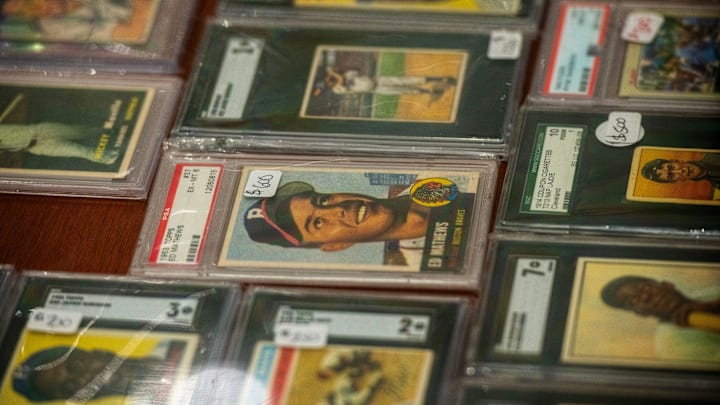
It's become so obvious over the last few decades that it really goes without saying - a perfect 10 isn't just great in gymnastics - rather, it's become the mythical number hanging over almost every card deal that you see on social media, every card show and what every collector dreams of owning - a gem-mint copy of their favorite cards. "Raw" cards, or cards that haven't been graded, often are bought at a premium to a card with a grade of 9, in the hopes that the raw card will achieve a 10 grade.
TOPPS 1952 MICKEY MANTLE

Who knows how many graded 9 copies have been removed from their casing and resubmitted to the grading companies in the hopes of getting the elusive 10 grade? It's for this reason alone that population reports may not be as trustworthy as we'd all like to think. What is it that drives this behavior? One answer pretty much sums it up - follow the money. When a PSA 10 is often delivering up to four times the selling price of a PSA 9, it's no wonder that the chase is on for perfection. But is the perfection all in our heads?
PANINI PRIZM SILVER 2023 VICTOR WEMBANYAMA

It can be argued that for most examples, there's almost no physical difference between a 9 and a 10 - ok, maybe a small imperfection that a progessional grader catches at the lab, but certainly nothing most of us in the hobby would notice. In most cases, a 9 and a 10 look identical to the naked eye. And before another 9 is cracked out of its case and resubmitted to the grading company, here's a few things to think about.

This is really just an issue with modern cards - for a lot of vintage cards, collectors are more than happy with low to mid-grades from a cost perspective alone. Most of the time, a 9 still looks great, but often it's easier to move, as there are more potential buyers based on a more affordable price. Dealers often talk about "liquidity", and this is what they mean - a 9 is far more likely to be easily moved than a 10, which could sit for longer, especially in the next down market. Don't forget that for the modern card market, print runs have started to explode, meaning there's more product being graded, and gem-mint rates have also started to go up. It could be that the PSA 10 of your favorite new basketball player isn't actually that rare at all.
 Add us as a preferred source on Google
Brian Hough became a fan of the hobby by opening packs of 1986 Donruss and 1987 Topps baseball with his dad and little brother. He has been writing about the collectibles industry for years, initially as a price guide editor for Tuff Stuff Magazine, which was a monthly sports magazine focused on sports cards and collectibles, particularly known for its price guides and checklists, that initially launched in April 1984.