
The Dealer's Corner: Record Card Sales, but Slow Show Floors
In this story:
The Nashville Card Show, known fondly as The Nash-ional, is one of the largest shows in America, with fourteen hundred tables across three buildings, hosting hundreds of dealers and thousands of collectors. The show has been a mainstay on our calendar for a while, and one thing that has always held true for us: Atlanta Braves autographs sell there.
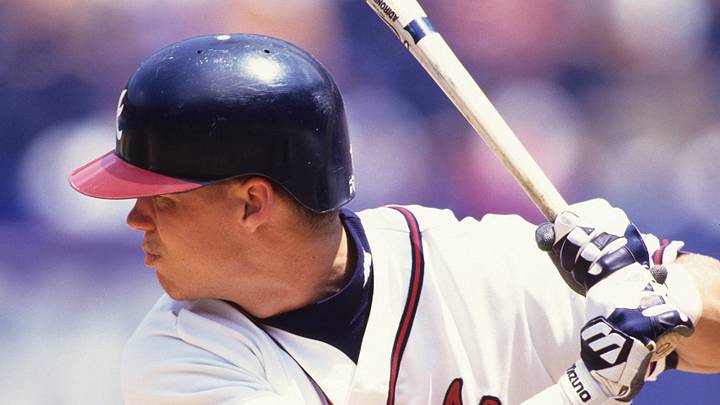
From October 30 to November 1, Chipper Jones kept staring at me. The grey, red, and blue stripes surrounded by silver filigree, the clean, bold blue autograph, the small black label with its distinctive “Dynasty” script, and then it went back into a dark case, waiting for the next show.
That’s the normal life cycle for a lot of sports cards that get hauled from show to show, waiting for the right collector to discover them - and be willing to part with the price tag. It was not supposed to be the story of this card.
That beautiful Topps Dynasty Chipper Jones card made it through the entire show, and only one person expressed any interest in it. That was more interest than the other Braves autographs in the showcase. Tom Glavine? John Smoltz? Andruw Jones? Those never even left the case to be considered.
A Common Theme with Other Dealers

At the end of the show, we still hit all our sales goals, but those four cards not selling stuck out like a sore thumb. In the process of packing up, we spoke to several other dealers who had similar experiences - either the things they were certain would sell didn’t, or overall they had a poor sales show. The disappointment was palpable, and for many, it was a fear-inducing moment.
“Are we finally slowing down?”
“I don’t know, man. This one was rough.”
“Is the market finally crashing?”
These questions, or variations of them, seem to be a recurring theme as vendors try to navigate the ever-changing landscape of the sports card market.
Differences in the Market
As in the general economy, the sports card market seems to be operating in two distinct realities. Card Ladder sales data shows that in October of 2026 alone, over $1,000,000,000 was spent on trading cards - and that is just in reportable online sales. As a dealer who is set up around the country nearly every week, I can confidently state that at least that much money is being spent in person at shows - let alone what is happening with live selling, card shops, and big-box retailers.
Yet, dealers are still experiencing a slowdown - both in overall sales volume and in foot traffic at shows. How is this seeming paradox happening?
When markets shift, it is rarely a seismic event. Even looking back on the junk wax era crash, it didn’t happen overnight. It didn’t even happen in several months. It took several years before anyone even realized that the market had “crashed”. Did that crash destroy the hobby? Did people stop collecting? Did most major manufacturers go out of business during the crash? The answer to all of these questions is a simple “No.”
We can see in the available data that even as dealers are experiencing this perceived slowdown, consumers are still spending more than ever on sports cards. So what is actually happening in the market?
Reallocation.
Where The Market is Moving?
This summer and early fall, we saw this reallocation happen more broadly as money left the ultra-modern market and flowed heavily into the 90s and 00s GOAT market.
From what we are seeing on the front lines, that shift is now happening as money is flowing from higher-dollar cards to less expensive ones. Repackers are heavily focused on the $25-$100 price band, and even more heavily focused on graded cards than ever before.
Healthy markets must reset when they get too hot. This happens once buying activity stops being driven by a fear of missing out (FOMO). We saw it in late 2022, and we are seeing it again now. Overall sales volume didn’t go down - but where and how people spent their money did.
This is the experience that many dealers are having at shows. Foot traffic is slightly down, especially at smaller shows. Hesitation from buyers is up, especially on higher-priced items.
As some collectors pull back, whether that is due to changes in discretionary income or a number of other factors, so does the price band that they shop in. The buyer who used to buy $10,000 cards may now buy $5,000 cards. The buyer who used to buy $100 cards may now be buying $50 cards. If you are a dealer who has a case full of $1,000 cards and you are experiencing a slowdown, it isn’t that the market has crashed - it’s that the market has reallocated.
This can, and often should, be seen as a sign of a healthier market than one driven purely by FOMO.
As our hobby grows, and as more people and more money flows into the space, there will be more short-term volatility. If you’ve built a business that relies on only one type of consumer, or on the idea of thin margins and fast money, then you may face real headwinds during a market correction.
Keep in mind that a stable market may not be as exciting, but it is most certainly better in the long run for both sides of the table. As for that Chipper Jones Dynasty auto, I am certain that at a show soon, the right collector will fall in love with it, and it won’t have to make any more trips in the dark depths of a Zion case.
Gary LeMaster is one-half of The BallCard Show and one of the co-hosts of Pardon the Nonsense. The Dealer's Corner will be a dispatch of what Gary is seeing on show floors as a dealer.
 Add us as a preferred source on Google

Gary LeMaster is one half of The Ballcard Show, and co-host of Pardon the Nonsense. He has been on the front line of the sports card industry as a full time dealer and content creator since 2020, when The Ballcard Show first launched as a weekly podcast focused on helping vendors in the sports card space.
Follow theballcardshow