
The Rise of Magazine Collecting and the Companies Powering It
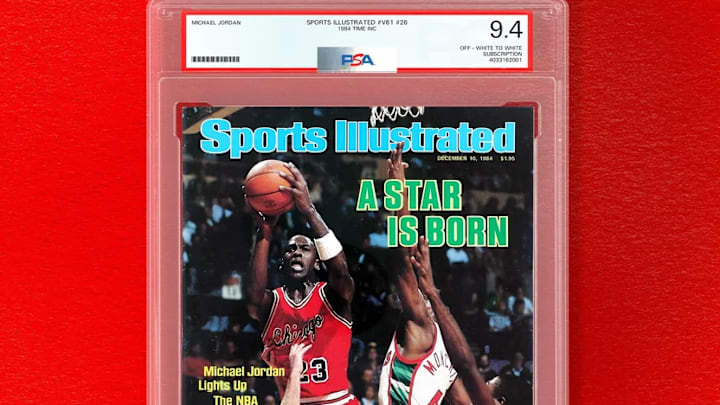
Magazine collecting is quickly becoming a defined category within the broader collectibles industry. What began as fans holding onto meaningful issues has evolved into a market supported by grading companies, auction houses, publishers, and a growing base of international collectors. The category is being strengthened by publishers, grading companies, and marketplaces working together to support long-term collecting.
CGC and Beckett were early pioneers in magazine grading, showing that print could be encapsulated and treated with the same care as comics and cards. The category took another step forward when PSA entered the space. PSA brought a familiar slab aesthetic, a grading structure collectors already trusted, and a built-in audience accustomed to uniformity across their collections. That combination gave magazine collecting scale and visibility almost overnight.
RELATED: Karl-Anthony Towns’ Topps Yamamoto 1/1 Hits Fanatics Auctions
Auction houses saw the impact immediately. Ken Goldin, founder of Goldin Auctions and one of the most influential figures in the modern hobby, has watched magazine demand accelerate across sports, music, gaming, and culture. As he explained, “Since PSA’s new magazine grading service started last summer, we’ve seen tremendous recent growth in the magazine market at Goldin. Collectors from all sectors are discovering how magazines are like bigger trading cards, with nostalgic covers, valuable ‘rookie’ 1st appearances, and very low pops. Autographed magazines in CGC/JSA holders are surging too. Comics have dominated collector wantlists for decades. Why not magazines too? It’s great to see, it’s a market I love and we are putting resources into marketing and dominating the space.”

That comparison resonates because it feels intuitive. Magazine covers often represent first appearances and defining moments, captured through photography and design on a larger canvas than a card. They function as visual history. Grading gives collectors a way to preserve those moments and display them alongside the rest of their collections in a consistent, intentional format.
Sports Illustrated’s ownership at Authentic Brands Group sees the same opportunity. Michael Sherman, EVP Sports & Media at ABG, views magazine grading as a bridge between SI’s legacy and modern collecting behavior. As he put it, “SI has documented some of the most important moments in sports and culture, and it’s exciting to see those stories gaining new life through magazine grading and collecting. We’re looking closely at how to continue bringing SI’s heritage to today’s fans in formats that feel authentic to the brand and relevant to how people interact with collectibles today.”
SLAM sits at the center of that connection. Fans saved SLAM because it reflected basketball culture at its peak intersection with music and fashion. Now those issues are entering a grading ecosystem that gives them a new dimension. SLAM has already begun offering graded versions of current releases. “As we’ve seen with cards and comics, people really enjoy owning slabbed collectibles that have been verified as authentic and graded by a respected third party,” the brand explained. “There’s a great opportunity with magazines because they’re so naturally displayable in the slabs.”

That opportunity became clear after testing the concept in person. “After a very positive response to selling graded mags directly to fans for the first time at Fanatics Fest last summer, the next logical step was to make some of these available outside of IRL events,” SLAM said. Collectors are also revisiting SLAM’s iconic covers from the late 1990s and early 2000s, from AI’s Soul on Ice to Kobe’s solo debut to LeBron’s early appearances. SLAM has leaned further into collectibility with limited Gold Metal editions, serial-numbered to just 94, designed specifically for fans who want something intentional from the start.

At PSA, the decision to enter magazine grading followed close attention to how collectors were already engaging with the category. Elizabeth Gruene, General Manager of Pop Culture at PSA, said the opportunity became clear once they looked at how collectors already think. “Given PSA’s long track record in the grading and authentication space, and the trust we have gained, we felt confident we could be the best at magazine and sports program grading as well. We saw a big opportunity to target magazine collecting specifically and build a service that supports that community and their unique needs. Many of these collectors already grade their cards with PSA, and we want to be a one-stop-shop. People are always looking for the next big category to collect, and I think magazines could be the next horizon in many ways.”
Early submissions support that view. “Our top submitted magazine so far is Jordan’s first Sports Illustrated cover in his Bulls uniform from December 10, 1984,” Gruene said, also pointing to strong interest in Jordan’s earlier SI appearance, Beckett Basketball Card Magazine #1, Cooper Flagg’s first SLAM cover, and even non-sports titles like Taylor Swift’s 2023 Time Person of the Year issue. “First appearances will always stand the test of time,” Gruene added. “Magazines are also a great vehicle for autographs, and pairing our autograph authentication with magazine grading has been a big win for collectors.”
TOP TRENDING COLLECTIBLES ARTICLES:
 Add us as a preferred source on Google
-83d4442a64cab760f636d15bfaa0f9d1.jpg "Mark Zablow")
Mark Zablow explores and lives at the intersection of collecting, creativity, and modern fandom. He built his career where storytelling, authenticity, and influence meet. Zablow is the founder of Bleecker Trading, a New York shop that helped bring the hobby into modern culture, and the CEO of Cogent World, a marketing agency that connects brands with audiences through creators, experiences, and storytelling. His work explores how provenance, identity, and value define what people collect and why they keep it. He lives on the East Coast with his wife and two sons.