
The Unexpected Cards Lost in the PSA/FedEx Theft
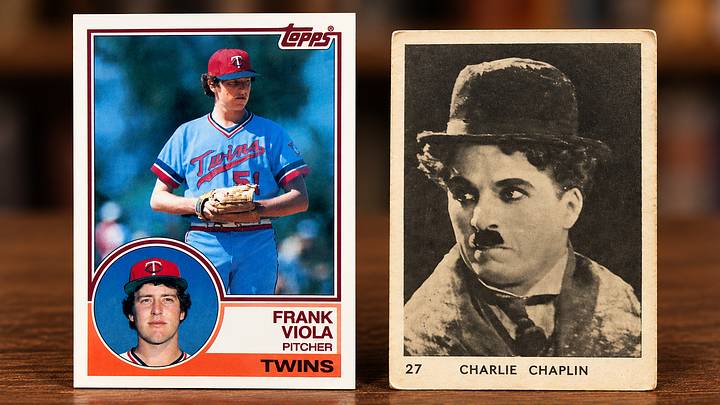
When PSA recently released its list of 6,451 cards stolen from a FedEx truck, collectors quickly started identifying the biggest names.
Michael Jordan. Babe Ruth. Shohei Ohtani. Rare autographs, Superfractors, and other cards that could command enormous prices. High-profile collectors have reported some big-ticket cards that were stolen during the theft.
But as I started going through the full 93-page list, I found myself drawn to a very different group of cards.
Frank Viola. Bernie Bickerstaff. Charlie Chaplin. Not exactly the names you'd expect to see in headlines about a major card theft. But as a collector, I couldn't help wondering about the people who submitted them for grading. And there are hundreds of similar names of players, celebrities, and characters that might not be household names, but hold unique value to the people who submitted them.
Because sometimes the cards that mean the most to us aren't the ones worth the most money.
Why Grade a Frank Viola Checklist?
Among the thousands of missing cards are about 30 featuring former Cy Young Award winner Frank Viola, including his 1983 Topps #586 card and a 1989 Upper Deck #691 Twins checklist.

There's also a group of Mike LaValliere cards, including his 1987 Topps Traded Tiffany #61T and a 1992 Upper Deck #113 Gold Hologram variation.
I'm not suggesting these cards have no value. A high-grade example of an otherwise common card can sometimes be surprisingly desirable. And since the grades of these particular cards haven't been disclosed, we don't know whether they received a PSA 10 or a PSA 2.
And we all know that grading isn't cheap. As of October 2026, PSA's lowest available service level costs $59.99 per card, while Value options are temporarily paused as they work through a massive backlog that currently sits at 7.2 million cards. Even at lower prices for older submissions, sending in dozens of cards for grading represents a significant investment, especially when their market value may be relatively modest.

But for many collectors, that's not the point. It isn't about market value or rarity. It's about why someone chose to collect and grade these particular cards in the first place. Grading costs money—and someone made the decision to submit these specific cards.
Was it a collector putting together a complete graded run of their favorite player? Someone chasing PSA 10s of cards they remember opening as a kid? Or perhaps a set collector filling a few stubborn holes?
We don't know. And that's part of what makes cards like these interesting.
From Basketball Commons to Charlie Chaplin
The list gets even more interesting when you venture beyond baseball.
There's a 1989 Hoops #269 Bernie Bickerstaff card, along with #82 Dan Schayes from the same set. Neither is likely to be the first card most collectors would pull from that set to send for grading. A David Robinson rookie from the set graded PSA 10 recently sold for $740—and with all due respect to Bernie and Dan, they’re not The Admiral.

But as anyone who's ever tried to complete a high-grade set knows, the biggest stars aren't necessarily the hardest cards to find in the condition you want.
Then there's Charlie Chaplin. PSA's list includes roughly 20 entries featuring the legendary entertainer, including a 1926 Lambert & Butler #27 Type 2 card and a 1934 Wills Famous Film Stars #71 small-format card. A PSA 7 of the Lambert & Butler card recently sold for $252—not exactly life-changing money.

But these are fascinating collectibles in their own right, and a reminder that the hobby extends well beyond baseball, basketball, and football. I personally collect Jayne Mansfield and Frank Sinatra cards and have submitted dozens for grading without worrying about their market value, since I have no intention of selling them.
Finding another copy of a century-old card can be difficult enough. Finding one with the same condition, appearance, and appeal could be another challenge entirely.
Of course, we can't assume all these cards belonged to the same collector or know why they were submitted. But we can all imagine the time and effort that went into assembling some of these collections.
The Cards That Mean the Most
I've collected long enough to know that some of my favorite pieces aren't necessarily the most valuable ones. Sometimes it's a card you spent years trying to find. Sometimes it's a player you grew up watching. And sometimes it's something that simply caught your eye and became part of your collection.
That's what makes this theft so upsetting to fellow collectors. Everyone in the hobby should hope that authorities catch those responsible and that all 6,451 items make their way back to their rightful owners. But as days pass without a reported recovery, it's hard not to worry about the possibility that some of these cards may never come home.
For those collectors, the uncertainty must be awful. And for the rest of us, it's not difficult to imagine ourselves in their position. The biggest cards will continue to get the headlines, understandably. But I keep coming back to those Frank Viola checklists, obscure basketball commons, and vintage Charlie Chaplin cards.
Because a price guide can tell you what a card might sell for or be “worth” for insurance or replacement purposes. But it can't always tell you what that card meant to the person who collected it.
 Add us as a preferred source on Google

Lucas Mast is a writer based in California’s Bay Area, where he’s a season ticket holder for St. Mary’s basketball and a die-hard Stanford athletics fan. A lifelong collector of sneakers, sports cards, and pop culture, he also advises companies shaping the future of the hobby and sports. He’s driven by a curiosity about why people collect—and what those items reveal about the moments and memories that matter most.
Follow sneakrz