
Why Panini Kaboom Cards Are So Expensive
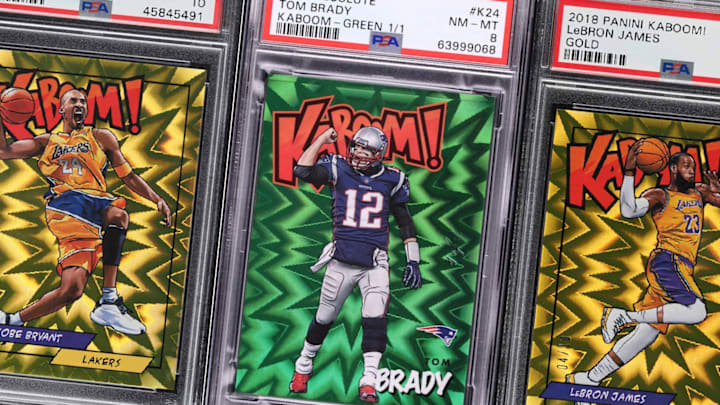
If you were told that among all publicly recorded LeBron James Panini card sales above $100,000, only four of them are not 1 of 1s, not Prizm cards, and not patch cards, you might assume they belong to some obscure ultra limited release. The reality is much simpler. All four are Kabooms. Outside of Prizm, there is no other brand from the Panini era that is even remotely as recognizable as Kaboom. It has cemented itself as the unquestioned insert of the era and accounts for some of the most expensive Panini cards ever made. But what exactly makes them so expensive? Here are a few reasons why they're so sought after.
RELATED: Why a Klay Thompson Kaboom card just sold for over $100,000
🚨 RECORD SALE! Featuring the 2021 Panini Absolute Tom Brady KABOOM! Green 1/1, graded PSA 8, sold for a record-high $660,000 via auction (47 bids) with Fanatics Premier last November 20th — making it the current highest public sale for any KABOOM! card across all sports!
— Cardhedger (@cardhedger) November 22, 2025
It… pic.twitter.com/yOZiJBI8ei
Lineage
The first point to note with Kabooms is their lineage. The insert debuted early in the Panini era and first appeared in 2013 Panini Innovation Basketball as a case hit, at a time when Panini was still finding its footing in the hobby. Because of this, by the time the more sought after numbered parallels arrived in 2018, Kaboom was already an established and recognizable insert. The introduction of rare parallels took an already popular design to the next level, which in turn amplified the excitement around Kabooms as a whole.
Aesthetics
Aesthetics can’t be overlooked when discussing why Kabooms generate so much demand. They were first introduced with an animated, superhero like depiction of the player which immediately set them apart from other sports cards of the time. The explosive background which refracts light in a unique way only added to the appeal.
💥 KOBE KABOOM EXPLOSION 💥
— Best Cards Ever 🏆 (@CardsBoulevard) November 8, 2025
2013 Panini Innovation Kaboom! BGS 9.5
💵 2019: $86
💵 2025: $26,861
📈 +31,130% in 6 years pic.twitter.com/5nYdWigG7j
Rarity
Another point that comes to mind when looking at the highest recorded Kaboom sales is rarity. In particular, the scarcity of the numbered parallels themselves, with Gold versions numbered to 10 and Green versions numbered to just 1. Even though they debuted in 2018, numbered Kabooms haven't been released every year, with only four years of licensed Kaboom basketball cards to date. Combine that with the fact that not every player is featured annually, and the result is extreme scarcity. Even some of the most popular players, such as Luka Doncic, have only three years of numbered Kabooms, while current and past stars like Shai Gilgeous Alexander and Klay Thompson each have just a single year.
🚨 Record Breaker 🚨
— Beckett Collectibles (@beckettcollect) December 3, 2025
This 2018 Stephen Curry Gold Kaboom /10 sold for $236,680, a new record for any Curry Kaboom. Graded BGS 9.5 Gem Mint with none graded higher, this Gold parallel stands as a defining piece for high-end Curry collectors. pic.twitter.com/pxJj39V1dn
Trickle Down Effect
Now, many collectors might be thinking that it makes sense for the rare numbered Kaboom parallels to carry such massive price tags, but what about the unnumbered versions that are also selling for ridiculous amounts? The answer is that this is just what happens when demand overwhelms supply. Collectors who can’t find or afford the card they want often turn to the next best option. In this case, that means unnumbered Kabooms.
While it’s fair to be skeptical about whether these cards can sustain their current prices, it would be a mistake to underestimate the demand behind them. When a Kaboom hits eBay, the number of watchers it quickly generates would shock you. At card shows, collectors ask about them repeatedly. And when a kid pulls a Kaboom from a pack, the excitement is palpable. If that demand ever begins to fade, then there is reason for concern, but only if that demand begins to fade. It’s true that some Kabooms aren’t as rare as other inserts from the era, but it's important not to be so focused on rarity that you’re unable to recognize demand.
TOP TRENDING COLLECTIBLES ARTICLES:
 Add us as a preferred source on Google
Jason is an experienced basketball card collector with a focus on writing and educating others about the sports card industry. Find him on Instagram @jeancardz