
Why Shohei Ohtani cards could be a dangerous investment in 2026
In this story:
After Babe Ruth, Shohei Ohtani is the most talented player baseball has ever seen. That statement should not be controversial. He has redefined what is possible on a modern baseball field and expanded the sport’s global reach in a way few players ever have.
But greatness does not automatically translate into a good investment. From a baseball card perspective, Ohtani’s market represents one of the most dangerous risk-reward profiles in the hobby. This has nothing to do with his talent, work ethic, or legacy potential.
His cards are priced as though his entire career has already played out perfectly, leaving little margin for error. That makes Ohtani a dangerous buy. He is the most popular player in the modern baseball card hobby, but he is also one of the riskiest. Below are three main reasons why “Shotime” represents a precarious baseball card investment in 2026.
RELATED: Ohtani, Judge & The 10 Most Iconic Baseball Cards of the 2010s
1. There is a Massive Overabundance of Ohtani Cards

One of the most obvious risks in the Ohtani market is sheer volume. According to Trading Card Database, Ohtani already has over 24,000 different baseball cards. That number should easily reach six figures by the time his playing career is over.
The over saturation of Ohtani cards is even apparent when looking at his most sought after rookie cards. His flagship rookie, the 2018 Topps Chrome #150 (Pitching), has a PSA 10 population exceeding 15,000 copies, yet it still sells in the $550 range. This high population count doesn’t even include the 17 different parallel variations of the same card. There are also additional autographed versions, image variations, and inserts of Ohtani within the 2018 Topps Chrome set.
It is not just the flagship rookie Ohtani cards that are selling for sky-high prices. The 2018 Topps Heritage #600 rookie base card has a PSA 10 population count of over 8,000, with recent sales in the $400 range. Even high population Allen & Ginter Ohtani base rookies are selling for $400 in a PSA 10. The Topps Heritage and Allen & Ginter sets are lower-end, more affordable products, which makes these cards especially risky.

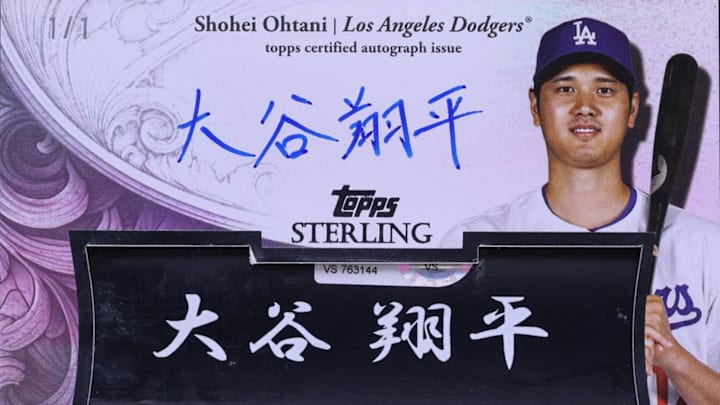
Even low numbered and 1/1 Shohei Ohtani cards are not immune to overproduction. While a “1 of 1” is a unique card within a specific product line, there are already estimated to be thousands of 1/1 Ohtani cards in existence.
While the risk of oversupply applies to any modern baseball player, the bubble surrounding Ohtani is massive. Ohtani’s prices and market bubble are in a league of their own. While all modern cards face over abundance issues, Ohtani’s prices are so high that his downside risk is significantly greater than any other player in baseball.
2. Ohtani’s Two-Way Ability Creates Increased Risk
Ohtani’s premium is in large part due to his identity as a two-way player. That uniqueness is the foundation of his card market, but it also creates risk in multiple ways.
Pitching makes Ohtani a very serious injury risk. Major injuries to pitchers have become so prevalent that Major League Baseball has begun exploring rule changes to incentivize durability. In 2024, a record 281 professional pitchers underwent Tommy John surgery, an increase of around 200% over 2010 levels.

If pitching leads to another significant arm or shoulder injury for Ohtani, he could miss significant time like he did in 2019 and 2024 (as a pitcher). If he misses an entire season because of injury, his card prices would likely see a dramatic dip in prices.
The Dodgers could also permanently pull the plug on his two-way career. His bat in the lineup is too important, and Ohtani already has undergone multiple major surgeries. Ohtani would still be an elite hitter and an all-time great player as a full-time DH. But the story that justifies record-setting card prices would be diminished.
Upside from here for Ohtani cards require continued perfection on the mound and at the plate. Because of how common injuries to pitchers are, this makes Ohtani cards a huge gamble.
3. Ohtani Is Already Priced Like an All-Time Legend

Ohtani’s major rookie cards are priced at levels that historically have been reserved for players with fully established careers. While Ohtani is still in his prime, the history of baseball is filled with examples of Hall-of-Fame players experiencing sharp, sudden declines once they hit their mid-30s.
Mike Trout's consistent injury issues have caused sharp declines in his card values, demonstrating how quickly market sentiment can shift, even for a universally loved player. Albert Pujols’ and Ken Griffey Jr.’s production plummeted in their 30s as well.
Griffey was a generational talent with massive popularity and cultural reach. Yet one of his most iconic rookies, the 1989 Fleer #548, has a PSA 10 population of 5,700 and sells for around $200. Griffey’s career arc is complete, and his résumé is secure. But his iconic Fleer rookie card sells for half the price of a 2018 Topps Archives Ohtani rookie in a PSA 10, despite similar population counts.
Derek Jeter’s 1996 Topps Chrome flagship rookie in a PSA 10 sells for $800, despite having a population count of 60. Ohtani’s PSA 10 Topps Chrome rookie sells for just $250 less despite having a population count that is 250 times greater (15,152). For Ohtani’s market to sustain such a massive premium over established legends, his career’s second half will have to be better than the first. Given the physical demands of two-way play, that is a tall order.
Final Thoughts

For years, many collectors have watched Shohei Ohtani’s prices from the sidelines, convinced the market had peaked and waiting for a more logical entry point. Instead, his values have continued to skyrocket through a historic 2024 "50/50" season and the Dodgers' back-to-back World Series titles.
While the future remains unpredictable, even the most legendary careers eventually hit a price ceiling. A player's greatness and future accolades become 'baked into' their market.
Baseball card investing is not strictly about identifying greatness. It is about identifying value. Ohtani’s cards are simply too risky at current values.
TOP TRENDING COLLECTIBLES ARTICLES:
 Add us as a preferred source on Google
David is a collector based in Georgia and a lifelong fan of the New York Yankees, New York Giants, and New York Knicks. He is an avid sports card collector with a strong passion for vintage baseball cards and vintage on-card autographs. David enjoys obtaining autographs through the mail and loves connecting with other knowledgeable collectors to discuss the history and evolution of the hobby. He also previously wrote about the New York Giants for GMENHQ.com