
The Numbers Don’t Lie, But the Film Tells the Story For Arkansas Basketball
In this story:
FAYETTEVILLE — Without going too far down the rabbit hole, let’s agree on one thing: numbers don’t lie. However, they don’t always tell the entire story, either.
Case in point, the Arkansas Razorbacks.
Look strictly at the numbers, and this Arkansas team has top-five potential. Watch the film, and there are stretches when the Razorbacks look more like a team fighting to stay inside the top 25.
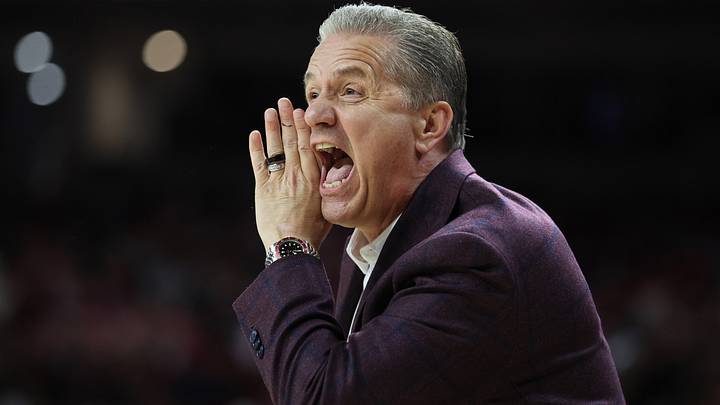
Don’t panic. I don’t believe this is a personnel issue. In fact, I’ll stand by my assessment that this is Coach John Calipari’s most diversified team since arriving at Arkansas.
Much of the preseason conversation centered on Arkansas’s perceived inability to shoot the three-point shot. Yet the Razorbacks are shooting 36% from three compared to last season’s 33.6%. They’re actually shooting it better.
So why does the offense look considerably worse at times? I see three areas that explain the disconnect between Arkansas’s statistical potential and what we’re watching on the floor.

Better Shooting, Worse Shot Selection
Arkansas is shooting a higher percentage from three, yet the Razorbacks are attempting eight fewer three-point field goals per game. Yes, eight.
At 36%, that’s approximately 2.88 additional made threes per game if those attempts were converted at the same rate. That’s nearly nine points of potential three-point production, though some of those attempts would replace two-point shots.
Watch how often a Razorback catches the ball with space on the perimeter, particularly in transition or early offensive action, and turns down the open three. The ball gets driven into a shrinking gap, the defense collapses, and suddenly an open perimeter opportunity becomes a contested attempt against two or three defenders.
That’s not creating offense. That’s making offense harder.
Those same possessions frequently extend deeper into the shot clock. Now a player who passed up a quality opportunity with 20 seconds remaining is trying to manufacture something with six seconds left. That’s offensive stress.
When young players experience offensive stress, their natural response is often to try harder instead of making the game easier. They overpenetrate, leave their feet without a passing angle, or attempt difficult finishes against multiple defenders.
Take the open three. Not because every three-point attempt is a good shot, but because passing up a high-quality shot often creates a much worse one.
A defense that doesn’t have to respect the initial perimeter opportunity can load the gaps, sit in help, and shrink the floor. Make that defense close out aggressively, and everything changes. Longer closeouts create bigger driving angles. Bigger driving angles create paint touches. Paint touches force defensive rotations, and rotations create scoring opportunities.
That’s how good offensive spacing works.

Fast-Break Points: Speed Without Efficiency
Through the same number of games, Arkansas has scored 90 fast-break points compared to 102 last season. At first glance, that’s not an overwhelming difference.
But of those 90 fast-break points, 45 came against UAPB in the season opener. Half of Arkansas’s entire fast-break production came against one opponent. That leaves just 45 points over the following three games.
For a team with this much athleticism, that’s concerning. And from a coaching standpoint, I don’t believe the answer is simply running faster. This Arkansas team is grinding it out every possession and it’s starting to show signs of thinking instead of reacting.
There’s a major difference between playing fast and playing efficiently. Transition offense is about creating and recognizing advantages before the defense gets set. Sprinting the floor matters, but spacing, early decisions, and passing ahead matter just as much.
If the ball stops, or an open three is passed up so a player can attack three defenders in the paint, the transition advantage disappears. The possession becomes a difficult half-court possession instead.
I’d emphasize wide lanes, early outlets, and a simple read: take the quality shot, attack the open gap, or move the ball before help arrives. Arkansas doesn’t need more speed. It needs to turn its speed into better opportunities.

Rotation, Roles, and Offensive Rhythm
The third issue is harder to capture in a box score: chemistry. Calipari is still sorting through combinations, and a larger rotation can make offensive timing less predictable. That will certainly work itself out in time and more games under the belt of the young freshman will begin to pay huge dividends.
The Bigger Picture
None of this requires a dramatic overhaul. Arkansas has the shooting, athleticism, and individual talent to be dangerous. What it needs now is to connect those strengths through better decisions.
The biggest determining factor in made or missed shots is proximity of a defender. Distance to a point for high level players matters less and less with age. Take quick deep ones not all the time but enough to feel relaxed on the offensive end.
Sign up to our free newsletter, and follow us on Facebook, X (Twitter), Instagram and subscribe to our YouTube channel for the latest in Razorback news.
 Add us as a preferred source on Google

Bart Reid serves as a basketball analyst covering basketball for Arkansas Razorbacks on SI. Reid previously contributed to 247Sports and is a frequent guest on 103.7 The Buzz’s Drive Time Sports. He brings an opinion-driven approach to his coverage, examining team identity, player development and the coaching decisions that shape the Razorbacks. A former Division I basketball player at UA-Little Rock, he has made an effort in helping Arkansas become a hotbed for recruiting in the Natural State formerly as the director of training for the Arkansas Hawks of the Adidas 3SSB grassroots circuit. He's helped develop the skills of NBA and college standouts such as Isaiah Joe, Nick Smith Jr., Devo Davis, Jaylin Williams, Layden Blocker, Annor Boateng, Terrion Burgess and many others.
Follow thebartreid