
Inside the Locker Room: Leadership and Accountability Fueling Maryland Football Against Nebraska
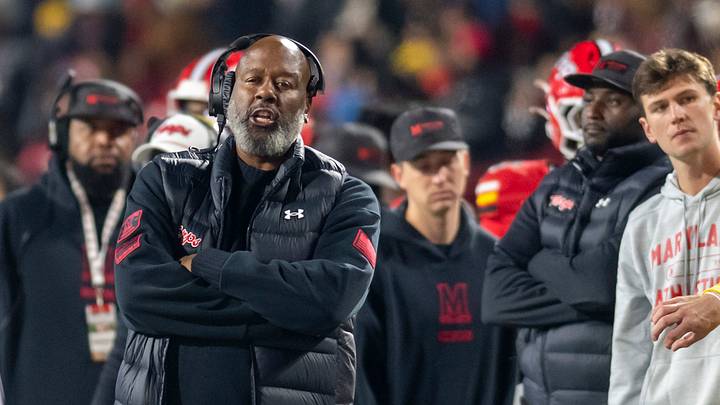
Maryland enters this week in a state of forced recalibration, responding to a humbling home loss defined by five turnovers and a staggering 51‑point margin. The defeat has prompted Head Coach Mike Locksley to tighten the program’s offensive operation, zeroing in on quarterback overload and breakdowns in communication that contributed to four interceptions and a derailed game plan.
As the Terps regroup, their focus shifts toward simplifying pre‑snap demands, restoring clarity in decision‑making, and bracing for a bruising road test against a Nebraska team that currently leads the Big Ten in total defense. Amid rising fan frustration and external noise, the staff is pushing a “get up” mentality, insulating the locker room, sharpening fundamentals, and demanding a response rooted in discipline rather than distraction.
Maryland’s latest outing was defined by breakdowns in execution and ball security, a performance Locksley bluntly summarized as “not good enough.” The Terps surrendered five turnovers, four of them interceptions, marking a stark regression from earlier weeks when protecting the football was a strength. Their offensive struggles were further magnified by a collapse on third down, converting just 1 of 15 attempts despite previously ranking among the nation’s most efficient units.
Maryland also failed to maintain offensive rhythm, repeatedly falling “behind the sticks” by missing the program’s benchmark of four or more yards on first‑down plays. That inability to stay on schedule created predictable passing situations, heightened pressure, and ultimately contributed to the disjointed, turnover‑ridden performance that defined the game.
Maryland’s run‑game issues continue to stem from a thinning personnel group, a problem that has placed an outsized burden on the passing attack and disrupted the offense’s ability to maintain balance. Injuries have stripped the backfield of depth, forcing the Terps into predictable situations and limiting their ability to control tempo. DeJuan Williams remains the key variable in any potential turnaround. He’s considered “close” to returning but not yet at full strength, with his availability set to be reevaluated midweek. His status, and the broader health of the position, will heavily influence how Maryland can structure its ground game moving forward.
Despite the lopsided final score, Maryland’s staff did identify subtle defensive gains that offered a measure of encouragement. Tackling, a recurring issue in recent weeks, showed cleaner form and more consistency, reflecting progress in fundamentals even amid a difficult game flow. The Terps also took a step forward on third down, an area of emphasis throughout the week, by more effectively getting off the field and limiting extended drives. While these improvements were overshadowed by the broader outcome, they represent incremental strides the defense can build on moving into the next challenge.
Maryland’s offensive reset centers on a deliberate effort to lighten Malik Washington's mental load and eliminate the communication issues that fueled recent turnovers. The staff is rolling out a condensed game plan that strips away excess pre‑snap responsibilities, allowing the quarterback to operate with clearer, faster decision‑making as he enters his 15th career start. Coaches are also tightening communication protocols after “lax” signaling led defenders to anticipate routes, including a pick‑six where a corner effectively ran the receiver’s pattern.
Additionally, the timing and execution of option concepts are being recalibrated to ensure receivers and Washington make the same read, reducing ambiguity and preventing routes from breaking in opposite directions. Together, these adjustments aim to stabilize the offense, restore rhythm, and prevent the costly mistakes that have derailed recent performances.

Maryland’s response to the fallout from its latest defeat extends beyond X’s and O’s, reflecting a broader emphasis on leadership, stability, and cultural resilience within the program. Locksley acknowledged the personal toll that mounting pressure can create, stressing the importance of mental insulation and modeling a disciplined approach to ignoring social media noise so players can stay anchored to the “guys in the building.” Administrative operations continued as normal, including his routine Monday meeting with Athletic Director Jim Smith, which focused strictly on personnel and improvement rather than assurances about the future.
The staff also recognized fan frustration, noting that the disappointment mirrors the team’s own expectation to win. Inside the locker room, veteran voices like Kaleb Webb stepped forward during a post‑game Leadership Council meeting to reinforce accountability and steady the group. At the heart of all these efforts is Locksley’s “get up” philosophy, a belief that the only way to recover from a difficult loss is through focused practice, internal resolve, and the resilience that the program considers fundamental to its DNA.
Stay up to date with the Terrapins by bookmarking Maryland On SI and follow us on Twitter.
 Add us as a preferred source on Google
Michael is a passionate sports writer who covers Major League Baseball, the NFL, college football, Maryland University, Rutgers University, and Monmouth football. With published work at FanSided, The Rutgers Wire (USA Today), and The League Winners, Michael delivers insightful analysis, in-depth features, and timely coverage that connects fans to the heart of the game. His work highlights key storylines and standout performances across both professional (NFL & MLB) and collegiate sports (Football, Baseball, Basketball, and Wrestling), with a strong focus on New Jersey-based programs.