
Texas Must Get Its Running Game More Involved Against Ole Miss
In this story:
Texas has spent the past two weeks finding ways to lose games it had opportunities to win. Consecutive 27-24 defeats against unranked Oklahoma and Florida have exposed problems with finishing drives, protecting leads and executing in critical situations. One issue connects those struggles: the Longhorns have not consistently sustained their offensive rhythm.
As Texas prepares to host Ole Miss on Saturday, the running game deserves more attention. The Longhorns have shown they can move the ball on the ground, but too few carries and missed opportunities on short-yardage downs have made it difficult to establish a dependable offensive identity.
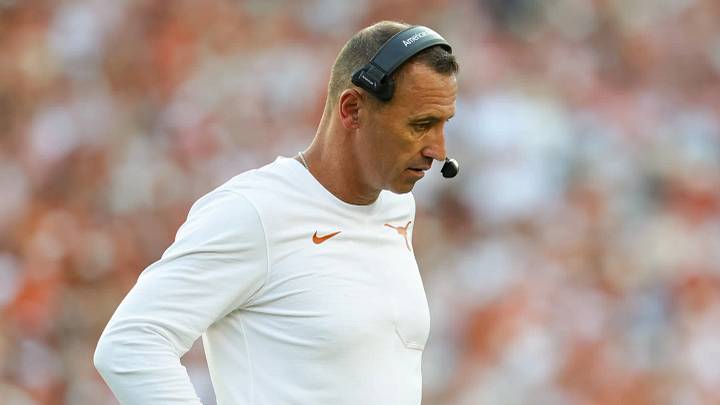
Steve Sarkisian understands that balance matters. The challenge is making sure Texas can stay committed to the run even when a drive stalls or the game begins to slip away.
Texas Needs to Turn Its Running Game Into a Strength

Sarkisian offered an explanation for the Longhorns' recent lack of rushing volume, pointing to how few offensive plays Texas ran after halftime against Florida. With the offense repeatedly going three-and-out, there were fewer opportunities to establish the ground game.
That context matters, but it does not eliminate the need for improvement. Texas cannot expect its rushing attack to develop consistency if it disappears whenever the offense faces adversity. The Longhorns need to create more opportunities to run the ball early, sustain drives and prevent the game situation from dictating every play call.
Texas has the talent and depth to execute this as well. When fully healthy, a group of Hollywood Smother, Raleek Brown and Derrek Cooper Jr. should have all the potential to create a consistent run game without running out of gas.
Sarkisian also acknowledged that the coaching staff must do a better job creating favorable situations for its players. Speaking about the team's struggles on short-yardage downs, he admitted, "I don't think schematically, in game plan wise, that we put our players in great positions to do well."
That admission points to an important part of the solution. Texas cannot simply demand better results from its offensive line and running backs without examining how the offense is being designed. Short-yardage situations such as third-and-two or fourth-and-one should provide opportunities to impose physicality, yet the Longhorns have struggled to convert those chances in recent weeks.
Those missed conversions have consequences beyond a single possession. They force Texas to punt, limit the offense's ability to control the clock and put additional pressure on the defense. Against Ole Miss, which has demonstrated its ability to produce a powerful rushing attack of its own, winning those situations could help determine who controls the game.
The Longhorns also need to make their running game work alongside Arch Manning rather than treating the two as competing options. A productive ground attack can create more manageable passing situations, open play-action opportunities and reduce the pressure on Manning to make difficult throws on every important possession.
Ole Miss presents a particularly important test. The Rebels have shown they can control games through their rushing attack, meaning Texas may need its own offense to sustain drives and keep the opposing offense on the sideline. If the Longhorns cannot consistently move the chains, they risk putting their defense in another difficult position.
Sarkisian has made clear that he does not want Texas to abandon the run. Now, the coaching staff must translate that belief into a more consistent game plan, especially when the Longhorns face short-yardage situations or fall behind. With the report of Smothers missing practice on Monday, the coaches may have to trust Brown to get the bulk of opportunities after he showed flashes of an electric run-game on Saturday.
Texas does not necessarily need to run the ball on every early down. It needs to make the ground game reliable enough that opponents cannot simply wait for Manning to throw. Against Ole Miss, that balance could be the difference between another frustrating finish and a much-needed response.
Sign up to our free newsletter and follow us on Facebook, X and Instagram for the latest news.
 Add us as a preferred source on Google

Phoenix Haigis is a staff writer for the Texas Longhorns on SI. He is a junior at the University of Texas at Austin as a journalism major with a minor in sports media. He is also a staff writer for the Daily Texan’s sports department. Haigis was born and raised in Cincinnati, OH., where he became a lifelong Bengals fan and Skyline Chili defender.
Follow phoenix_haigis