%22%3E%0A%3Cpath%20d%3D%22M0%204.9397H7.3484V12.6932H14.0649V4.9397H21.4133V26.912H14.0649V19.037H7.3484V26.912H0V4.9397Z%22%20fill%3D%22white%22%2F%3E%0A%3Cpath%20d%3D%22M23.6572%204H31.0299V8.55326H23.6572V4ZM23.7788%209.77664H30.9003V26.9121H23.7788V9.77664Z%22%20fill%3D%22white%22%2F%3E%0A%3Cpath%20d%3D%22M32.7241%2029.861L34.9197%2025.5589C36.8317%2026.5635%2038.7519%2027.1955%2041.1014%2027.1955C43.7669%2027.1955%2045.1848%2025.8101%2045.1848%2023.4281V22.9258C44.2125%2024.0276%2042.6084%2025.2834%2040.2264%2025.2834C35.8028%2025.2834%2032.6025%2022.1399%2032.6025%2017.4084V17.3436C32.6025%2012.5392%2035.8676%209.37134%2039.8213%209.37134C42.3329%209.37134%2043.8074%2010.3112%2045.0632%2011.5994V9.77643H52.1848V22.5855C52.1848%2025.7533%2051.5285%2027.9246%2049.9568%2029.4883C48.4174%2031.0277%2046.0679%2031.9999%2042.2357%2031.9999C38.4035%2031.9999%2035.4868%2031.2464%2032.7241%2029.8691V29.861ZM45.2172%2017.3679V17.3031C45.2172%2015.8285%2044.091%2014.6376%2042.3572%2014.6376C40.6234%2014.6376%2039.4972%2015.8609%2039.4972%2017.3679V17.4327C39.4972%2018.9073%2040.6234%2020.0658%2042.3572%2020.0658C44.091%2020.0658%2045.2172%2018.8748%2045.2172%2017.3679Z%22%20fill%3D%22white%22%2F%3E%0A%3Cpath%20d%3D%22M54.3145%204H61.436V12.0695C62.5379%2010.6597%2064.2636%209.37155%2066.6779%209.37155C70.2914%209.37155%2072.5437%2011.7535%2072.5437%2015.6181V26.9202H65.4221V17.9109C65.4221%2016.4364%2064.5471%2015.5857%2063.4777%2015.5857C62.4082%2015.5857%2061.436%2016.4364%2061.436%2017.9109V26.9202H54.3145V4Z%22%20fill%3D%22white%22%2F%3E%0A%3Cpath%20d%3D%22M80.8983%2023.6146L84.8196%2018.9398C87.2016%2020.7627%2089.9319%2021.5162%2092.5083%2021.5162C93.8289%2021.5162%2094.388%2021.1678%2094.388%2020.5764V20.5116C94.388%2019.8796%2093.6993%2019.5393%2091.3417%2019.0694C86.4157%2018.0648%2082.0812%2016.6551%2082.0812%2012.0046V11.9398C82.0812%207.76732%2085.3463%204.53467%2091.4065%204.53467C95.6437%204.53467%2098.7792%205.5393%20101.323%207.54857L97.7421%2012.5069C95.6681%2011%2093.1889%2010.3437%2091.1472%2010.3437C90.0454%2010.3437%2089.543%2010.7245%2089.543%2011.2511V11.3159C89.543%2011.9155%2090.1426%2012.2882%2092.4597%2012.7257C98.0743%2013.7627%20101.842%2015.3912%20101.842%2019.8148V19.8796C101.842%2024.4977%2098.0419%2027.3172%2092.1437%2027.3172C87.6877%2027.3172%2083.6692%2026.0614%2080.874%2023.6146H80.8983Z%22%20fill%3D%22white%22%2F%3E%0A%3Cpath%20d%3D%22M102.838%2018.4374V18.3726C102.838%2013.5682%20106.605%209.39575%20112.187%209.39575C115.955%209.39575%20118.62%2011.3402%20119.941%2014.1354L114.829%2017.0196C114.229%2015.9178%20113.476%2015.2939%20112.317%2015.2939C110.81%2015.2939%20109.684%2016.6145%20109.684%2018.3078V18.3726C109.684%2020.1631%20110.81%2021.4513%20112.228%2021.4513C113.484%2021.4513%20114.205%2020.8194%20114.893%2019.7256L120.071%2022.6747C118.531%2025.5347%20115.931%2027.3495%20111.847%2027.3495C106.638%2027.3495%20102.838%2023.2338%20102.838%2018.4374Z%22%20fill%3D%22white%22%2F%3E%0A%3Cpath%20d%3D%22M121.164%204H128.286V12.0695C129.387%2010.6597%20131.113%209.37155%20133.528%209.37155C137.141%209.37155%20139.393%2011.7535%20139.393%2015.6181V26.9202H132.272V17.9109C132.272%2016.4364%20131.397%2015.5857%20130.327%2015.5857C129.258%2015.5857%20128.286%2016.4364%20128.286%2017.9109V26.9202H121.164V4Z%22%20fill%3D%22white%22%2F%3E%0A%3Cpath%20d%3D%22M140.867%2018.405V18.3402C140.867%2013.5033%20144.886%209.36328%20150.533%209.36328C156.18%209.36328%20160.142%2013.4466%20160.142%2018.2753V18.3402C160.142%2023.177%20156.123%2027.317%20150.476%2027.317C144.829%2027.317%20140.867%2023.2337%20140.867%2018.405ZM153.295%2018.405V18.3402C153.295%2016.6469%20152.04%2015.2939%20150.468%2015.2939C148.896%2015.2939%20147.705%2016.6469%20147.705%2018.2753V18.3402C147.705%2020.0335%20148.961%2021.3865%20150.533%2021.3865C152.104%2021.3865%20153.295%2020.0335%20153.295%2018.405Z%22%20fill%3D%22white%22%2F%3E%0A%3Cpath%20d%3D%22M161.203%2018.405V18.3402C161.203%2013.5033%20165.222%209.36328%20170.869%209.36328C176.516%209.36328%20180.477%2013.4466%20180.477%2018.2753V18.3402C180.477%2023.177%20176.459%2027.317%20170.812%2027.317C165.165%2027.317%20161.203%2023.2337%20161.203%2018.405ZM173.631%2018.405V18.3402C173.631%2016.6469%20172.376%2015.2939%20170.804%2015.2939C169.232%2015.2939%20168.041%2016.6469%20168.041%2018.2753V18.3402C168.041%2020.0335%20169.297%2021.3865%20170.869%2021.3865C172.44%2021.3865%20173.631%2020.0335%20173.631%2018.405Z%22%20fill%3D%22white%22%2F%3E%0A%3Cpath%20d%3D%22M182.139%204H189.26V26.9121H182.139V4Z%22%20fill%3D%22white%22%2F%3E%0A%3Cpath%20fill-rule%3D%22evenodd%22%20clip-rule%3D%22evenodd%22%20d%3D%22M199.368%204.36764C205.191%20-1.45588%20214.632%20-1.45588%20220.456%204.36764C226.279%2010.1912%20226.279%2019.6324%20220.456%2025.4559L209.912%2036L199.368%2025.4559C193.544%2019.6324%20193.544%2010.1912%20199.368%204.36764ZM202.009%207.55761C201.948%207.86849%20201.916%208.39718%20201.916%209.14566V10.4189C201.916%2011.1832%20201.948%2011.7198%20202.013%2012.0267C202.078%2012.3317%20202.278%2012.6168%20202.617%2012.8762C202.956%2013.1376%20203.403%2013.3316%20203.958%2013.4623C204.512%2013.593%20205.1%2013.6583%20205.837%2013.6583C206.573%2013.6583%20207.217%2013.591%20207.769%2013.4524C208.322%2013.3158%20208.761%2013.1178%20209.086%2012.8604C209.411%2012.6029%20209.605%2012.3178%20209.666%2012.0069C209.728%2011.6961%20209.759%2011.1674%20209.759%2010.4189V9.14566C209.759%208.38134%20209.728%207.84473%20209.662%207.53781C209.597%207.23287%20209.397%206.94972%20209.058%206.68834C208.72%206.42696%20208.272%206.23291%20207.718%206.10223C207.163%205.97154%20206.536%205.90619%20205.839%205.90619C205.102%205.90619%20204.459%205.97352%20203.906%206.11213C203.352%206.24875%20202.914%206.44677%20202.589%206.70418C202.265%206.9616%20202.071%207.24673%20202.009%207.55761ZM207.276%2024.8638C210.876%2024.8638%20212.557%2024.2064%20212.557%2021.862V21.858V21.3155C212.557%2019.6581%20211.516%2018.971%20208.252%2018.3136C207.278%2018.1136%20206.908%2017.9136%20206.908%2017.3136V16.9414C206.908%2016.6543%20207.177%2016.5117%20207.413%2016.5117C207.749%2016.5117%20207.918%2016.7137%20207.918%2016.9414V18.1136H212.391V17.3988C212.391%2015.4563%20211.347%2014.4266%20207.177%2014.4266C204.15%2014.4266%20201.896%2015.3414%20201.896%2017.3711V17.7433C201.896%2019.5155%20202.805%2020.3155%20206.201%2021.0303C206.28%2021.0472%20206.355%2021.063%20206.427%2021.0781C207.329%2021.2674%20207.647%2021.3341%20207.647%2021.9174V22.2897C207.647%2022.6619%20207.546%2022.8045%20207.142%2022.8045C206.67%2022.8045%20206.637%2022.5471%20206.637%2022.262V21.2897H201.894V21.7471C201.894%2024.149%20203.476%2024.8638%20207.276%2024.8638ZM213.424%2024.5569H217.925V14.7355H213.424V24.5569ZM214.955%2013.5019H217.925V6.06064H215.092V9.411L213.193%206.06064H210.359V13.5019H213.193V10.1199L214.955%2013.5019ZM206.269%2012.152C206.204%2012.2688%20206.055%2012.3262%20205.825%2012.3262L205.827%2012.3282C205.604%2012.3282%20205.459%2012.2767%20205.398%2012.1757C205.336%2012.0748%20205.305%2011.8074%20205.305%2011.3758V7.90068C205.305%207.51852%20205.352%207.28684%20205.445%207.20962C205.538%207.13239%20205.675%207.09279%20205.851%207.09279C206.059%207.09279%20206.198%207.14031%20206.265%207.23734C206.332%207.33239%20206.366%207.55416%20206.366%207.90068V11.3203C206.366%2011.7579%20206.334%2012.0352%20206.269%2012.152Z%22%20fill%3D%22white%22%2F%3E%0A%3C%2Fg%3E%0A%3Cdefs%3E%0A%3CclipPath%20id%3D%22clip0_15247_3714%22%3E%0A%3Crect%20width%3D%22225%22%20height%3D%2236%22%20fill%3D%22white%22%2F%3E%0A%3C%2FclipPath%3E%0A%3C%2Fdefs%3E%0A%3C%2Fsvg%3E%0A)
The Hidden NIL Problem: Why Athletes Are Losing Money Before They Go Pro
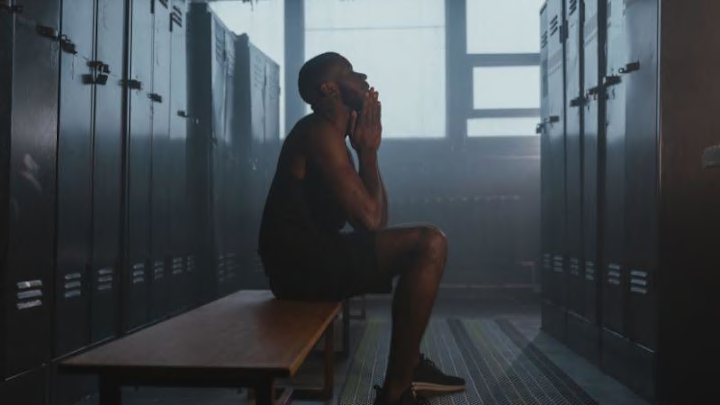
What was supposed to empower athletes is now forcing many of them to navigate one of the most complex business environments in sports—often before they even graduate high school.
And increasingly, the difference between success and regret comes down to one thing:
Who they trust.
Too often, young athletes and their families are steered into murky situations—even by people they trust—simply because they’re navigating a space they haven’t been educated on.
Whether it’s greed, inexperience, or simple negligence, the result is the same: athletes making high-stakes decisions without the information needed to protect themselves.
And at the grassroots level, where education is limited and opportunity is growing, kids are being targeted the hardest.
The Data Is Starting to Catch Up to Reality
A recent report from ESPN is putting numbers behind what many in the industry have already seen firsthand.
According to research cited in the report:
- 18% of college athletes said they had help with NIL deals while still in high school
- 67% of those athletes agreed to give that person a percentage cut
- The median cut was around 20%, far exceeding industry norms (ESPN)
That number alone should raise eyebrows. (Below is an interview Bloomberg did a year ago on the negative impacts of NIL as Industry voices are beginning to highlight the same concerns around NIL and athlete exploitation.)
In professional sports, certified agents typically operate around 3–5%, with strict regulations and oversight. In NIL, many of the people taking the largest cuts have neither.
And yet—they’re often the first people athletes turn to.
A Problem You Don’t Need Data to See
Spend enough time around high-level high school athletes, and the pattern becomes obvious.
I’ve seen it firsthand—multiple times.

Athletes being steered into deals that aren’t in their best interest. Families relying on people close to them—friends, trainers, or loosely connected “advisors”—to handle opportunities worth real money.
And in many cases, those same people are taking 20%, 30%, or more.
Not because they’re experts.
But because there’s no system in place stopping them.
“The Focus Is Always Now”
For longtime NFL agent Tim Younger, the issue is clear.
A trial attorney and founder of QB Limited, Younger has represented elite talent for decades, including Derek Carr—who once held the largest contract in NFL history—as well as current prospects like the Bachmeier and Mauigoa brothers, including Francis, a top-10 NFL Draft pick. Long before NIL reshaped the landscape, Younger built his career on a simple principle: put the athlete first, not the deal.
From his perspective, NIL hasn’t created the problem—it’s exposed it.
“The presence of ‘street agents’ have negatively impacted the NIL industry,” Younger said. “Most ignore the state registration process and focus solely on dollar value a player may command… ignoring environment, educational fit, and better football opportunity.”
That short-term thinking is where things break down.
“They lure players into the portal without consideration of the effect on graduation,” Younger said. “For these advisors… the focus is always ‘now’ and rarely about the future.”
It’s Bigger Than “Street Agents”
But the reality is more complicated than just unregulated middlemen.
According to a WME NIL agent who works primarily in basketball, the issue isn’t just who’s involved—it’s how the entire ecosystem is behaving.
“Relationships matter, and representation matters even more,” the agent said. “Anyone charging north of 10% is taking too much off the top.”
At the same time, he emphasized that not all representation is equal.
“Talent and families have to understand—not all representation is created equal. You usually get what you pay for.”
That gap between access and expertise is widening.
“With NIL changing so fast, nobody has every answer. But some groups are far more equipped—especially when it comes to legal structure, compliance, and long-term strategy. That part gets overlooked too often.”
The Real Tradeoff: Money vs. Development
One of the biggest shifts in the NIL era isn’t just financial—it’s philosophical.
“When money becomes the main driver, development can get pushed to the side,” the agent said.
That’s playing out in real time across recruiting and the transfer portal.
“I’ve seen situations where the highest number became the focus—even when a different fit offered a better path to development, winning, and ultimately a better shot at the NBA or a long pro career.”
That tradeoff used to come later in an athlete’s career.
Now, it’s happening before it even begins.
When Too Many Voices Get Involved
At the grassroots level, decision-making is rarely simple.
“What I see too much of at the high school level is people trying to make quick money off a kid’s moment,” the agent said. “AAU coaches, trainers, parents—they all feel invested. But when too many hands are involved, the player can lose leverage, money, and opportunity.”
It becomes even more complicated when relationships turn into business.
“When the relationship started as something personal—family friend, mentor, coach—that’s where boundaries blur. Emotions get involved, and decisions stop being objective.”
Accountability Goes Both Ways
The reality is not every athlete is simply being taken advantage of.
“I think it’s a mix,” the agent said. “Some players are hiding behind agents and running from hard conversations. When things get uncomfortable, it’s easier to point to someone else.”
But that doesn’t mean the system is working.
“Are some agents not delivering full information? Absolutely. Not every player is getting the full picture on fit, development, or long-term outlook.”
The responsibility, he says, is shared.
“Agents work for the talent—but players have to ask questions, stay informed, and own their career.”
The Pressure Few Talk About
For athletes from tougher backgrounds, NIL decisions aren’t just strategic—they’re emotional.
“When life-changing money hits the table, it can create security for an entire family overnight,” the agent said.
That pressure changes everything.
“It can make short-term decisions feel like the only decision. But one wrong move chasing quick money can cost a player far more in the long run.”
Where NIL Goes From Here
Despite the challenges, there’s a path forward.
“The right relationships open doors,” the agent said. “The right representation protects value and helps maximize it.”
And over time, the market may correct itself.
“Eventually, commission rates will come down closer to 5%. But right now, there’s a lot of noise—and a lot of people claiming expertise.”
The Bottom Line
NIL isn’t broken.
But it is unbalanced.
Right now, the gap between opportunity and exploitation is defined by:
- Who’s advising the athlete
- What they’re charging
- And whether the focus is on today—or the next 10 years
Because in a system built to empower athletes, the wrong guidance can still take that power away. The next phase of NIL must focus on education—equipping the next generation with the knowledge and resources to navigate this space with clarity and confidence. Without it, too many young athletes will continue to fall into the same traps set by unqualified “street agents” operating without the experience, structure, or long-term perspective to truly protect their futures.
 Add us as a preferred source on Google
Roland Padilla is a high school sports journalist, NIL specialist, and analytics strategist covering primarily West Coast track and field, basketball, and football for High School On SI. He began his career in 2015 reporting on Kevin Durant and Russell Westbrook’s Thunder era for ClutchPoints before moving into full NBA coverage. He later worked directly with the founder/CEO of Ballervisions, shortly leading programming and cross-platform social strategy during its viral 2016 rise covering the Ball brothers—a run that helped propel the brand toward its eventual ESPN acquisition and evolution into SportsCenter NEXT. A three-sport alumnus and current throwing coach at Damien High School, and a former NCAA track athlete at UC San Diego, Roland blends athlete-development knowledge with advanced analytics in his role as a Senior Analyst at DAZN and Team Whistle. He has supported content strategy for major global and U.S. sports properties including World Rugby, FIFA Club World Cup, the New York Mets, MLS, X Games, the Premier League, the NFL, and the Downs2Business podcast. With a strong background in NIL rules, athlete branding, and recruiting, Roland helps families, athletes, and readers navigate the rapidly changing high school sports landscape—bringing national-level storytelling and clarity to the next generation of athletes.