
5 little-known facts about Topps's original 1951 baseball card sets

In this story:
Topps is celebrating a 75th anniversary of making baseball cards in 2026. While the anniversary will get plenty of publicity, most think of Topps' origins as tied up with its iconic 1952 set. Sure, the design was glorious, the Mantle rookie remains an all-time card, and collectors love the 1952 set. But the 1951 sets are often overlooked.
RELATED: 1951 Topps Turns 75: Time for a New Baseball TCG
For the curious card historian, the 1951 Topps sets afford a much more affordable entry point into the company's history. Both the red-backed and blue-backed cards were released in sets of 52 cards and even the highest-priced card in the set can be purchased raw-- albeit in relatively poor condition-- for under $100. Here's the story of 1951 Topps in five facts.
1. Yes, it was a game.
Like Classic decades later, Topps made its entry not strictly in a set of cards, but in a game that utilized cards. The cards are smaller than normal (2 inches by 2 5/8 inches), have rounded corners, and clearly have the tabs where they were connected to other cards. Each card had an outcome, from "home run" to "strike" and players were expected to shuffle (gasp) their deck and draw cards to simulate a baseball game. Strat-O-Matic it wasn't.
2. While Bowman was on to Mickey Mantle in 1951, Topps wasn't.
The 1951 Topps sets weren't exactly heavy on rookies. Despite being produced a bit into the baseball season, the only notable rookie in either set is Monte Irvin, whose red back card (#50) is one of the set's more valuable cards. But while competitor Bowman did make an iconic 1951 Mickey Mantle card, Topps's Mantle rookie, of course, waited until 1952.
3. The 1951 cards are very affordable, but top grades are still expensive.
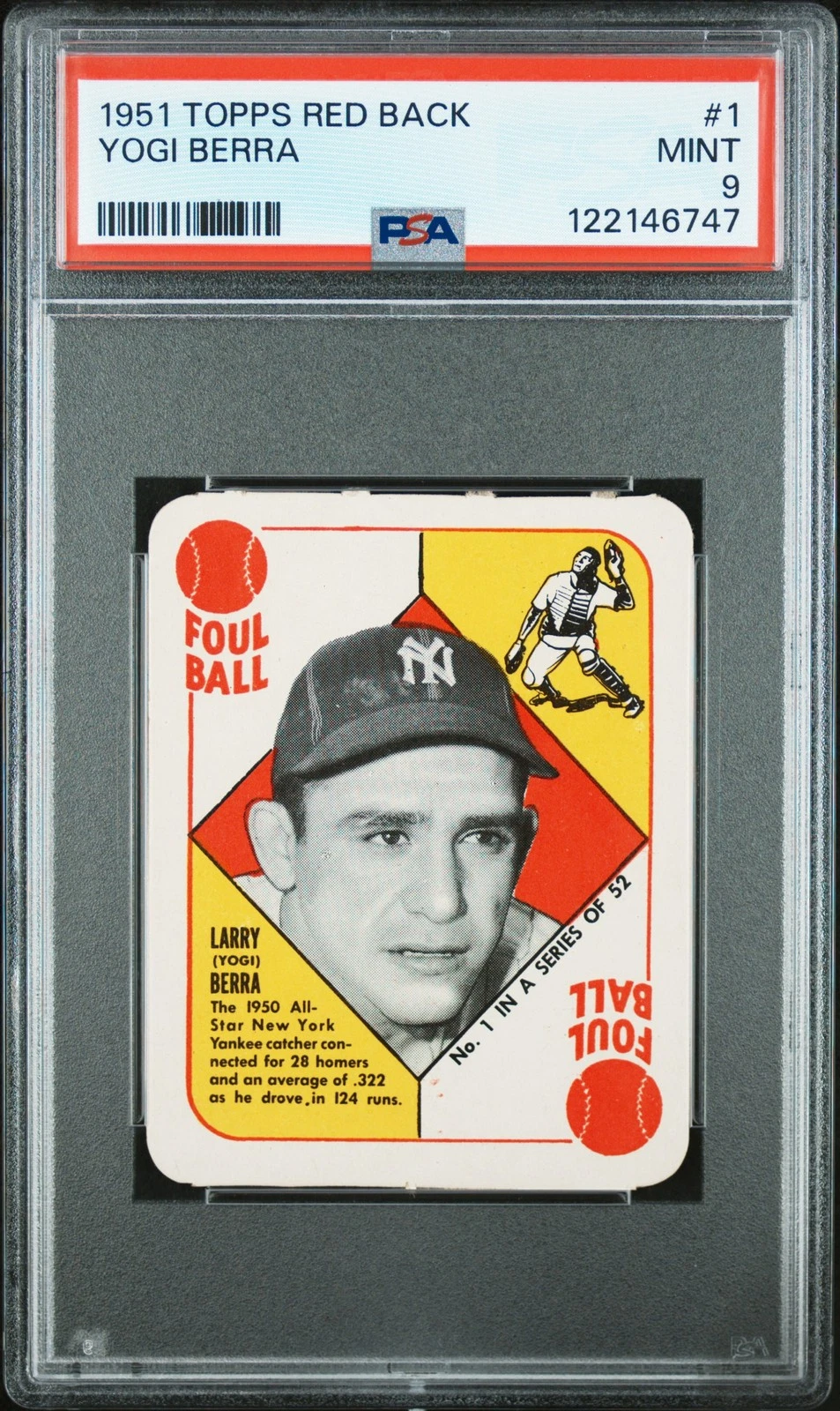
Again, one of the beauties of the 1951 set is that a 52-card set (or even both) is much easier to collect than, say, the 407-card 1952 set. Even the most valuable card, the red back Yogi Berra (valuable likely because of Berra's stardom and because as card #1, most examples have seen their fair share of rubber band damages over the years) can be cheaply purchased.
Top grades are hard to find and can be costly. A PSA 9 Berra, for instance, sold for $2,500 in November. Out of over 17,000 PSA grades, the company has given only 47 10s to any of the red backs, for instance. One of the 3 PSA 10 Warren Spahn cards sold for over $2,000 back in 2015.
4. There are a few errors-- or corrections-- in the set.
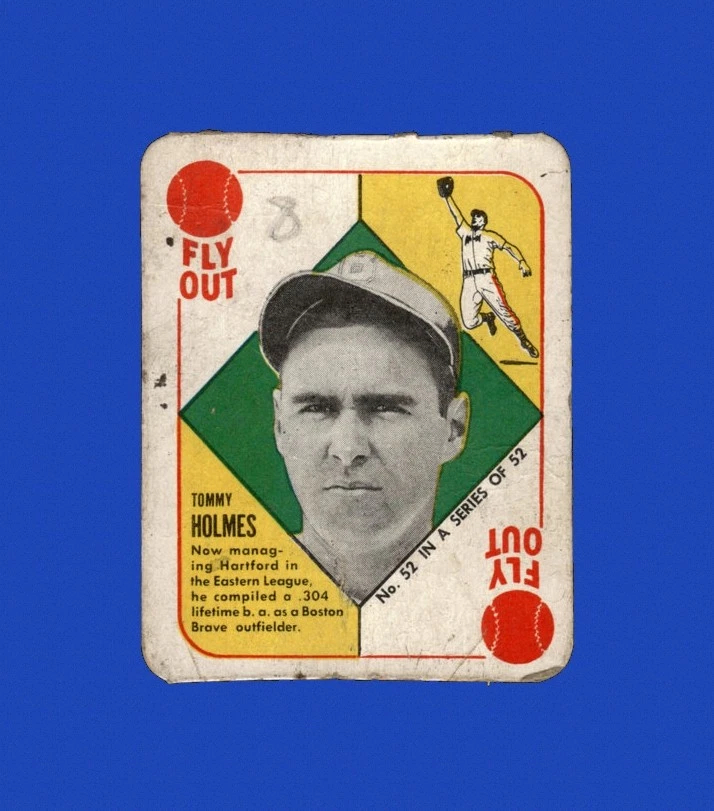
Topps wasn't entirely careful with quality control. Vern Stephens and Dom DiMaggio, for instance, have their names spelled wrong on their cards. Those errors weren't fixed. But a few changes were made. Outfielder Tommy Holmes, who was card #52 in the red back set, was sent to the minors to Hartford as a player-manager to open the 1951 season. The original red-back card didn't mention this, but a corrected card noted Holmes's managing debut and spoke of his playing career in the past tense. The card not mentioning managing in Hartford is worth slightly more than the corrected card.
5. The one-cent packs can still be found (and again, relatively cheaply)

Topps sold the sets in one-cent packs of two cards with a caramel, but soon realized that the caramels didn't have a great effect on the cards. While the packs aren't going for a penny anymore, they do still turn up routinely and sell at relatively competitive prices. A PSA 8 unopened pack sold in September for $430. Not exactly cheap, but a 75-year old wax rip doesn't come along every day.
TOP TRENDING COLLECTIBLES ARTICLES:
 Add us as a preferred source on Google
Joe is a journalist and writer who covers college and professional sports. He has written or co-written over a dozen sports books, including several regional best sellers. His last book, A Fine Team Man, is about Jackie Robinson and the lives he changed. Joe has been a guest on MLB Network, the Paul Finebaum show and numerous other television and radio shows. He has been inside MLB dugouts, covered bowl games and conference tournaments with Saturday Down South and still loves telling the stories of sports past and present.