
Bob Weir’s Legacy Lives On Through Grateful Dead Cards & Collectibles
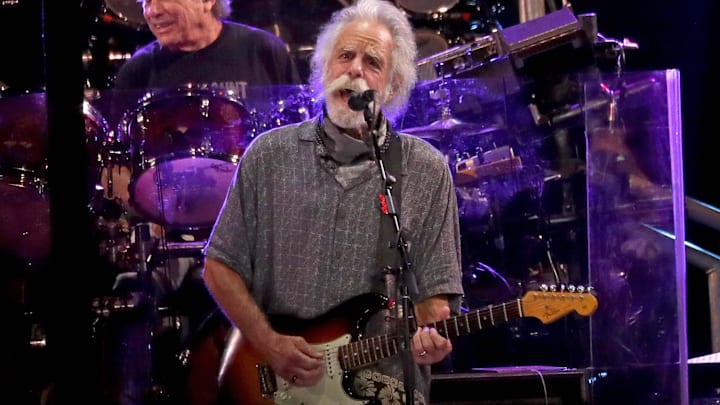
The sad passing of Bob Weir at 78 closes one of the longest, strangest, and most influential chapters in American music. According to his family, Weir died after courageously battling cancer, ultimately succumbing to underlying lung issues. For a musician whose career spanned more than six decades and who never really stopped touring, his passing feels less like a single loss and more like the end of an era that began in Bay Area clubs in the 1960s and somehow never let go.
Architect of the Grateful Dead Sound
Weir co-founded the Grateful Dead after meeting Jerry Garcia in a Palo Alto music shop, and quickly became the band’s rhythmic backbone. His choppy, jazz-inflected guitar style and unconventional chord voicings gave Garcia the harmonic freedom to roam, while keeping the music grounded. As a songwriter, Weir helped define the Dead’s identity, penning or co-writing staples like “Sugar Magnolia,” “Jack Straw,” “Playing in the Band,” and “Estimated Prophet.”
RELATED: Upper Deck and Harry Potter: New Cards including Gold 1/1 Outburst parallels

Bay Area Roots and the End of a Living Lineup
From Haight-Ashbury acid tests to stadium tours, Weir was a central figure in shaping the San Francisco psychedelic sound. The Dead didn’t just come from the Bay Area scene; they helped invent it, blending folk, blues, country, and experimental rock into a template later adopted by generations of jam bands.

With Garcia gone since 1995, Ron “Pigpen” McKernan since 1973, and Phil Lesh’s death in 2024, Weir’s passing leaves Mickey Hart and Bill Kreutzmann as the only surviving core members. California officials called him “a true son of California,” and for many fans, this moment marks the point where the original Grateful Dead fully passed from living possibility into history.
Grateful Dead: By the Numbers
Over six decades, the Grateful Dead built a scale of impact few bands can touch. They played more than 2,300 concerts, once holding a Guinness World Record for most live performances by a rock band, and sold an estimated 35 million albums worldwide across studio, live, and archival releases.

Despite limited radio play, the Grateful Dead placed a staggering 66 albums in the Billboard 200’s Top 40, a testament to a fanbase fueled by relentless touring, tape trading, and deep catalog devotion rather than hit singles. In their modern incarnation with Dead & Company, featuring John Mayer alongside surviving members, that reach only expanded.
The band’s Dead Forever residency at the Las Vegas Sphere became a cultural and commercial landmark, drawing nearly 477,000 fans across 30 shows and grossing more than $130 million, with average nightly attendance of roughly 15,900.
RELATED: Rare Walt Disney Mickey Mouse: Hand Drawn and Signed–Heads to Auction
Cultural Reach and Collecting Legacy
Deadhead culture has long extended beyond music into sports, Hollywood, politics, and tech, with Weir serving as a bridge between eras. That reach is a major reason Grateful Dead memorabilia, from trading cards, vintage posters, ticket stubs, signed ephemera, and rare recordings—remains a cornerstone of the music collectibles market.

Weir’s family said he “transitioned peacefully, surrounded by loved ones,” noting that he continued performing even as his health declined. With his passing, the era of living Grateful Dead reunions effectively ends. For collectors and fans, that reality will inevitably focus attention on artifacts tied to the band’s formative years and Weir’s six-decade run on the road.
For Bay Area music, and for generations who built their lives around tapes, tours, and parking-lot economies, Bob Weir’s death feels like the closing of a chapter. But it also invites reflection on how much of modern fan culture—and the related memorabilia of generations of fans—can be traced back to a rhythm guitarist who never stopped chasing the next song.
TOP TRENDING COLLECTIBLES ARTICLES:
 Add us as a preferred source on Google
Lucas Mast is a writer based in California’s Bay Area, where he’s a season ticket holder for St. Mary’s basketball and a die-hard Stanford athletics fan. A lifelong collector of sneakers, sports cards, and pop culture, he also advises companies shaping the future of the hobby and sports. He’s driven by a curiosity about why people collect—and what those items reveal about the moments and memories that matter most.
Follow sneakrz