
Comparing baseball cards from the 1950s and 1960s
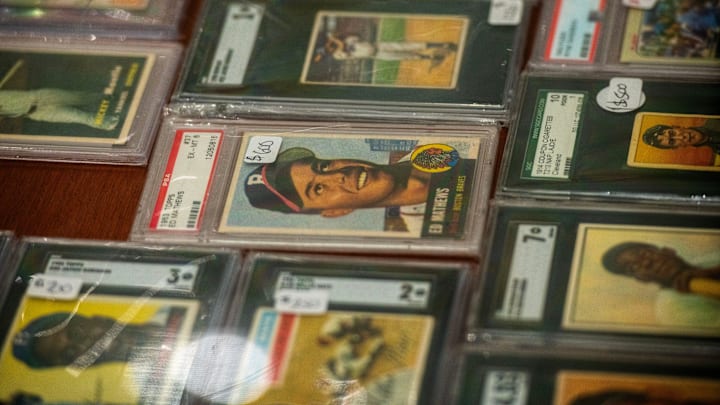
Editor's Note: Data used in this articles comes from Card Ladder. The indexes include 10 years for each era and limit the cards to those sold for less than $1 million.
Markets ebb and flow. The stock market, the crypto market, and the card market. But you can't take these in small sample sizes. You need to look at the broader picture to get a real feel of how markets perform, no matter what they're measuring.
Predicting the modern card market is tough, and player performance dependent. Players excel, they fail, they get hurt. Any one of those events can have an immediate impact on the overall market. But vintage is a different ballgame (pun intended). There are only a limited amount of factors that effect older cards, such as player retirement, Hall of Fame induction or death.
Taking a long enough window, you can see how the markets have moved, and which has performed better?
The vintage market of cards from the 50s

As you can see from the above graph, cards from the 1950s valued at less than $1 million dollars have had a steady market, but dipped over a year ago. Since then, however, prices have climbed. Currently the index shows a growth of 15.42 percent.

According to Card Ladder, the most valuable card of the era is a 1956 Roberto Clemente rookie card, graded a PSA GEM MT 10. They list the value at $903,430.

The vintage market of cards from the 60s.

From the graph above, baseball cards from the 1960s have not performed as well as those from the decade before. However, that market seems to be more consistent, with one big jump in August 2025. It looked like it dropped a bit in late 2025, but according to the graph looks like it has stabilized again.

According to Card Ladder, the most valuable card is the 1969 Mickey Mantle graded a PSA Mint 9. Card Ladder lists the value at $960.180, with the last sale occurring on August 23, 2025 and went for $915,000.
As you can see from the data, while cards from the 1960s seem to be more consistent, cards from the 1950s will bring a higher premium if and when a collector decides to sell their prized pieces from that decade.

 Add us as a preferred source on Google
After graduating from the University of North Dakota in 2008, Cole worked as an advertising copywriter until shifting to print journalism a few years later. Managing three weekly newspapers in the Dakotas, Cole won numerous awards from the North Dakota Newspaper Association including Best of the Dakotas and, their top award, General Excellence. He returned to collecting in 2021 and has since combined his passion for writing with his love of cards. Cole also writes for the Sports Cards Nonsense newsletter and has made guest appearances on multiple sports card collecting podcasts including Sports Cards Nonsense, and the Eephus Baseball Cards Podcast. IG: coleryan411 X: @colebenz