
Muhammad Ali’s Unsigned Draft Card Could Fetch $5 Million
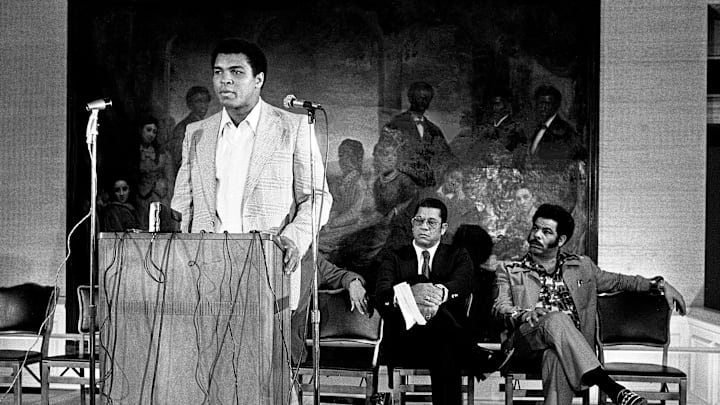
Auction house Christie’s is putting one extraordinary piece of paper in the spotlight this fall: Muhammad Ali’s unsigned draft card. On its face it’s just a routine Selective Service document, but it represents the moment the world’s most famous boxer chose principle over compliance—and changed sports history in the process.

A Card That Sparked a Stand
The card was issued on March 14, 1967 by Louisville Draft Board 47 and signed by board chairman J. Allen Sherman—but not by Ali. Christie’s senior Americana specialist Peter Klarnet calls it “a vital and intimate document connected to one of the most important figures of the last century,” and it’s easy to see why.

Ali was required by law to carry this card. Weeks later, he reported to an induction center and famously refused to step forward, citing both his Muslim faith and his opposition to the Vietnam War.
Fallout and Exile
The backlash was immediate and punishing. Boxing commissions stripped him of his heavyweight title and revoked his license. A federal jury convicted him of draft evasion and handed down a five-year prison sentence and a $10,000 fine.

Though free on appeal, Ali lost more than three prime years of his career before the U.S. Supreme Court unanimously overturned the conviction in 1971. (Justice Thurgood Marshall recused himself, a move historians often tie to the nation’s shifting view of the war.)

From Villain to Visionary
At first, Ali’s decision drew widespread condemnation—sportswriters, politicians, even some civil-rights leaders called him unpatriotic. But as the war dragged on and public opinion turned, his refusal to compromise began to look like courage.

His stand inspired other athletes to speak out, from Jim Brown and Bill Russell to Kareem Abdul-Jabbar. Decades later, figures like Colin Kaepernick and Megan Rapinoe would point to Ali as proof that athletes can challenge injustice and still shape culture.
The Sale
Christie’s is presenting the draft card in a special single-lot online sale, “His Greatest Fight,” running October 10–28, 2025. It will be on public view at Rockefeller Center in New York from September 18—October 21, 2005.
RELATED: When the Spotlight Shines on Athletes, eBay Searches Surge
The estimate: a staggering $3 to $5 million. The card comes directly from Ali’s descendants and, according to Christie’s, is the first time such a personal, high-stakes document from his life has ever come to market.
Why It Matters
For collectors, this isn’t just memorabilia. It’s a direct link to the moment Ali risked everything—his titles, his livelihood, his prime years—for what he believed was right. It’s the kind of item that doesn’t just commemorate a career; it tells the story of an athlete who became a global symbol of conscience.

When the online bidding opens in October, the winner won’t just own a piece of boxing history. They’ll hold the document that marked the day Muhammad Ali proved that sometimes the greatest fights happen far from the ring.
TOP TRENDING COLLECTIBLES ARTICLES:
 Add us as a preferred source on Google
Lucas Mast is a writer based in California’s Bay Area, where he’s a season ticket holder for St. Mary’s basketball and a die-hard Stanford athletics fan. A lifelong collector of sneakers, sports cards, and pop culture, he also advises companies shaping the future of the hobby and sports. He’s driven by a curiosity about why people collect—and what those items reveal about the moments and memories that matter most.
Follow sneakrz