
How Arizona State’s Thin Rotation is Defining Season
In this story:
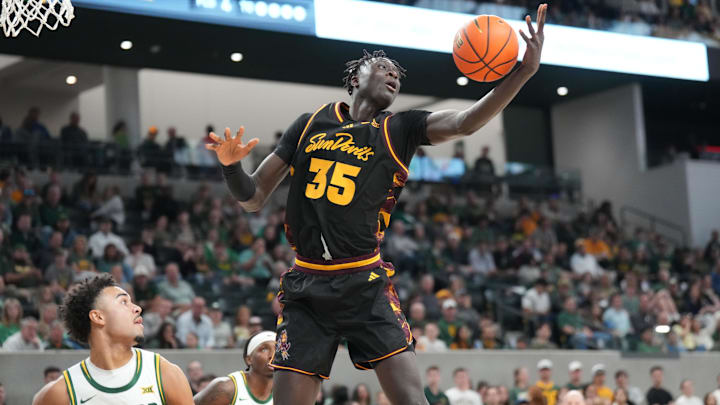
Arizona State’s 73-60 loss to Baylor felt like more than just another defeat. It felt like a reality check. Coming off their first two-game win streak in Big 12 play, there was real hope that the Sun Devils had finally turned a corner. Instead, the momentum disappeared on the first stop of their Texas road trip.
This game didn’t spiral out of control immediately. Arizona State had moments where they looked connected, especially late in the first half. But over 40 minutes, one issue stood out above everything else: depth.
Only Seven Players Saw the Floor
In a conference as physical and fast-paced as the Big 12, playing just seven guys is incredibly tough. Yet that’s exactly what Arizona State did.
Bryce Ford missed another game. Trevor Best was available but didn’t play. Marcus Adams hasn’t been fully himself when active. And with other long-term injuries already thinning the roster, the rotation has shrunk to the point where there is almost no flexibility.
When players got into foul trouble, there were no easy substitutions. When energy dipped, there weren’t fresh legs waiting at the scorer’s table. Everything felt tight. Everything felt forced.

Pig Johnson Tried to Carry the Load
If Arizona State stayed competitive at all, it was because of Anthony “Pig” Johnson. He was fearless. He attacked the rim, got to the free-throw line, and brought real intensity.
His 20 points and three steals kept the Sun Devils within reach longer than they probably should have been.
But that’s the problem.
When one bench player has to become the emotional and offensive engine, it says a lot about how thin things are.
Johnson did his job. But asking him to save the game isn’t sustainable.

Fatigue Shows in Small Moments
Depth doesn’t just show up in the box score. It shows up in small details.
Moe Odum and Masassamba Diop, who have been reliable all season, both looked a step off. Odum forced difficult shots and turned the ball over.
Diop needed 12 shots to score 10 points and blocked just one shot.
The team had only one total block all night.
Those are subtle signs of tired legs and heavy minutes.
Late rotations. Short jumpers. Defensive lapses. Over the course of a long conference schedule, that adds up.

What It Means Moving Forward
Arizona State still has games left to fight for postseason hopes. But with only seven players logging real minutes, every game becomes a grind.
To beat teams like TCU or Utah, and possibly steal one against Kansas or Iowa State, they’ll need near-perfect effort and energy they may not always have.
This team has heart. They compete. But until the rotation grows or the injury list shrinks, Arizona State will continue walking a razor-thin line between potential and reality.
Right now, depth isn’t just a weakness.
It’s the story of their season.
 Add us as a preferred source on Google
Lizzie Vargas attends Pasadena City College, pursuing a career in sports journalism. As a lifelong Raiders fan, she's excited to combine my passion for sports with storytelling that brings the sports world to life.