
3 Key Stats That Could Decide Indiana's Top 20 Showdown With USC
In this story:
Indiana football's bye week couldn't have come at a much better time.
The Hoosiers had played nine consecutive games without a break, and the wear and tear was beginning to show, particularly on offense. Now, with a week to rest and regroup, Indiana welcomes USC to Memorial Stadium for a matchup that could have major implications for the Big Ten and College Football Playoff races.
Here are three statistical matchups that could help decide Saturday's top-20 clash.
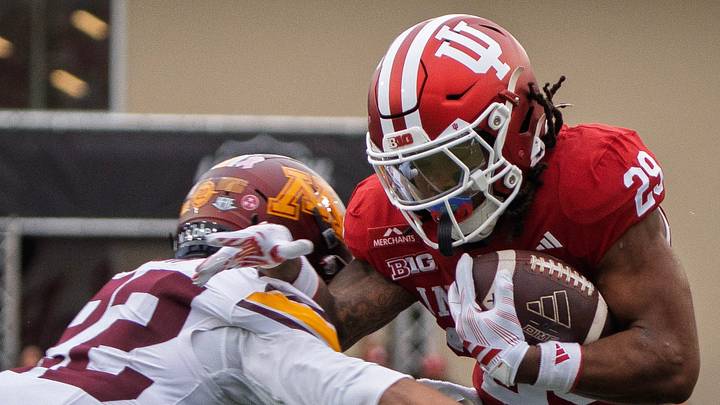
5.1 yards per carry vs. 3.8 allowed
Indiana's rushing numbers still look impressive on paper. The last month, however, has told a different story.
The Hoosiers average 5.1 yards per carry, which ranks 17th in the country, and 172.5 rushing yards per game, which ranks 41st. But those season-long figures are boosted by Indiana's early offensive dominance, before the schedule became considerably more demanding.
Three of Indiana's last four opponents rank among the nation's top 20 in yards per carry allowed. Minnesota, which ranks 65th, offered a slightly more forgiving matchup than Nebraska, Ohio State and Michigan, and Indiana's ground game showed signs of improvement.
USC could provide another opportunity.
The Trojans allow 3.8 yards per carry, ranking 40th nationally, and surrender 124.8 rushing yards per game, which ranks 37th. That's hardly a defense Indiana can expect to run through at will, but it's a step down from the imposing fronts the Hoosiers encountered throughout the middle part of the season.
With an extra week to recover after nine straight games, Indiana should be better positioned to establish the run. Whether it actually does so could determine how much pressure falls on the passing game Saturday.
294 passing yards per game vs. 201 allowed


USC boasts, likely, the most potent passing attack Indiana has seen this season.
The Trojans average 294.4 passing yards per game, while completing 67.31% of their attempts for an average of 8.5 yards per pass — all top-20 marks in the country. More than half of USC's offensive plays are passes, and its offensive line has allowed sacks on just 4% of dropbacks, which ranks 25th nationally.
Meanwhile, Indiana has recorded sacks on 9.57% of opposing dropbacks, the 9th-best mark in the country.
Indiana's pass defense has improved statistically in recent weeks, now allowing 201.1 yards per game and 6.3 yards per attempt. Still, USC's combination of efficiency and explosiveness presents a different challenge than what the Hoosiers saw against Michigan and Minnesota.
The Hoosiers have the pass rush to disrupt USC's rhythm. The question is whether they can get home often enough to prevent the Trojans from finding openings downfield.
37.1% vs. 49.5% third-down conversion rate
For all the attention paid to explosive plays, Saturday could come down to something considerably less glamorous: keeping drives alive.
Indiana is converting just 37.11% of its third downs, which ranks 89th in the country. USC, meanwhile, converts 49.53% of its third-down opportunities, the 12th-best mark in the country.
The defensive numbers tell a slightly different story.
Indiana allows opponents to convert 33.61% of their third downs, ranking 23rd nationally, while USC surrenders a 35.85% conversion rate, which ranks 44th.
The Hoosiers have the stronger third-down defense, but the Trojans have been considerably better at sustaining drives.
Indiana can't afford to repeatedly stall on third down while USC extends drives and keeps the Hoosiers' defense on the field.
After a much-needed bye week, Indiana will have to show it can get back to playing complementary football. Winning the battle on third down would be a good place to start.
 Add us as a preferred source on Google
