
Reimagining the Terps' Offense: Trickett and Locksley’s Blueprint for a Explosive Offense
In this story:
Maryland Football’s Fall Media Day made one thing clear. The Terps are entering camp with a sharpened offensive identity built around tempo, spacing, and the rapidly rising talent of sophomore quarterback Malik Washington. Offensive Coordinator Clint Trickett and Head Coach Mike Locksley are aligned on a philosophy that stretches “every blade of grass,” using the full width of the field to manufacture explosive opportunities.
Backed by one of the nation’s highest levels of returning production, Maryland is doubling down on depth across its skill positions while introducing strategic tweaks, most notably a stronger commitment to the run game and a more complex, high‑snap system tailored to Washington’s exceptional processing ability.
Maryland’s core offensive philosophy centers on stretching the field and speeding up the game, blending space creation with relentless tempo. Trickett and Locksley want defenders to account for “every blade of grass,” widening splits and formations to force one‑on‑one matchups and open natural escape lanes for Washington. That spacing pairs with an urgent, high‑snap approach designed to push the offense into the 70–90‑play range, maximizing touches for Maryland’s deep skill groups. While Washington thrived in a pass‑heavy system last season, the staff is intentionally rebalancing the attack, placing renewed emphasis on a stronger, more consistent running game to complement the tempo‑driven, field‑stretching identity.
The Terps' staff views Washington as the centerpiece of its offensive evolution, praising both his physical gifts and his rare mental sharpness. Trickett describes Washington as unusually advanced “between the ears,” a trait that allows the coaches to load him with responsibility and expand the complexity of the system. His arm strength further unlocks the wide‑split formations Maryland favors, giving the offense confidence that he can drive throws from the far hash that many timing‑based quarterbacks simply can’t make.

Entering his sophomore season, Washington is expected to grow not just as a playmaker but as a vocal leader after being thrust into action as a true freshman. The staff plans to use his mobility more deliberately in the run game, while coaching him to balance competitiveness with self‑preservation by sliding when necessary. Combined with the experience he gained in tight contests last year, Maryland believes Washington is poised to deliver stronger execution in one‑score situations and elevate the offense as a whole.
Maryland enters fall camp with one of the deepest and most versatile offensive rosters in the Big Ten, a product of strong returning production and a targeted recruiting strategy built around local talent and proven transfers. Trickett likens the skill groups to “basketball teams,” each player bringing a distinct, specialized trait that expands the playbook. Trickett describes the tight end room as "deep" and reminiscent of his most successful units at previous coaching stops. The receiving corps has been largely revamped, with five to six players competing for top spots.
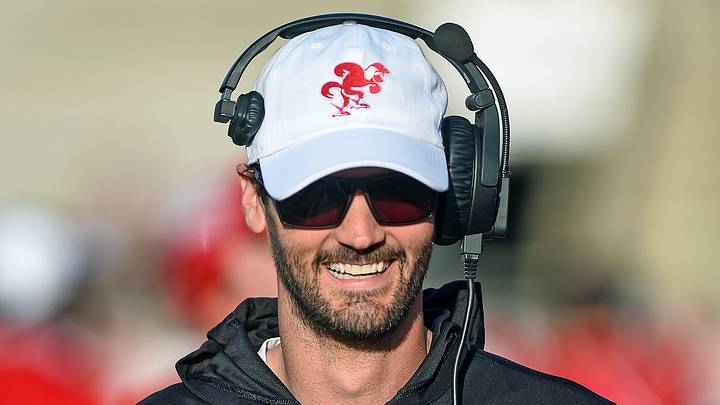
The shift to Trickett as Maryland’s Offensive Coordinator comes with a blend of deep football roots, shared vision, and disciplined coaching DNA. Trickett stresses that the offensive system is a true “100% collaboration” with Locksley, with the two in constant communication to refine concepts and ensure philosophical alignment. His approach is shaped by experiences at Florida State, where he worked with quarterbacks like EJ Manuel and Jameis Winston, and West Virginia, as well as a personal upbringing defined by the militant discipline of his father, a longtime offensive line coach and Vietnam veteran.
Trickett calls his recent stint at Jacksonville State, where he coached alongside his father, the best experience of his career. Before accepting the Maryland role, he conducted thorough due diligence, consulting former staffers to confirm the strength of the program’s culture under Locksley, receiving candid feedback that affirmed the direction and stability of the Terps’ environment.

As Maryland enters fall camp, the staff has outlined clear performance markers that will shape the offense’s trajectory heading into the season. Identifying true playmakers, those who can consistently win in space, remains the top priority, ensuring the scheme funnels touches to the most dynamic athletes. Building dependable depth is equally critical, with coaches focused on solidifying the fourth and fifth wide receivers and pinpointing a reliable sixth offensive lineman to maintain resilience through a long Big Ten schedule.
A more physical, balanced run game is another central objective, signaling a shift from last year’s pass‑heavy tendencies toward a sturdier ground attack. Finally, the program aims to translate last season’s “banked” experience in tight contests into improved situational execution, sharpening late‑game performance in one‑score scenarios that often define a team’s postseason fate.
Stay up to date with the Terrapins by bookmarking Maryland On SI and follow us on Twitter.
 Add us as a preferred source on Google
Michael is a passionate sports writer who covers Major League Baseball, the NFL, college football, Maryland University, Rutgers University, and Monmouth football. With published work at FanSided, The Rutgers Wire (USA Today), and The League Winners, Michael delivers insightful analysis, in-depth features, and timely coverage that connects fans to the heart of the game. His work highlights key storylines and standout performances across both professional (NFL & MLB) and collegiate sports (Football, Baseball, Basketball, and Wrestling), with a strong focus on New Jersey-based programs.