
Looking at NC State's Methodical Transfer Portal Approach
In this story:
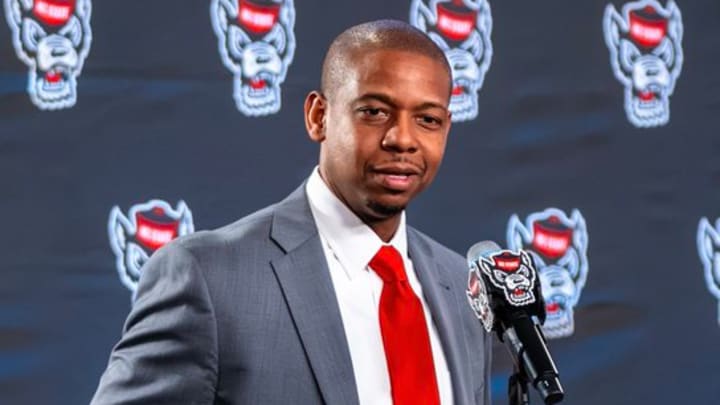
RALEIGH — NC State quickly moved to hire Justin Gainey as the 22nd head coach in program history following the ugly end of the short Will Wade era for the men's basketball program. Since making his return to his alma mater, Gainey worked hard on assembling a well-balanced staff to help him navigate through his first season as a head coach after two decades on other staffs.
The Wolfpack's new head coach arrived in Raleigh with an extreme sense of urgency, knowing the transfer portal was set to open less than a week after his introductory press conference. Since the portal opened on April 7, NC State, like many other programs, has been deliberate about its process in evaluating and signing players. Here are two reasons why.
Letting the market shape

The expectation around college basketball is that there will be some massive financial commitments thrown in the direction of players in the transfer portal. With agents controlling what their clients ask for, the numbers only seem to be growing according to estimations from various outlets, including Kevin Sweeney of SI. According to an anonymous poll of various college general managers, Sweeney estimated that an all-conference talent from a high-major league could cost $3 million.
Similar guesses have been made about Gainey's NIL budget. Athletic director Boo Corrigan has repeatedly indicated that NC State is highly competitive in the revenue-sharing system and with its NIL infrastructure, potentially even bolstering the latter around Gainey after the way things ended with Wade.

Even with the enhanced resources to work with, Gainey and his staff aren't throwing everything they have at high-major transfers in hopes that the money will draw them to NC State alone. There's also no reason to rush the market, instead letting players hear their value from another school and returning with an offer that's more realistic for the Wolfpack than what the player hoped for.
Avoiding the same mistakes

Wade spent the last weeks of his tenure bemoaning his own roster construction, leading to some friction between the coach and his first Wolfpack roster. Ultimately, he chose to return to LSU after one up-and-down season in Raleigh with a team he picked out very intentionally in the transfer portal. His first roster was built on two things: second-half production and NCAA Tournament production.
Wade identified high-major players who played well with some of the best programs in the country. However, those players were in the transfer portal for a reason. The hodge-podge he assembled based on those key metrics turned out to be a puzzle he couldn't put together. So far, Gainey seems set on productive players at all levels, including mid and low-majors.
Wade's best portal acquisition, Quadir Copeland, came with him from McNeese State. Gainey might be trying to do something similar, but on a wider scale.
 Add us as a preferred source on Google
Tucker Sennett graduated summa cum laude with a B.A. in Sports Journalism from the esteemed Walter Cronkite School of Journalism and Mass Communication at Arizona State University. A former basketball player, he has gained valuable experience working at Cronkite News and brings a deep passion for sports and reporting to his role as the NC State Wolfpack Beat Writer On SI.
Follow SennettTucker