%22%3E%0A%3Cpath%20d%3D%22M0%205.14502H22.0497V12.6671H8.80191V16.0127H21.1066V22.8611H8.80191V31.4834H0V5.14502Z%22%20fill%3D%22white%22%2F%3E%0A%3Cpath%20d%3D%22M22.1396%2025.6454V25.578C22.1396%2021.469%2025.1934%2019.1787%2029.976%2019.1787C31.705%2019.1787%2033.9279%2019.5604%2034.8261%2019.9421V19.6053C34.8261%2017.7192%2033.6585%2016.6414%2031.0314%2016.6414C28.9207%2016.6414%2027.1469%2017.0905%2025.3506%2017.809L23.8461%2012.1282C26.2262%2011.23%2028.9207%2010.6238%2032.4909%2010.6238C36.6673%2010.6238%2039.3842%2011.4995%2041.1805%2013.2958C42.7298%2014.8451%2043.3361%2016.8435%2043.3361%2019.8074V31.5059H34.8036V29.4401C33.3666%2030.9894%2031.458%2031.9998%2028.8983%2031.9998C24.9464%2031.9998%2022.1621%2029.732%2022.1621%2025.6679L22.1396%2025.6454ZM34.8934%2023.8716V22.9958C34.3995%2022.8162%2033.6585%2022.659%2032.94%2022.659C31.2559%2022.659%2030.3128%2023.6695%2030.3128%2024.9493V25.0167C30.3128%2026.2292%2031.1886%2027.0151%2032.2663%2027.0151C33.7707%2027.0151%2034.8934%2025.8026%2034.8934%2023.8491V23.8716Z%22%20fill%3D%22white%22%2F%3E%0A%3Cpath%20d%3D%22M44.4131%2028.9912L47.3096%2024.1412C49.802%2025.6905%2052.5863%2026.4315%2054.9215%2026.4315C55.7523%2026.4315%2056.1564%2026.2519%2056.1564%2025.7579V25.6905C56.1564%2025.2863%2055.7747%2025.0169%2053.709%2024.478C48.5221%2023.1981%2045.3112%2021.806%2045.3112%2017.5622V17.4949C45.3112%2012.9816%2048.9263%2010.4668%2054.2703%2010.4668C57.6609%2010.4668%2061.0065%2011.3425%2063.4989%2012.8469L60.7819%2017.9215C58.6039%2016.709%2055.9768%2016.0129%2054.2254%2016.0129C53.3946%2016.0129%2053.0129%2016.2374%2053.0129%2016.6416V16.709C53.0129%2017.1131%2053.462%2017.3826%2055.5277%2017.9215C60.7146%2019.2013%2063.8357%2020.6384%2063.8357%2024.8373V24.9046C63.8357%2029.3729%2060.49%2031.9776%2054.9215%2031.9776C50.9247%2031.9776%2047.3321%2030.9672%2044.3906%2029.0137L44.4131%2028.9912Z%22%20fill%3D%22white%22%2F%3E%0A%3Cpath%20d%3D%22M67.0022%2024.5903V17.5173H64.5996V10.9383H67.0022V5.77393H75.5346V10.9383H80.2724V17.5173H75.5346V22.7041C75.5346%2024.2535%2076.2532%2024.8148%2077.6004%2024.8148C78.3863%2024.8148%2079.2844%2024.5903%2080.205%2024.1861V30.7651C78.8578%2031.4836%2076.8145%2031.9327%2074.7488%2031.9327C69.6966%2031.9327%2067.0022%2029.5975%2067.0022%2024.5903Z%22%20fill%3D%22white%22%2F%3E%0A%3Cpath%20d%3D%22M90.8938%2029.1483V31.4835H82.3613V4.02246H90.8938V13.4755C92.2859%2011.9711%2093.8577%2010.4667%2096.9788%2010.4667C101.941%2010.4667%20105.826%2014.8003%20105.826%2021.0874V21.1548C105.826%2027.6664%20101.919%2032%2097.0686%2032C93.9475%2032%2092.2186%2030.6527%2090.8938%2029.1708V29.1483ZM97.5401%2021.2446V21.1772C97.5401%2019.1115%2096.0806%2017.4948%2094.1272%2017.4948C92.1737%2017.4948%2090.7142%2019.1115%2090.7142%2021.1772V21.2446C90.7142%2023.2654%2092.1737%2024.927%2094.1272%2024.927C96.0806%2024.927%2097.5401%2023.3103%2097.5401%2021.2446Z%22%20fill%3D%22white%22%2F%3E%0A%3Cpath%20d%3D%22M107.15%2025.6454V25.578C107.15%2021.469%20110.204%2019.1787%20114.987%2019.1787C116.716%2019.1787%20118.939%2019.5604%20119.837%2019.9421V19.6053C119.837%2017.7192%20118.669%2016.6414%20116.042%2016.6414C113.931%2016.6414%20112.158%2017.0905%20110.361%2017.809L108.857%2012.1282C111.237%2011.23%20113.931%2010.6238%20117.502%2010.6238C121.678%2010.6238%20124.395%2011.4995%20126.191%2013.2958C127.741%2014.8451%20128.347%2016.8435%20128.347%2019.8074V31.5059H119.814V29.4401C118.377%2030.9894%20116.469%2031.9998%20113.909%2031.9998C109.957%2031.9998%20107.173%2029.732%20107.173%2025.6679L107.15%2025.6454ZM119.904%2023.8716V22.9958C119.41%2022.8162%20118.669%2022.659%20117.951%2022.659C116.267%2022.659%20115.324%2023.6695%20115.324%2024.9493V25.0167C115.324%2026.2292%20116.199%2027.0151%20117.277%2027.0151C118.781%2027.0151%20119.904%2025.8026%20119.904%2023.8491V23.8716Z%22%20fill%3D%22white%22%2F%3E%0A%3Cpath%20d%3D%22M130.973%204H139.505V31.4611H130.973V4Z%22%20fill%3D%22white%22%2F%3E%0A%3Cpath%20d%3D%22M142.357%204H150.89V31.4611H142.357V4Z%22%20fill%3D%22white%22%2F%3E%0A%3Cpath%20fill-rule%3D%22evenodd%22%20clip-rule%3D%22evenodd%22%20d%3D%22M160.368%204.36764C166.191%20-1.45588%20175.632%20-1.45588%20181.456%204.36764C187.279%2010.1912%20187.279%2019.6324%20181.456%2025.4559L170.912%2036L160.368%2025.4559C154.544%2019.6324%20154.544%2010.1912%20160.368%204.36764ZM163.009%207.55761C162.948%207.86849%20162.916%208.39718%20162.916%209.14566V10.4189C162.916%2011.1832%20162.948%2011.7198%20163.013%2012.0267C163.078%2012.3317%20163.278%2012.6168%20163.617%2012.8762C163.956%2013.1376%20164.403%2013.3316%20164.958%2013.4623C165.512%2013.593%20166.1%2013.6583%20166.837%2013.6583C167.573%2013.6583%20168.217%2013.591%20168.769%2013.4524C169.322%2013.3158%20169.761%2013.1178%20170.086%2012.8604C170.411%2012.6029%20170.605%2012.3178%20170.666%2012.0069C170.728%2011.6961%20170.759%2011.1674%20170.759%2010.4189V9.14566C170.759%208.38134%20170.728%207.84473%20170.662%207.53781C170.597%207.23287%20170.397%206.94972%20170.058%206.68834C169.72%206.42696%20169.272%206.23291%20168.718%206.10223C168.163%205.97154%20167.536%205.90619%20166.839%205.90619C166.102%205.90619%20165.459%205.97352%20164.906%206.11213C164.352%206.24875%20163.914%206.44677%20163.589%206.70418C163.265%206.9616%20163.071%207.24673%20163.009%207.55761ZM168.276%2024.8638C171.876%2024.8638%20173.557%2024.2064%20173.557%2021.862V21.858V21.3155C173.557%2019.6581%20172.516%2018.971%20169.252%2018.3136C168.278%2018.1136%20167.908%2017.9136%20167.908%2017.3136V16.9414C167.908%2016.6543%20168.177%2016.5117%20168.413%2016.5117C168.749%2016.5117%20168.918%2016.7137%20168.918%2016.9414V18.1136H173.391V17.3988C173.391%2015.4563%20172.347%2014.4266%20168.177%2014.4266C165.15%2014.4266%20162.896%2015.3414%20162.896%2017.3711V17.7433C162.896%2019.5155%20163.805%2020.3155%20167.201%2021.0303C167.28%2021.0472%20167.355%2021.063%20167.427%2021.0781C168.329%2021.2674%20168.647%2021.3341%20168.647%2021.9174V22.2897C168.647%2022.6619%20168.546%2022.8045%20168.142%2022.8045C167.67%2022.8045%20167.637%2022.5471%20167.637%2022.262V21.2897H162.894V21.7471C162.894%2024.149%20164.476%2024.8638%20168.276%2024.8638ZM174.424%2024.5569H178.925V14.7355H174.424V24.5569ZM175.955%2013.5019H178.925V6.06064H176.092V9.411L174.193%206.06064H171.359V13.5019H174.193V10.1199L175.955%2013.5019ZM167.269%2012.152C167.204%2012.2688%20167.055%2012.3262%20166.825%2012.3262L166.827%2012.3282C166.604%2012.3282%20166.459%2012.2767%20166.398%2012.1757C166.336%2012.0748%20166.305%2011.8074%20166.305%2011.3758V7.90068C166.305%207.51852%20166.352%207.28684%20166.445%207.20962C166.538%207.13239%20166.675%207.09279%20166.851%207.09279C167.059%207.09279%20167.198%207.14031%20167.265%207.23734C167.332%207.33239%20167.366%207.55416%20167.366%207.90068V11.3203C167.366%2011.7579%20167.334%2012.0352%20167.269%2012.152Z%22%20fill%3D%22white%22%2F%3E%0A%3C%2Fg%3E%0A%3Cdefs%3E%0A%3CclipPath%20id%3D%22clip0_15247_3479%22%3E%0A%3Crect%20width%3D%22186%22%20height%3D%2236%22%20fill%3D%22white%22%2F%3E%0A%3C%2FclipPath%3E%0A%3C%2Fdefs%3E%0A%3C%2Fsvg%3E%0A)
20 Years After Moneyball, Cleveland Guardians Excel with Low Payroll, Against the Grain Strategy
In this story:
20 years ago, the 2002 Oakland Athletics revolutionized the game of baseball.
Well-documented in Michael Lewis' best-seller Moneyball and depicted in the 2011 best picture nominee of the same name, general manager Billy Beane and assistant general manager Paul DePodesta built a division winner on a dime.
One of the opening shots of Bennett Miller's 2011 film is a black screen that shows the payroll discrepancy between the A's and the New York Yankees, the team that eliminated Oakland from the American League Division Series in 2001, in five games. It reads, $114,457,768 vs. $39,722,689.
In a best-of-five series, the team with baseball's third-lowest payroll pushed the club with the highest payroll to five games.
Fast forward to 2022, and the Yankees were once again on the brink of elimination, thanks to the team with baseball's third-lowest payroll, the Cleveland Guardians.
$56,507,878 vs. $214,676,803.
The payroll disparity was even larger this time around. The Yankees' payroll was nearly four times the size of the Guardians'. And yet, the Guardians took a 2-1 ALDS lead and had a chance to clinch a trip to the American League Championship Series, at home, in game four.
The Yankees won 99 games in 2022. The Guardians, 92.
The Yankees spent $2,168,452.56 million per win in 2022.
The Guardians spent $614,216.07 per win.
The Guardians, like the A's, were unable to slay Goliath, coming up just short in the postseason. But their against the grain approach could revolutionize the game, or simply revert it, in the same way that the A's did 20 years ago.
Michael Lewis' book explores how collective wisdom in the game of baseball had become outdated, as front offices and scouts were overvaluing metrics such as batting average, RBI and stolen bases. The A's zigged while others zagged, finding undervalued players that excelled in undervalued statistical categories such as on base percentage and slugging percentage. The forward-thinking A's were at the forefront of change in the sport, as advanced analytics and sabermetrics would soon take over and change the way that executives would build their rosters. Not long after, the rest of the league followed in the A's footsteps.
20 years later, the statistics that Major League Baseball may have collectively overvalued in 2002, may now be the ones that are undervalued.
Baseball continues to shift into a game of three true outcomes: home runs, strikeouts and walks. Contact hitting, putting the ball in play and stealing bases have become a lost art.
As pitching becomes more dominant and front office executives continue to put a premium on power-hitting, in 2022, Major League Baseball saw its lowest league average batting average since 1968. The average batting average in 2022 was .243, the sixth-lowest league average in baseball history, going all the way back to 1871.
Now, front offices not only believe in power-hitting, but they also seem to be losing their belief in the ability to beat teams by stringing hits together.
Entering the postseason, the biggest knock I heard on the Guardians from pundits was their lack of power. The Guardians hit 127 home runs in 2022. It was the second-lowest total among the league's 30 teams.
I heard several analysts saying that a team needs to hit home runs in order to win in the postseason, believing that a team is more likely to score runs off of the long ball, than it is by stringing hits together against a top-flight pitcher.
There may be some truth to that hypothesis, but playoff games can also be won by simply putting the ball in play. In the postseason, everything is pressurized. Teams have been known to often beat themselves when their opposition puts the ball in play.
The St. Louis Cardinals fell apart in game one of the National League Wild Card Series when the Philadelphia Phillies drew walks and reached base, primarily hitting ground balls. Even the Cardinals, an elite defensive club, failed to make plays in the field when it mattered most. The Phillies strung together some hits and caught some breaks in their six-run ninth inning. They would go on to take game one, and finish the Cardinals at Busch Stadium in game two.
When a player strikes out, there is a near-zero chance of reaching base or advancing runners.
Hit a ground ball, and the shortstop might not get to it. The ball could bounce off his glove or he could make an errant throw. A weak groundball can also be a productive out, advancing runners into scoring position. Striking out does nothing to advance runners or gain baserunners, unless there is a rare dropped-third-strike that allows for a player to reach first base. Meanwhile, every ball that is hit in the infield requires the opposition to react.
Teams that live and die by the longball are often the teams that strike out the most.
It took 18 innings in game three of the American League Championship Series last Saturday for a team to score, as the Houston Astros and Seattle Mariners took turns trying to hit the contest's game-winning homer. The two teams combined for 42 strikeouts and only one run.
When a team puts the ball in play and gets runners on base, it changes how a pitcher pitches, and how players respond in the field. Sometimes players in the field get the jitters as the batting team picks up momentum, putting runners on base and a roaring home crowd responds. Sometimes a pitcher may be hesitant to throw breaking balls in the dirt, when there's a runner on base who can easily advance 90 feet on a passed ball. There's a human element that is often overlooked in the advanced analytical community.
As batting averages collectively go down across the league, contact-hitting in 2022 is undervalued. Major League Baseball has swung in the exact opposite direction of the one it leaned in favor of 20 years ago. In 2002, the league-wide average batting average was .262, nearly 20 points higher than the league-wide average in 2022 (.243).
Now, contact bats that do not hit for power, are less appealing to teams than they ever have been before.
As the league has trended towards power, the Guardians zigged while the rest of the league zagged, building a team that steals bases, stretches singles into doubles, plays elite defense and does not strikeout.
The Guardians may not have hit many home runs in 2022, but they won games having the league's lowest strikeout rate (18.5%) and baseball's highest contact rate.
The Guardians stole 119 bases, the third-highest total in the league. Cleveland also had the third-most Defensive Runs Saved (79), trailing just the Yankees and the Los Angeles Dodgers.
The Guardians had an elite pitching staff, both in their rotation and their bullpen, posting the second-lowest ERA (3.46) in the American League.
The Guardians are a return to old school baseball, and a fun television product at that.
Baseball is better when there's action. Fans gravitate towards plays at the plate, diving catches, stolen bases and extra-base hits.
Another trend that is sweeping Major League Baseball is the phenomenon of batting a team's best hitter in the lead-off spot or two-hole, in hopes of getting him more at bats over the course of the season.
The thought process leads to quantity over quality. Batting Julio Rodriguez in the lead-off spot will assure that he gets more at bats than any other player on the Mariners. But will he have the most opportunities to plate runners home?
The 'big bat' in a lineup, traditionally has batted third or fourth. The goal has been for the lineup's first two hitters to get on base, with the 'big bat' getting an opportunity to drive in runs.
Having the 'big bat' in the lead-off spot often results in having him bat with nobody on base. He may get more at bats, but his home runs will only count for one run, if nobody is on base.
The Guardians batted their best hitter, Jose Ramirez, solely in the three-hole. Ramirez played 157 games, and did not appear in another spot in the lineup all season.
As a result, Ramirez saw more at bats with runners on base than Aaron Judge did. Ramirez hit better with runners on base (.327 BA, 17 home runs in 318 plate appearances), than he did with the bases empty (.241 BA 12 HR in 367 plate appearances).
Judge put together perhaps the greatest offensive season in baseball history, but only hit five more RBI than Ramirez did.
Imagine how many more runs the Yankees may have scored in 2022, if they didn't spend 146 games batting Judge in the one or two spot in the lineup. Judge batted third just seven times.
Ramirez and Judge each played 157 games. Ramirez made 685 plate appearances. How many more plate appearances did Judge receive, hitting higher in the Yankees' batting order? 11. Judge received 696 plate appearances. He also had 31 fewer official at bats, as he walked more. With first base empty, clubs began pitching around Judge late in the season to keep him from beating their team.
Of course, the Yankees won this round. They got off to a remarkable start, and had a 64-28 record at the All-Star break. They were a .500 club in the season's second half, going 35-35 after the break. The Yankees' strong start was enough to secure a first round bye from the Wild Card Series and home field advantage in the American League Division Series.
The Guardians' young team took longer to gel. At the All-Star break, the Guardians were 46-44. In the second half of the season, they finished strong, going 46-26.
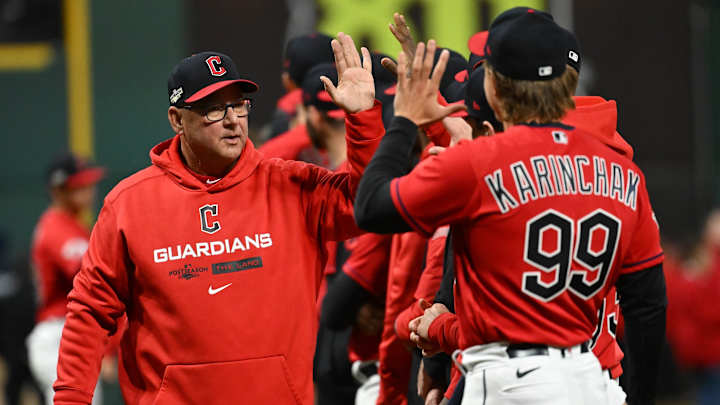
The two teams that were moving in opposite directions collided last week. The Yankees, with their homefield advantage, took round one. But the Guardians are just getting started, as their young team reenergized manager Terry Francona, postponing his retirement plans.
With the youngest roster in the league, and the third-lowest payroll, president of baseball operations Chris Antonetti assembled a team that should be competitive for many years to come.
The Guardians' approach was truly the inverse of the 2002 Athletics', but like the A's, they found something that was undervalued and took full advantage of it. They didn't need to spend a great deal of money assembling their roster either.
It might not happen immediately, but after Major League Baseball deadened its baseballs, and home run totals in 2022 went down league-wide for the first time in a full-season since 2016, other teams will likely copy the Guardians' blueprint in the near future.
Call it innovative or simply traditional, the Guardians found success in 2022, at a time when very few people had high hopes for their club. As one team finds success going against the grain, others typically tend to follow.
 Add us as a preferred source on Google
Jack Vita is a national baseball writer for Fastball on Sports Illustrated/FanNation.
Follow @JackVitaShow