%22%3E%0A%3Cpath%20d%3D%22M0%204.9397H7.3484V12.6932H14.0649V4.9397H21.4133V26.912H14.0649V19.037H7.3484V26.912H0V4.9397Z%22%20fill%3D%22white%22%2F%3E%0A%3Cpath%20d%3D%22M23.6572%204H31.0299V8.55326H23.6572V4ZM23.7788%209.77664H30.9003V26.9121H23.7788V9.77664Z%22%20fill%3D%22white%22%2F%3E%0A%3Cpath%20d%3D%22M32.7241%2029.861L34.9197%2025.5589C36.8317%2026.5635%2038.7519%2027.1955%2041.1014%2027.1955C43.7669%2027.1955%2045.1848%2025.8101%2045.1848%2023.4281V22.9258C44.2125%2024.0276%2042.6084%2025.2834%2040.2264%2025.2834C35.8028%2025.2834%2032.6025%2022.1399%2032.6025%2017.4084V17.3436C32.6025%2012.5392%2035.8676%209.37134%2039.8213%209.37134C42.3329%209.37134%2043.8074%2010.3112%2045.0632%2011.5994V9.77643H52.1848V22.5855C52.1848%2025.7533%2051.5285%2027.9246%2049.9568%2029.4883C48.4174%2031.0277%2046.0679%2031.9999%2042.2357%2031.9999C38.4035%2031.9999%2035.4868%2031.2464%2032.7241%2029.8691V29.861ZM45.2172%2017.3679V17.3031C45.2172%2015.8285%2044.091%2014.6376%2042.3572%2014.6376C40.6234%2014.6376%2039.4972%2015.8609%2039.4972%2017.3679V17.4327C39.4972%2018.9073%2040.6234%2020.0658%2042.3572%2020.0658C44.091%2020.0658%2045.2172%2018.8748%2045.2172%2017.3679Z%22%20fill%3D%22white%22%2F%3E%0A%3Cpath%20d%3D%22M54.3145%204H61.436V12.0695C62.5379%2010.6597%2064.2636%209.37155%2066.6779%209.37155C70.2914%209.37155%2072.5437%2011.7535%2072.5437%2015.6181V26.9202H65.4221V17.9109C65.4221%2016.4364%2064.5471%2015.5857%2063.4777%2015.5857C62.4082%2015.5857%2061.436%2016.4364%2061.436%2017.9109V26.9202H54.3145V4Z%22%20fill%3D%22white%22%2F%3E%0A%3Cpath%20d%3D%22M80.8983%2023.6146L84.8196%2018.9398C87.2016%2020.7627%2089.9319%2021.5162%2092.5083%2021.5162C93.8289%2021.5162%2094.388%2021.1678%2094.388%2020.5764V20.5116C94.388%2019.8796%2093.6993%2019.5393%2091.3417%2019.0694C86.4157%2018.0648%2082.0812%2016.6551%2082.0812%2012.0046V11.9398C82.0812%207.76732%2085.3463%204.53467%2091.4065%204.53467C95.6437%204.53467%2098.7792%205.5393%20101.323%207.54857L97.7421%2012.5069C95.6681%2011%2093.1889%2010.3437%2091.1472%2010.3437C90.0454%2010.3437%2089.543%2010.7245%2089.543%2011.2511V11.3159C89.543%2011.9155%2090.1426%2012.2882%2092.4597%2012.7257C98.0743%2013.7627%20101.842%2015.3912%20101.842%2019.8148V19.8796C101.842%2024.4977%2098.0419%2027.3172%2092.1437%2027.3172C87.6877%2027.3172%2083.6692%2026.0614%2080.874%2023.6146H80.8983Z%22%20fill%3D%22white%22%2F%3E%0A%3Cpath%20d%3D%22M102.838%2018.4374V18.3726C102.838%2013.5682%20106.605%209.39575%20112.187%209.39575C115.955%209.39575%20118.62%2011.3402%20119.941%2014.1354L114.829%2017.0196C114.229%2015.9178%20113.476%2015.2939%20112.317%2015.2939C110.81%2015.2939%20109.684%2016.6145%20109.684%2018.3078V18.3726C109.684%2020.1631%20110.81%2021.4513%20112.228%2021.4513C113.484%2021.4513%20114.205%2020.8194%20114.893%2019.7256L120.071%2022.6747C118.531%2025.5347%20115.931%2027.3495%20111.847%2027.3495C106.638%2027.3495%20102.838%2023.2338%20102.838%2018.4374Z%22%20fill%3D%22white%22%2F%3E%0A%3Cpath%20d%3D%22M121.164%204H128.286V12.0695C129.387%2010.6597%20131.113%209.37155%20133.528%209.37155C137.141%209.37155%20139.393%2011.7535%20139.393%2015.6181V26.9202H132.272V17.9109C132.272%2016.4364%20131.397%2015.5857%20130.327%2015.5857C129.258%2015.5857%20128.286%2016.4364%20128.286%2017.9109V26.9202H121.164V4Z%22%20fill%3D%22white%22%2F%3E%0A%3Cpath%20d%3D%22M140.867%2018.405V18.3402C140.867%2013.5033%20144.886%209.36328%20150.533%209.36328C156.18%209.36328%20160.142%2013.4466%20160.142%2018.2753V18.3402C160.142%2023.177%20156.123%2027.317%20150.476%2027.317C144.829%2027.317%20140.867%2023.2337%20140.867%2018.405ZM153.295%2018.405V18.3402C153.295%2016.6469%20152.04%2015.2939%20150.468%2015.2939C148.896%2015.2939%20147.705%2016.6469%20147.705%2018.2753V18.3402C147.705%2020.0335%20148.961%2021.3865%20150.533%2021.3865C152.104%2021.3865%20153.295%2020.0335%20153.295%2018.405Z%22%20fill%3D%22white%22%2F%3E%0A%3Cpath%20d%3D%22M161.203%2018.405V18.3402C161.203%2013.5033%20165.222%209.36328%20170.869%209.36328C176.516%209.36328%20180.477%2013.4466%20180.477%2018.2753V18.3402C180.477%2023.177%20176.459%2027.317%20170.812%2027.317C165.165%2027.317%20161.203%2023.2337%20161.203%2018.405ZM173.631%2018.405V18.3402C173.631%2016.6469%20172.376%2015.2939%20170.804%2015.2939C169.232%2015.2939%20168.041%2016.6469%20168.041%2018.2753V18.3402C168.041%2020.0335%20169.297%2021.3865%20170.869%2021.3865C172.44%2021.3865%20173.631%2020.0335%20173.631%2018.405Z%22%20fill%3D%22white%22%2F%3E%0A%3Cpath%20d%3D%22M182.139%204H189.26V26.9121H182.139V4Z%22%20fill%3D%22white%22%2F%3E%0A%3Cpath%20fill-rule%3D%22evenodd%22%20clip-rule%3D%22evenodd%22%20d%3D%22M199.368%204.36764C205.191%20-1.45588%20214.632%20-1.45588%20220.456%204.36764C226.279%2010.1912%20226.279%2019.6324%20220.456%2025.4559L209.912%2036L199.368%2025.4559C193.544%2019.6324%20193.544%2010.1912%20199.368%204.36764ZM202.009%207.55761C201.948%207.86849%20201.916%208.39718%20201.916%209.14566V10.4189C201.916%2011.1832%20201.948%2011.7198%20202.013%2012.0267C202.078%2012.3317%20202.278%2012.6168%20202.617%2012.8762C202.956%2013.1376%20203.403%2013.3316%20203.958%2013.4623C204.512%2013.593%20205.1%2013.6583%20205.837%2013.6583C206.573%2013.6583%20207.217%2013.591%20207.769%2013.4524C208.322%2013.3158%20208.761%2013.1178%20209.086%2012.8604C209.411%2012.6029%20209.605%2012.3178%20209.666%2012.0069C209.728%2011.6961%20209.759%2011.1674%20209.759%2010.4189V9.14566C209.759%208.38134%20209.728%207.84473%20209.662%207.53781C209.597%207.23287%20209.397%206.94972%20209.058%206.68834C208.72%206.42696%20208.272%206.23291%20207.718%206.10223C207.163%205.97154%20206.536%205.90619%20205.839%205.90619C205.102%205.90619%20204.459%205.97352%20203.906%206.11213C203.352%206.24875%20202.914%206.44677%20202.589%206.70418C202.265%206.9616%20202.071%207.24673%20202.009%207.55761ZM207.276%2024.8638C210.876%2024.8638%20212.557%2024.2064%20212.557%2021.862V21.858V21.3155C212.557%2019.6581%20211.516%2018.971%20208.252%2018.3136C207.278%2018.1136%20206.908%2017.9136%20206.908%2017.3136V16.9414C206.908%2016.6543%20207.177%2016.5117%20207.413%2016.5117C207.749%2016.5117%20207.918%2016.7137%20207.918%2016.9414V18.1136H212.391V17.3988C212.391%2015.4563%20211.347%2014.4266%20207.177%2014.4266C204.15%2014.4266%20201.896%2015.3414%20201.896%2017.3711V17.7433C201.896%2019.5155%20202.805%2020.3155%20206.201%2021.0303C206.28%2021.0472%20206.355%2021.063%20206.427%2021.0781C207.329%2021.2674%20207.647%2021.3341%20207.647%2021.9174V22.2897C207.647%2022.6619%20207.546%2022.8045%20207.142%2022.8045C206.67%2022.8045%20206.637%2022.5471%20206.637%2022.262V21.2897H201.894V21.7471C201.894%2024.149%20203.476%2024.8638%20207.276%2024.8638ZM213.424%2024.5569H217.925V14.7355H213.424V24.5569ZM214.955%2013.5019H217.925V6.06064H215.092V9.411L213.193%206.06064H210.359V13.5019H213.193V10.1199L214.955%2013.5019ZM206.269%2012.152C206.204%2012.2688%20206.055%2012.3262%20205.825%2012.3262L205.827%2012.3282C205.604%2012.3282%20205.459%2012.2767%20205.398%2012.1757C205.336%2012.0748%20205.305%2011.8074%20205.305%2011.3758V7.90068C205.305%207.51852%20205.352%207.28684%20205.445%207.20962C205.538%207.13239%20205.675%207.09279%20205.851%207.09279C206.059%207.09279%20206.198%207.14031%20206.265%207.23734C206.332%207.33239%20206.366%207.55416%20206.366%207.90068V11.3203C206.366%2011.7579%20206.334%2012.0352%20206.269%2012.152Z%22%20fill%3D%22white%22%2F%3E%0A%3C%2Fg%3E%0A%3Cdefs%3E%0A%3CclipPath%20id%3D%22clip0_15247_3714%22%3E%0A%3Crect%20width%3D%22225%22%20height%3D%2236%22%20fill%3D%22white%22%2F%3E%0A%3C%2FclipPath%3E%0A%3C%2Fdefs%3E%0A%3C%2Fsvg%3E%0A)
Rachel Naughton’s Ballin HBCU Is Changing How Athletes See Their Future
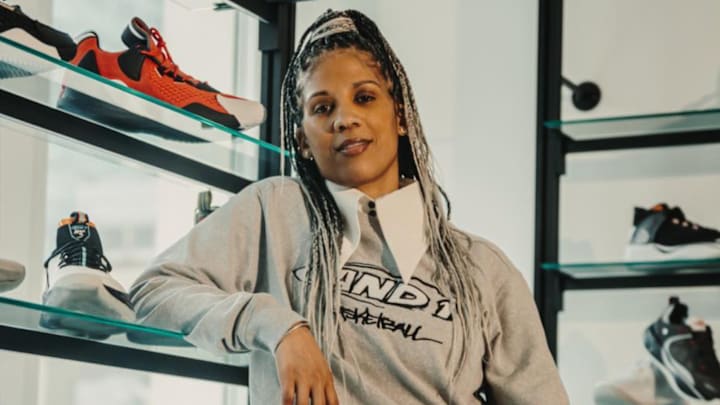
She was once where they are now – a high school student in Queens trying to figure it all out.
At Murry Bergtraum High School, Rachel Naughton didn’t have a clear roadmap. Like many student-athletes, she was chasing opportunity without fully understanding all of her options.
Basketball gave her direction. It eventually led to stops at Saint Paul’s College and Borough of Manhattan Community College, and later to a coaching career that included high school programs in Delaware and work on the AAU circuit.
But one question still lingers: What if she had known about HBCUs earlier?
Thankfully basketball was there. Basketball has always been there, as was an eventual bright future at Saint Paul’s College in Lawrenceville, Virginia, prior to a stint at Manhattan Community College. But had teenage Rachel Naughton known what she currently teaches to high school kids and their parents, her path might have looked very different and HBCUs may have been part of the plan from the start.
Naughton went on to coach college basketball and coached boys' high school basketball in Delaware at Hodgson Vocational Technical High School. She also spent 10 years as a volunteer coach with the Amateur Athletic Union (AAU). Along the way, the youngest girls of three sisters and five brothers — and the author of the children’s book “My Little Tomboy: Little Girls Play Sports Too” — continued to lead with heart, using basketball as a vehicle for something bigger than the game.
She also created Ballin HBCU, a valuable resource for high school student-athletes?
Filling the Gap in HBCU Awareness
“This really started from recognizing what was missing. There are plenty of opportunities for kids to play, but not enough platforms that intentionally educate them, especially when it comes to HBCUs,” Coach Naughton told High School On SI.
“I wasn’t interested in creating just another event. I wanted to build something with structure and purpose. Growing up, we never had conversations at home about HBCUs, not once. And at my high school, no one was teaching us about them either. I had to figure things out on my own.”
Building Ballin HBCU With Intention
Today, that unwitting high school girl is now helping other high school kids figure things out by leading Ballin HBCU, a year-round initiative through non-profit program, One Goal One Youth, that focuses on identifying, developing, and promoting high school basketball talent while connecting them with Historically Black Colleges and Universities. Learning about the rich history of HBCUs, gaining financial literacy values, offering college prep workshops, understanding the NIL landscape, and building a community together that extends beyond the basketball court is exactly what high school students from all backgrounds need to hear and understand as they prepare to make important decisions about their future athletic and academic careers.
Who better to learn that lesson from than a passionate person like Coach Naughton, the former head women’s basketball coach at Wilberforce University, the nation's oldest private HBCU founded in 1856 in Ohio.
Thoughtfully, Coach Naughton shared her dreams on the formation and growth of Ballin HBCU with High School On SI, the impact the annual high school basketball event is having nationally, the personal inspiration behind educating kids about HBCU’s, the organic collaboration with streetball brand AND1, and her inner-drive to build something lasting that gives back to high school kids anywhere and everywhere.
Q&A with Rachel Naughton
Can you take me back to hosting your first Ballin HBCU event in Wilmington, Delaware. What was that moment like for you to finally see those high school kids on the court while soaking up what they learned about HBCU’s?
It was confirmation for me. It was the first time I saw the vision fully come to life in real time. You had high-level competition on the court from high schoolers, but what stood out even more was the level of curiosity off of the court. These student-athletes were engaged, asking questions, and really trying to understand something they hadn’t been fully exposed to before.
We had players travel in from New York, Virginia, Maryland, Texas, New Jersey, and Pennsylvania, so it wasn’t just local talent. It was a diverse group of athletes coming together with different backgrounds but a shared purpose. The coaches were just as intentional. Many were affiliated with HBCUs, and some were even current players, which made the experience more relatable and real for the kids. Having Ben Wallace there as an ambassador elevated everything. He spoke to the players about opportunity, discipline, and what it takes to move to the next level. When that message comes from someone who has lived it, it hits differently.
The community showed up, which I appreciated, and it created a strong environment for the athletes. At the same time, I was intentional about inviting local leadership, especially those who had shown interest during election season. It showed me there’s real opportunity to build stronger, more consistent support around initiatives like this moving forward. What stayed with me the most was the shift in perspective. You could see it happening in real time. These kids began to understand that HBCUs weren’t just an option, they were a legitimate and meaningful pathway. That kind of realization doesn’t always happen in traditional basketball environments.
For me, it went beyond executing a successful event. It was about creating a space where basketball and education intersect in a way that actually influences decision-making. That’s when I fully understood the long-term potential of what we’re building.
When did this dream of yours start to launch the basketball showcase while keeping education about HBCU culture as the base? Why was that important to you?
This really started from recognizing what was missing. There are plenty of opportunities for kids to play, but not enough platforms that intentionally educate them, especially when it comes to HBCUs. I wasn’t interested in creating just another event. I wanted to build something with structure and purpose. Basketball brings them in, but education is the foundation. Without that, you’re just circulating talent without direction.
That’s also why player development is such a big focus for us. Programs like the “You Play Like a Girl” camp are about building confidence, sharpening skill, and making sure athletes are actually improving. At the same time, we’re introducing financial literacy, because understanding how to manage life off the court is just as important as what happens on it. My goal is to develop well-rounded student-athletes who are prepared for more than just the game. I want Ballin HBCU to be a platform that introduces young people to HBCUs not only through sports, but through community events, education, and real exposure. That’s where the impact is.
When you were a high school student-athlete yourself, what did you know at that time or learn about attending an HBCU?
I knew nothing. Even though my older sister attended Tennessee State University, there was a significant age gap between us. She was only 14 when she started college, and she’s almost 20 years older than me, so we were in completely different stages of life. We never had conversations at home about HBCUs, not once. And at my high school, no one was teaching us about them either. I had to figure things out on my own.
I eventually attended Saint Paul’s College, and that experience changed everything for me. I was a single mother at the time, and the support system there gave me structure, resources, and a real sense of community. That’s when I truly understood what HBCUs represent. It’s not just education, it’s support, accountability, and opportunity. That’s why I’m so intentional now. I don’t want these kids to have to figure it out the way I did. I want them to be informed early and move with confidence.
What kind of feedback have you received from parents and kids about the event and this mission of yours with Ballin HBCU?
The feedback has been meaningful. Parents often tell me they didn’t realize how much they didn’t know, and that says a lot. It shows we’re filling a gap that’s been there for a long time.
From the athletes, the shift is in how they think. They start asking better questions, they become more intentional, and they begin to see themselves in different environments. They also appreciate the development side. They’re not just coming to play games. They’re being challenged, coached, and educated. That combination is what creates real, long-term impact.
Naturally, you’ve partnered with AND1 in this space to make an impact. What are your thoughts on what they are doing brand wise with organically building their high school basketball following?
What AND1 is doing feels authentic, and that’s important. They’re not trying to force their way into the space or copy what other brands are doing. They understand the culture and they’re building from within it. They’ve been very supportive of my work, and that alignment matters because this isn’t easy to build. It requires vision and consistency. Right now, NIL has become such a major focus that sometimes it feels like it overshadows the game itself. What we’re doing is bringing balance back to that. Yes, NIL matters, but development, education, and character matter just as much. That’s where the real value is created.

For the high school boys and girls competing in the games and repping Ballin HBCU, how difficult is it to select players on a national scale? Are you looking for aspects that extend beyond just basketball?
It’s definitely a process, because talent is everywhere. But we’re not just looking for talent. We’re evaluating character, discipline, coachability, and how these athletes carry themselves both on and off the court. That matters just as much as performance. It’s not about assembling the most talented group. It’s about identifying individuals who represent the values of the platform. At the end of the day, we want good students and good citizens. Basketball is a tool, not the final destination.
You have the benefit of not only connecting with high school basketball players, but watching them grow and develop as they begin their own college journeys. What does your team at Wilberforce think of your work with Ballin HBCU? And why is it important for them to see you give back in this way?
There’s a real level of respect for the work because the impact is visible. When you’re in college athletics, you understand quickly that development goes beyond the court. This platform allows us to connect with athletes early and guide them before they even step onto a college campus. From a recruiting standpoint, it gives deeper insight into who these players are. You’re seeing habits, mindset, and how they respond in real situations. More importantly, it shows that giving back matters. It reinforces that success isn’t just about personal achievement, it’s about creating opportunities for others.
What’s next for Ballin HBCU and you?
Right now, the focus is on structure and growth. What we’ve built so far is just the foundation. We’re continuing to expand player development, strengthen our educational components like financial literacy, and build systems that go beyond single events. There are things in motion that I’m excited about, but I’m intentional about not sharing everything too early. Just know, we’re building something that’s meant to last. I’m always thinking, always creating. The vision is clear, and we’re moving with purpose. We’re just getting started.
 Add us as a preferred source on Google
Wendell Maxey has worked as a featured sports writer since 2004 with his stories and interviews on professional, college, and high school sports appearing on ESPN.com, NBA.com, SLAM Magazine/SLAMOnline, FoxSports.com, and USA Today, among other national newspapers and publications. Along with covering the NBA, Maxey spent four years as an international writer in Europe, scouted and recruited professional basketball players for Nürnberg Falcons/ Nürnberger BC, and also gained experience coaching high school and middle school basketball in Germany, and the United States. A published author, Maxey’s work has been featured in five books including "Called For Traveling: 20 Years of Sports Writing from The NBA, To Europe, and Back Again" released in 2026. In 2025, Wendell joined High School On SI to provide national coverage as a contributing writer.
Follow w_maxey