
Card Care vs. Card Alteration: Where Is the Line?
In this story:
Sports card collectors generally agree on the extremes when it comes to card alteration. Wiping a fingerprint off a card does not bother collectors, but trimming an edge or recoloring a damaged corner certainly crosses the line. The more difficult questions are everything in between.
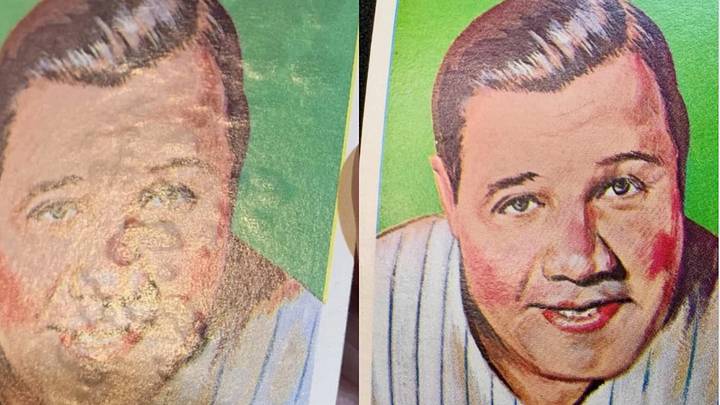
What about flattening a warped card? Pressing down a raised corner? Using humidity and pressure to reduce an indentation? Is it OK to clean off dirt or residue that was never part of the card in the first place?

Those questions become even more interesting when sports cards are compared to comics and magazines. PSA currently offers professional pressing and cleaning for comics and magazines before grading. Pressing can reduce wrinkles, waves, folds, and other defects, and PSA says the process can improve the appearance of a comic or magazine and potentially help it receive a better grade.
For sports cards, though, PSA takes a much different approach. PSA considers crease or wrinkle pressing a form of alteration. That raises an obvious question: if pressing is acceptable preparation for one graded collectible (magazines), why is it considered alteration for another?
Card Preparation vs. Alteration

Why is pressing OK for magazines and not cards? PSA points to the materials themselves, saying comics and magazines are thinner and can sometimes be pressed without leaving a noticeable trace, while pressing thicker card stock can actually change the dimensions of the card. PSA also points out that comic and magazine collectors have historically been more accepting of pressing, while sports card collectors have placed more value on preserving the card in its original condition.

That explains PSA’s policy, but it does not completely settle the argument. If a card develops a curl, raised corner or indentation from storage, is flattening it really alteration if nothing is trimmed, recolored or added to the card? Humidity can also make card stock more flexible before pressing, further complicating where preparation ends and alteration begins.
Perspective from Kurt’s Card Care

Kurt, the founder of Kurt’s Card Care, sees the line between alteration and preparation differently than PSA does. He has spent years teaching collectors how to clean and care for sports cards, and he does not believe pressing or cleaning a card automatically means it has been altered.
“I don’t consider it alteration at all,” Kurt told me. “What is considered altered? Adding something, taking it away, or damaging something so bad that a grading service calls it altered.”
Kurt pointed to trimming and recoloring as practices that clearly cross the line, while removing dirt or residue that landed on the card later is different. “Don’t trim cards. You don’t color cards,” Kurt said. “Anything that landed on a card, dirt-wise or anything like that, that’s not the alteration. It’s just simply cleaning a card and getting cards back in shape.”

That difference in philosophy is really where the debate gets interesting. PSA focuses on whether the card has gone through certain treatments, while Kurt focuses more on whether the original card itself has actually been added to, taken away from, or permanently changed. That does not mean there is no risk involved. Anyone who uses a cleaning product on a card and later submits it to a grading company is taking the risk that the card could be considered altered. PSA’s standards are clear that certain cleaning products and treatments can make a card ineligible for a numerical grade.
Should Cleaning Cards Be Considered Altering?

Cleaning is even more complicated than pressing. Wiping off a fingerprint with a microfiber cloth is harmless to most collectors, but applying a chemical product to the surface of a card is a different story. PSA’s standards make it clear that certain cleaning methods can cause a card to receive an altered designation.
Kurt, however, argues that the product being used and the person using it matter a lot. He said collectors can absolutely damage cards by using the wrong products or trying techniques they do not fully understand. “There could absolutely be major long-term effects if people don’t know what they’re doing,” Kurt said. “If you’re out there trying to do too much to a card, you’re going to damage it.”
Kurt also has a background in chemistry and product manufacturing. He described himself to me as a registered chemical manufacturer in the United States and said he has spent years working in product manufacturing and chemistry. His company says its products were developed specifically for trading cards (rather than using household or automotive cleaners).
One of the biggest concerns PSA has raised about cleaning products is what happens years later. A card may look better immediately after treatment, but a grading company cannot necessarily know how every substance will react with the card stock, ink, or coating 10 or 20 years down the road.

PSA President Ryan Hoge discussed that issue in an interview with Geoff Wilson. Because PSA financially guarantees its grades, a treatment that temporarily improves a card before wearing off could potentially leave PSA standing behind a grade that no longer accurately represents the card. From that perspective, PSA’s caution makes sense.
Kurt’s argument is that professionally developed card-care products should not automatically be treated the same way as household chemicals or homemade mixtures. He believes experience, proper chemical formulation, and proper use matter, pointing to more than 20 years working with card care. “There’s not a person alive that’s put in more hours into card care than me,” Kurt said. “It’s something I’ve done 20-plus years. I built a whole business around this. I built all these custom products around this.”
Grading Isn’t the Only Factor

Kurt also does not think card care should only be discussed in terms of grading. Most collectors never submit their cards to a grading company, and he believes collectors should know how to properly care for their collections regardless. “I want to empower every collector out there to know how to take care of their collection,” Kurt said. “It’s like if you owned a bunch of nice automobiles, but you don’t know how to take care of them.”
For someone keeping a card raw in a personal collection, whether a grading company would accept a certain treatment doesn't matter. Kurt said that philosophy has helped his business grow from something he started himself into a company with a staff and its own facility.
Where Should the Line Be Drawn?

Not every improvement to a sports card should automatically be considered an alteration. Trimming an edge, recoloring a corner, or adding material clearly changes the actual card and should be considered an alteration. In my view, reducing an indentation or removing something that was never originally part of the card should not.
That does not mean collectors should ignore grading-company policies. Anyone who cleans, presses, or treats a card before submitting it is taking a risk that PSA or another grading company could consider the card altered. PSA has legitimate reasons to be cautious. It cannot know exactly what has been applied to every card or what the long-term effects will be, and it puts a financial guarantee behind the grades it assigns.
But I believe the better dividing line is whether the original card has actually been added to or removed from. Restoring a card closer to its original state is fundamentally different from trimming, recoloring, or creating something that was never there.
 Add us as a preferred source on Google
David is a collector based in Georgia and a lifelong fan of the New York Yankees, New York Giants, and New York Knicks. He is an avid sports card collector with a strong passion for vintage baseball cards and vintage on-card autographs. David enjoys obtaining autographs through the mail and loves connecting with other knowledgeable collectors to discuss the history and evolution of the hobby. He also previously wrote about the New York Giants for GMENHQ.com