
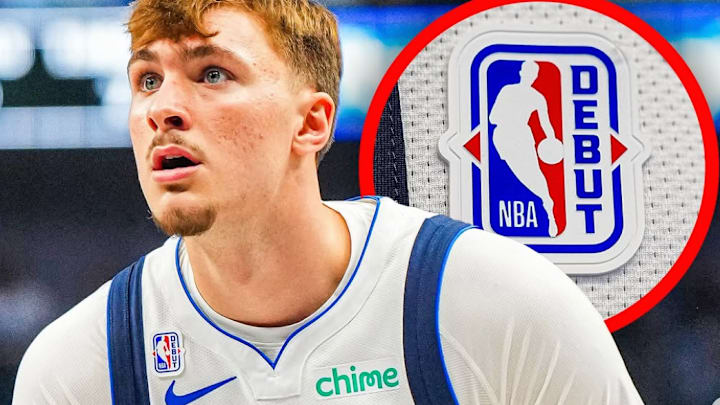
Cooper Flagg wore 3 debut patches and jerseys
In this story:
Dallas Mavericks rookie Cooper Flagg’s NBA debut this week wasn’t just a basketball milestone—it was a case study in modern collecting strategy. Flagg wore three separate Rookie Debut Patches across different jerseys during his first NBA game, where he posted 10 points, 10 rebounds, and one steal in the Mavericks loss to the San Antonio Spurs. But only one patch will survive.
Fanatics-owned Topps has stated that the debut patch will be authenticated, signed by Flagg, and released later this season as a 1-of-1 Rookie Debut Patch Autograph card—a single, irreplaceable piece of NBA history that will be the centerpiece for a lucky collector and could command millions on the secondary market.
RELATED: The Return of a Classic: Topps and Fanatics Bring the NBA License Home
The other two patches, while game-worn, were intentionally destroyed to preserve the uniqueness and long-term value of that one true debut card. The jerseys themselves remain intact; only the small embroidered patches met their fate.
The decision might sound extreme, but it fits squarely within the modern logic of engineered scarcity—the same principle that has guided the luxury, art, and even music industries for decades.
The Luxury Logic of Destruction
In fashion, destruction isn’t a mistake—it’s a marketing move. Louis Vuitton has long been rumored to destroy unsold handbags rather than discount them, ensuring that no product ever hits an outlet rack or resale platform below full price. The goal: keep the brand aspirational and exclusive.
RELATED: Topps Basketball Launch Turns Fifth Avenue Into a Hobby Frenzy
Louis Vuitton had a problem—its bags were everywhere, and the ultra-rich were losing interest.
— Founder Mode (@Founder_Mode_) February 6, 2025
Their solution? Burn millions of dollars worth of unsold bags.
No discounts. No sales. Just fire.
Here’s how destroying their own products made Louis Vuitton even more desirable: pic.twitter.com/0Zwg9S5cf5
Burberry drew frustration in 2018 after revealing it burned more than $36 million in unsold clothes and perfume each year to “protect brand value.” Likewise, Richemont, the Swiss parent company of Cartier and Piaget, allegedly dismantled and melted down over $500 million in unsold watches between 2016 and 2018 to keep grey-market resellers from undercutting retail prices. Even Chanel is said to quietly destroy inventory to maintain mystique and consistency.
The message across luxury brands is clear: value depends not only on creation, but on curated elimination. And now, the collectibles world is adopting the same ethos—at least for an ultra-rare chase card.
Destruction as Storytelling
Topps’ move mirrors some of contemporary art’s most famous moments of deliberate loss. When Banksy’s “Girl with Balloon” self-shredded at a Sotheby’s auction in 2018, its value immediately doubled. When Damien Hirst burned 1,000 paintings from The Currency project to validate NFT ownership, it was both spectacle and statement. In both cases, destruction didn’t erase value—it created it.
That logic isn’t confined to art galleries. Music has its own history of creative destruction. The Foo Fighters, for instance, famously sliced the analog master tapes of Wasting Light (2011) into hundreds of pieces, embedding them inside physical albums so fans could literally own a fragment of the recording—a protest against corporate control and a celebration of impermanence.
Happy 13th Wasting Light! https://t.co/14OXmlFewX pic.twitter.com/yHgVi3RiGu
— Foo Fighters (@foofighters) April 13, 2024
Prince, ever the perfectionist, routinely pulled entire finished albums from release when they didn’t meet his standards, even persuading Warner Bros. to destroy copies of The Black Album in 1987. What began as acts of control and defiance ultimately became legends of scarcity, turning what’s gone into something everyone wants.
The Future of “Luxury Collecting”
This move also aligns with the broader evolution of sports cards into luxury-grade collectibles. Today’s market rewards scarcity and narrative as much as stats or signatures. It’s no coincidence that Topps’ 2023 MLB Debut Patch program, with Paul Skenes’ 1-of-1 card later selling for more than $1 million, set the bar for this approach. Flagg’s debut is the next logical step: a 1-of-1 rookie artifact born not from excess production, but from controlled destruction.

As hobby culture continues to blur with fashion, art, and music, scarcity has become a design choice. Because sometimes, the surest way to make something priceless is to make sure it’s the only one left.
TOP TRENDING COLLECTIBLES ARTICLES:
 Add us as a preferred source on Google
Lucas Mast is a writer based in California’s Bay Area, where he’s a season ticket holder for St. Mary’s basketball and a die-hard Stanford athletics fan. A lifelong collector of sneakers, sports cards, and pop culture, he also advises companies shaping the future of the hobby and sports. He’s driven by a curiosity about why people collect—and what those items reveal about the moments and memories that matter most.
Follow sneakrz