
Hobby Education: The Secret to Lowering Risk When Investing in Sports Cards
In this story:
Player prospecting is a fun part of both sports card collecting and investing. Few things are more exciting than buying into a player early and watching their career take off. Unfortunately, for many collectors, it hasn't been the most reliable investment strategy.
This may officially be the WORST trading card flip of all-time…
— The Collectibles Guru (@gurucollects) October 27, 2023
Bought on 8/18/22: $132,000
Sold on 10/22/23: $7,350
Hold time: 14 months
Profit: -$124,650 (-94.43%)
Absolutely brutal…can’t imagine thinking a $100k+ Trey Lance was a good buy. pic.twitter.com/CcxfiDvLQb
From Zion Williamson and Ja Morant to Zach Wilson and Trey Lance, hobby history is littered with players collectors once believed in, only to watch their card values collapse. Even players who have solid careers can struggle to maintain the same level of demand they had earlier in their career. At first glance, it seems like there's no simple solution. If you want to prospect on young players, you're naturally taking on the risk that comes with betting on their future. But while there may not be a way to completely eliminate that risk, there is a strategy that often goes unnoticed.
What You Buy Can Be More Important Than Who You Buy
Let's say, for example, that during the 2022-23 season, after Zion Williamson sat out the prior year due to injury, you noticed him averaging 26 points per game on 60% shooting from the field. Feeling confident that Zion was back and could compete at a high level for years to come, you decided to buy one of his cards because you believed it would increase in value over time.
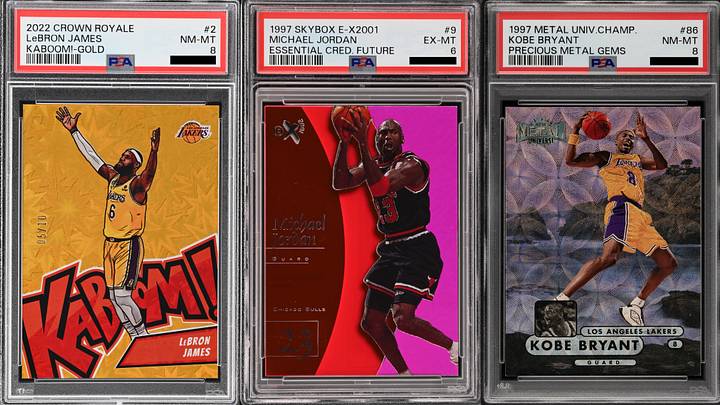
This led you to purchase his 2019 Panini Select Gold Wave Courtside PSA 10 rookie card for around $3,000 in October of 2023. Unfortunately for you, that card is now worth approximately $600. But what if, instead, you had spent that same $3,000 on a 2022 Crown Royale Gold Kaboom? Despite being a non-rookie card, you would have more than doubled your money.

This, in a nutshell, is the idea behind lowering your risk while still prospecting on players. And while it's true that nobody could have predicted Gold Kabooms would become as valuable as they are today, we absolutely could have understood why the Select Gold Wave carried more risk.
A card can rise in value for two reasons. The first is that the player's market grows. The second is because the set itself becomes more desirable over time. Many rookie cards and autograph cards, amongst others, almost entirely tie the value of the card to the player's market. If that player falls short of expectations, there isn't much hope for recouping your investment.
Focus on the Set First, and Then the Player
By focusing not only on the player but also on sets that have the potential to become important down the road, you give yourself a second out. If the player underperforms, the set may still become iconic and highly sought after by collectors. Ignoring the set when prospecting removes that second out entirely.
John Elway's most valuable card isn't his rookie card.
— Alt (@altxyzofficial) May 14, 2025
It’s this.
1997 Metal Universe brought the coveted Precious Metal Gems parallel to the football card industry.
The parallels replaced the base cards’ foil backgrounds with solid colors – a vibrant Green for the first 15 in… pic.twitter.com/uXuzOm7RrQ
Now, it's important to acknowledge that player-focused cards may offer a higher ceiling. A low-numbered rookie card from a flagship brand like Prizm or Topps Chrome will often have more upside than a card from a set that may or may not become popular down the road. That said, you're still placing all of your eggs in one basket.
My personal preference when prospecting is to use the best available knowledge about which sets have historically become important and to spread out the risk, even if it means giving up some potential upside. Who knows, it may just become the next Gold Kaboom.
 Add us as a preferred source on Google
Jason is an experienced basketball card collector with a focus on writing and educating others about the sports card industry. Find him on Instagram @jeancardz