
Why Are Precious Metal Gems So Valuable?
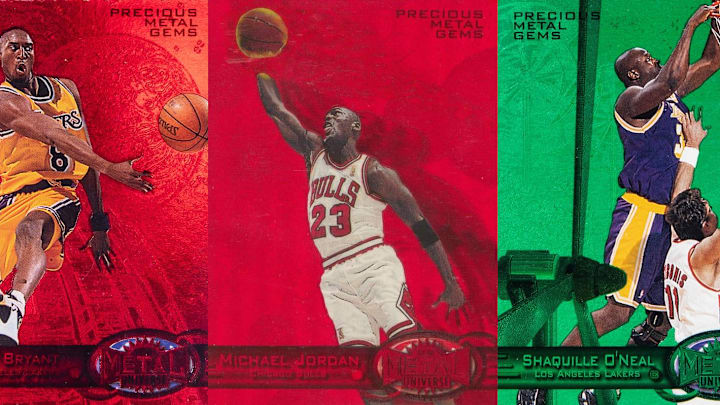
Precious Metal Gems (PMGs) are a cornerstone of 90s basketball card collecting. These iconic parallels debuted in 1997-98 Metal Universe packs, which originally retailed for just $2.49. The Red and Green PMGs quickly became synonymous with high-end collecting and remain among the most coveted cards from the era. But what is it that makes these cards so valuable? Let’s take a closer look.
1. Scarcity
The value of cards like PMGs typically comes down to some form of supply and demand. The odds of pulling a PMG featuring your favorite player were an astronomical 1 in 17,500. In 1997, long before eBay became the marketplace it is today, collectors rarely had the chance to even see one in person. If someone pulled a Green or even a Red PMG at a local card shop, it often sent shockwaves through the town's collecting community.
2. Numbering Structure
Another unique characteristic of PMGs is their numbering structure. All PMGs are numbered to 100, but the color depended on the card’s serial number. Cards numbered 1-10 were the elusive emerald green, while numbers 11-100 were red. This made the greens incredibly sought after, which, in turn, increased demand for the reds as well.
3. Condition Sensitivity
PMGs are notoriously susceptible to chipping. This makes high-graded copies even more rare and desirable - which often draws significant attention from the collecting community when those cards do hit the market. This dynamic further boosts the publicity of these already sought-after cards.
This 1997 Shaquille O'Neal Metal Universe Precious Metal Gems in a PSA 4 sold for a record $20,400 in Alt Auctions.
— Alt (@altxyzofficial) December 13, 2024
This is the record all-time for a PSA 4 copy.
Previous sale in this grade was $15,600 in September 2023. pic.twitter.com/uar6w6F2rk
4. One and Done
While Panini often releases rare inserts or parallels (often of the same variant) year after year, flooding the market with more of the same, that wasn’t the case with PMGs. Though more PMGs were made in subsequent years, they didn’t feature the same red or green parallels. As a result, the supply remained limited, and demand only continued to rise.
So, what will be the next PMG? This is one of the most debated topics in sports card collecting. Many believe the answer lies in the 2012 Prizm Gold and Silver parallels. While they don’t share the same unique numbering structure and are still being produced, their scarcity and popularity are undeniable. Prizm is Panini’s flagship brand, and it certainly helps that the first-year release featured just three parallels - none more coveted than the Golds numbered to 10 and the Silvers, which have an estimated print run of 180. It’s clear that 2012 Prizm has cultivated a passionate collector base that shows no signs of fading. This leads to another question on the minds of many: What will be the next Gold Prizm?
 Add us as a preferred source on Google
Jason is an experienced basketball card collector with a focus on writing and educating others about the sports card industry. Find him on Instagram @jeancardz