
Why Dealers Rarely Pay Full Price When Buying Cards
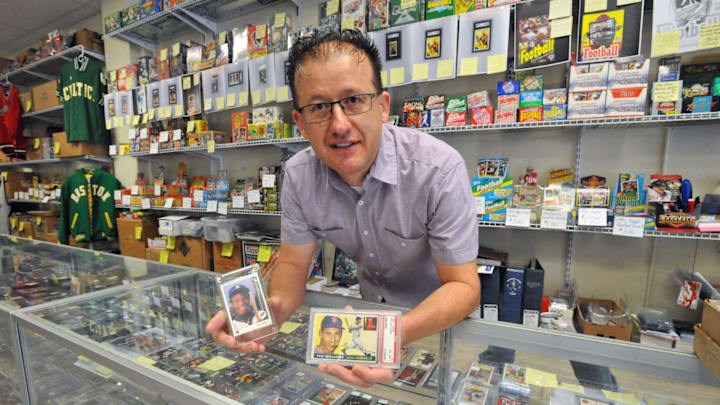
You’ve strained your eyes over eBay sold listings, 130 Point data, and Card Ladder charts until the numbers blur. Armed with airtight comps (comparable prices), you step into the local card shop with the gait of someone expecting a hefty payday.
The owner’s your pal—someone you chat up about the latest release or which 1st Bowman to sink your teeth into. He’ll give you close to comp for your stack of cards, right? Not exactly.
You see, most LCS proprietors won’t budge above the 60-70 percent mark when it comes to buying from customers. While that might seem greedy, it’s really about survival.
Let’s start with the expenses you don’t see in the display case. Rent, insurance, payroll, and utilities are the obvious bills, but plenty of smaller items gnaw at the bottom line, too. Think supplies—card holders and sleeves—plus the software that runs everything from the books to the register, marketing costs to keep customers shuffling in, Chamber of Commerce dues, and pesky credit-card fees. Time is another hidden cost. Each card must be priced, photographed, cataloged, and patiently shown to window-shoppers—whiling away the hours before a return is seen. Toss in an oft-forgotten line item for “missing” inventory (thieves are everywhere!) and the overhead column can balloon in a hurry.

Now we need to talk convenience, the enemy of today’s brick-and-mortar shop owner. In 2025 a collector can offload cards on Whatnot from the comfort of their couch with just a couple of finger taps, print a prepaid label, and move on. To have any chance at competing with this culture of instant gratification, immediate margin becomes a top priority. If a $400 Rafael Devers PSA 10 collects dust because of an underwhelming start in San Francisco, that’s idle funds that could have covered next week’s payroll or restocked some blaster boxes.

Local stores aren’t the only ones living on the razor’s edge. Hop over to your nearest card show and the reality can be just as brutal. A single table can run anywhere from under $100 at a one-day local show to several hundred at a busy mall event or larger venue, and that’s before gas, hotel, tolls, and the hand truck that occasionally gets left behind. Factor in displays, lighting—and yes, theft again—and you can start to grasp why they, too, often pay around 60 percent of comp. Although the lion’s share of dealers at shows seem to be buying these days, that mass appeal doesn’t do much to move the needle when it comes to their payouts.
Keeping all of this in mind, why sell directly to a dealer if you can reel in more online? There’s an element of convenience there as well, one that avoids sketchy customers, chargeback scams, shipping snafus, and a bevy of other pitfalls that can accompany digital transactions. If you want to keep things simple and you need cash now, take the face-to-face route.
So the next time your local shop offers you sixty cents on the dollar for those prized possessions, stop short of being offended. They’re not trying to lowball you, just doing what it takes to stay in business so you can drop in with another stack soon.
TOP TRENDING COLLECTIBLES ARTICLES:
 Add us as a preferred source on Google
Scott Orgera is a sportswriter and statistician with more than three decades of experience. He has covered thousands of MLB and NFL games, along with most other major sports. A member of the BBWAA, his bylines appear in the Associated Press, Baseball America, Baseball Prospectus, FanGraphs, and Forbes, among others. He also co‑authored 976‑1313: How Sports Phone Launched Careers and Broke New Ground. Having worked card shows with his family in the 1980s, Scott has remained active in the hobby ever since and now owns a card and memorabilia shop just outside New York City.