
LSU’s SEC Dispute Raises Questions Far Bigger Than Conference Membership
In this story:
The biggest opponent LSU has faced this season hasn't been a major SEC opponent on a football field, but the SEC itself in a courtroom.
The conference has threatened LSU's expulsion from the SEC twice this season, after player eligibility concerns rose for both the football and men's basketball programs.
Now, SEC presidents and chancellors are set to meet on December 3rd to discuss LSU's membership in the conference.
If the result of the meeting does not go in LSU's favor, major questions will arise that go beyond watching LSU face an SEC rival on the field or court.
Beyond The Membership

SEC Commissioner has been the leading force in threatening LSU with major punishments to its program as the players' eligibility concerns came up this fall. Now, he's getting one step closer to removing one of the conference's founding teams.
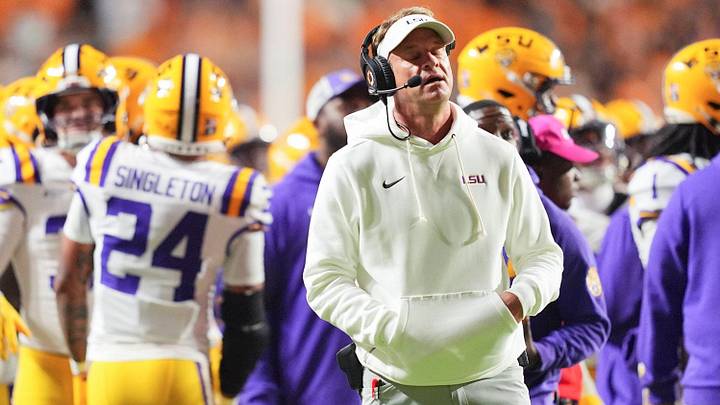
LSU has come across some serious controversies recently, including the rehire of Will Wade and the addition of Lane Kiffin. This turned all eyes to these programs as they kicked off the season, bringing an increase in viewership to the new and improved programs.
The games might not always result in dominant wins, but the viewership is there. Across almost all of LSU's athletic programs. That raises the question: Can the SEC afford to lose LSU?
Not just losing the LSU vs. SEC rival games that capture the attention of the nation during the afternoon and night primetime football games, but also dropping to 15 teams would reduce its $3 billion deal with ESPN, a contract the conference has set until 2034.



Between the tens of millions of views each SEC football game brought this year, the basketball programs' viewership, highlighted by well-known coaches Wade and Kim Mulkey, and the men's baseball's expected postseason run, ESPN could lose up to $500 million to $1 billion before the contract is set to end.
That's an expensive way to go out.
In terms of scheduling, LSU football would survive in the College Football Playoff as an independent team if they make it into the committee's top-12 this year or top-24 next year.
The ideal case would be for LSU to look for a new home in a conference for programs beyond football, such as baseball and Olympic sports, to solidify NCAA Tournament bids under conference championships.
Either way, LSU no longer being a part of the SEC will make each sport look different in its standings and schedules, which raises more questions about who the Tigers could face if they are a stand-alone team or first-time members in a new conference.
There is one question that will have to be established and answered as the SEC presidents sit down for the anticipated meeting: What happens when a team is kicked out of a conference?
This has yet to happen in any Power 4 conference. And it will not be pretty.
Instead, Sankey and LSU will meet back in the courtroom, where LSU can negotiate the decision, bringing up conflicts in its voting members and punishment conduct that isn't explicitly stated in the league's bylaws.
When a school voluntarily leaves a conference, the school must pay a massive buyout fee. As this could be the first time the situation is flipped, there is no set fee for a conference that is forcefully removed, but LSU can certainly argue that it is owed money for lost media rights.
Once again, LSU is involved in doing something that has yet to happen in the SEC. While it may be the conference's final straw, the exit will not be smooth.
Sign up to our free newsletter and follow us on Facebook and X for the latest news.
 Add us as a preferred source on Google

Brooke Benedict is a junior at LSU with a major in Print Journalism and a minor in Sports Studies. She’s originally from Boulder, Colorado and enjoys how sports bring people together. She has spent one semester as a sports columnist for the LSU student newspaper, and is excited to continue her LSU sports reporting career with On SI.
Follow BrookeBenedict_