
Wisconsin Football Report Card: Grading Every Offensive Position After Emphatic Win Over USC
In this story:
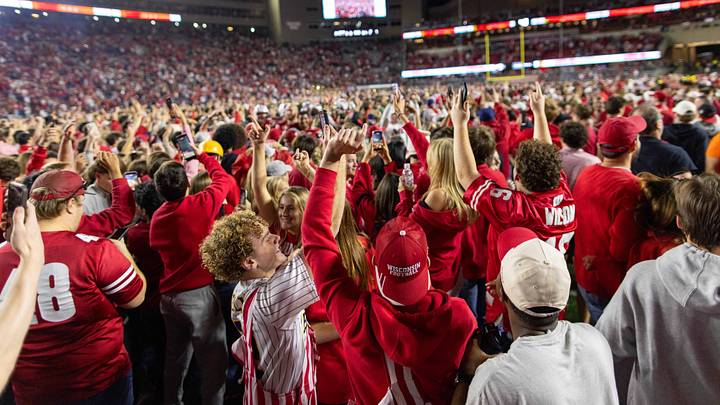
Fresh off a frustrating road loss to UCLA, Wisconsin (5-2, 3-1) returned home Saturday and responded with an emphatic 24-7 victory over No. 16 USC (6-2, 3-2).
While a dominant defensive performance stole the show, Badgers On SI will start on the other side of the ball, handing out grades to each offensive position group following the Badgers’ takedown of the Trojans.
Quarterback

Colton Joseph put together far and away his most accurate performance as a Badger, completing 12 of 14 passes for 58 yards and a touchdown in the win. His lone touchdown pass came on a 16-yard screen to Chris Brooks Jr. in the third quarter. The Old Dominion transfer also carried the ball 15 times for 32 yards, with two sacks accounting for 11 yards lost.
While the efficiency was encouraging, Wisconsin made virtually no effort to push the ball downfield. To a certain extent, that was by design, as offensive coordinator Jeff Grimes leaned heavily on the running game. Still, Grimes’ conservative playcalling raises questions about his trust in Joseph, though the fourth-year quarterback may also be hesitant to take shots downfield himself.
Joseph wasn’t particularly explosive on the ground, but he made his presence felt by moving the chains, picking up six first downs with his legs, including three on third down. His mobility remains a valuable asset, even when the passing attack isn’t producing much.
This is a difficult performance to grade, given the role of the game plan and playcalling. Ultimately, the Badgers knocked off a ranked opponent, and Joseph deserves credit for executing what was asked of him. I’ll settle on a B, but it’s tough to feel particularly comfortable about the prospect of throwing for fewer than 60 yards and expecting another victory next week at Iowa.
Grade: B
Running Backs

After Wisconsin’s running backs combined for just 12 carries in last week’s loss to UCLA, the Badgers made a concerted effort to give their tailbacks more touches, and it worked beautifully. Abu Sama III handled the bulk of the workload, tallying 71 yards on 17 carries (4.2 yards per carry), including eight attempts for 46 yards during the team’s first touchdown drive in the second quarter. The Iowa State transfer also caught two passes for seven yards.
Complementing Sama, Bryan Jackson II saw his most extensive playing time since arriving in Madison, turning seven carries into 38 yards (5.4 yards per carry) and a touchdown on a five-yard plunge in the second quarter.
Dealing with injuries throughout the season, we haven’t gotten consistent looks at the best version of Sama. While I wouldn’t go so far as to say Saturday represented his true peak form, he was shifty, forcing four missed tackles per PFF, and fared well in a workhorse role. Jackson was incredibly impressive in his own right, running with authority and power against his former team. Darrion Dupree saw just four snaps and no carries, which was surprising, though his inclusion on the injury report earlier in the week suggests health could’ve played a role.
The explosive plays weren’t quite there, with Sama’s 17-yard gain representing the longest run, but Wisconsin’s running backs performed admirably and helped drive the offense toward victory.
Grade: A
Wide Receivers

With Wisconsin generating little through the air for another week, evaluating the pass catchers is a tricky proposition. Eugene Hilton Jr. led the way with three receptions for 18 yards and added four yards on his lone carry, though Chris Brooks Jr. made the most consequential play of the group, taking a fourth-down screen pass 16 yards to the end zone in the third quarter. Jaylon Domingeaux hauled in a six-yard reception on Wisconsin’s fourth-quarter touchdown drive, setting up a manageable third-and-1, while Tyrell Henry finished with one reception for no gain and one carry for a loss of three yards.
With the Badgers leaning heavily on the ground game and most passing plays consisting of quick-developing throws and seemingly designed checkdowns, the wide receivers had few opportunities to make an impact downfield.
It’s difficult to fault the unit for a lack of production when the game plan offered so little room for explosiveness. Given the circumstances, I thought the receivers did their jobs well enough, with Brooks’ touchdown serving as the clear highlight.
Grade: B
Tight Ends

Much like the wide receivers, Wisconsin’s tight ends had few opportunities to make an impact through the air, though their contributions extended beyond the stat sheet. Jeff Grimes continued dialing up quick rollout passes to the flat, often leaving his targets with little room to operate.
Grant Stec was a prime example, finishing with two receptions for zero yards. Jacob Harris fared slightly better, hauling in two passes for 11 yards, though arguably his biggest contribution came when he drew a pass interference penalty that set up Bryan Jackson II’s five-yard touchdown run in the second quarter.
The Badgers added a wrinkle on their final touchdown drive, lining up Ryan Schwendeman at fullback before he powered into the end zone from a yard out for his first score at Wisconsin. Beyond that highlight, the most encouraging development was the tight ends’ improvement in pass protection. After struggling noticeably against UCLA, the group held its own against USC and didn’t surrender a single pressure.
The numbers won’t turn any heads, and I’d like to see Harris more involved, but the improved blocking and Schwendeman’s touchdown made this a respectable evening for the unit.
Grade: B
Offensive Line

Wisconsin’s offensive line came under heavy scrutiny following a poor showing against UCLA, raising questions about whether another shakeup was in store. The answer was yes, though perhaps not in the way many expected.
Despite being removed from the injury report after missing last week’s contest with a broken hand, starting center Austin Kawecki didn’t see the field. Stylz Blackmon remained at center, while Barrett Nelson earned the start at right guard over PJ Wilkins.
A fifth-year lineman with limited meaningful experience, Nelson endured some early struggles, surrendering two pressures, including a sack, before settling in and making his presence felt in the running game. He ultimately earned the highest PFF grade of any Wisconsin offensive player at 72.1.
Blackmon appeared more comfortable in his second start at center, though he was flagged for holding in the second quarter. Left guard Colin Cubberly, meanwhile, has been a bright spot for much of the season but didn’t have his finest outing against USC, particularly in pass protection, where he allowed two pressures, including a sack. The tackles held up their end of the bargain, with neither Kevin Heywood nor Emerson Mandell surrendering a pressure.
Perhaps the most encouraging takeaway was the Badgers’ ability to establish a legitimate ground game, something that wouldn’t have been possible without improved play from the big boys up front. It wasn’t necessarily a dominant performance, but the offensive line took a meaningful step forward after last week’s struggles. Moving forward, Kawecki’s health and availability, along with the possibility of further changes to the starting five, will be worth monitoring.
Grade: B
 Add us as a preferred source on Google

Jeremy Schneider is a San Diego native and current journalism student at the University of Wisconsin-Madison. In addition to covering Wisconsin athletics for Badgers On SI, he is a RotoWire contributor and Big Ten Plus broadcaster.
Follow jerschneid14