
Texas A&M's Disastrous Game Management Cost the Aggies a Winnable Lone Star Showdown
In this story:
Texas A&M had an opportunity to go for it on fourth-and-3 at the Texas 40 in the first quarter. On paper, the decision was easy. The Aggies had very little to lose in the Lone Star Showdown, entering the contest with just one win in conference play. Additionally, the Aggies had moved the ball into opposing territory, a minor achievement for an offense that had struggled to sustain drives all season.
Instead of going for it and potentially extending the possession, Texas A&M took a delay-of-game penalty and punted. It was deflating, to say the least.
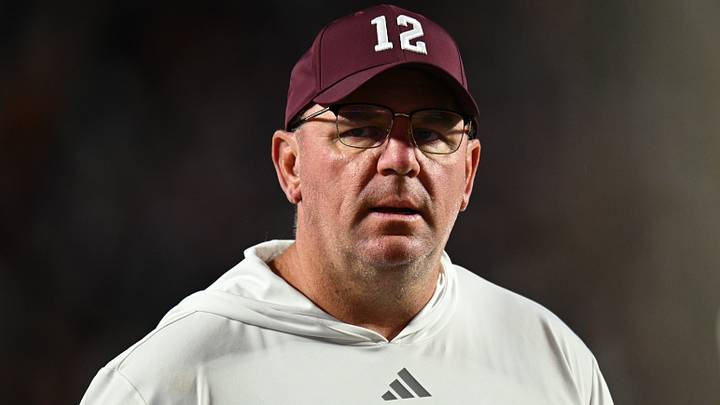
That sequence was not the sole reason Texas A&M lost to its biggest rival. It was, however, an early indication that Mike Elko and the rest of the coaching staff weren't approaching the game with an aggressive mindset. Instead, they seemed to operate under the assumption that those sorts of opportunities would be plentiful. For this Texas A&M team, they almost never were.
A Game That Demanded Better Decisions

Texas gave the Aggies every reason to believe the game could be stolen. Arch Manning managed 143 passing yards, and Tawfiq Byard intercepted him in the end zone during the fourth quarter. The Longhorns scored one touchdown all night, something that would usually result in a defeat for the folks from Austin.
The Aggies kept making their own job harder. Their possession before halftime began at the A&M 22 with 1:38 left. A run lost two yards, and the clock kept moving through a drive that required David Olano to make a 52-yard field goal as time expired. The kick provided three valuable points, but the management hardly suggested a staff determined to squeeze everything possible from its opportunities.



There were limits to what coaching could accomplish, of course. Texas A&M rushed for only 33 yards, and Brady Hart couldn't turn a few good throws into a touchdown. Yet a team with those shortcomings has an even greater need for good judgment on fourth down and a clear understanding of the clock. Texas A&M's coaches struggled with both.
The Last Five Minutes Said Enough

Trailing 16-6, the Aggies took possession with 5:18 remaining and just one timeout. They needed two scores, which meant there was no room to burn 45 seconds between an opening 3-yard run and the next snap. That's what happened. Short completions followed as the drive inched forward, with Texas receiving the greatest benefit from every second that disappeared.
By the time A&M reached fourth-and-1 at the Texas 43, the clock showed 2:39. The Aggies used their final timeout before calling a pass that fell incomplete. The lack of urgency had already compromised whatever chance remained; the failed conversion finished it.
There's no certainty that better management would have produced a win. Texas was the better team, and A&M's offense had been dreadful for months. But Elko's staff needed to recognize that an overmatched group required more assistance from the sideline, especially when its defense was delivering the performance necessary to make an upset possible.
Sign up to our free newsletter and follow us on Facebook, X and Instagram for the latest news.
 Add us as a preferred source on Google

Seth Dowdle graduated from TCU with a degree in sports broadcasting and journalism and joined On SI in 2025. In addition to writing for Texas A&M On SI, he writes for MLB On SI and is also the editor-in-chief at The Football Corner.
Follow sethdowdle