%22%3E%0A%3Cpath%20d%3D%22M4.44772%2012.9274H0V8.64893H13.945V12.9274H9.49725V23.7693H4.44772V12.9274Z%22%20fill%3D%22white%22%2F%3E%0A%3Cpath%20d%3D%22M14.1895%2016.256V16.209C14.1895%2011.6955%2017.7063%208.3291%2022.2198%208.3291C25.5485%208.3291%2027.7865%209.94646%2029.0653%2012.2596L24.8997%2014.6951C24.3355%2013.6137%2023.5363%2012.8615%2022.154%2012.8615C20.452%2012.8615%2019.3236%2014.3472%2019.3236%2016.162V16.209C19.3236%2018.1743%2020.4896%2019.5565%2022.154%2019.5565C23.5833%2019.5565%2024.3825%2018.7761%2025.0032%2017.6571L29.1688%2020.0079C27.8993%2022.2553%2025.7836%2024.0889%2022.0223%2024.0889C17.8379%2024.0889%2014.1895%2020.9388%2014.1895%2016.256Z%22%20fill%3D%22white%22%2F%3E%0A%3Cpath%20d%3D%22M30.1002%2016.9895V8.6582H35.2344V16.9236C35.2344%2018.8043%2036.2029%2019.6036%2037.5664%2019.6036C38.9298%2019.6036%2039.8984%2018.8701%2039.8984%2017.0365V8.6582H45.0325V16.886C45.0325%2022.0484%2042.0329%2024.0795%2037.5194%2024.0795C33.0058%2024.0795%2030.0908%2022.0108%2030.0908%2016.9989L30.1002%2016.9895Z%22%20fill%3D%22white%22%2F%3E%0A%3Cpath%20d%3D%22M52.3008%208.6582H57.3503V13.9898H61.9673V8.6582H67.0168V23.7692H61.9673V18.3529H57.3503V23.7692H52.3008V8.6582Z%22%20fill%3D%22white%22%2F%3E%0A%3Cpath%20d%3D%22M68.3428%2017.9205V17.8735C68.3428%2014.5447%2071.1073%2011.6956%2074.9909%2011.6956C78.8744%2011.6956%2081.6013%2014.4977%2081.6013%2017.8265V17.8735C81.6013%2021.2022%2078.8368%2024.0514%2074.9532%2024.0514C71.0697%2024.0514%2068.3428%2021.2398%2068.3428%2017.9205ZM76.8903%2017.9205V17.8735C76.8903%2016.7075%2076.0252%2015.7766%2074.9438%2015.7766C73.8625%2015.7766%2073.0444%2016.7075%2073.0444%2017.8265V17.8735C73.0444%2019.0395%2073.9095%2019.9704%2074.9909%2019.9704C76.0722%2019.9704%2076.8903%2019.0395%2076.8903%2017.9205Z%22%20fill%3D%22white%22%2F%3E%0A%3Cpath%20d%3D%22M82.7861%2011.9776H87.6852V14.3566C88.3528%2012.758%2089.4342%2011.7237%2091.3807%2011.8083V17.0083H90.8635C88.7948%2017.0083%2087.6852%2018.1555%2087.6852%2020.7602V23.7598H82.7861V11.9682V11.9776Z%22%20fill%3D%22white%22%2F%3E%0A%3Cpath%20d%3D%22M92.3115%2011.9775H97.2106V13.6231C97.9629%2012.6546%2099.1571%2011.7048%20100.812%2011.7048C103.294%2011.7048%20104.846%2013.3504%20104.846%2016.0021V23.7786H99.9469V17.5818C99.9469%2016.5663%2099.3451%2015.9833%2098.6117%2015.9833C97.8782%2015.9833%2097.2106%2016.5663%2097.2106%2017.5818V23.7786H92.3115V11.9869V11.9775Z%22%20fill%3D%22white%22%2F%3E%0A%3Cpath%20d%3D%22M105.955%2017.9393V17.8923C105.955%2014.3755%20108.485%2011.6956%20112.02%2011.6956C116.205%2011.6956%20118.151%2014.6106%20118.151%2018.1932C118.151%2018.4565%20118.151%2018.7574%20118.132%2019.0113H110.553C110.901%2020.0456%20111.719%2020.591%20112.782%2020.591C113.666%2020.591%20114.399%2020.1773%20115.18%2019.378L117.813%2021.4749C116.647%2022.9888%20114.982%2024.042%20112.434%2024.042C108.569%2024.042%20105.955%2021.6066%20105.955%2017.9299V17.9393ZM113.685%2016.8579C113.581%2015.7389%20112.904%2015.0901%20112.039%2015.0901C111.174%2015.0901%20110.638%2015.7766%20110.487%2016.8579H113.685Z%22%20fill%3D%22white%22%2F%3E%0A%3Cpath%20d%3D%22M118.97%2017.958V17.911C118.97%2014.1779%20121.217%2011.6955%20124%2011.6955C125.796%2011.6955%20126.784%2012.4759%20127.545%2013.3128V8H132.445V23.7598H127.545V22.3117C126.746%2023.1768%20125.843%2024.0419%20124.047%2024.0419C121.198%2024.0419%20118.97%2021.5594%20118.97%2017.9486V17.958ZM127.649%2017.8922V17.8452C127.649%2016.6792%20126.812%2015.7294%20125.684%2015.7294C124.555%2015.7294%20123.718%2016.6604%20123.718%2017.8452V17.8922C123.718%2019.077%20124.565%2020.0079%20125.684%2020.0079C126.803%2020.0079%20127.649%2019.077%20127.649%2017.8922Z%22%20fill%3D%22white%22%2F%3E%0A%3Cpath%20d%3D%22M139.704%208.6582H152.361V12.9743H144.763V14.8925H151.825V18.8231H144.763V23.7692H139.713V8.6582H139.704Z%22%20fill%3D%22white%22%2F%3E%0A%3Cpath%20d%3D%22M153.498%2011.9776H158.397V14.3566C159.065%2012.758%20160.146%2011.7237%20162.093%2011.8083V17.0083H161.575C159.507%2017.0083%20158.397%2018.1555%20158.397%2020.7602V23.7598H153.498V11.9682V11.9776Z%22%20fill%3D%22white%22%2F%3E%0A%3Cpath%20d%3D%22M162.544%2017.9205V17.8735C162.544%2014.5447%20165.308%2011.6956%20169.192%2011.6956C173.076%2011.6956%20175.802%2014.4977%20175.802%2017.8265V17.8735C175.802%2021.2022%20173.038%2024.0514%20169.154%2024.0514C165.271%2024.0514%20162.544%2021.2398%20162.544%2017.9205ZM171.091%2017.9205V17.8735C171.091%2016.7075%20170.226%2015.7766%20169.145%2015.7766C168.064%2015.7766%20167.246%2016.7075%20167.246%2017.8265V17.8735C167.246%2019.0395%20168.111%2019.9704%20169.192%2019.9704C170.273%2019.9704%20171.091%2019.0395%20171.091%2017.9205Z%22%20fill%3D%22white%22%2F%3E%0A%3Cpath%20d%3D%22M176.734%2025.8004L178.248%2022.8384C179.564%2023.5248%20180.881%2023.9574%20182.498%2023.9574C184.332%2023.9574%20185.31%2023.0076%20185.31%2021.3715V21.0236C184.642%2021.7758%20183.542%2022.6409%20181.896%2022.6409C178.85%2022.6409%20176.649%2020.4782%20176.649%2017.2247V17.1776C176.649%2013.8771%20178.897%2011.6956%20181.614%2011.6956C183.345%2011.6956%20184.36%2012.3444%20185.216%2013.2283V11.9777H190.115V20.7885C190.115%2022.97%20189.663%2024.4557%20188.582%2025.5371C187.52%2026.5903%20185.902%2027.2673%20183.269%2027.2673C180.636%2027.2673%20178.624%2026.7501%20176.725%2025.8004H176.734ZM185.329%2017.2058V17.1588C185.329%2016.1433%20184.548%2015.3252%20183.363%2015.3252C182.179%2015.3252%20181.398%2016.1715%20181.398%2017.2058V17.2529C181.398%2018.2684%20182.179%2019.0677%20183.363%2019.0677C184.548%2019.0677%20185.329%2018.2496%20185.329%2017.2152V17.2058Z%22%20fill%3D%22white%22%2F%3E%0A%3Cpath%20d%3D%22M190.829%2022.34L192.493%2019.5566C193.923%2020.4406%20195.512%2020.8731%20196.857%2020.8731C197.336%2020.8731%20197.571%2020.7697%20197.571%2020.4876V20.4406C197.571%2020.2055%20197.355%2020.055%20196.17%2019.7541C193.189%2019.0207%20191.356%2018.2214%20191.356%2015.7766V15.7295C191.356%2013.1343%20193.424%2011.6956%20196.49%2011.6956C198.436%2011.6956%20200.355%2012.1939%20201.784%2013.059L200.232%2015.974C198.982%2015.2876%20197.468%2014.8738%20196.471%2014.8738C195.991%2014.8738%20195.785%2015.0055%20195.785%2015.2406V15.2876C195.785%2015.5227%20196.048%2015.6731%20197.233%2015.974C200.214%2016.7075%20202%2017.5256%20202%2019.9422V19.9892C202%2022.5563%20200.082%2024.0514%20196.885%2024.0514C194.6%2024.0514%20192.522%2023.4684%20190.839%2022.3494L190.829%2022.34Z%22%20fill%3D%22white%22%2F%3E%0A%3Cpath%20fill-rule%3D%22evenodd%22%20clip-rule%3D%22evenodd%22%20d%3D%22M211.368%204.36764C217.191%20-1.45588%20226.632%20-1.45588%20232.456%204.36764C238.279%2010.1912%20238.279%2019.6324%20232.456%2025.4559L221.912%2036L211.368%2025.4559C205.544%2019.6324%20205.544%2010.1912%20211.368%204.36764ZM214.009%207.55761C213.948%207.86849%20213.916%208.39718%20213.916%209.14566V10.4189C213.916%2011.1832%20213.948%2011.7198%20214.013%2012.0267C214.078%2012.3317%20214.278%2012.6168%20214.617%2012.8762C214.956%2013.1376%20215.403%2013.3316%20215.958%2013.4623C216.512%2013.593%20217.1%2013.6584%20217.837%2013.6584C218.573%2013.6584%20219.217%2013.591%20219.769%2013.4524C220.322%2013.3158%20220.761%2013.1178%20221.086%2012.8604C221.411%2012.6029%20221.605%2012.3178%20221.666%2012.0069C221.728%2011.6961%20221.759%2011.1674%20221.759%2010.4189V9.14566C221.759%208.38134%20221.728%207.84473%20221.662%207.53781C221.597%207.23287%20221.397%206.94971%20221.058%206.68834C220.72%206.42696%20220.272%206.23291%20219.718%206.10223C219.163%205.97154%20218.536%205.90619%20217.839%205.90619C217.102%205.90619%20216.459%205.97352%20215.906%206.11213C215.352%206.24875%20214.914%206.44677%20214.589%206.70418C214.265%206.9616%20214.071%207.24673%20214.009%207.55761ZM219.276%2024.8638C222.876%2024.8638%20224.557%2024.2064%20224.557%2021.862V21.858V21.3155C224.557%2019.6581%20223.516%2018.971%20220.252%2018.3136C219.278%2018.1136%20218.908%2017.9136%20218.908%2017.3136V16.9414C218.908%2016.6543%20219.177%2016.5117%20219.413%2016.5117C219.749%2016.5117%20219.918%2016.7137%20219.918%2016.9414V18.1136H224.391V17.3988C224.391%2015.4563%20223.347%2014.4266%20219.177%2014.4266C216.15%2014.4266%20213.896%2015.3414%20213.896%2017.3711V17.7433C213.896%2019.5155%20214.805%2020.3155%20218.201%2021.0303C218.28%2021.0472%20218.355%2021.063%20218.427%2021.0781C219.329%2021.2674%20219.647%2021.3341%20219.647%2021.9174V22.2897C219.647%2022.6619%20219.546%2022.8045%20219.142%2022.8045C218.67%2022.8045%20218.637%2022.5471%20218.637%2022.262V21.2897H213.894V21.7471C213.894%2024.149%20215.476%2024.8638%20219.276%2024.8638ZM225.424%2024.5569H229.925V14.7355H225.424V24.5569ZM226.955%2013.5019H229.925V6.06064H227.092V9.411L225.193%206.06064H222.359V13.5019H225.193V10.1199L226.955%2013.5019ZM218.269%2012.152C218.204%2012.2688%20218.055%2012.3262%20217.825%2012.3262L217.827%2012.3282C217.604%2012.3282%20217.459%2012.2767%20217.398%2012.1758C217.336%2012.0748%20217.305%2011.8074%20217.305%2011.3758V7.90068C217.305%207.51852%20217.352%207.28684%20217.445%207.20962C217.538%207.13239%20217.675%207.09279%20217.851%207.09279C218.059%207.09279%20218.198%207.14031%20218.265%207.23734C218.332%207.33239%20218.366%207.55416%20218.366%207.90068V11.3203C218.366%2011.7579%20218.334%2012.0352%20218.269%2012.152Z%22%20fill%3D%22white%22%2F%3E%0A%3C%2Fg%3E%0A%3Cdefs%3E%0A%3CclipPath%20id%3D%22clip0_15206_214935%22%3E%0A%3Crect%20width%3D%22237%22%20height%3D%2236%22%20fill%3D%22white%22%2F%3E%0A%3C%2FclipPath%3E%0A%3C%2Fdefs%3E%0A%3C%2Fsvg%3E%0A)
Earned Perspective | TCU Backups Must Become Reliable Depth
In this story:
TCU is five games into its season with a 2-3 record, a bye week behind it, and Baylor waiting next. That makes this a good time to return to three questions I raised earlier in the season.
I asked fans to think about which reserves might become important by November, which positions would eventually depend most on their depth, and which players could maintain their level of performance as the season took its physical toll.
We planned to check back after four games. We've now seen five, and although it's too early to settle those questions, something has already become clear.
A team can have plenty of backups without having much actual depth.
That's a distinction I came to understand playing linebacker at TCU.
Why TCU Needs More Than Names on a Depth Chart
There was an incredible amount of talent in our linebacker room during my years at TCU. David Hawthorne, Robert Henson, Daryl Washington, Tank Carder, and I all eventually made it to the NFL.
That's five future NFL linebackers passing through a defensive system that was built around two linebacker positions in Gary Patterson's 4-2-5 defense.
Having that much ability in one position room provided our coaches with something every coach in America would love to have.
Options.
Competition wasn't something we just discussed. We lived it. You were expected to perform, and if you didn't, somebody else was eager to show he could handle your job.
Screw something up and you might be standing beside the coaches for the next play, the next series, or even the next half. It depended on what happened and how badly your mistake hurt the team.
You'd get your ass chewed on the sideline while another linebacker took your place. Then you'd wait for another shot. If he messed up, you might be back out there before long.
None of that works unless the replacement is capable of doing the job.
Some position groups don't have that advantage. A coach might recognize a player's mistake and still have no better option than leaving him in the game.
That's what separates roster numbers from genuine depth.
You don't measure it by counting how many names appear beneath the starters. You measure it by how many of those players can be trusted when the outcome is still in doubt.
Having a backup means you've got another body. Having depth means you've got another answer.
TCU Linebacker Depth Starts With Preparation
Linebacker is one of the first positions I'm examining on TCU's current roster.
Max Carroll and Hudson Hooper have already carried important responsibilities. Both were listed as starting linebackers against UCF and BYU.

Hooper made seven tackles against Arkansas State, followed by eight against UCF and another eight against BYU. His eight tackles against BYU led the team.
He's already an established contributor, though. What interests me more is who can step in behind those starters.
Michael Short deserves attention.
Against UCF, Short made seven tackles, three solo and four assisted, without being listed as a starting linebacker.
That's enough production to make me interested, but not enough to convince me he played outstanding football.

I've watched linebackers pile up tackles after being out of position. I've also watched guys execute their assignments beautifully and finish with very little statistical production.
The box score tells us Short was involved. It doesn't tell us everything about how he played.
Michael Teason Jr. brings another element to the conversation. He started games at Missouri State before coming to TCU and appeared in 12 regular-season games for the Frogs last year.
Dillon Arkansas also belongs on the list of players to follow. His two assisted tackles against BYU came on punt coverage, though, so those plays alone do not tell us how ready he is to contribute at linebacker.
What matters now is how effectively those players handle their opportunities.
Do they identify offensive formations? Can they communicate the necessary adjustments? Do they understand their responsibilities well enough for the defense to operate without changing its approach to accommodate them?
Coaches spend all week asking their starters those same questions in film sessions, making damn sure they understand not just their own assignments, but what the offense is trying to do to them overall.
It was just part of how we prepared each week. The coaches would stop the film and demand that we identify our alignment, assignment, and responsibilities. They didn’t stop there. They questioned us about personnel groupings, formations, and what it meant when certain players lined up differently than usual.
Being athletic enough to play linebacker didn't mean a damn thing if you didn't know what the hell you were doing.
Run a 4.4-second 40-yard dash all you want. If you misread the formation and sprint in the wrong direction, that speed isn't helping anybody.
That's why tackle totals alone can't establish whether a team has quality depth.
I want to see reserves who understand the defense and can execute it when the game matters.
Short has done enough to make himself worth watching. Whether TCU has enough reliable linebackers behind its starters remains a question the coming weeks should help answer.
TCU's Defensive Front Faces a Physical Big 12 Schedule
The defensive front seven remains the position group I'm watching most closely.
That isn't an accusation that those players are already wearing down. We don't have enough evidence to say that.
It's about understanding what their jobs require over an entire season, especially against offenses that use the quarterback as another rushing threat.
TCU limited UCF to 106 rushing yards on 33 attempts.
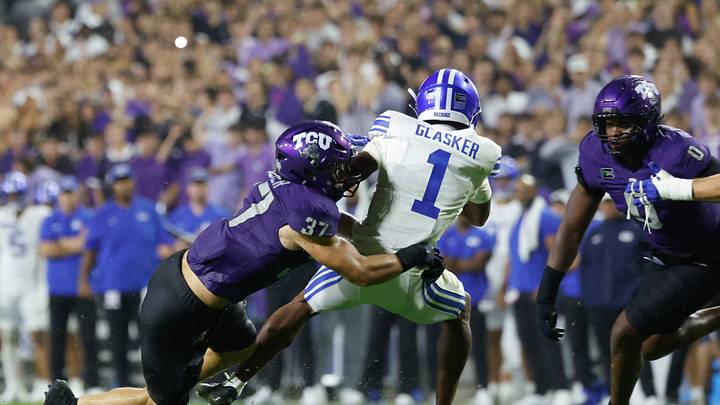
The Frogs then held BYU to 216 yards of total offense, with only 62 coming through the air.
Those are impressive defensive numbers.
Yet BYU still gained 154 yards rushing, and quarterback Bear Bachmeier accounted for both touchdowns with his legs.

The second was a 21-yard run that ended a 10-play, 72-yard possession late in the fourth quarter.
I've already covered that drive in Through the Facemask, so there's no reason to revisit every play here.
What matters for this discussion is the difficulty of defending a quarterback who can run.
The defense must account for an additional ball carrier without abandoning its responsibilities against the running backs. A defender loses leverage, somebody fails to finish a tackle, and a manageable play can suddenly become a big gain.
We can't automatically attribute those breakdowns to fatigue. We also can't point to that possession and declare TCU doesn't have enough depth.
It does demonstrate how quickly a defensive mistake can undo a lot of good work.
That becomes harder to avoid when the season starts accumulating in a player's body.
Defensive linemen fight through blocks and pursue the football snap after snap. Linebackers take on linemen, cover receivers, run from sideline to sideline, and try to finish every tackle.
Eventually, those repetitions add up.
That's when capable replacements become so important.
Can TCU give its starters a break and still get the same communication, discipline, and execution from the players who enter?
Sometimes you know a backup has done his job when nobody even realizes the starter left the field.
I haven't seen enough through five games to conclude that the defensive front is declining physically. What remains to be seen is whether it can sustain its performance as the conference schedule gets deeper.
Hudson Hooper and the Demands of a Full Season
The physical side of this discussion is harder to judge because availability and effectiveness aren't the same thing.
A linebacker can still record tackles even when he's no longer attacking blockers with the same force. An offensive lineman might remain in the starting lineup while losing a little quickness in his feet.
That doesn't give us permission to diagnose injuries from our living rooms.
A difficult opponent, a different scheme, or one poor performance can produce the same appearance.
That's why individual games matter less than the patterns developing across several weeks.
Hudson Hooper is a good example of someone worth monitoring.

His tackle totals against Arkansas State, UCF, and BYU were seven, eight, and eight. That's encouraging consistency against opponents presenting different offensive problems.
Still, I want to see more than the numbers.
Are his eyes as disciplined as they were earlier in the season? Is he attacking blockers with the same physicality? Is he identifying what offenses are trying to do before the play develops?
Those details can begin slipping even while a player's statistics remain steady.
A linebacker might be physically capable of staying on the field for 70 snaps. That doesn't guarantee his seventieth snap will be as effective as his first.
A prepared backup can help by allowing that starter a few plays to recover.
Hooper's production has held up well so far. Whether every part of his game remains as effective through November is something we'll continue evaluating.
How the Bye Week Can Help TCU Develop Depth
TCU and Baylor both had a week without a game before their rivalry matchup.
Rest and recovery are obviously important, especially after five games. But a bye week also creates an opportunity to develop the players who haven't been getting many snaps.
A veteran might need fewer physical repetitions and more recovery time. A reserve who's barely played might need every competitive repetition available.
Giving both players the same practice schedule doesn't necessarily help either one.
When I coached linebackers at TCU, I expected mental repetitions to count.
Standing behind the defense didn't excuse you from knowing the call, identifying the formation, or understanding your responsibility. You were supposed to prepare mentally as if you were taking every snap.
Saturday's opponent isn't going to wait for a backup to figure out his assignment.
I can't tell you exactly how TCU distributed those repetitions during the bye week.
I can tell you what I would hope to see against Baylor: starters who have recovered physically and reserves who are better prepared to contribute.
There's a difference between having time off and making productive use of that time.
Accountability Requires Prepared Replacements
One of the most overlooked parts of developing depth is what it allows a coaching staff to demand.
You can't hold somebody accountable by threatening to replace him if you haven't prepared anybody capable of replacing him.
That's a responsibility shared by coaches and players.
Coaches must teach their systems, develop the roster, and give reserves the tools to succeed. Players must learn their assignments, prepare themselves, and earn the confidence of the people deciding who plays.

Not every mistake requires a substitution. Sometimes a player needs an opportunity to correct it. Sometimes the starter remains the best available choice.
But having capable replacements means coaches can make those decisions rather than having them made by a lack of alternatives.
That's what meaningful competition provides.
You can't demand accountability without creating the opportunity to enforce it.
What Five Games Have Revealed About TCU Football
Five games are behind TCU, with seven remaining in the regular season.
Michael Short has become a reserve worth following. The defense has produced some encouraging performances, while also showing how costly late-game breakdowns can be.
Hudson Hooper has maintained consistent tackle production, making him an interesting player to evaluate as the physical demands increase.
What we still don't know is how many players TCU can depend on to maintain its level of execution when the starters come off the field.
The upcoming stretch against Baylor, West Virginia, Kansas, and Arizona should give us a better understanding.
For those who made predictions after my original article, stick with them. Don't change your selections just because five games have provided a little more information.
The exercise was always about following the season, studying how players and position groups develop, and finding out how much the demands of football change a team.
My dad used to tell me, "You don't get in football shape until you play football."
TCU has now played five games.
We know which players are capable of getting on the field. The more important question is how many have been prepared to perform when their number gets called.
When the starter comes off the field, the standard shouldn't come off with him.
Stay Connected
Stay connected with TCU Horned Frogs On SI for the latest TCU football news, Big 12 coverage, and more from Jason Phillips. Join the conversation with fellow Horned Frogs on the KillerFrogs fan forum and explore KillerFrogs.com for our community, events, and membership opportunities.
 Add us as a preferred source on Google
Jason Phillips is a TCU Athletics Hall of Fame linebacker, four-time All Mountain West selection, and 2009 NFL Draft pick who spent five seasons in the pros before returning to TCU as a coach. Now writing for KillerFrogs, he brings an authentic, insider perspective to TCU On SI. In his weekly column, The Phillips Standard, Phillips breaks down game film, program culture, and Horned Frog football with the insight only a former player and coach can provide.
Follow MadeMan39