%22%3E%0A%3Cpath%20d%3D%22M4.44772%2012.9274H0V8.64893H13.945V12.9274H9.49725V23.7693H4.44772V12.9274Z%22%20fill%3D%22white%22%2F%3E%0A%3Cpath%20d%3D%22M14.1895%2016.256V16.209C14.1895%2011.6955%2017.7063%208.3291%2022.2198%208.3291C25.5485%208.3291%2027.7865%209.94646%2029.0653%2012.2596L24.8997%2014.6951C24.3355%2013.6137%2023.5363%2012.8615%2022.154%2012.8615C20.452%2012.8615%2019.3236%2014.3472%2019.3236%2016.162V16.209C19.3236%2018.1743%2020.4896%2019.5565%2022.154%2019.5565C23.5833%2019.5565%2024.3825%2018.7761%2025.0032%2017.6571L29.1688%2020.0079C27.8993%2022.2553%2025.7836%2024.0889%2022.0223%2024.0889C17.8379%2024.0889%2014.1895%2020.9388%2014.1895%2016.256Z%22%20fill%3D%22white%22%2F%3E%0A%3Cpath%20d%3D%22M30.1002%2016.9895V8.6582H35.2344V16.9236C35.2344%2018.8043%2036.2029%2019.6036%2037.5664%2019.6036C38.9298%2019.6036%2039.8984%2018.8701%2039.8984%2017.0365V8.6582H45.0325V16.886C45.0325%2022.0484%2042.0329%2024.0795%2037.5194%2024.0795C33.0058%2024.0795%2030.0908%2022.0108%2030.0908%2016.9989L30.1002%2016.9895Z%22%20fill%3D%22white%22%2F%3E%0A%3Cpath%20d%3D%22M52.3008%208.6582H57.3503V13.9898H61.9673V8.6582H67.0168V23.7692H61.9673V18.3529H57.3503V23.7692H52.3008V8.6582Z%22%20fill%3D%22white%22%2F%3E%0A%3Cpath%20d%3D%22M68.3428%2017.9205V17.8735C68.3428%2014.5447%2071.1073%2011.6956%2074.9909%2011.6956C78.8744%2011.6956%2081.6013%2014.4977%2081.6013%2017.8265V17.8735C81.6013%2021.2022%2078.8368%2024.0514%2074.9532%2024.0514C71.0697%2024.0514%2068.3428%2021.2398%2068.3428%2017.9205ZM76.8903%2017.9205V17.8735C76.8903%2016.7075%2076.0252%2015.7766%2074.9438%2015.7766C73.8625%2015.7766%2073.0444%2016.7075%2073.0444%2017.8265V17.8735C73.0444%2019.0395%2073.9095%2019.9704%2074.9909%2019.9704C76.0722%2019.9704%2076.8903%2019.0395%2076.8903%2017.9205Z%22%20fill%3D%22white%22%2F%3E%0A%3Cpath%20d%3D%22M82.7861%2011.9776H87.6852V14.3566C88.3528%2012.758%2089.4342%2011.7237%2091.3807%2011.8083V17.0083H90.8635C88.7948%2017.0083%2087.6852%2018.1555%2087.6852%2020.7602V23.7598H82.7861V11.9682V11.9776Z%22%20fill%3D%22white%22%2F%3E%0A%3Cpath%20d%3D%22M92.3115%2011.9775H97.2106V13.6231C97.9629%2012.6546%2099.1571%2011.7048%20100.812%2011.7048C103.294%2011.7048%20104.846%2013.3504%20104.846%2016.0021V23.7786H99.9469V17.5818C99.9469%2016.5663%2099.3451%2015.9833%2098.6117%2015.9833C97.8782%2015.9833%2097.2106%2016.5663%2097.2106%2017.5818V23.7786H92.3115V11.9869V11.9775Z%22%20fill%3D%22white%22%2F%3E%0A%3Cpath%20d%3D%22M105.955%2017.9393V17.8923C105.955%2014.3755%20108.485%2011.6956%20112.02%2011.6956C116.205%2011.6956%20118.151%2014.6106%20118.151%2018.1932C118.151%2018.4565%20118.151%2018.7574%20118.132%2019.0113H110.553C110.901%2020.0456%20111.719%2020.591%20112.782%2020.591C113.666%2020.591%20114.399%2020.1773%20115.18%2019.378L117.813%2021.4749C116.647%2022.9888%20114.982%2024.042%20112.434%2024.042C108.569%2024.042%20105.955%2021.6066%20105.955%2017.9299V17.9393ZM113.685%2016.8579C113.581%2015.7389%20112.904%2015.0901%20112.039%2015.0901C111.174%2015.0901%20110.638%2015.7766%20110.487%2016.8579H113.685Z%22%20fill%3D%22white%22%2F%3E%0A%3Cpath%20d%3D%22M118.97%2017.958V17.911C118.97%2014.1779%20121.217%2011.6955%20124%2011.6955C125.796%2011.6955%20126.784%2012.4759%20127.545%2013.3128V8H132.445V23.7598H127.545V22.3117C126.746%2023.1768%20125.843%2024.0419%20124.047%2024.0419C121.198%2024.0419%20118.97%2021.5594%20118.97%2017.9486V17.958ZM127.649%2017.8922V17.8452C127.649%2016.6792%20126.812%2015.7294%20125.684%2015.7294C124.555%2015.7294%20123.718%2016.6604%20123.718%2017.8452V17.8922C123.718%2019.077%20124.565%2020.0079%20125.684%2020.0079C126.803%2020.0079%20127.649%2019.077%20127.649%2017.8922Z%22%20fill%3D%22white%22%2F%3E%0A%3Cpath%20d%3D%22M139.704%208.6582H152.361V12.9743H144.763V14.8925H151.825V18.8231H144.763V23.7692H139.713V8.6582H139.704Z%22%20fill%3D%22white%22%2F%3E%0A%3Cpath%20d%3D%22M153.498%2011.9776H158.397V14.3566C159.065%2012.758%20160.146%2011.7237%20162.093%2011.8083V17.0083H161.575C159.507%2017.0083%20158.397%2018.1555%20158.397%2020.7602V23.7598H153.498V11.9682V11.9776Z%22%20fill%3D%22white%22%2F%3E%0A%3Cpath%20d%3D%22M162.544%2017.9205V17.8735C162.544%2014.5447%20165.308%2011.6956%20169.192%2011.6956C173.076%2011.6956%20175.802%2014.4977%20175.802%2017.8265V17.8735C175.802%2021.2022%20173.038%2024.0514%20169.154%2024.0514C165.271%2024.0514%20162.544%2021.2398%20162.544%2017.9205ZM171.091%2017.9205V17.8735C171.091%2016.7075%20170.226%2015.7766%20169.145%2015.7766C168.064%2015.7766%20167.246%2016.7075%20167.246%2017.8265V17.8735C167.246%2019.0395%20168.111%2019.9704%20169.192%2019.9704C170.273%2019.9704%20171.091%2019.0395%20171.091%2017.9205Z%22%20fill%3D%22white%22%2F%3E%0A%3Cpath%20d%3D%22M176.734%2025.8004L178.248%2022.8384C179.564%2023.5248%20180.881%2023.9574%20182.498%2023.9574C184.332%2023.9574%20185.31%2023.0076%20185.31%2021.3715V21.0236C184.642%2021.7758%20183.542%2022.6409%20181.896%2022.6409C178.85%2022.6409%20176.649%2020.4782%20176.649%2017.2247V17.1776C176.649%2013.8771%20178.897%2011.6956%20181.614%2011.6956C183.345%2011.6956%20184.36%2012.3444%20185.216%2013.2283V11.9777H190.115V20.7885C190.115%2022.97%20189.663%2024.4557%20188.582%2025.5371C187.52%2026.5903%20185.902%2027.2673%20183.269%2027.2673C180.636%2027.2673%20178.624%2026.7501%20176.725%2025.8004H176.734ZM185.329%2017.2058V17.1588C185.329%2016.1433%20184.548%2015.3252%20183.363%2015.3252C182.179%2015.3252%20181.398%2016.1715%20181.398%2017.2058V17.2529C181.398%2018.2684%20182.179%2019.0677%20183.363%2019.0677C184.548%2019.0677%20185.329%2018.2496%20185.329%2017.2152V17.2058Z%22%20fill%3D%22white%22%2F%3E%0A%3Cpath%20d%3D%22M190.829%2022.34L192.493%2019.5566C193.923%2020.4406%20195.512%2020.8731%20196.857%2020.8731C197.336%2020.8731%20197.571%2020.7697%20197.571%2020.4876V20.4406C197.571%2020.2055%20197.355%2020.055%20196.17%2019.7541C193.189%2019.0207%20191.356%2018.2214%20191.356%2015.7766V15.7295C191.356%2013.1343%20193.424%2011.6956%20196.49%2011.6956C198.436%2011.6956%20200.355%2012.1939%20201.784%2013.059L200.232%2015.974C198.982%2015.2876%20197.468%2014.8738%20196.471%2014.8738C195.991%2014.8738%20195.785%2015.0055%20195.785%2015.2406V15.2876C195.785%2015.5227%20196.048%2015.6731%20197.233%2015.974C200.214%2016.7075%20202%2017.5256%20202%2019.9422V19.9892C202%2022.5563%20200.082%2024.0514%20196.885%2024.0514C194.6%2024.0514%20192.522%2023.4684%20190.839%2022.3494L190.829%2022.34Z%22%20fill%3D%22white%22%2F%3E%0A%3Cpath%20fill-rule%3D%22evenodd%22%20clip-rule%3D%22evenodd%22%20d%3D%22M211.368%204.36764C217.191%20-1.45588%20226.632%20-1.45588%20232.456%204.36764C238.279%2010.1912%20238.279%2019.6324%20232.456%2025.4559L221.912%2036L211.368%2025.4559C205.544%2019.6324%20205.544%2010.1912%20211.368%204.36764ZM214.009%207.55761C213.948%207.86849%20213.916%208.39718%20213.916%209.14566V10.4189C213.916%2011.1832%20213.948%2011.7198%20214.013%2012.0267C214.078%2012.3317%20214.278%2012.6168%20214.617%2012.8762C214.956%2013.1376%20215.403%2013.3316%20215.958%2013.4623C216.512%2013.593%20217.1%2013.6584%20217.837%2013.6584C218.573%2013.6584%20219.217%2013.591%20219.769%2013.4524C220.322%2013.3158%20220.761%2013.1178%20221.086%2012.8604C221.411%2012.6029%20221.605%2012.3178%20221.666%2012.0069C221.728%2011.6961%20221.759%2011.1674%20221.759%2010.4189V9.14566C221.759%208.38134%20221.728%207.84473%20221.662%207.53781C221.597%207.23287%20221.397%206.94971%20221.058%206.68834C220.72%206.42696%20220.272%206.23291%20219.718%206.10223C219.163%205.97154%20218.536%205.90619%20217.839%205.90619C217.102%205.90619%20216.459%205.97352%20215.906%206.11213C215.352%206.24875%20214.914%206.44677%20214.589%206.70418C214.265%206.9616%20214.071%207.24673%20214.009%207.55761ZM219.276%2024.8638C222.876%2024.8638%20224.557%2024.2064%20224.557%2021.862V21.858V21.3155C224.557%2019.6581%20223.516%2018.971%20220.252%2018.3136C219.278%2018.1136%20218.908%2017.9136%20218.908%2017.3136V16.9414C218.908%2016.6543%20219.177%2016.5117%20219.413%2016.5117C219.749%2016.5117%20219.918%2016.7137%20219.918%2016.9414V18.1136H224.391V17.3988C224.391%2015.4563%20223.347%2014.4266%20219.177%2014.4266C216.15%2014.4266%20213.896%2015.3414%20213.896%2017.3711V17.7433C213.896%2019.5155%20214.805%2020.3155%20218.201%2021.0303C218.28%2021.0472%20218.355%2021.063%20218.427%2021.0781C219.329%2021.2674%20219.647%2021.3341%20219.647%2021.9174V22.2897C219.647%2022.6619%20219.546%2022.8045%20219.142%2022.8045C218.67%2022.8045%20218.637%2022.5471%20218.637%2022.262V21.2897H213.894V21.7471C213.894%2024.149%20215.476%2024.8638%20219.276%2024.8638ZM225.424%2024.5569H229.925V14.7355H225.424V24.5569ZM226.955%2013.5019H229.925V6.06064H227.092V9.411L225.193%206.06064H222.359V13.5019H225.193V10.1199L226.955%2013.5019ZM218.269%2012.152C218.204%2012.2688%20218.055%2012.3262%20217.825%2012.3262L217.827%2012.3282C217.604%2012.3282%20217.459%2012.2767%20217.398%2012.1758C217.336%2012.0748%20217.305%2011.8074%20217.305%2011.3758V7.90068C217.305%207.51852%20217.352%207.28684%20217.445%207.20962C217.538%207.13239%20217.675%207.09279%20217.851%207.09279C218.059%207.09279%20218.198%207.14031%20218.265%207.23734C218.332%207.33239%20218.366%207.55416%20218.366%207.90068V11.3203C218.366%2011.7579%20218.334%2012.0352%20218.269%2012.152Z%22%20fill%3D%22white%22%2F%3E%0A%3C%2Fg%3E%0A%3Cdefs%3E%0A%3CclipPath%20id%3D%22clip0_15206_214935%22%3E%0A%3Crect%20width%3D%22237%22%20height%3D%2236%22%20fill%3D%22white%22%2F%3E%0A%3C%2FclipPath%3E%0A%3C%2Fdefs%3E%0A%3C%2Fsvg%3E%0A)
What Saturday’s Big 12 Games Mean for TCU Before Baylor
In this story:
TCU didn't play this weekend, but the rest of the Big 12 gave the Horned Frogs plenty to think about.
BYU kept winning. Oklahoma State beat a UCF team that handed TCU one of its two conference losses. Utah and Houston continued moving forward, and Arizona put up 52 points against a West Virginia team the Frogs will face in two weeks.
Meanwhile, Baylor spent the weekend preparing for TCU.
The Frogs are 2-3 overall and 0-2 in conference play. Several teams ahead of them are beginning to separate themselves, and another conference loss would make an already difficult road even tougher.
But what interested me most wasn't necessarily who won or lost. It was how those games were won, what they revealed about TCU's previous opponents and what the Frogs might learn before heading to Waco.
BYU Keeps Winning While TCU Searches for Answers
BYU 24, Iowa State 10
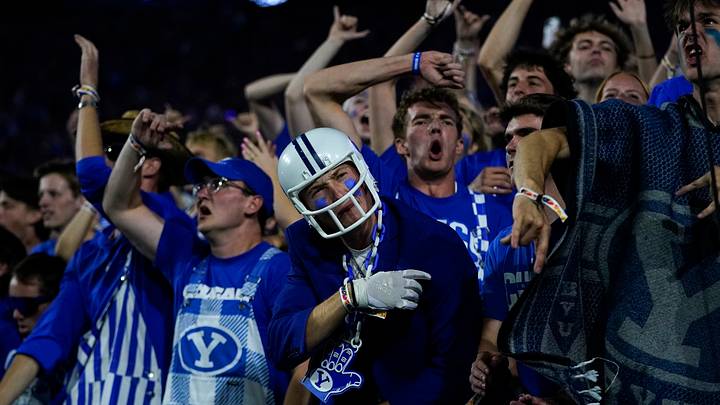
BYU followed its 17-10 victory over TCU with another conference win Friday night, improving to 5-0 overall and 3-0 in Big 12 play.
But the way the Cougars beat Iowa State was considerably different from how they beat TCU.
Against the Frogs, BYU managed only 216 total yards and 17 points. Against Iowa State, the Cougars generated 506 yards, including 329 passing yards and 109 rushing yards from quarterback Bear Bachmeier.
Despite all that production, BYU scored only 24 points.
That's where the numbers get interesting.
The Cougars moved the football but left points on the field, including failed fourth-down attempts deep in Iowa State territory. They also had special-teams mistakes that gave the Cyclones opportunities.
Yet BYU still won by two touchdowns.
Against TCU, BYU needed its defense and one decisive fourth-quarter drive. Against Iowa State, it generated considerably more offense but still had trouble finishing some possessions.
Two different performances. Same result.
And that's what TCU should be paying attention to.

The Frogs have played well enough defensively to win both conference games. But football isn't played by two separate teams wearing the same uniform. What one unit does directly affects the other.
When your defense forces a punt and your offense goes three-and-out, you've probably given away much of the field-position advantage your defense just created. Now those same defenders are back on the field, often without much time to recover.
I've been that linebacker.
You can keep telling yourself to get another stop, but eventually your offense has to make those stops mean something.
BYU is finding ways to win despite imperfections. TCU is finding ways to lose despite doing some things well.
That's the difference the Frogs have to close. TCU’s offensive numbers in Big 12 play show how much work remains.
Oklahoma State’s Win Over UCF Offers Lessons for TCU
Oklahoma State 42, UCF 28
This was probably the most useful result of the weekend for TCU.
UCF beat the Frogs 21-13 in Orlando. Since then, the Knights have lost to Houston and Oklahoma State.
Now, matchups matter, and one team's success against an opponent doesn't guarantee another team can duplicate it.
But when Oklahoma State puts up 42 points against a team TCU managed only 13 against, I want to know why.
The answer goes well beyond offensive play-calling.

Oklahoma State gained 414 yards on 60 offensive plays, averaging 6.9 yards per snap. UCF gained 375 yards on 83 plays, averaging 4.5.
The Cowboys also produced six plays of at least 20 yards, compared with three for UCF.
That's a significant difference in offensive efficiency.
UCF actually controlled possession for more than 35 minutes, but Oklahoma State was getting considerably more production out of each snap.
Then look at what happened defensively.
Oklahoma State held Duke Watson, who entered the game averaging 8.2 yards per carry, to 79 yards on 21 attempts.
The Cowboys also returned a fumble 28 yards for a touchdown, converted the two-point attempt and took advantage of a failed UCF fourth-down conversion to score on a short, 34-yard drive.
That tells a much more complete story than simply saying Oklahoma State scored 42 points.
Its offense generated explosive plays, its defense limited UCF's rushing efficiency, and the Cowboys turned defensive opportunities into points.
That's complementary football.
TCU's defense held UCF to 266 total yards and 106 rushing yards. The Frogs did enough defensively to give themselves an opportunity to win.
But creating an opportunity and capitalizing on it are two different things.
The bye week is a great opportunity for self-scouting, but I wouldn't limit it to studying our own film.
If I were TCU, I'd be studying exactly how Oklahoma State created its scoring opportunities against UCF, what the Cowboys did successfully on early downs, and how UCF responded when they started applying pressure.
Then I'd figure out how to adapt what worked to our personnel and offensive system.
That doesn't mean copying Oklahoma State's playbook. It means understanding why certain concepts worked. Did a formation create a favorable matchup? Did a route combination take advantage of a defender's leverage? Did the Cowboys recognize something in UCF's alignment before the snap?
Good coaches understand why something worked and determine whether their own players can execute it.
TCU has shown it can compete defensively. The next step is figuring out how to turn those performances into enough points to win football games.
That's a problem the Frogs need to solve, and quickly enough to put what they've learned into action while there's still time to turn this season around.
Arizona and West Virginia Present Different Tests for TCU
Arizona 52, West Virginia 31
This was the game I encouraged TCU fans to watch during the bye week, and it didn't disappoint.
Both teams are still on the Frogs' schedule, and Saturday revealed two completely different challenges TCU will have to prepare for.
I broke down those challenges and what they mean for the Frogs in my separate Arizona-West Virginia scouting column.

The biggest takeaway?
West Virginia can make you defend long possessions. Arizona can beat you with a handful of explosive plays.
Utah Showed What Finishing a Football Game Looks Like
Utah 41, Kansas 24
Kansas trailed Utah just 27-24 heading into the fourth quarter.
The Utes answered with a touchdown drive to extend their lead to 34-24. When Kansas threatened to make it a one-possession game again, Utah’s defense stopped quarterback Isaiah Marshall on fourth down at the one-yard line.
On the ensuing possession, Wayshawn Parker broke a 90-yard touchdown run.
That’s a pretty good example of complementary football, too.
Your defense makes a critical stop with its back against the goal line. Then your offense does more than get you out of trouble. It turns that opportunity into a touchdown.
Utah finished with 287 rushing yards, including 171 from Parker, while holding Kansas to just 58 yards on the ground.
The Utes didn’t play a perfect game, but when Kansas threatened to get back in it, Utah made the plays that mattered most.
TCU still has both teams on its schedule, and there’s a lesson here for the Frogs.
Playing hard for four quarters matters. So does making the plays necessary to win in the fourth.
The Frogs have already seen what happens when you play well defensively for most of a game but allow one late drive to determine the outcome.
Against BYU, the 216 total yards allowed weren’t what bothered me. The late 72-yard touchdown drive was.
Utah’s response against Kansas is another reminder that a defensive performance has to include the stop you need when the game is still there to be won.
TCU better be prepared for both.
Houston Keeps Showing Why Matchups Matter
Houston 35, Kansas State 16
Houston’s victory over Kansas State offered another useful lesson for TCU.

The Cougars produced 475 total yards, including 233 rushing, and scored touchdowns on five of their six red-zone opportunities.
Quarterback Conner Weigman threw four touchdown passes. All four went to tight end Patrick Overmyer.
As a former linebacker, that’s the statistic that jumps off the page to me.
When an offense repeatedly gets the football to its tight end near the goal line, I want to know what the defense is being forced to respect.
Is the running game keeping the linebackers close to the line of scrimmage? Are formations creating favorable matchups? Is motion making defenders reveal their assignments before the snap?
Those are questions you answer on film. A box score can tell you what happened, but it can’t tell you why.
Four touchdown catches by the same tight end should certainly make a defensive staff want to find out.
Houston’s performance also reinforces something TCU needs to understand as it prepares for the rest of its schedule.
The teams finding success in this conference aren’t all doing it the same way. Arizona can hurt you with explosive plays. Utah showed how its running game and defense can finish a close game. Houston kept finding an answer near the goal line.
TCU needs to recognize those differences and adjust to what each opponent demands.
Kansas State is still on the Frogs’ schedule, too. I’d want to understand how Houston created those opportunities and whether TCU has the personnel to take advantage of something similar.
TCU Needs a Baylor Win to Keep Pace in the Big 12
TCU is still looking for its first conference victory.
There's plenty of football left, but the standings are beginning to create separation.
The Frogs aren't just trying to catch teams that are winning. They're also running out of opportunities to lose games without making that climb considerably more difficult.
That's what makes Baylor so important.
A loss in Waco would put TCU at 0-3 in conference play while giving Baylor a head-to-head victory and three fewer conference losses than the Frogs.

A win wouldn't erase what happened against UCF and BYU, but it would prevent the Bears from creating that separation and give TCU something it desperately needs.
A conference victory.
At some point, you have to stop talking about how close you were and start putting wins on the board.
TCU vs. Baylor Will Show Whether the Bye Week Worked
Baylor didn't play this weekend, either.
The Bears are 4-1 overall and 2-0 in conference play after beating Arizona State 55-19.
That performance should get TCU’s attention.
Baylor produced 564 total yards, including 244 rushing and 320 passing, while converting nine of 15 third-down opportunities.
That's a balanced offensive attack capable of making a defense defend the entire field.
TCU can't simply assume another strong defensive performance will hold Baylor to 17 or 21 points.
The Frogs need to be prepared to win a game that might require considerably more offensive production than they've generated recently.
For me, there are three things worth watching.
First, can TCU stay ahead of the chains offensively?
When you're consistently facing second-and-long or third-and-long, the defense has a much better idea of what's coming. That allows defensive coordinators to become more aggressive with pressures, coverage disguises and personnel packages.
Second, can the Frogs create explosive plays?
TCU has targets who can help, but those opportunities have to translate into production.
You don't have to score on every possession, but you can't expect to consistently put together 12- or 15-play scoring drives without eventually making a mistake.
A missed block, penalty or negative play can erase several good snaps.
Explosive plays reduce the number of times an offense has to execute perfectly to reach the end zone.
Third, and most importantly, can TCU make its defensive stops count?
That doesn't mean every stop has to produce a touchdown.
Sometimes a couple of first downs can flip field position. Sometimes a sustained possession gives your defense a chance to recover. Sometimes a field goal is enough to reward a defensive unit that just handed you an opportunity.
But those possessions have to produce something.
That's what I mean when I talk about complementary football.
Every possession affects the next one. TCU has had an extra week to examine its tendencies, identify what opponents are doing to stop it and determine which adjustments fit its personnel. Players have had time to recover and work on what hasn't been executed consistently.
I've been part of teams that used a bye week to get better. I've also seen teams come out of one looking exactly like they did before it.
The difference isn't how much time you had.
It's what you did with it.
Baylor will give us a pretty good indication of whether TCU used that time effectively.

If the Frogs are still struggling on early downs, failing to create explosive plays and leaving their defense on the field without much offensive support, then the bye week didn't solve the problems we've been watching.
But if we see better situational football, more efficient possessions and an offense that can capitalize when its defense gives it an opportunity, we'll know some of those adjustments are starting to work.
Saturday's results reminded us that the Big 12 isn't going to wait for TCU to figure things out.
The teams ahead of the Frogs are winning, the conference race is taking shape, and Baylor is next.
The bye week gave TCU time to find some answers. Baylor week is where we find out if they actually did.
Stay Connected
Follow TCU Horned Frogs On SI for the latest TCU football and Big 12 coverage. Keep up with KillerFrogs on Facebook, X and Instagram, join the conversation on the KillerFrogs forum, and subscribe to The Weekly Croak for Horned Frog news delivered to your inbox.
 Add us as a preferred source on Google
Jason Phillips is a TCU Athletics Hall of Fame linebacker, four-time All Mountain West selection, and 2009 NFL Draft pick who spent five seasons in the pros before returning to TCU as a coach. Now writing for KillerFrogs, he brings an authentic, insider perspective to TCU On SI. In his weekly column, The Phillips Standard, Phillips breaks down game film, program culture, and Horned Frog football with the insight only a former player and coach can provide.
Follow MadeMan39