
UCLA Red Zone Report: Why Drives Succeeded, Adjustments Needed
In this story:
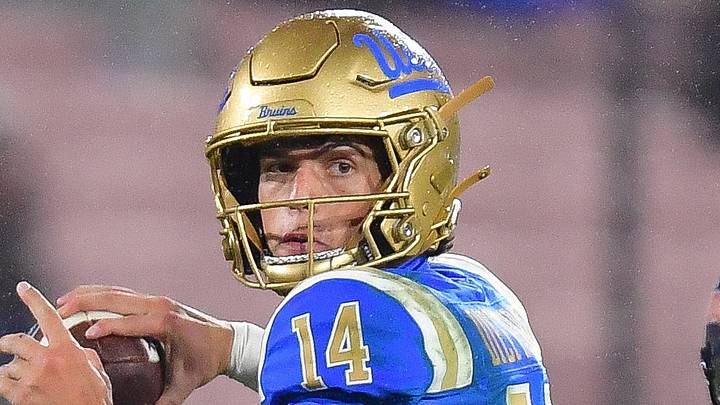
The UCLA Bruins remain one of the final unbeaten teams after defeating Illinois over the weekend.
The Bruins struggled to put the Fighting Illini away. Defensively, UCLA was stout and was the driving force for the win. However, the offense was stale throughout the game but did enough in certain spots. With that in mind, here's a red zone report.
Why Drives Succeeded
Explosive Plays
With several components of the offense lacking, its success was predicated on generating explosive plays. Aidan Mizell caught six passes for 176 yards and one touchdown. It took five plays for UCLA to jump out to a 7-0 lead, as Ty Dieffenbach connected with Mizell on a 54-yard touchdown. Mizell's longest reception went for 63 yards.
We'll talk about this shortly, but the rushing attack didn't provide much of a lift, so the passing game was the only avenue for large chunk plays.
Staying Ahead of the Chains
UCLA went 5-of-13 on third downs, but on drives where the offense hit paydirt, it put itself in comfortable down-to-go situations. Completing underneath passes and allowing receivers to gain yards after the catch were the main sources of this development.
Because the game script didn't force the Bruins to aggressively push the ball vertically, Dieffenbach could operate comfortably and manage the game.


Why Drives Stalled
Costly Turnover

This game could have looked vastly different if one play hadn't transpired in the first half. Already up by seven, UCLA was driving in the second quarter with an opportunity to take a two-possession lead. A field goal was a virtual guarantee as the Bruins were inside Illinois' 15-yard line.
All of that evaporated when Dieffenbach was hesitant to pull the trigger, allowing Juice Clarke to recover, gain ground, and intercept the pass. Ultimately, that didn't cost UCLA, but it certainly complicated the path to victory.
Dieffenbach's Injury
That aforementioned interception was magnified when the veteran signal caller went down with a shoulder injury late in the first half. Dieffenbach missed almost the entire third quarter, returning to the game with a little over one minute remaining.

During his absence, the Bruins' ability to move the ball felt like pulling teeth. The offense looked inept and lost without its starting quarterback.
Run Game Struggles
UCLA's offense was one-dimensional throughout the game, as the rushing attack was stagnant from the get-go. Luckily, the defense stifled Illinois for the majority of the contest. That said, when a team can't consistently and efficiently generate yards on the ground, it makes it virtually impossible to move the ball. The Bruins need to play complementary football to compete against the best of the best.
 Add us as a preferred source on Google

Logan Lazarczyk is a graduate of the University of Missouri-Kansas City, where he earned a Bachelor of Arts in Communication Studies with an emphasis in Journalism. Logan joined our team with extensive experience, having previously written and worked for media entities such as USA Today and Union Broadcasting.