%20%20--%3E%0A%3Csvg%20version%3D%221.1%22%20id%3D%22Layer_1%22%20xmlns%3D%22http%3A%2F%2Fwww.w3.org%2F2000%2Fsvg%22%20xmlns%3Axlink%3D%22http%3A%2F%2Fwww.w3.org%2F1999%2Fxlink%22%20x%3D%220px%22%20y%3D%220px%22%0A%09%20width%3D%2239px%22%20height%3D%2240px%22%20viewBox%3D%220%200%2039%2040%22%20enable-background%3D%22new%200%200%2039%2040%22%20xml%3Aspace%3D%22preserve%22%3E%0A%3Cpath%20fill%3D%22%23FFFFFF%22%20d%3D%22M38.5%2C7H28.2v26h10.3V7z%22%2F%3E%0A%3Cpath%20fill-rule%3D%22evenodd%22%20clip-rule%3D%22evenodd%22%20fill%3D%22%23FFFFFF%22%20d%3D%22M26.1%2C25.5c0%2C5.8-4.1%2C7.5-12.9%2C7.5C3.9%2C33%2C0%2C31.2%2C0%2C25.2v-1.1h11.6%0A%09v2.4c0%2C0.7%2C0.1%2C1.4%2C1.2%2C1.4c1%2C0%2C1.2-0.4%2C1.2-1.3v-0.9c0-1.6-0.9-1.6-3.5-2.2C2.2%2C21.7%2C0%2C19.7%2C0%2C15.3v-0.9C0%2C9.3%2C5.5%2C7%2C12.9%2C7%0A%09c10.2%2C0%2C12.8%2C2.6%2C12.8%2C7.4v1.8h-11v-2.9c0-0.6-0.4-1.1-1.2-1.1c-0.6%2C0-1.2%2C0.4-1.2%2C1.1v0.9c0%2C1.5%2C0.9%2C2%2C3.3%2C2.5%0A%09c8%2C1.6%2C10.5%2C3.3%2C10.5%2C7.5V25.5z%22%2F%3E%0A%3C%2Fsvg%3E%0A)
Oldest Active Stadiums in MLB History
In this story:
While all major sports respect their history, baseball carries it around proudly, almost like a symbol. Perhaps that's due to the sport's billing as "America's Pastime." Or perhaps it's because many of the elements of baseball's yesteryear remain present today.
You won't see peach baskets on a basketball court nowadays, nor will you spy a player using a leather helmet on the football field.
But in baseball, while plenty of changes have taken place, you can step into the past with ease. Especially in places like Boston, Chicago and Los Angeles, you have the ability to watch players play in the same stadium players were playing in decades prior.
It's unique. It's special. It's baseball.
And these are the oldest ballparks.
The Oldest Active Stadiums in MLB
Ballpark | City | Team | First Game Played |
|---|---|---|---|
Fenway Park | Boston | Red Sox | 1912 |
Wrigley Field | Chicago | Cubs | 1914 |
Dodger Stadium | Los Angeles | Dodgers | 1962 |
Angel Stadium | Anaheim | Angels | 1966 |
Kauffman Stadium | Kansas City | Royals | 1973 |
Rogers Centre | Toronto | Blue Jays | 1989 |
Rate Field | Chicago | White Sox | 1991 |
Oriole Park at Camden Yards | Baltimore | Orioles | 1992 |
Progressive Field | Cleveland | Guardians | 1994 |
Coors Field | Denver | Rockies | 1995 |
Fenway Park
First game: April 20, 1912
First HR: Hugh Bradley (April 26, 1912)
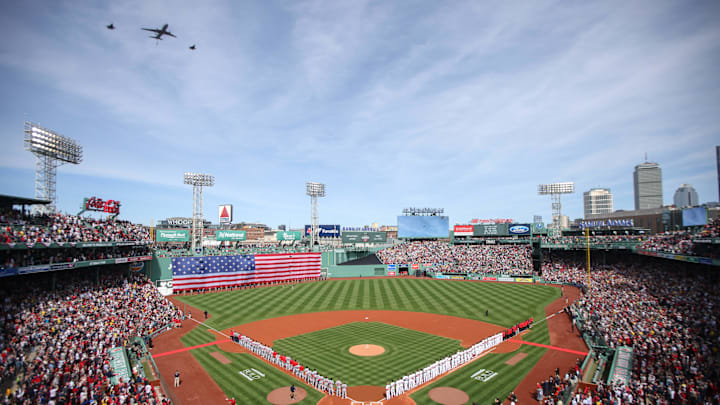
The oldest active MLB ballpark, Fenway Park is known for its iconic "Green Monster." From home plate, the left field wall is just 310 feet away. However, the Monster stands just over 37-feet tall and runs more than 230 feet.
It is a unique challenge for both hitters and defenders. Left fielders in Fenway often need some adjusting to learn to play balls off a 37-foot tall wall, while right-handed batters can see a dip in home runs traded for an increase in doubles.
Fenway Park is considered one of the most iconic and recognizable stadiums in the world and is a pending Boston landmark.

Wrigley Field
First game: April 23, 1914
First HR: Art Wilson (April 23, 1914)
Referred to as the "Friendly Confines," Wrigley Field is known for its iconic ivy-covered brick outfield walls. In 1988, the ballpark installed lights, making it the last MLB park to do so. In 2020, Wrigley Field was designated a national historic landmark.

Dodger Stadium
First game: April 10, 1962
First HR: Wally Post (April 10, 1962)
Upon moving to Los Angeles from Brooklyn in 1958, the Dodgers played four seasons at the L.A. Coliseum while they waited for their new ballpark to be ready.
Once Dodger Stadium was opened in 1962, the team set the MLB attendance record.
With a capacity of 56,000, Dodger Stadium is the largest ballpark west of the Mississippi River. It has played host to 10 World Series and hosted the MLB All-Star Game in 2022.
Iconic Ballparks of Yesteryear
The Polo Grounds
The Polo Grounds remains one of the strangest stadiums in the history of sports. Originally built for polo in upper Manhattan, it was home to four professional teams throughout its life: the New York Giants, New York Yankees, New York Mets and New York Giants (NFL).
And the shape of the Polo Grounds is what made it a legendary ballpark. Both left and right field had incredibly short porches (279 feet to left and 258 feet to right), but center field was an absurd 483 feet away from home plate.
The Polo Grounds were demolished in 1964, but 10 years prior were part of one of the most iconic plays in baseball history.
Let's set the scene. Game 1 of the 1954 World Series. The New York Giants and Cleveland Indians are tied at two runs apiece in the eighth inning. With two runners on, Vic Wertz is at the plate for Cleveland and crushes a pitch toward the cavernous center field of the Polo Grounds.
Willie Mays turns and sprints toward the wall, tracking the ball without ever turning around to make an over-the-shoulder basket catch. He then spins and fires the ball back to the infield, preventing the go-ahead run.
The Giants would go on to sweep the series and Mays' incredible play remains one of the best moments on the diamond.
Ebbets Field
You can't touch on the legendary ballparks of history without mentioning Ebbets Field in Brooklyn. Not only was it a massive part of the community, but it witnessed history as Jackie Robinson broke baseball's color barrier and became the first black man to play in MLB.
Ebbets Field was truly beautiful. It had prominent arched windows and a brick facade that was the epitome of big-city baseball. The double-decker grandstand in the outfield was tall and sat close to the field, so fans knew their voices were being heard.
Then on April 15, 1947, Robinson and the Dodgers took the field and he made history. Robinson played first base that day for Brooklyn, scoring the go-ahead run in the seventh inning.
In 1957, owner Walter O'Malley moved the Dodgers to Los Angeles seeking a stadium upgrade and larger crowds. Fans in Brooklyn were understandably devasted as the team had won the World Series just two years prior.
In 1960, Ebbets Field was demolished and replaced with the Ebbets Field Apartments.
 Add us as a preferred source on Google
Nathan Cunningham is a writer for Sports Illustrated and Minute Media. Throughout his career, he has written about collegiate sports, NFL Draft, Super Bowl champions, and more. Nathan has also been featured in FanSided and 90Min. Nathan loves colorful uniforms, mascots and fast-break pull-up 3-pointers. He graduated from BYU in 2016 with a degree in journalism.