%20%20--%3E%0A%3Csvg%20version%3D%221.1%22%20id%3D%22Layer_1%22%20xmlns%3D%22http%3A%2F%2Fwww.w3.org%2F2000%2Fsvg%22%20xmlns%3Axlink%3D%22http%3A%2F%2Fwww.w3.org%2F1999%2Fxlink%22%20x%3D%220px%22%20y%3D%220px%22%0A%09%20width%3D%2239px%22%20height%3D%2240px%22%20viewBox%3D%220%200%2039%2040%22%20enable-background%3D%22new%200%200%2039%2040%22%20xml%3Aspace%3D%22preserve%22%3E%0A%3Cpath%20fill%3D%22%23FFFFFF%22%20d%3D%22M38.5%2C7H28.2v26h10.3V7z%22%2F%3E%0A%3Cpath%20fill-rule%3D%22evenodd%22%20clip-rule%3D%22evenodd%22%20fill%3D%22%23FFFFFF%22%20d%3D%22M26.1%2C25.5c0%2C5.8-4.1%2C7.5-12.9%2C7.5C3.9%2C33%2C0%2C31.2%2C0%2C25.2v-1.1h11.6%0A%09v2.4c0%2C0.7%2C0.1%2C1.4%2C1.2%2C1.4c1%2C0%2C1.2-0.4%2C1.2-1.3v-0.9c0-1.6-0.9-1.6-3.5-2.2C2.2%2C21.7%2C0%2C19.7%2C0%2C15.3v-0.9C0%2C9.3%2C5.5%2C7%2C12.9%2C7%0A%09c10.2%2C0%2C12.8%2C2.6%2C12.8%2C7.4v1.8h-11v-2.9c0-0.6-0.4-1.1-1.2-1.1c-0.6%2C0-1.2%2C0.4-1.2%2C1.1v0.9c0%2C1.5%2C0.9%2C2%2C3.3%2C2.5%0A%09c8%2C1.6%2C10.5%2C3.3%2C10.5%2C7.5V25.5z%22%2F%3E%0A%3C%2Fsvg%3E%0A)
East Coast bias? These days sports is all about the West Coast

Forgive my terrible mood, but I woke up this morning on the wrong side of the country. I live on the East Coast, a coast that's toast at the moment. East Coast girls are hip -- I really dig those styles they wear -- but beyond them, and a few nifty museums, I cannot boast of my benighted coast.
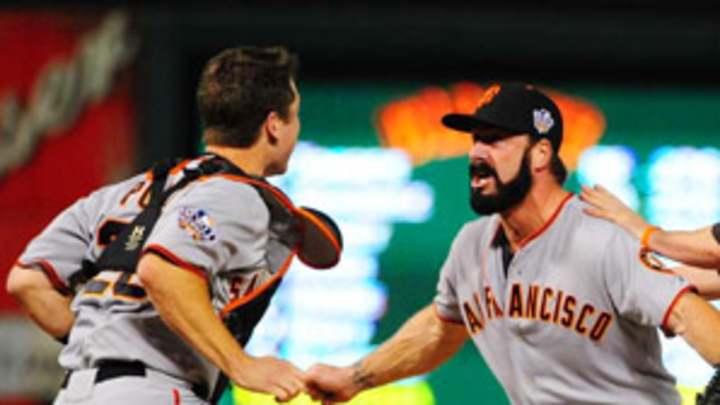
It's not just the East Coast that's in decline, it's the entire Eastern Time Zone. Not a single Eastern team is defending champion of any of the major North American professional leagues. Two play west of the Mississippi (the Lakers and Giants), one plays on the Mississippi (the Saints) and one (the Blackhawks) plays in what is often called America's breadbasket -- to distinguish it, apparently, from America's bike basket: That dainty, antiquated, plastic-flowered thing at the front end of the country.
At least I'm told the Lakers, Giants, Saints and Hawks are champions of their respective leagues. As a TV viewer on the East Coast, I haven't witnessed the end of a major championship -- to say nothing of a Monday Night Football game -- in decades. They all end past my bedtime. Fortunately, I can now nod off in my nightcap, dentures soaking on the nightstand, knowing that no team within 1,000 miles of my home will have won anything of any significance, with the perennial exception of the University of Connecticut women's basketball team.
Thank goodness for college basketball. Butler came within a basket of beating Duke for the men's title last April. Butler, of course, is in Indiana, a state that has vacillated so often between Central and Eastern times -- occasionally observing both simultaneously -- that nobody, least of all residents of the Hoosier State, has any idea what time it is there.
And so I hereby petition the Army Corps of Engineers to trigger a controlled earthquake that would break off the entire Eastern Time Zone from the rest of the continental U.S., creating our own island, giving the East Coast its own West Coast -- and with it, perhaps, some of that western sports mojo. If the Big House overlooked its own cove, in the way that AT&T Park in San Francisco does, Michigan's football program might return to glory.
Instead, college football has all but abandoned the Eastern Time Zone. Only one team in the BCS top 10 plays its home games here. Ohio State is America's easternmost football power, and to people on the East Coast, Ohio is a frontier wilderness. It's appropriate that the Buckeyes play in Columbus, for the city exists, to the average New Yorker, somewhere beyond the edge of the known world. That is to say, west of Moonachie, New Jersey.
Nearly half of all Americans live in the Eastern Time Zone, but the same cannot be said for half the All-Americans. College football's real titans -- Oregon and Boise State and TCU and before them, USC -- might as well play in another universe entirely. We hear only fourth-hand tales of their prowess, passed down by business travelers, who return to LaGuardia speaking of mythical blue fields and feathered uniforms and horned frogs and Trojan horses.
We sheltered Easterners are shocked at this reversal. It used to be that the west was home to quaint regional rivalries like Cal-Stanford, Sonics-Blazers and Dodgers-Giants. Now, of course, the opposite is true. It's the east that has the quaint rivalries: Harvard-Yale, Rangers-Islanders and -- in an annual competition to determine the American League East runner-up -- Red Sox-Yankees. To redress this balance, Sox owner John Henry just bought a team, Liverpool F.C., from the West Coast. Of England.
Real Salt Lake is the reigning champion of Major League Soccer. The Seattle Storm won the WNBA title. Mercifully, I'm a native of the Midwest, what is often called a "transplant" to the East Coast, and in my case the transplant didn't quite take. Whether the host rejected the organ or the organ rejected the host -- a little of both, probably -- the bottom line is this: I've never adjusted to Eastern time, though I've been living on it for much of the last 20 years.
In my heart, it will always be Central time. It's an hour earlier in my soul.
And anyway, I look on the bright side. The sun will come up tomorrow -- in the east, no less, before doing what it always does: Heading west.
More good news: A team from the east is about to win something, at long last. Major League Soccer's Eastern Conference final is being played Saturday night.
The bad news: The league's Eastern Conference final pits -- sigh -- Colorado against San Jose.

Special Contributor, Sports Illustrated Steve Rushin was born in Elmhurst, Ill. on September 22, 1966 and raised in Bloomington, Minn. After graduating from Bloomington Kennedy High School in 1984 and Marquette University in 1988, Rushin joined the staff of Sports Illustrated. He is a Special Contributor to the magazine, for which he writes columns and features. In 25 years at SI, he has filed stories from Greenland, India, Indonesia, Antarctica, the Arctic Circle and other farflung locales, as well as the usual locales to which sportswriters are routinely posted. His first novel, The Pint Man, was published by Doubleday in 2010. The Los Angeles Times called the book "Engaging, clever and often wipe-your-eyes funny." His next book, a work of nonfiction, The 34-Ton Bat, will be published by Little, Brown in 2013. Rushin gave the commencement address at Marquette in 2007 and was awarded an honorary Doctor of Letters for "his unique gift of documenting the human condition through his writing." In 2006 he was named the National Sportswriter of the Year by the National Sportswriters and Sportscasters Association. A collection of his sports and travel writing—The Caddie Was a Reindeer—was published by Grove Atlantic in 2005 and was a semifinalist for the Thurber Prize for American Humor. The Denver Post suggested, "If you don't end up dropping The Caddie Was a Reindeerduring fits of uncontrollable merriment, it is likely you need immediate medical attention." A four-time finalist for the National Magazine Award, Rushin has had his work anthologized in The Best American Sports Writing, The Best American Travel Writing and The Best American Magazine Writing collections. His essays have appeared in Time magazine andThe New York Times. He also writes a weekly column for SI.com. His first book, Road Swing, published in 1998, was named one of the "Best Books of the Year" by Publishers Weekly and one of the "Top 100 Sports Books of All Time" by SI. He and his wife, Rebecca Lobo, have four children and live in Connecticut.