%20%20--%3E%0A%3Csvg%20version%3D%221.1%22%20id%3D%22Layer_1%22%20xmlns%3D%22http%3A%2F%2Fwww.w3.org%2F2000%2Fsvg%22%20xmlns%3Axlink%3D%22http%3A%2F%2Fwww.w3.org%2F1999%2Fxlink%22%20x%3D%220px%22%20y%3D%220px%22%0A%09%20width%3D%2239px%22%20height%3D%2240px%22%20viewBox%3D%220%200%2039%2040%22%20enable-background%3D%22new%200%200%2039%2040%22%20xml%3Aspace%3D%22preserve%22%3E%0A%3Cpath%20fill%3D%22%23FFFFFF%22%20d%3D%22M38.5%2C7H28.2v26h10.3V7z%22%2F%3E%0A%3Cpath%20fill-rule%3D%22evenodd%22%20clip-rule%3D%22evenodd%22%20fill%3D%22%23FFFFFF%22%20d%3D%22M26.1%2C25.5c0%2C5.8-4.1%2C7.5-12.9%2C7.5C3.9%2C33%2C0%2C31.2%2C0%2C25.2v-1.1h11.6%0A%09v2.4c0%2C0.7%2C0.1%2C1.4%2C1.2%2C1.4c1%2C0%2C1.2-0.4%2C1.2-1.3v-0.9c0-1.6-0.9-1.6-3.5-2.2C2.2%2C21.7%2C0%2C19.7%2C0%2C15.3v-0.9C0%2C9.3%2C5.5%2C7%2C12.9%2C7%0A%09c10.2%2C0%2C12.8%2C2.6%2C12.8%2C7.4v1.8h-11v-2.9c0-0.6-0.4-1.1-1.2-1.1c-0.6%2C0-1.2%2C0.4-1.2%2C1.1v0.9c0%2C1.5%2C0.9%2C2%2C3.3%2C2.5%0A%09c8%2C1.6%2C10.5%2C3.3%2C10.5%2C7.5V25.5z%22%2F%3E%0A%3C%2Fsvg%3E%0A)
Abbreviated Seasons
Abbreviated Seasons
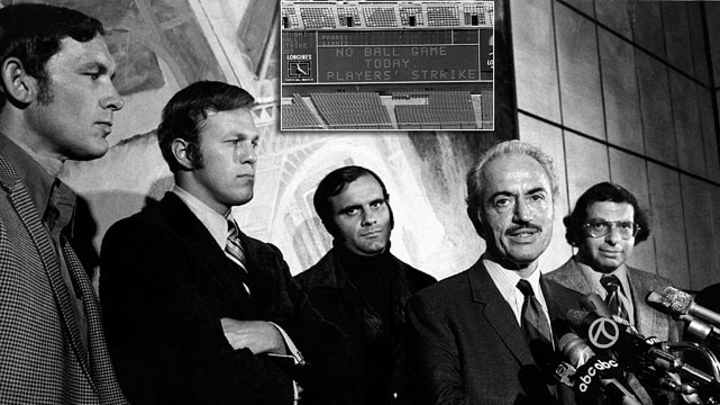
MLB, 1972
With NBA and NFL players locked out and the possibility that games could be missed in each league, SI.com looks back at some of the abbreviated seasons in sports. The first players' strike in the history of the MLB brought baseball to a standstill from April 1-13, 1972, leaving a total of 86 games canceled in its wake. Although the players were not paid for the missed games, the athletes were given a pension increase and the right to salary arbitration. (Pictured, from left: Gary Peters, Wes Parker, Joe Torre, MLBPA Executive Director Marvin Miller and assistant counsel Dick Moss)
MLB, 1981
The 1981 MLB strike occurred midway through the season and led to the loss of more than 50 games per team. The players and the owners had fought over whether teams should be awarded compensation for lost free agents, a battle that finally ended with the agreement of partial compensation.
NFL, 1982
After a 57-day players' strike, the 1982 NFL season was cut to nine games per team, while the postseason adopted a format that resembled March Madness. Divisional standings were ignored and teams were instead seeded 1-8 in each conference.
NFL, 1987
Although the 1987 NFL lockout resulted in the loss of just one game per team, three other weeks were filled by teams fielded by "replacement" players who had crossed the picket lines to play. The players returned to work, defeated, but in the coming years would go on to take their labor battles to court, where they found more success. (Pictured: Dan Marino, left, and Kenny Hill with his dog)
MLB, 1994-95
In August 1994, the Montreal Expos had a .649 winning percentage and were two months away from their second ever postseason appearance. Unfortunately for Expos fans, a 232-day strike led to the cancellation of the rest of the regular season and the entire postseason. The strike carried on to the 1995 season, which was shortened to a 144-game long season.
NHL, 1994-95
The 1994-95 NHL lockout saw the regular season shortened from 84 games to 48. All of the games were intra-conference contests and the 22-18-8 New Jersey Devils went on to win the Stanley Cup. (Pictured: NHL Commissioner Gary Bettman, left, and NHLPA Executive Director Bob Goodenow)
NBA, 1998-99
Tip-off for 1998-99 NBA regular season was postponed more than three months because of stalled negotiations over a new collective bargaining agreement. Each team's schedule was shortened from 82 to 50 games and the All-Star Game was canceled. (Pictured, from left: NBA Commissioner David Stern, Danny Schayes, NBAPA Executive Director Billy Hunter, and Patrick Ewing)
NHL, 2004-05
A 310-day lockout led to the cancellation of the 2004-05 NHL season and left the Stanley Cup without an owner for the first time since a Spanish flu outbreak led to the cancellation of the 1919 Finals. In order to win back fans after the lockout, the NHL changed some of its rules, including adding overtime shootouts.
 Add us as a preferred source on Google