%20%20--%3E%0A%3Csvg%20version%3D%221.1%22%20id%3D%22Layer_1%22%20xmlns%3D%22http%3A%2F%2Fwww.w3.org%2F2000%2Fsvg%22%20xmlns%3Axlink%3D%22http%3A%2F%2Fwww.w3.org%2F1999%2Fxlink%22%20x%3D%220px%22%20y%3D%220px%22%0A%09%20width%3D%2239px%22%20height%3D%2240px%22%20viewBox%3D%220%200%2039%2040%22%20enable-background%3D%22new%200%200%2039%2040%22%20xml%3Aspace%3D%22preserve%22%3E%0A%3Cpath%20fill%3D%22%23FFFFFF%22%20d%3D%22M38.5%2C7H28.2v26h10.3V7z%22%2F%3E%0A%3Cpath%20fill-rule%3D%22evenodd%22%20clip-rule%3D%22evenodd%22%20fill%3D%22%23FFFFFF%22%20d%3D%22M26.1%2C25.5c0%2C5.8-4.1%2C7.5-12.9%2C7.5C3.9%2C33%2C0%2C31.2%2C0%2C25.2v-1.1h11.6%0A%09v2.4c0%2C0.7%2C0.1%2C1.4%2C1.2%2C1.4c1%2C0%2C1.2-0.4%2C1.2-1.3v-0.9c0-1.6-0.9-1.6-3.5-2.2C2.2%2C21.7%2C0%2C19.7%2C0%2C15.3v-0.9C0%2C9.3%2C5.5%2C7%2C12.9%2C7%0A%09c10.2%2C0%2C12.8%2C2.6%2C12.8%2C7.4v1.8h-11v-2.9c0-0.6-0.4-1.1-1.2-1.1c-0.6%2C0-1.2%2C0.4-1.2%2C1.1v0.9c0%2C1.5%2C0.9%2C2%2C3.3%2C2.5%0A%09c8%2C1.6%2C10.5%2C3.3%2C10.5%2C7.5V25.5z%22%2F%3E%0A%3C%2Fsvg%3E%0A)
Seau's death sparks more player lawsuits, but it's an uphill climb
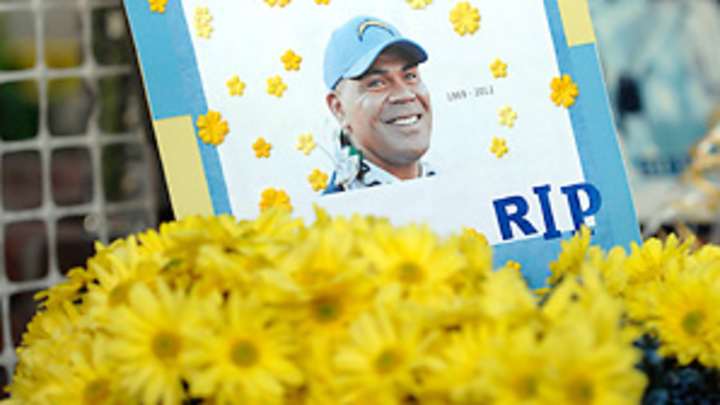
The phone rang more frequently at Craig Mitnick's Philadelphia-area law offices late in the afternoon on May 2 as news of legendary linebacker Junior Seau's suicide started circulating. On the other end of the phone, Mitnick heard the antsy voices of retired NFL players, calling one after another, for a status check on the concussion-related claims Mitnick filed on their behalf against the NFL.
"A lot of athletes I'm speaking with after Junior Seau's incident are saying, 'Wow, I'm glad I'm joined this. I need to become part of this. I'm worried. I have some symptoms,'" Mitnick says.
Though researchers are weeks away from determining if Seau suffered brain damage linked to concussions, his death -- coupled with the suicide 11 days earlier of Atlanta Falcons safety Ray Easterling, lead plaintiff in the first federal suit against the NFL for concussion-related injuries -- has emboldened some of Mitnick's 800 clients, many of whom he described as hesitant to sue the league. Since Seau shot himself in the chest, at least six new lawsuits have been filed, charging that the league ignored and hid information about the dangers of head trauma and failed to properly treat concussed players. As of Thursday, more than 1,800 retired players in 71 lawsuits say they suffer symptoms like memory loss, depression, and sleeplessness due to repeated hits to the head they endured as pro football players. Thirteen of the suits also name the NFL's licensed helmet manufacturer, Riddell, as a co-defendant, alleging the company defectively designed and manufactured helmets. (Six widows of former players have also filed separate wrongful death suits against the league). The suits ask for financial damages and some want the court to mandate a medical monitoring program for players. Most disputes are in the process of being consolidated into one case in the United States District Court in Philadelphia. Lawyers for the plaintiffs have until June 8 to file a master complaint.
Legal analysts interviewed by SI describe the players' fight the same way: an uphill battle. Andrew B. Carrabis, a Florida attorney and author of a Harvard Journal of Sports & Entertainment Law article about the legal implications of concussions in pro football, says the plaintiffs' challenge is twofold. First, the players must argue that their complaints are beyond the scope of the NFL's collective bargaining agreements. Second, the plaintiffs have to establish a clear cause-and-effect relationship between their symptoms and the hits they took as NFL players.
In the Easterling suit, the NFL filed a motion to dismiss last November, arguing the players' claims were "inextricably intertwined" with the CBA. "That is the case here," the motion states. (The Easterling case has since been combined into the Philadelphia master complaint.)
To get around the CBA, the plaintiffs need "a smoking gun," says Robert Boland, academic chair of NYU's Preston Robert Tisch Center for Hospitality, Tourism, and Sports Management. "Something that shows the concealment or conceit" that the NFL knew the dangers of head injuries.
Yet Boland notes the NFL isn't just fighting the concussion issue in the court of law but in the court of public opinion, too. "Football is very traditional in the sense that it's enjoyed by generations. It honors team. It honors our commitment to one another. The idea that the league would be in a position of acting to crush the claims of past heroes and appear insensitive might be the biggest issue here," he says. Events like Seau's and Easterling's suicides, Boland notes, "put the NFL in a situation where they want to be very careful in managing this because you don't want to appear to be unsympathetic to your former stars." Popular perception more than legal obligation may compel the league to settle quickly, stopping the onslaught of headlines with every new filing.
Locks, the attorney, says it's too early to think settlement. Which is partly why his co-counsel, Mitnick, continues staking out new clients. He set up a website last January -- playerinjury.com -- with the latest news about concussions, the lawyers' contact information, and a 17-question intake form. "It's very difficult for players out there to have access to attorneys that are involved in this litigation where they can ask questions, where they can become informed, where they know about the lawsuit they're getting involved in," Mitnick says. He estimates that 1,000 retired players have answered the questionnaire. After filling out the form asking about players' concussion histories and instructing them to click "Yes" next to the symptoms they've suffered, such as headaches and tingling or numbness in the hands, there's one final box for players to check before submitting their forms: a retainer agreement with the Locks firm. With a click of a mouse -- much to the chagrin of competing attorneys -- retired NFL stars can join the suit. Or, in more sobering metrics, about as long as it took Seau and Easterling to lose their lives.
 Add us as a preferred source on Google
Staff Writer, Sports Illustrated Staff writer Melissa Segura made an immediate impression at Sports Illustrated. As an undergraduate intern in 2001, her reporting helped reveal that Danny Almonte, star of the Little League World Series, was 14, two years older than the maximum age allowed in Little League. Segura has since covered a range of sports for SI, from baseball to mixed martial arts, with a keen eye on how the games we play affect the lives we lead. In a Sept. 10, 2012, cover story titled, The Other Half of the Story, Segura chronicled the plight of NFL wives and girlfriends caring for brain-injured players. In 2009 she broke the story that MLB had discovered that Washington Nationals prospect Esmailyn Gonzalez, who had been signed to a team-record $1.4 million bonus in 2006, was really Carlos Alvarez and he was four years older than he had claimed to be. Segura graduated with honors from Santa Clara University in 2001 with a B.A. in Spanish studies and communications (with an emphasis in journalism). In 2011, she studied immigration issues as a New York Times fellow at UC-Berkeley's Graduate School of Journalism. Before joining SI full-time in 2002, she worked for The Santa Fe New Mexican and covered high school sports for The Record (Bergen County, N.J.). Segura says Gary Smith is the SI staffer she would most want to trade places with for a day. "While most noted for his writing style, having worked alongside Gary, I've come to realize he is an even more brilliant reporter than he is a writer."