%22%3E%0A%3Cpath%20d%3D%22M0%205.37646H8.15061L17.4195%2016.8819V5.37646H26.0647V31.4412H18.3227L8.64523%2019.4196V31.4412H0V5.37646Z%22%20fill%3D%22white%22%2F%3E%0A%3Cpath%20d%3D%22M29.2041%205.37649H43.8064C47.4193%205.37649%2049.6989%206.1937%2051.2258%207.72059C52.1505%208.64533%2052.8172%2010.0002%2052.8172%2011.7851V11.8497C52.8172%2014.9465%2050.9462%2016.8389%2048.172%2017.8067C51.5269%2018.7744%2053.6774%2020.5594%2053.6774%2024.1293V24.1938C53.6774%2028.3659%2050.258%2031.4197%2043.6558%2031.4197H29.2041V5.35498V5.37649ZM44.258%2013.7637C44.258%2012.6024%2043.3333%2011.9787%2041.4623%2011.9787H37.6988V15.6346H41.5053C43.3763%2015.6346%2044.258%2015.011%2044.258%2013.8497V13.7852V13.7637ZM42.0859%2020.9895H37.6988V24.8605H42.0644C43.9569%2024.8605%2044.9247%2024.0863%2044.9247%2022.968V22.9035C44.9247%2021.7852%2043.9999%2021.011%2042.0859%2021.011V20.9895Z%22%20fill%3D%22white%22%2F%3E%0A%3Cpath%20d%3D%22M64.8174%205.18286H73.4627L84.452%2031.4411H74.9896L73.6132%2027.9357H64.4949L63.1615%2031.4411H53.8496L64.8389%205.18286H64.8174ZM71.4412%2021.7636L69.054%2015.441L66.6669%2021.7636H71.4412Z%22%20fill%3D%22white%22%2F%3E%0A%3Cpath%20d%3D%22M95.2695%205.37646H105.248C115.592%205.37646%20120.775%2010.4733%20120.775%2018.1938V18.2583C120.775%2025.9788%20115.485%2031.4412%20104.947%2031.4412H95.2695V5.37646ZM104.001%2012.9679V23.8497H105.463C109.442%2023.8497%20112.022%2022.2153%20112.022%2018.4518V18.3873C112.022%2014.6239%20109.463%2012.9894%20105.463%2012.9894H104.001V12.9679Z%22%20fill%3D%22white%22%2F%3E%0A%3Cpath%20d%3D%22M123.098%2011.1182H131.549V15.2258C132.711%2012.4731%20134.56%2010.6881%20137.915%2010.8387V19.8065H137.012C133.442%2019.8065%20131.528%2021.785%20131.528%2026.2797V31.4625H123.076V11.1182H123.098Z%22%20fill%3D%22white%22%2F%3E%0A%3Cpath%20d%3D%22M137.808%2025.6772V25.6127C137.808%2021.5482%20140.818%2019.2901%20145.55%2019.2901C147.27%2019.2901%20149.464%2019.6557%20150.345%2020.0428V19.6987C150.345%2017.8277%20149.184%2016.7524%20146.582%2016.7524C144.496%2016.7524%20142.754%2017.204%20140.969%2017.9137L139.485%2012.3008C141.829%2011.3975%20144.517%2010.8169%20148.044%2010.8169C152.173%2010.8169%20154.862%2011.6771%20156.646%2013.4621C158.173%2014.989%20158.776%2016.9675%20158.776%2019.9137V31.5052H150.324V29.4622C148.904%2030.9891%20147.012%2031.9999%20144.474%2031.9999C140.56%2031.9999%20137.808%2029.7633%20137.808%2025.7417V25.6772ZM150.431%2023.9138V23.0536C149.937%2022.86%20149.206%2022.7095%20148.496%2022.7095C146.818%2022.7095%20145.894%2023.7202%20145.894%2024.9891V25.0536C145.894%2026.2364%20146.754%2027.0321%20147.829%2027.0321C149.313%2027.0321%20150.431%2025.8493%20150.431%2023.9138Z%22%20fill%3D%22white%22%2F%3E%0A%3Cpath%20d%3D%22M162.883%2017.6345H160.496V11.1183H162.883C162.926%208.96778%20163.442%207.20433%20164.711%205.9355C166.088%204.55915%20167.872%204%20170.668%204C173.163%204%20174.69%204.21506%20175.851%204.55914V9.84951C175.034%209.65596%20174.217%209.54843%20173.141%209.54843C171.83%209.54843%20171.163%2010.0646%20171.163%2011.1829V11.3334H175.851V17.6345H171.335V31.4411H162.883V17.6345Z%22%20fill%3D%22white%22%2F%3E%0A%3Cpath%20d%3D%22M178.883%2024.6238V17.613H176.496V11.0968H178.883V6H187.335V11.0968H192.023V17.613H187.335V22.7528C187.335%2024.2797%20188.045%2024.8389%20189.378%2024.8389C190.152%2024.8389%20191.055%2024.6238%20191.937%2024.2152V30.7314C190.604%2031.4411%20188.582%2031.8927%20186.539%2031.8927C181.55%2031.8927%20178.862%2029.5916%20178.862%2024.6238H178.883Z%22%20fill%3D%22white%22%2F%3E%0A%3Cpath%20fill-rule%3D%22evenodd%22%20clip-rule%3D%22evenodd%22%20d%3D%22M201.368%204.36764C207.191%20-1.45588%20216.632%20-1.45588%20222.456%204.36764C228.279%2010.1912%20228.279%2019.6324%20222.456%2025.4559L211.912%2036L201.368%2025.4559C195.544%2019.6324%20195.544%2010.1912%20201.368%204.36764ZM204.009%207.55761C203.948%207.86849%20203.916%208.39718%20203.916%209.14566V10.4189C203.916%2011.1832%20203.948%2011.7198%20204.013%2012.0267C204.078%2012.3317%20204.278%2012.6168%20204.617%2012.8762C204.956%2013.1376%20205.403%2013.3316%20205.958%2013.4623C206.512%2013.593%20207.1%2013.6583%20207.837%2013.6583C208.573%2013.6583%20209.217%2013.591%20209.769%2013.4524C210.322%2013.3158%20210.761%2013.1178%20211.086%2012.8604C211.411%2012.6029%20211.605%2012.3178%20211.666%2012.0069C211.728%2011.6961%20211.759%2011.1674%20211.759%2010.4189V9.14566C211.759%208.38134%20211.728%207.84473%20211.662%207.53781C211.597%207.23287%20211.397%206.94972%20211.058%206.68834C210.72%206.42696%20210.272%206.23291%20209.718%206.10223C209.163%205.97154%20208.536%205.90619%20207.839%205.90619C207.102%205.90619%20206.459%205.97352%20205.906%206.11213C205.352%206.24875%20204.914%206.44677%20204.589%206.70418C204.265%206.9616%20204.071%207.24673%20204.009%207.55761ZM209.276%2024.8638C212.876%2024.8638%20214.557%2024.2064%20214.557%2021.862V21.858V21.3155C214.557%2019.6581%20213.516%2018.971%20210.252%2018.3136C209.278%2018.1136%20208.908%2017.9136%20208.908%2017.3136V16.9414C208.908%2016.6543%20209.177%2016.5117%20209.413%2016.5117C209.749%2016.5117%20209.918%2016.7137%20209.918%2016.9414V18.1136H214.391V17.3988C214.391%2015.4563%20213.347%2014.4266%20209.177%2014.4266C206.15%2014.4266%20203.896%2015.3414%20203.896%2017.3711V17.7433C203.896%2019.5155%20204.805%2020.3155%20208.201%2021.0303C208.28%2021.0472%20208.355%2021.063%20208.427%2021.0781C209.329%2021.2674%20209.647%2021.3341%20209.647%2021.9174V22.2897C209.647%2022.6619%20209.546%2022.8045%20209.142%2022.8045C208.67%2022.8045%20208.637%2022.5471%20208.637%2022.262V21.2897H203.894V21.7471C203.894%2024.149%20205.476%2024.8638%20209.276%2024.8638ZM215.424%2024.5569H219.925V14.7355H215.424V24.5569ZM216.955%2013.5019H219.925V6.06064H217.092V9.411L215.193%206.06064H212.359V13.5019H215.193V10.1199L216.955%2013.5019ZM208.269%2012.152C208.204%2012.2688%20208.055%2012.3262%20207.825%2012.3262L207.827%2012.3282C207.604%2012.3282%20207.459%2012.2767%20207.398%2012.1757C207.336%2012.0748%20207.305%2011.8074%20207.305%2011.3758V7.90068C207.305%207.51852%20207.352%207.28684%20207.445%207.20962C207.538%207.13239%20207.675%207.09279%20207.851%207.09279C208.059%207.09279%20208.198%207.14031%20208.265%207.23734C208.332%207.33239%20208.366%207.55416%20208.366%207.90068V11.3203C208.366%2011.7579%20208.334%2012.0352%20208.269%2012.152Z%22%20fill%3D%22white%22%2F%3E%0A%3C%2Fg%3E%0A%3Cdefs%3E%0A%3CclipPath%20id%3D%22clip0_15247_3640%22%3E%0A%3Crect%20width%3D%22227%22%20height%3D%2236%22%20fill%3D%22white%22%2F%3E%0A%3C%2FclipPath%3E%0A%3C%2Fdefs%3E%0A%3C%2Fsvg%3E%0A)
2026 NBA Draft: The Efficient Tall Freshman (ETF) Query
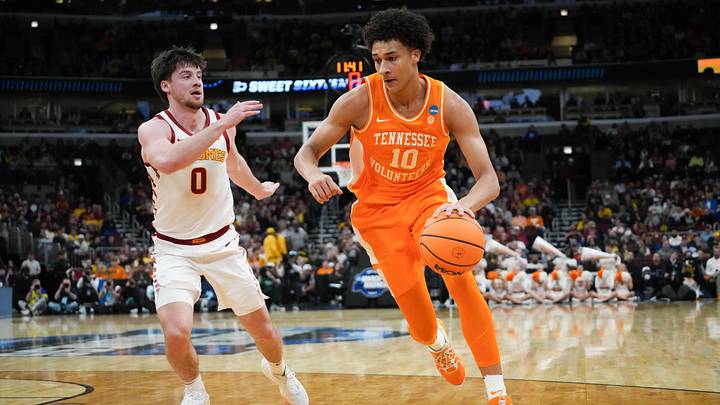
The new era of the NBA has emphasized both outside shooting and positional size. Most competitive teams are now filled with taller wings or forwards who can space the floor and guard multiple positions defensively. The NBA's movement towards taller players with long wingspans has also led to the decline of undersized guards sticking in the NBA.
While we've dove into three queries that emphasize different levels of production based on college year, as shown through the Productive Young Athlete (PYA) query, Productive Sophomore Query (PSQ), and Productive Junior Query (PJQ), the Efficient Tall Freshman (ETF) Query dives into the combination of size and potential as a shooter in predicting NBA outcomes. The title itself is also a play on exchange-traded funds, which are also known as ETFs in the financial world and are one of the most common ways for people to invest their money. Similarly, perhaps the ETF query can be one data point for a team to invest in a prospect who meets the necessary criteria.
The Efficient Tall Freshman (ETF) Query
- The Study
- Efficient Tall Freshman Query: Player Outcomes
- The Results
- Projecting Into the Future
- Conclusion: Why is this Useful?
The Study
Before we dive into the statistical analysis, it’s important to define what “stick” means in my study. In this case, I considered a prospect to “stick” if they played five-plus seasons in the NBA. Prospects who qualified in recent seasons had projections created for them based on career statistics and overall performance thus far.
There were 77 freshmen throughout the 15 college basketball seasons from 2010-2021 who played at least 40% of their team's minutes, were at least 6-foot-6, had a free throw percentage of at least 75%, had at least 50 free throw attempts, had a Box Plus-Minus of at least +3, and met the minimum athletic threshold of four total dunks. 67.5% (52/77) of those freshmen played five-plus years in the NBA, are currently in the NBA, or are strongly projected to stick in the NBA.
Why are each of these criteria important?
A freshman is the first year of a player at a college or university, indicating a young age of around 18 years old. Minutes Percentage is the share of the team’s total minutes that a prospect plays in. These two criteria alone help narrow prospects down into college basketball players who are young but are already trusted by their college coach and talented enough to play significant (defined here as ≥40% of the team’s total) minutes.
The next indicator for the prospect is having a free throw percentage of at least 75%, which indicates potential as a shooter at the next level. In fact, a player's college free throw percentage is actually a better indicator of potential as an NBA shooter than their college three-point percentage. Additionally, all prospects included in the study shot at least 50 free throw attempts in their freshman season, reducing the chance for error within the free throw shooting indicator.
Since size and, more specifically, height is becoming more important to sticking in the NBA, we looked at players who are at least 6-foot-6. This narrows it down to freshmen being trusted to play a significant amount of their team's minutes, have potential as a shooter in the NBA, and have significant size at 6-foot-6. Finally, one of the last two indicators is a Box Plus-Minus of at least +3, used to ensure that the prospects are impacting the college game to a baseline level over a replacement player. The last indicator is a minimum dunk threshold of four, used to incorporate a baseline athleticism metric.
Therefore, players who meet the Efficient Tall Freshman (ETF) query are freshmen who are trusted to play at least 40% of their team's minutes, are impacting the game at a minimum level (+3 Box Plus-Minus), have positional size of at least 6-foot-6, have positive shooting indicators (converting at least 75% from the line on at least 50 attempts that season), and also meet the four-dunk athletic threshold.
Efficient Tall Freshman Query: Player Outcomes
Sticking in the NBA is one thing, but how impactful were the players who stuck? Below I grouped the 77 players who have met the Efficient Tall Freshman Query from 2010-2024 into four subcategories based on Draft Express Pick Expectations. One highlight: Nearly 34% of players to meet the criteria (26 of the 77 players) became NBA starters or multi-time All-Stars.
While players were grouped based on current career statistics, there were seven players in particular who were too early to group: Tucker DeVries ('22), Mark Mitchell ('23), Andrew Rohde ('23). Julian Phillips ('23), Jett Howard ('23), Johnny Furphy ('24), and Kwame Evans Jr ('24). To be on the cautionary side, only two of these seven players were included in the "Backup" threshold while five of these seven players were included in the "Did Not Stick" category. More on the groups below:
Players were grouped into the following five categories:
Did Not Stick
Players who met the Efficient Tall Freshman Query (ETF) but did not stick in the NBA or are projected not to stick: Xaiver Henry ('10), Trent Widemen ('11), Quincy Miller ('12), Aaron Harrison ('14), William Lee ('15), Mike Daum ('16), Allonzo Trier ('16), Diamond Stone ('16), Tyler Lydon ('16), Jacob Evans III ('16), Kristian Doolittle ('17), Daniel Purifoy ('17), Matt Mitchell ('18), Kevin Obanor ('19), Joe Wieskamp ('19), Ignas Brazdeikis ('19), Nick Muszynski ('19), Zach Freemantle ('20), Marcus Domask ('20), Efe Abogidi ('21), Julian Phillips* ('23), Tucker DeVries* ('22), Andrew Rohde* ('23), Mark Mitchell* ('23), Kwame Evans Jr* ('24)
*Players were too early to group but were included in the study to increase future accuracy of the study
Backup: Five NBA seasons, with career 10-24 minutes per game, or over 4000 career NBA minutes
Backup Players who met the Efficient Tall Freshman Query: Alec Burks ('10), Cody Zeller ('12), Nik Stauskas ('13), Justin Anderson ('13), Amir Coffey ('17), Jonathan Isaac ('17), Oshae Brissett ('18), Kevin Knox ('18), Naji Marshall ('18), Jalen McDaniels ('18), Cam Reddish ('19), Nassir Little ('19), Charles Bassey ('19), Justin Champagnie ('20), Terrence Shannon Jr ('20), Jeremiah Robinson-Earl ('20), Josh Green ('20), Zeke Nnaji ('20), Moses Moody ('21), AJ Griffin ('22), Brice Sensabaugh ('23), Taylor Hendricks ('23), Gradey Dick ('23), Kyle Filipowski ('23), Jett Howard** ('23), and Johnny Furphy** ('24)
**Players were too early to group but were included to increase future accuracy of the study
Starter: Career 24 minutes per game or higher, or started over half of career NBA games (minimum 21 minutes per game)
Starters who met the Efficient Tall Freshman Query: Tobias Harris ('11), Harrison Barnes ('11), Allen Crabbe ('11), Andrew Wiggins ('14), Myles Turner ('15), Mikal Bridges ('16), Lauri Markkanen ('17), Gary Trent Jr ('18), De'Andre Hunter ('18), Julian Champagnie ('20), Jaime Jaquez Jr. ('20), Patrick Williams ('20), Franz Wagner ('20), Isaiah Stewart ('20), Keegan Murray ('21), Bennedict Mathurin ('21), Jabari Smith ('22), Brandon Miller ('23), and Stephon Castle ('24)
All-Star: Two or more appearances in the NBA All-Star Game
All-Star Players who met the Efficient Tall Freshman Query: Karl-Anthony Towns ('15), Pascal Siakam ('15), Devin Booker ('15), Jayson Tatum ('17), Shai Gilgeous-Alexander ('18), Jaren Jackson Jr., ('18), and Cade Cunningham ('21)
The Results
Out of the 77 players who have met the Efficient Tall Freshman Query from the 2010-2024 college basketball seasons...
- ~32.5% of them did not stick in the NBA (25 players)
- ~33.8% of them became Backups (26 players)
- ~24.7% of them became Starters (19 players)
- ~9.1% of them became multi-time All-Stars (7 players)

To put these outcomes into context, let's compare it to the results of draft picks over a similar timeframe.
If we look at the 2010-2021 NBA Draft classes utilizing Draft Express Pick Expectations, players who meet the Efficient Tall Freshman Query have a comparable All-Star/Starter rates as Picks 11-20, where 28% of players became Starters and 8% of players became multi-time All-Stars.

Simultaneously, players who meet the Efficient Tall Freshman Query have a comparable rate to "not stick" as players drafted between Picks 21-30 across a similar timeframe. Players who hit the ETF Query historically "did not stick" at a 32% rate while players drafted between Picks 21-30 did not stick 36% of the time.

Comparing to Other Studies:
Let's compare the Efficient Tall Freshman Query to the Productive Young Athlete Query, Productive Sophomore Query, and the Productive Junior Query:


Outcome | PYA Query | PSQ | ETF | PJQ |
|---|---|---|---|---|
All-Star | 17.8% | 6.9% | 9.1% | 2.6% |
Starter | 32.2% | 37.9% | 24.7% | 15.8% |
Backup | 27.8% | 27.6% | 33.8% | 44.7% |
Did Not Stick | 22.2% | 27.6% | 32.5% | 36.8% |
Sample Size | 90 players | 58 players | 77 players | 38 players |
Note: Rounding causes some of the percentages to equal more than 100%
First Takeaway: Approximately 50% of players who have met the PYA Query became Starters/multi-time All-Stars, while this number is approximately 45% for players who meet the PSQ, 34% for players who have met the ETF Query, and around 18% for players who have met the PJQ.
Second Takeaway: Approximately 78% of players who have met the PYA Query have stuck in the NBA, compared to 72% for players who have met the Productive Sophomore Query, 68% for players who have met the ETF Query, and 63% for players who have met the Productive Junior Query.
Third Takeaway: Production (in this case measured in Box Plus-Minus) is less predictive of NBA success for college prospects as years of experience increase. Additionally, holding athleticism and and production baseline while focusing on height and shooting potential unlocks a group of freshmen not found by the PYA Query that still has a high historical probability of success in the league.
Combining the PYA and ETF Query:
On that note, 17 players have met both the ETF and PYA Query from 2010-2024. A player would meet this criteria if they met the ETF Query and had a minimum Box Plus-Minus of at least 7.5 instead of a minimum BPM of at least three. Of these players:
- ~23.5% of them did not stick in the NBA (four players)
- ~17.6% of them became Backups (three players)
- ~35.3% of them became Starters (six players)
- ~23.5% of them became multi-time All-Stars (four players players)
Did Not Stick: Xavier Henry ('10), Mike Daum ('16), Ignas Brazdeikis ('19), and Nick Muszynski ('19)
Backup: Cody Zeller ('12), Jonathan Isaac ('17), and Brice Sensabaugh ('23) (Backup)
Starter: Myles Turner ('15), Mikal Bridges ('16), Lauri Markkanen ('17), De'Andre Hunter ('18), Jabari Smith ('22), and Brandon Miller ('23)
All-Star: KAT ('15), Devin Booker ('15), SGA ('18), and JJJ ('18)
This is a much smaller sample size than any of the above four studies, but has a high stick rate of 76.4% (less than the PYA Query but greater than the PSQ, PJQ, and ETF). Additionally, the multi-time All-Star rate of 23.5% is higher than the four studies, as is the combined Starter/multi-time All-Star rate of 58.8%. This was worth diving into for fun, but a sample size of 17 players is not substantial enough to take these results into account with serious consideration.
Projecting Into the Future
Who Qualified for the Efficient Tall Freshman Query in 2025?
Eight players met the ETF Query in 2025: Cooper Flagg, Khaman Maluach, Dylan Harper, Derik Queen, Tre Johnson, Isaac Celiscar, Karter Knox, and Jacob Cofie
Celiscar will be transferring to Baylor this upcoming season after finishing his sophomore season at Yale, Karter Knox will be transferring to Louisville after his sophomore season at Arkansas, while Jacob Cofie will be returning to USC for his junior season after meeting the ETF query his freshman year at Virginia. Flagg, Maluach, Harper, Queen, and Johnson are all in the NBA.
Who Qualified for the Efficient Tall Freshman Query in 2026?
Seven freshmen met the Efficient Tall Freshman Query in 2026. Players are listed below in highest to lowest Box Plus-Minus, along with a small statistical summary of each player.
Cameron Boozer, Duke

The Wooden Award winner had the second-highest Box Plus-Minus in a single season for any player since 2008, behind only Zion Williamson in 2019. The 6-foot-9, 250-pound forward averaged 22.5 points, 10.2 rebounds, 4.1 assists, and 1.4 steals, and 0.6 blocks per game while shooting 64.5% at the rim (332 attempts), 42.3% on non-rim twos (52 attempts), 39.1% from three (138 attempts), and 78.9% from the free throw line (280 attempts).
Additionally, Boozer recorded a 12.5 offensive rebound percentage, 22.1 defensive rebound percentage, a 25.6 assist percentage, and a 4.7 stock percentage. Boozer is a projected top five pick in the 2026 NBA Draft.
Allen Graves, Santa Clara

The 6-foot-9, 220-pound forward averaged 11.8 points, 6.5 rebounds, 1.8 assists, 1.9 steals, and 0.9 blocks per game while shooting 63.3% at the rim (120 attempts), 44.6% on non-rim twos (65 attempts), 41.3% from three (92 attempts | 6.7 three point attempts per 100 possessions), and 75% from the free throw line (112 attempts).
Additionally, Graves recorded a 13.8 offensive rebound percentage, a 19.8 defensive rebound percentage, a 13.9 assist percentage, a 4.9 steal percentage, and a 4.9 block percentage--very high defensive playmaking numbers. Graves is a projected first round pick in the 2026 NBA Draft.
AJ Dybantsa, BYU

The 6-foot-9, 210-pound wing averaged 25.5 points, 6.8 rebounds, 3.7 assists, and 1.4 stocks per game while shooting 72.3% at the rim (184 attempts), 46.3% on non-rim twos, 33.1% from three (148 attempts | 6.9 three point attempts per 100 possessions), and 77.4% from the free throw line (296 attempts).
Dybanta's offensive production was impressive, as he was unassisted on 75.3% of his made field goals while assisting an estimated 22.1% of his teammates' made field goals when on the floor this past season. He's a projected top three pick in the 2026 NBA Draft.
Hannes Steinbach, Washington

The 6-foot-11, 220-pound big averaged 18.5 points, 11.8 rebounds, 1.6 assists, 1.1 steals, and 1.2 blocks while shooting 70.6% at the rim (204 attempts), 44.8% on non-rim twos (105 attempts), 34% from three (53 attempts), and 75.9% from the free throw line (158 attempts) this past season.
Steinbach also recorded a 25 defensive rebound percentage, a 14.3 offensive rebound percentage, and a 5.7 stock percentage. He's a projected late-lottery pick in the 2026 NBA Draft.
Nate Ament, Tennessee

The first player on this list to meet the ETF Query but not the Productive Young Athlete Query, the 6-foot-10, 200-pound forward averaged 16.7 points, 6.3 rebounds, 2.3 assists, one steal, and 0.6 blocks per game while shooting 51.8% at the rim (114 attempts), 37.3% on non-rim twos (177 attempts), 33.3% from three (138 attempts | 7.9 three point attempts per 100 possessions), and 79% from the free throw line (248 attempts).
One of the more polarizing prospects in the 2026 NBA Draft, Ament is projected to be drafted in the late lottery.
Braden Frager, Nebraska

Frager is a 6-foot-7 guard who averaged 11.8 points, 3.8 rebounds, one assist, and 0.8 stocks per game while coming off the bench for the Cornhuskers. Additionally, Frager shot an impressive 77.1% at the rim, 35.2% from three (162 attempts | 12.5 three point attempts per 100 possessions), and 80.5% from the free throw line (82 attempts). Like Ament, Frager did not meet the PYA query this past season.
Frager will return to Nebraska for his sophomore season, where he's someone to monitor as a potential 2027 NBA Draft prospect.
Matt Able, NC State

The 6-foot-6, 205-pound guard recently committed to UNC for his sophomore season, where he'll be a player to monitor for the 2027 NBA Draft. This past season, when coming off the bench for the Wolfpack, he averaged 8.8 points, 3.4 rebounds, 0.9 assists, and 1.5 stocks per game while shooting 54.5% at the rim (66 attempts), 41.3% on non-rim twos (46 attempts), 35.5% from three (138 attempts | 7.5 three point attempts per 100 possessions), and 79.6% from the free throw line (54 attempts). Additionally, Able recorded a 3.3 steal percentage and a 1.9 block percentage. Like Ament and Frager, Able did not meet the PYA Query.
*Both Roman Domon and Stefan Vaaks met the query as well, but played professionally overseas prior to playing college basketball.
Conclusion: Why is this Useful?
The Efficient Tall Freshman query is best used when attempting to identify talent or when weighing the potential risks of drafting a player.
For example, if a college basketball player meets the seven criteria during the season, then due diligence on the player is likely necessary. Similarly, if you're considering a player who's met the Efficient Tall Freshman query, it may be a sense of comfort that 68% of players who hit the same criteria play five-plus seasons in the NBA.
This is especially important to take into account when you realize only 65% of players picked between picks 21-30 from the 2010-2021 NBA Drafts have stuck in the NBA. This number drops to 47% for picks 31-40, 37% for picks 41-50, and 15% for picks 51-60.
Additionally, while 34% of players who have met the Efficient Tall Freshman query became multi-time All-Stars or NBA starters, only 23% of players picked between 21-30 from the 2010-2021 NBA Draft classes became multi-time All-Stars or Starters. This number drops to 15% of players picked between 31-40, 4% for players picked 41-50 and 1% for players picked 51-60.
Read More: The Productive Young Athlete Query
Read More: The Productive Sophomore Query
Read More: The Productive Junior Query
 Add us as a preferred source on Google
Jordan is a senior at Cornell University where he is an analytics consultant for the men’s basketball team and Co-President of the Cornell ILR Sports Business Society. He has also interned for Sports Aptitude, where he helped interview former front office members and current professional basketball players with the goal of improving the pre-draft process.
Follow JMonacoScouting