%20%20--%3E%0A%3Csvg%20version%3D%221.1%22%20id%3D%22Layer_1%22%20xmlns%3D%22http%3A%2F%2Fwww.w3.org%2F2000%2Fsvg%22%20xmlns%3Axlink%3D%22http%3A%2F%2Fwww.w3.org%2F1999%2Fxlink%22%20x%3D%220px%22%20y%3D%220px%22%0A%09%20width%3D%2239px%22%20height%3D%2240px%22%20viewBox%3D%220%200%2039%2040%22%20enable-background%3D%22new%200%200%2039%2040%22%20xml%3Aspace%3D%22preserve%22%3E%0A%3Cpath%20fill%3D%22%23FFFFFF%22%20d%3D%22M38.5%2C7H28.2v26h10.3V7z%22%2F%3E%0A%3Cpath%20fill-rule%3D%22evenodd%22%20clip-rule%3D%22evenodd%22%20fill%3D%22%23FFFFFF%22%20d%3D%22M26.1%2C25.5c0%2C5.8-4.1%2C7.5-12.9%2C7.5C3.9%2C33%2C0%2C31.2%2C0%2C25.2v-1.1h11.6%0A%09v2.4c0%2C0.7%2C0.1%2C1.4%2C1.2%2C1.4c1%2C0%2C1.2-0.4%2C1.2-1.3v-0.9c0-1.6-0.9-1.6-3.5-2.2C2.2%2C21.7%2C0%2C19.7%2C0%2C15.3v-0.9C0%2C9.3%2C5.5%2C7%2C12.9%2C7%0A%09c10.2%2C0%2C12.8%2C2.6%2C12.8%2C7.4v1.8h-11v-2.9c0-0.6-0.4-1.1-1.2-1.1c-0.6%2C0-1.2%2C0.4-1.2%2C1.1v0.9c0%2C1.5%2C0.9%2C2%2C3.3%2C2.5%0A%09c8%2C1.6%2C10.5%2C3.3%2C10.5%2C7.5V25.5z%22%2F%3E%0A%3C%2Fsvg%3E%0A)
Sources: College Basketball Point Shaving Federal Investigation Nearing Indictments
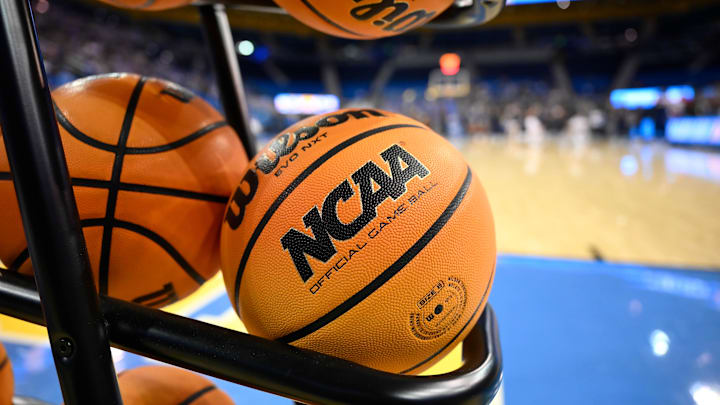
Federal investigators from the U.S. Attorney’s Office in the Eastern District of Pennsylvania have advanced their probe of point shaving and game fixing in college basketball, multiple sources tell Sports Illustrated, conducting interviews with players suspected of manipulating their performances for the benefit of gamblers who wagered on their games. The investigation covers multiple regions and teams, sources say, with a current focus on “Southern schools.”
The probe is believed to be heading toward the indictment stage.
“There are going to be charges,” a source with knowledge of the investigation says. “It’s going to be national in scope. It’s going to involve multiple players and programs.”
The EDPA investigation dovetails with the Eastern District of New York’s inquiry centering on the gambling ring that was involved with former NBA player Jontay Porter, sources say. The EDNY office also is investigating unusual gambling activity on current NBA player Malik Beasley’s performances during the 2023–24 season, according to the player’s attorney, Steve Haney. “An investigation is not a charge,” Haney told SI in June. “He has not been charged.”
MORE: Inside the Gambling Ring Allegedly Linked to Point Shaving Across Pro and College Basketball
SI reported in February that authorities are looking into links between the ring that has been charged in the Porter case and wagering on at least nine college games across the last two seasons. Gambling monitoring services flagged unusual wagers on games involving at least five college teams—and investigators have been prepared for that number to increase. The NCAA also is performing its own investigations of a number of programs, with infractions cases or eligibility inquiries involving players at New Orleans, Eastern Michigan, Mississippi Valley State and Temple.
It’s not clear whether the players from those institutions are under criminal investigation, or whether the NCAA will charge them or their schools with violations. Inquiries initiated by alerts from gambling compliance agencies may not all lead to findings of wrongdoing, sources say.
New Orleans began an internal investigation in January and turned information over to the NCAA, which began its own inquiry. Four players were removed from the team by Feb. 1, with one of those players having subsequently graduated and the other three transferring, according to UNO interim athletic director Vince Granito. “The investigation is now between the NCAA and the players directly,” Granito says. “This is not just a University of New Orleans issue. It’s a national issue. This is going on in a lot of places.”
The NCAA investigation at Eastern Michigan also dates to January. In response to a records request from SI, the university turned over a notice of inquiry from the NCAA that was dated Jan. 17. Four days later, the NCAA issued requests for cell phone data from five individuals whose names are redacted. Eastern Michigan had two games flagged by gambling watchdogs last season: against Wright State on Dec. 21 and Central Michigan on Jan. 14, sources say.
U.S. attorneys have not discussed the gambling ring case publicly. But their court filings imply that the scheme is significantly wider than what they have alleged so far.
To date, prosecutors have charged five people in the Porter scheme. Four of them—Porter, Timothy McCormack, Mahmud Mollah and Long Phi “Bruce” Pham—have pleaded guilty to conspiracy to commit wire fraud. Their plea agreements remain under seal, but their sentencing dates have all been pushed back, which is common in cases where defendants have agreed to testify.
A fifth defendant, Ammar Awawdeh, has been indicted for conspiracy to commit wire fraud and conspiracy to influence sporting contests by bribery. Awawdeh has been negotiating a plea agreement since at least March, according to joint filings between his attorney and U.S. attorneys in the Eastern District of New York.
A sixth person, Shane Hennen, was arrested in January. He has not been officially charged, but the Justice Department has said Hennen will be charged with wire fraud conspiracy and money laundering. At the time of Hennen’s arrest, EDNY U.S. Attorney Carolyn Pokorny wrote a letter to a U.S. Attorney in Nevada vouching for “substantial evidence” that Hennen was involved in “illicit financial transactions and fraudulent sports wagers totaling millions of dollars,” resulting “in potentially millions of dollars’ worth of illicit profits and money-laundering transactions.”
Pokorny also described “a network of proxies and straw bettors located across the country.” The six men who have been named publicly are all from New York or Pennsylvania.
A footnote on page two of Pokorny’s letter reads, “The government respectfully requests that this letter be filed under seal as it describes …” The next five lines are blacked out.
Hennen has been negotiating a plea agreement since late January, according to joint filings between his attorney and U.S. attorneys.
All of the current charges stem directly from the scheme for Porter to fake injuries in two games so his co-conspirators could win prop bets on him. But at Pham’s plea hearing last November, it was clear that his crimes went beyond those two incidents.
During that hearing, U.S. Magistrate Judge Sanket J. Bulsara said the third paragraph of Pham’s plea agreement “runs from Page 2 to the top of Page 5” and “describes conduct related to several different frauds.” By signing the agreement, Bulsara told Pham, “You are agreeing that you engaged in the conduct related to each of these frauds … conduct that is separate and apart from the conduct that you are pleading guilty to.”
“I understand,” Pham said.
As part of their plea agreements, McCormack agreed to forfeit $51,294; Mollah agreed to forfeit $40,585.54; and Pham agreed to forfeit $393,136.62.
But those amounts only account for what each conspirator gained in unlawful proceeds. It does not include restitution—reimbursing victims for losses.
U.S. Attorney Benjamin Weintraub of EDNY said at McCormack’s plea hearing that “a very broad estimate” for his victims’ losses “would be approximately $200,000.” For Mollah—who did not join the scheme until after Porter’s first fake injury—Weintraub said victims’ losses were “approximately $26,000.”
Weintraub did not publicly estimate how much Pham’s victims lost. But Judge Bulsara did say Pham would owe restitution “to victims of these frauds” that are detailed in his plea agreement, “in addition to any restitution that is required to victims for the offense that you are pleading guilty to.”
 Add us as a preferred source on Google
Michael Rosenberg was a senior writer for Sports Illustrated, covering any and all sports. He writes columns, profiles and feature stories and has covered almost every major sporting event. He joined SI in 2012 after working at the Detroit Free Press for 13 years, eight of them as a columnist. Rosenberg is the author of “War As They Knew It: Woody Hayes, Bo Schembechler and America in a Time of Unrest.” Several of his stories also have been published in collections of the year’s best sportswriting. He is married with three children.
Follow rosenberg_mike
Pat Forde is a senior writer for Sports Illustrated who covers college football and college basketball as well as the Olympics and horse racing. He cohosts the Others Receiving Votes podcast for SI and is a regular contributor to the Tony Kornheiser Show podcast. He previously worked for Yahoo Sports, ESPN and The (Louisville) Courier-Journal. Forde has won 28 Associated Press Sports Editors writing contest awards, has been published three times in the Best American Sports Writing book series, and was nominated for the 1990 Pulitzer Prize. A past president of the U.S. Basketball Writers Association and member of the Football Writers Association of America, he lives in Louisville with his wife. They have three children, all of whom were collegiate swimmers.
Follow ByPatForde