%20%20--%3E%0A%3Csvg%20version%3D%221.1%22%20id%3D%22Layer_1%22%20xmlns%3D%22http%3A%2F%2Fwww.w3.org%2F2000%2Fsvg%22%20xmlns%3Axlink%3D%22http%3A%2F%2Fwww.w3.org%2F1999%2Fxlink%22%20x%3D%220px%22%20y%3D%220px%22%0A%09%20width%3D%2239px%22%20height%3D%2240px%22%20viewBox%3D%220%200%2039%2040%22%20enable-background%3D%22new%200%200%2039%2040%22%20xml%3Aspace%3D%22preserve%22%3E%0A%3Cpath%20fill%3D%22%23FFFFFF%22%20d%3D%22M38.5%2C7H28.2v26h10.3V7z%22%2F%3E%0A%3Cpath%20fill-rule%3D%22evenodd%22%20clip-rule%3D%22evenodd%22%20fill%3D%22%23FFFFFF%22%20d%3D%22M26.1%2C25.5c0%2C5.8-4.1%2C7.5-12.9%2C7.5C3.9%2C33%2C0%2C31.2%2C0%2C25.2v-1.1h11.6%0A%09v2.4c0%2C0.7%2C0.1%2C1.4%2C1.2%2C1.4c1%2C0%2C1.2-0.4%2C1.2-1.3v-0.9c0-1.6-0.9-1.6-3.5-2.2C2.2%2C21.7%2C0%2C19.7%2C0%2C15.3v-0.9C0%2C9.3%2C5.5%2C7%2C12.9%2C7%0A%09c10.2%2C0%2C12.8%2C2.6%2C12.8%2C7.4v1.8h-11v-2.9c0-0.6-0.4-1.1-1.2-1.1c-0.6%2C0-1.2%2C0.4-1.2%2C1.1v0.9c0%2C1.5%2C0.9%2C2%2C3.3%2C2.5%0A%09c8%2C1.6%2C10.5%2C3.3%2C10.5%2C7.5V25.5z%22%2F%3E%0A%3C%2Fsvg%3E%0A)
ESPN Commentators Call Out Tennessee and Syracuse for Faking Injuries
In this story:
ESPN commentators Bob Wischusen and Louis Riddick were unimpressed with how both No. 24 Tennessee and Syracuse handled themselves in their season-opening game on Saturday.
The disappointment did not stem from how the team played on the field, but rather their reliance on faking injuries to cause stoppages while on defense.
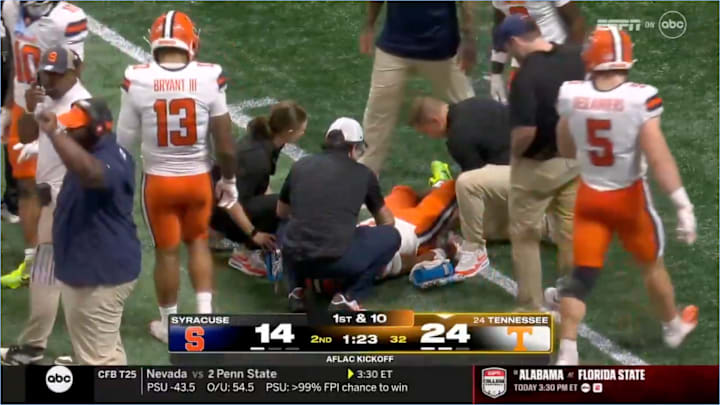
Both teams were guilty of the crime at different moments of the game, but Riddick plainly called out the teams after a particularly egregious move to stop the clock was made by the Orange. Following a big play by Tennessee, Syracuse safety Demetres Samuel Jr. dove to the ground, forcing the game to a stop as trainers came out to check on him.
“This isn’t a good one. This one looks blatant, where he just kind of hit the dirt,” Riddick said. “I know they’re trying to crack down on this kind of thing—faking injuries. I don’t want to assume anything about any player, but this one to me looked suspicious.”
ESPN's Bob Wischusen and Louis Riddick call out Syracuse (and Tennessee) for "faking injuries"
— Awful Announcing (@awfulannouncing) August 30, 2025
Riddick: "They're trying to crack down on this kind of thing ... this one to me looked suspicious."
"If you're serious about getting this out of the game, you have to call that." pic.twitter.com/xB9JwDPWRw
Watching the replay back, Riddick and Wischusen noted that two players on the Syracuse defense appeared to be going down in fake injuries simultaneously, with corner Duce Chestnut moving towards the ground as well before bringing himself back to his feet once he saw Samuel had the situation under control.
When Samuel was back on the field looking spry just moments later, the two could only laugh.
A moment later, at the goal line.
— Awful Announcing (@awfulannouncing) August 30, 2025
Wischusen: "Demetres Samuel has made a miraculous recovery, he is back on the field."
Riddick: "Yeah, well." pic.twitter.com/Ma5iWiQ4fz
The Tennessee crowd booed the Syracuse players for their violation of a rule both written and unwritten in football, but as Wischusen noted, the Volunteers had employed similar tactics earlier in the game.
The frustration from Riddick and Wischusen is well justified. Obviously, above all else, we don’t want players getting hurt, but using the sport’s attempt to keep things relatively safe for those involved to manipulate the pace of the game to your advantage is unsporting to say the least. It can also, by the letter of the law, be penalized, but as Riddick noted, it’s not easy to call out a young player as faking an injury, because there’s plenty of real injuries to be concerned with.
Tennessee would go on to win the game, 45–26.
More College Football on Sports Illustrated
 Add us as a preferred source on Google
Tyler Lauletta was a staff writer for the Breaking and Trending News team at Sports Illustrated. Before joining SI, he covered sports for nearly a decade at Business Insider, and helped design and launch the OffBall newsletter. He is a graduate of Temple University in Philadelphia, and remains an Eagles and Phillies sicko. When not watching or blogging about sports, Tyler can be found scratching his dog behind the ears.
Follow tylerlauletta