%20%20--%3E%0A%3Csvg%20version%3D%221.1%22%20id%3D%22Layer_1%22%20xmlns%3D%22http%3A%2F%2Fwww.w3.org%2F2000%2Fsvg%22%20xmlns%3Axlink%3D%22http%3A%2F%2Fwww.w3.org%2F1999%2Fxlink%22%20x%3D%220px%22%20y%3D%220px%22%0A%09%20width%3D%2239px%22%20height%3D%2240px%22%20viewBox%3D%220%200%2039%2040%22%20enable-background%3D%22new%200%200%2039%2040%22%20xml%3Aspace%3D%22preserve%22%3E%0A%3Cpath%20fill%3D%22%23FFFFFF%22%20d%3D%22M38.5%2C7H28.2v26h10.3V7z%22%2F%3E%0A%3Cpath%20fill-rule%3D%22evenodd%22%20clip-rule%3D%22evenodd%22%20fill%3D%22%23FFFFFF%22%20d%3D%22M26.1%2C25.5c0%2C5.8-4.1%2C7.5-12.9%2C7.5C3.9%2C33%2C0%2C31.2%2C0%2C25.2v-1.1h11.6%0A%09v2.4c0%2C0.7%2C0.1%2C1.4%2C1.2%2C1.4c1%2C0%2C1.2-0.4%2C1.2-1.3v-0.9c0-1.6-0.9-1.6-3.5-2.2C2.2%2C21.7%2C0%2C19.7%2C0%2C15.3v-0.9C0%2C9.3%2C5.5%2C7%2C12.9%2C7%0A%09c10.2%2C0%2C12.8%2C2.6%2C12.8%2C7.4v1.8h-11v-2.9c0-0.6-0.4-1.1-1.2-1.1c-0.6%2C0-1.2%2C0.4-1.2%2C1.1v0.9c0%2C1.5%2C0.9%2C2%2C3.3%2C2.5%0A%09c8%2C1.6%2C10.5%2C3.3%2C10.5%2C7.5V25.5z%22%2F%3E%0A%3C%2Fsvg%3E%0A)
Rose Bowl's Longstanding Start Time to Change for 2025 College Football Playoff
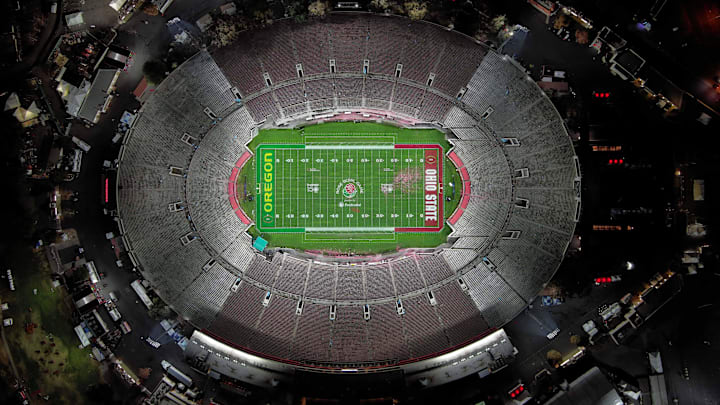
The Rose Bowl—once the bulwark of little-c conservatism in college football—has made another concession to modernity.
College football's oldest bowl game is moving its kickoff from 2 p.m. PT to 1 p.m. PT—or from 5 p.m. ET to 4 p.m. ET—on New Year's Day 2026, the College Football Playoff announced Tuesday afternoon. The announcement was made as part of the CFP's general announcement of its quarterfinal, semifinal and national championship schedules for the 2025 season.
"All three bowls shifting their start times allows us to place each game in an ideal window on New Year's Day and provide the optimal viewing experience. New Year's Day and college football are synonymous with each other, and these changes only strengthen that relationship," CFP executive director Rich Clark said in a statement.
Though the Rose Bowl has moved around before, the timing of the game—which coincides with the third-quarter sunset over the nearby San Gabriel Mountains—has long been considered essential to its mystique.
The Cotton Bowl will lead off the major bowl slate on Dec. 31 at 7:30 ET, followed by the Orange, Rose and Sugar Bowls at noon, 4 and 8 ET on New Year's Day. Previously, the Rose Bowl had led into the Sugar Bowl—which often led to the latter game starting around 9 ET.
This year, the Fiesta and Peach Bowls will serve as semifinal games. Both will kick off at 7:30 ET on Jan. 8 and 9, respectively. The national championship will take place on Jan. 19 at 7:30 ET.
More College Football on Sports Illustrated
 Add us as a preferred source on Google
Patrick Andres is a staff writer on the Breaking and Trending News team at Sports Illustrated. He joined SI in December 2022, having worked for The Blade, Athlon Sports, Fear the Sword and Diamond Digest. Andres has covered everything from zero-attendance Big Ten basketball to a seven-overtime college football game. He is a graduate of Northwestern University's Medill School of Journalism with a double major in history .
Follow PAndres2001