%20%20--%3E%0A%3Csvg%20version%3D%221.1%22%20id%3D%22Layer_1%22%20xmlns%3D%22http%3A%2F%2Fwww.w3.org%2F2000%2Fsvg%22%20xmlns%3Axlink%3D%22http%3A%2F%2Fwww.w3.org%2F1999%2Fxlink%22%20x%3D%220px%22%20y%3D%220px%22%0A%09%20width%3D%2239px%22%20height%3D%2240px%22%20viewBox%3D%220%200%2039%2040%22%20enable-background%3D%22new%200%200%2039%2040%22%20xml%3Aspace%3D%22preserve%22%3E%0A%3Cpath%20fill%3D%22%23FFFFFF%22%20d%3D%22M38.5%2C7H28.2v26h10.3V7z%22%2F%3E%0A%3Cpath%20fill-rule%3D%22evenodd%22%20clip-rule%3D%22evenodd%22%20fill%3D%22%23FFFFFF%22%20d%3D%22M26.1%2C25.5c0%2C5.8-4.1%2C7.5-12.9%2C7.5C3.9%2C33%2C0%2C31.2%2C0%2C25.2v-1.1h11.6%0A%09v2.4c0%2C0.7%2C0.1%2C1.4%2C1.2%2C1.4c1%2C0%2C1.2-0.4%2C1.2-1.3v-0.9c0-1.6-0.9-1.6-3.5-2.2C2.2%2C21.7%2C0%2C19.7%2C0%2C15.3v-0.9C0%2C9.3%2C5.5%2C7%2C12.9%2C7%0A%09c10.2%2C0%2C12.8%2C2.6%2C12.8%2C7.4v1.8h-11v-2.9c0-0.6-0.4-1.1-1.2-1.1c-0.6%2C0-1.2%2C0.4-1.2%2C1.1v0.9c0%2C1.5%2C0.9%2C2%2C3.3%2C2.5%0A%09c8%2C1.6%2C10.5%2C3.3%2C10.5%2C7.5V25.5z%22%2F%3E%0A%3C%2Fsvg%3E%0A)
The Seven Ripple Effects of Pete Alonso’s Mega Deal With the Orioles
In this story:
The Baltimore Orioles made a huge splash Wednesday by signing free agent first baseman Pete Alonso to a five-year, $155 million contract. It’s the second largest contract in Orioles history (and just the second at more than $90 million), behind only the seven-year, $161 million disaster of a deal for Chris Davis. The splash is huge. The ripples are many. Here are the biggest ripple effects from the deal:
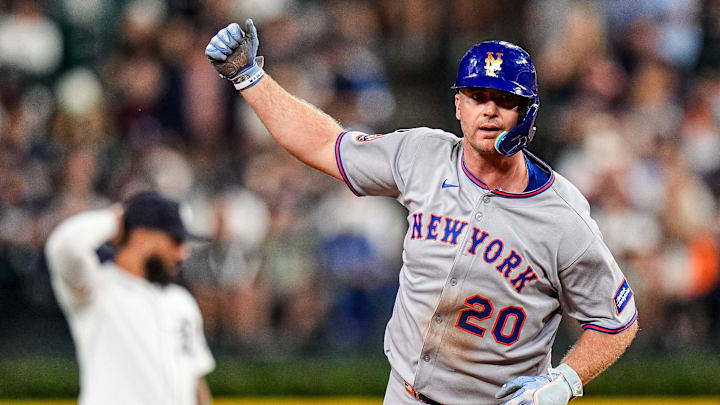
- The Mets never wanted Alonso on a long-term deal. That was obvious last year with the long wait until their awkward reunion, and it was obvious this year. This wasn’t the same as losing Edwin Diaz because he wanted a more attractive option (the Dodgers). This time the Mets lost a cornerstone player essentially of their own choosing. Once Kyle Schwarber re-signed with the Phillies for five years and $150 million, you had to know Scott Boras was going to play leapfrog with Alonso, who plays defense and is two years younger. The Mets were never getting him on a short-term deal. Simply put, Alonso, the Mets’ homegrown, all-time franchise leader in home runs, was worth more to the Orioles than his organization of the past nine years.
- Alonso’s greatest value is in scarcity: he is a rare righthanded pure slugger with one of the highest floors in the game. He has hit at least 34 homers in every full season. He is not artful in doing so—and that goes for his defense as well. The downside is that such one-dimensional hitters often don’t age well, such as Cecil Fielder, Ryan Howard, Glenn Davis and yes, Chris Davis. But the upside is he is a lesser Jim Thome, a country strong dude with a youthful love of the game (check out his games played) that bodes well for keeping himself in slugging shape through his early 30s.
- The Mets don’t like the aging curve where they think Alonso is headed, which is ironic because they just took a three-year bet that Marcus Semien somehow avoids the typical collapse of mid-30s second basemen. Mets president David Stearns is nothing but disciplined. Ever since he was hired in New York, he has wanted to remake this team into an athletic group stocked with rangy, multi-positional players. It’s been the emphasis of his player development and—outside of Juan Soto, an acquisition more attributable to the owner, Steve Cohen—a guiding force in player acquisition. Semien is a plus defender. Alonso is a poor defender. He doesn’t fit his model.
- I mentioned this before the signing: Alonso’s 38 homers in 2025 translate to 45 in Camden Yards. Take it with a grain of salt, but you get the approximation: he’s a great fit for the ballpark. This is especially true with the way Alonso has learned how to stay on the ball longer and drive it to the right-center gap, a friendly place for homers in Baltimore. He is not purely a pull slugger. Alonso has made deep dives into his swing mechanics and become a better hitter. You can see that in the way he has maintained elite swing velocity (75.3 mph) while shortening his stroke (from 7.3 feet in 2023 to 7.1 in 2025). Check out these other metrics that show how Alonso is catching the ball deeper (which allows himself more time) and with a more inside-out swing path:
Year | Contact point* | Attack direction | Opposite field HR | Opposite field SLG |
|---|---|---|---|---|
2023 | 8.6" | 8° pull | 7 | .520 |
2024 | 5.7" | 3° pull | 4 | .421 |
2025 | 3.9" | 1° opposite | 10 | .677 |
*: Measured in front of home plate
- Soto cannot be happy. I can still see him when I spoke with him in Port St. Lucie nine months ago for the SI cover story. He emphasized how important lineup protection is for him, and in that case, it meant the late winter re-signing of Alonso. Where does that protection come from now? Mark Vientos? Semien? No. Alex Bregman? Bo Bichette? Kyle Tucker? Stearns has work to do.
- The Orioles are back in play as an AL contender. They tried to fix their issues last winter against lefthanded pitching by signing Tyler O’Neill and Gary Sánchez. Oof. Big-time whiff. In Taylor Ward and Alonso, they have added 74 home runs. Now they can shop Coby Mayo for a controllable starting pitcher from teams such as the Marlins or Pirates. Great job by new ownership by stepping up and taking on risk and money.
- The Yankees need Cody Bellinger even more. The AL East is loading up. The Orioles are back in play as a contender. The Red Sox added Sonny Gray and have a full season of Roman Anthony and figure to sign Bregman or Bichette. The Blue Jays added Dylan Cease and are in play for Tucker, Bichette and others. The Rays will bounce back after a trying year in a bandbox of a minor league stadium and a brutal summer schedule. Bellinger’s bat and versatility is the team’s biggest need.
 Add us as a preferred source on Google
Tom Verducci is a senior writer for Sports Illustrated who has covered Major League Baseball since 1981. He also serves as an analyst for FOX Sports and the MLB Network; is a New York Times best-selling author; and cohosts The Book of Joe podcast with Joe Maddon. A five-time Emmy Award winner across three categories (studio analyst, reporter, short form writing) and nominated in a fourth (game analyst), he is a three-time National Sportswriter of the Year winner, two-time National Magazine Award finalist, and a Penn State Distinguished Alumnus Award recipient. Verducci is a member of the National Sports Media Hall of Fame, Baseball Writers Association of America (including past New York chapter chairman) and a Baseball Hall of Fame voter since 1993. He also is the only writer to be a game analyst for World Series telecasts. He lives in New Jersey with his wife, with whom he has two children.