%20%20--%3E%0A%3Csvg%20version%3D%221.1%22%20id%3D%22Layer_1%22%20xmlns%3D%22http%3A%2F%2Fwww.w3.org%2F2000%2Fsvg%22%20xmlns%3Axlink%3D%22http%3A%2F%2Fwww.w3.org%2F1999%2Fxlink%22%20x%3D%220px%22%20y%3D%220px%22%0A%09%20width%3D%2239px%22%20height%3D%2240px%22%20viewBox%3D%220%200%2039%2040%22%20enable-background%3D%22new%200%200%2039%2040%22%20xml%3Aspace%3D%22preserve%22%3E%0A%3Cpath%20fill%3D%22%23FFFFFF%22%20d%3D%22M38.5%2C7H28.2v26h10.3V7z%22%2F%3E%0A%3Cpath%20fill-rule%3D%22evenodd%22%20clip-rule%3D%22evenodd%22%20fill%3D%22%23FFFFFF%22%20d%3D%22M26.1%2C25.5c0%2C5.8-4.1%2C7.5-12.9%2C7.5C3.9%2C33%2C0%2C31.2%2C0%2C25.2v-1.1h11.6%0A%09v2.4c0%2C0.7%2C0.1%2C1.4%2C1.2%2C1.4c1%2C0%2C1.2-0.4%2C1.2-1.3v-0.9c0-1.6-0.9-1.6-3.5-2.2C2.2%2C21.7%2C0%2C19.7%2C0%2C15.3v-0.9C0%2C9.3%2C5.5%2C7%2C12.9%2C7%0A%09c10.2%2C0%2C12.8%2C2.6%2C12.8%2C7.4v1.8h-11v-2.9c0-0.6-0.4-1.1-1.2-1.1c-0.6%2C0-1.2%2C0.4-1.2%2C1.1v0.9c0%2C1.5%2C0.9%2C2%2C3.3%2C2.5%0A%09c8%2C1.6%2C10.5%2C3.3%2C10.5%2C7.5V25.5z%22%2F%3E%0A%3C%2Fsvg%3E%0A)
Don’t Worry About Eli, Worry About the Rest of the Giants
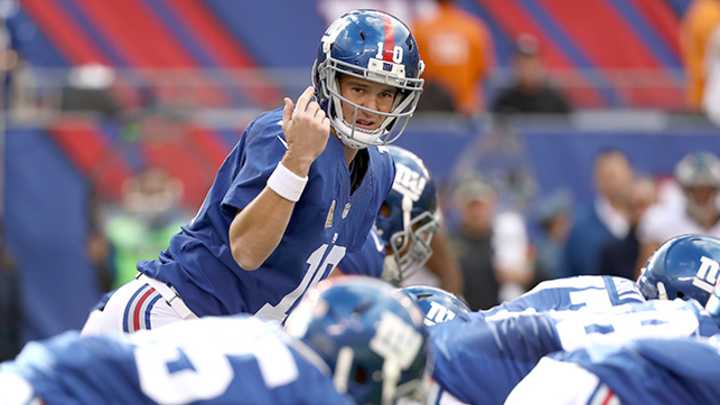
I admit it: Barricading myself in the film room during the NFL season, I don’t always hear the word on the street. So when Peter King and I were discussing potential topics for this week’s column, I was surprised when he told me that on the Manhattan streets (where Peter, it so happened, was out walking his dog), the word was Eli Manning has been stinking it up. Which, of course, being a member of the First Family of Football and leader of a marquee New York franchise, means he’s washed up.
Perfect. We had my Extra Point column topic for Monday figured out. And the thesis—The word on the street is wrong, Manning is fine—was 99 percent likely to hold up regardless of the outcome in Sunday’s Giants-Eagles game. Because Manning hasn’t been the deciding factor in most of New York’s games this year.
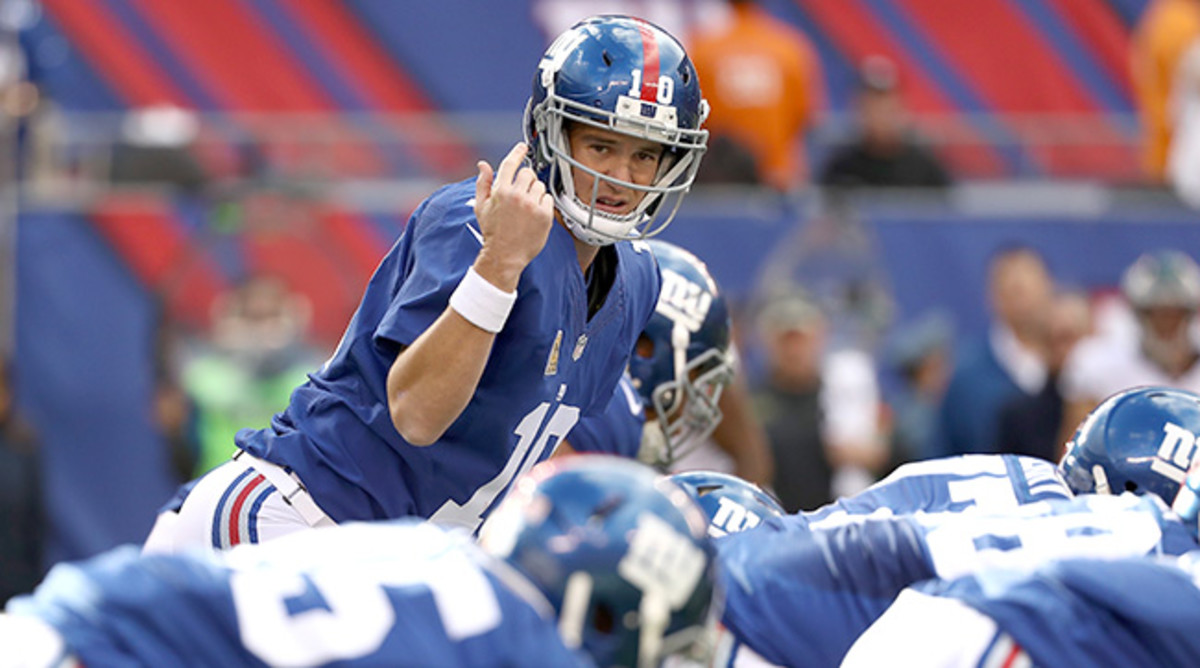
The Sunday game turned out well for Manning: 22-for-36, 257 yards and four scores in a 28-23 win. Of course, if Carson Wentz and the Eagles had been able to get a go-ahead red-zone touchdown in the final minutes, the talk would have been about the washed-up Manning’s interception that set up that Eagles score, even though that interception was strictly about good defense from Connor Barwin (line of scrimmage deflection) and Jordan Hicks (diving catch).
Nevertheless, the Giants are now 5-3 and so Manning (I assume) is respected again. That leaves the discussion centered on, really, what’s been the story all along: the players around Manning. They are the cause of the team’s inconsistencies. Those players were good enough Sunday. Can they continue to be good enough in the second half of the season?
The first point of concern, of course, is the running game. It ranks dead last. In fact, since Shane Vereen went down after Week 3 it is averaging just 49.8 yards an outing. And, it has looked every bit that anemic on film. None of New York’s ballcarriers are creators. Fifth-round rookie Paul Perkins provided some spark on a few important fourth-quarter carries Sunday, and will likely see his role expand in the coming weeks. But there are still questions surrounding Perkins in the passing game. And the Giants, remember, are a three-receiver base offense; a running back must have reliable hands and pass-blocking aptitude to make that work.
When you’re a three-receiver offense, you’re also dependent on your back to create some of his own yardage. There’s less room for the scheme to help. You have no fullback or move tight end, which severely limits your ability to create new gaps and angles after the snap. This is especially true with the Giants, because whoever is in at tight end (Will Tye, Larry Donnell and Jerell Adams rotate) is a blocker you want to hide, not rely on. It’s an inherently rigid running game. What you see before the snap is almost always what you get after it.
Exacerbating matters is the fact that, with left guard Justin Pugh out after injuring his knee against the Eagles, the Giants don’t have any movable linemen. Pugh provided value as a puller, which gave the Giants the ability to run “power” and, once in a while, “counter.” Now, we’re likely to see more inside zone—straight ahead runs with double-teams at the point of attack. Tactically, it doesn’t get simpler than that. And it’s especially easy on defenses because, with the Giants having a spread-based passing game, their receivers are often aligned outside the field numbers, which can leave them too far away to come in and block safeties. A straight-ahead running game with noncreative backs, athletically limited linemen and no means for blocking the safety? That’s what defenses dream of playing against.
The offensive line woes seep into the passing game, as well. Right tackle Bobby Hart has been better than Marshall Newhouse (who is now healthy but no longer starting), but Ereck Flowers remains a problem at left tackle. His technique is liable to betray him at any time. And when it does, it usually stays away at length, leaving Flowers widening his arms, bending at the waist and initially contacting defenders with the top of his helmet on snap after snap. It’s a recipe for QB hits and holding fouls.
Fortunately, the quick-strike nature of New York’s spread passing game can help offset some of Flowers’ issues. With Odell Beckham Jr. headlining the receiving corps, it’s always a dangerous passing game. Though it’s one that, schematically, is easy to defend. You rarely see significant pre-snap shifting and motion from the Giants. And, though it has not been the case quite as often lately, Beckham for stretches will line up in the same spot. Imagine the mental stress it would put on the defense if he were to consistently move all over the formation.
One, and probably the biggest, reason New York doesn’t texture its formations is Manning. Like brother Peyton in his early years with the Colts, Eli likes to meticulously analyze the defense before the snap. Static formations keep the picture still, making that easier. To maximize Manning’s time at the line of scrimmage, the Giants will go no-huddle but not hurry-up.
Not only is Manning scholarly at this sort of 500-level quarterbacking, he’s also—and we so easily forget—an acute passer. Or, to be fair, an acute passer who every now and then has a brain freeze, which can dilute his cerebral style of play. But gaffe plays aside (and those are much fewer and further between than most realize), you rarely see Manning throw with imprecision. And he almost never leaves open receivers untargeted. That’s why, for years, the Giants, while not dominant, have been capable of beating any team at anytime, including on the road in the playoffs.
If this defense can keep improving, especially with coordinator Steve Spagnuolo’s designer blitzes, which have come to define the unit more in recent weeks (including late against Philly), this is a strong enough team to return to the playoffs. But for them to be a threat in those playoffs, all the other ifs we’ve touched on have to break the right way.
Question or comment? Email us at talkback@themmqb.com.
 Add us as a preferred source on Google