%20%20--%3E%0A%3Csvg%20version%3D%221.1%22%20id%3D%22Layer_1%22%20xmlns%3D%22http%3A%2F%2Fwww.w3.org%2F2000%2Fsvg%22%20xmlns%3Axlink%3D%22http%3A%2F%2Fwww.w3.org%2F1999%2Fxlink%22%20x%3D%220px%22%20y%3D%220px%22%0A%09%20width%3D%2239px%22%20height%3D%2240px%22%20viewBox%3D%220%200%2039%2040%22%20enable-background%3D%22new%200%200%2039%2040%22%20xml%3Aspace%3D%22preserve%22%3E%0A%3Cpath%20fill%3D%22%23FFFFFF%22%20d%3D%22M38.5%2C7H28.2v26h10.3V7z%22%2F%3E%0A%3Cpath%20fill-rule%3D%22evenodd%22%20clip-rule%3D%22evenodd%22%20fill%3D%22%23FFFFFF%22%20d%3D%22M26.1%2C25.5c0%2C5.8-4.1%2C7.5-12.9%2C7.5C3.9%2C33%2C0%2C31.2%2C0%2C25.2v-1.1h11.6%0A%09v2.4c0%2C0.7%2C0.1%2C1.4%2C1.2%2C1.4c1%2C0%2C1.2-0.4%2C1.2-1.3v-0.9c0-1.6-0.9-1.6-3.5-2.2C2.2%2C21.7%2C0%2C19.7%2C0%2C15.3v-0.9C0%2C9.3%2C5.5%2C7%2C12.9%2C7%0A%09c10.2%2C0%2C12.8%2C2.6%2C12.8%2C7.4v1.8h-11v-2.9c0-0.6-0.4-1.1-1.2-1.1c-0.6%2C0-1.2%2C0.4-1.2%2C1.1v0.9c0%2C1.5%2C0.9%2C2%2C3.3%2C2.5%0A%09c8%2C1.6%2C10.5%2C3.3%2C10.5%2C7.5V25.5z%22%2F%3E%0A%3C%2Fsvg%3E%0A)
Mailbag: USA vs. Mexico, Olympic qualifying, America's role in soccer
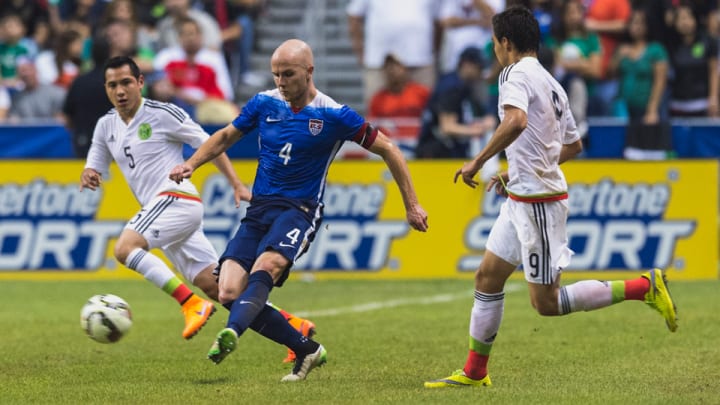
It’s USA-Mexico week, as you probably know, and nearly everything soccer-wise here this week is focused (as it should be) on the showdown in the Rose Bowl on Saturday. But I wanted to kick off the latest ‘Bag with what I think is an important point:
In many of the areas that matter most, the United States is leading the way in world soccer these days.
Let’s count the ways:
• Cleaning up global soccer corruption
Where would we be right now if the U.S. Department of Justice hadn’t gone after FIFA, the confederations and shady soccer marketing bosses in a way that no government from an “established” soccer country had ever done before?
I’ll tell you where we’d be: FIFA president Sepp Blatter would be looking forward to serving the remainder of his four-year tenure (instead of being on the way out and possibly headed to jail). Soccer officials like American ex-FIFA ExCo member Chuck Blazer and Brazilian marketer Jose Hawilla wouldn’t have pleaded guilty to wire fraud and racketeering charges. And ex-FIFA officials like Jack Warner, Jeffrey Webb, Nicolás Leóz and Jose Maria Marin wouldn’t be under indictment.
Even better, with U.S. attorney general Loretta Lynch leading the way, the Swiss government finally stopped protecting the bad guys (as it had for decades) and started its own criminal investigations, first into the bids for World Cups 2018 and ’22 and now into Blatter himself.
Sepp Blatter probe raises questions for him, Michel Platini, FIFA's future
It’s revealing that the four FIFA sponsors who called for Blatter’s immediate resignation last week were all either U.S.-based companies (Coca-Cola, McDonald’s, Visa) or have a deep U.S. history (Budweiser). Meanwhile, other FIFA sponsors from “established” soccer countries like Adidas and Gazprom refused to do so. While the U.S.-based sponsors should have spoken up long ago, at least they’re doing the right things now.
The same could be said for the U.S. Soccer Federation, which spent far too long supporting Blatter (voting for him in every FIFA election from 1998 to 2011) and looking the other way for years when it suspected Blazer and Warner were up to improper behavior in CONCACAF. But if you say that, you also have to give U.S. Soccer some credit for turning on Blatter and supporting his challenger Prince Ali of Jordan long before the U.S. arrests were made in Zurich last May.
As anyone who has read the U.S. indictment would conclude, it’s impossible to know if anyone in the soccer world is 100% clean. But I will say this: An impressive forensic investigation with subpoena power by the U.S. Department of Justice and the FBI has so far not revealed any allegations of wrongdoing by U.S. Soccer.
• Respecting women in soccer
There’s something fantastic about a woman (the U.S. attorney general) becoming the most feared person at FIFA, not least because FIFA’s record of respecting women has been shameful until the last couple years. Only in 2013 was the first woman in FIFA’s century-plus history elected as a member of its executive committee (Burundi’s Lydia Nsekera). And while FIFA has begun to put together some programs for the women’s game led by an impressive group of women, the paucity of money going toward those programs makes it seem like paternalistic lip service at this point.
FC Kansas City edges Seattle for second straight NWSL championship
The disgraceful treatment of recently ousted Chelsea team doctor Eva Carneiro also shows that women in soccer have a long way to go in “established” soccer countries like England.
Here, too, the U.S. has led the way (along with some Scandinavian countries), supporting the growth of women’s soccer going back to the 1980s through Title IX and the efforts of an amazing group of pioneers (Michelle Akers, Mia Hamm, Julie Foudy and others) who fought for better treatment of the women’s game.
Foudy, in particular, continues to demand publicly that FIFA do more to create a foundation for the global growth of women’s soccer instead of simply shrugging and saying market demands aren’t currently there. As a World Cup winner and a former president of the Women’s Sports Foundation, Foudy would be a better candidate for FIFA president than anyone in FIFA these days.
• Awareness of head injuries
We saw firsthand at World Cup 2014 that FIFA doesn’t take head injuries seriously enough, as several players were allowed to continue playing when they shouldn’t have been on the field. The same is the case seemingly week to week in European club soccer.
Meanwhile, U.S. sports (including soccer) are light years ahead in their awareness of head injuries and policies toward them. In American soccer that’s best personified by ThinkTaylor.org, the organization founded by Taylor Twellman after he was forced to retire from the game due to head injuries. Twellman has acted locally—he recently had a Concussion Awareness Week for young athletes—but you can only imagine the impact his message would have if FIFA embraced it globally.
• Welcoming gay players
It’s instructive that when American Robbie Rogers came out as gay in 2013, he was living in England and at the same time announced he was retiring from the sport, believing there was no way he could have been an active gay soccer player there. In Los Angeles, however, Rogers has un-retired, finding a deeply supportive team with the Galaxy as he became the first openly gay male player in a major U.S. pro team sport.
In this case, soccer has led the way for other U.S. pro sports, too. Nor should anyone underestimate the importance of LA coach Bruce Arena, who showed active leadership by reaching out to Rogers and working to create an environment inside the Galaxy where Rogers could make history—and, not incidentally, become an important part of a championship team.
U.S. women’s soccer, too, has been welcoming to gay athletes, whether they’re national-teamers like Abby Wambach and Megan Rapinoe or club players like Houston’s Ella Masar and Erin McLeod, who got married this year. We’re getting closer to a point where being a gay athlete simply isn’t news anymore, but to get there we’ve had to go through an important time when it has been news.
Look, soccer in the U.S. has plenty of flaws, whether we’re talking about the club game, the U.S. Soccer Federation, the development of players, access to the minority community and the performance of the national teams. There’s no need to sugarcoat that, and we hear plenty about what soccer in America does wrong, most often from people in the soccer community itself. Self-scrutiny can be good, of course, but there’s also a significant inferiority complex among many soccer-loving Americans, who’ve dealt with scorn over the years both from U.S. fans of other sports and from people in “established” soccer countries.
You’ll hear plenty in this space about what needs to improve in American soccer. But today, as we’re thinking about a big game involving two of the most popular national teams in the United States, it felt like a good time to remind you that the U.S. is doing a lot of good in world soccer these days.
On to the ‘Bag:
What do you think of Landon Donovan’s comments that Jurgen Klinsmann should be fired if the U.S. loses to Mexico?
@GrantWahl (yes, a self-question)
Not surprising. We’ve known for weeks that if the U.S. loses to Mexico, it would be the first time during Klinsmann’s four-year U.S. tenure that soccer figures and members of the U.S. media would be calling for him to be fired. Given the history between Donovan and Klinsmann over the 2014 World Cup, this one isn’t shocking.
What’s your prediction for the USMNT starting XI on Saturday?
@mattbrown714
Who would you start against Mexico?
@patrickstanwood
So here’s who I think Jurgen Klinsmann will start vs. Mexico:
Brad Guzan; Fabian Johnson, Michael Orozco, Matt Besler, DaMarcus Beasley; Kyle Beckerman; Alejandro Bedoya, Michael Bradley, Jermaine Jones; Clint Dempsey, Jozy Altidore.
Here’s who I would start (based on who’s in camp):
Tim Howard; Johnson, Geoff Cameron, Besler, Beasley; Beckerman; Bedoya, Bradley, Jones; Dempsey, Altidore.
Three big questions facing USMNT ahead of playoff showdown vs. Mexico
Maybe it’s wishful thinking to predict Klinsmann will go with a 4-1-3-2 and have Beckerman sitting in front of the back line as an old-fashioned No. 6, but it would go along with what Klinsmann has said about needing experienced guys out there to win a big one-off game. And while I think it should be obvious that Cameron and Besler are the starting center backs, I suspect Klinsmann will go with at least one of Orozco or Ventura Alvarado there.
As for Howard vs. Guzan, I’d be fine with either one in goal—they’re both very good—but if we’re splitting hairs I’d go with Howard. (Klinsmann, for his part, has already announced that Guzan will start.)
Do other countries care about [soccer in the] Olympics? Or are we making too big a deal?
@G_60_timbersfan
As we get closer to Saturday’s other big game, when the U.S. Under-23s have an Olympic berth on the line, it’s fair to say that many of the most established soccer countries don’t care as much about Olympic men’s soccer as we do in the United States. It’s an Under-23 tournament, of course (with three over-age players allowed per team), and players of that age in the biggest soccer countries have more venues where they can be tested at a high level than a player in the United States has.
United States routs Cuba to reach Olympic qualifying knockout round
But keep in mind, the Olympics are a really big deal in the U.S., and I’ve had Donovan tell me that being an Olympian was as big to him as playing in a World Cup. Plus, from a soccer perspective, it’s a good experience for a young U.S. team to play competitive games in a quality international tournament. Remember, too, that some of the world’s biggest soccer countries do take men’s Olympic soccer seriously.
Brazil is one of them, in part because the five-time World Cup champion (and 2016 host) has somehow never won the Olympic gold medal in soccer. Argentina, too, is a country that takes Olympic soccer seriously. Maybe that has to do with what I’ve noticed as a hugely patriotic streak in Argentine sports.
Will Russia be a safe place to travel to in 2018 for the World Cup?
@rpine5
I think so. In my experience, World Cups and Olympics tend to have amusement park-style atmospheres that give everyone the best possible chance to spend their money (and keep sponsors happy) and not worry much about safety. You can’t be naïve, of course, and pitfalls await anyone who, say, drinks way too much or goes to dangerous neighborhoods. Might it be different in Russia during a regular non-World Cup time? Perhaps, just as it would have been in South Africa and Brazil.
I will say that I have some concerns about domestic airline safety in Russia, more than I did for South Africa and Brazil. Nor is the gay community always welcome in Russia, which is a huge problem.
Who should we be supporting for Sepp Blatter’s replacement? Clearly not Michel Platini. Who stands out?
@Our_ArsenalFC
As I said above, I really do think Foudy would be a better FIFA presidential candidate than anyone currently in the race. But if you put a gun to my head and said I had to pick somebody who’s already a candidate, I’d say Jordan’s Prince Ali. He may not be the world’s most charismatic guy, but he supports a clean FIFA and the kinds of reforms it will take to get there, including term limits for FIFA leaders. Nor is he a product of the rotten culture pervading FIFA.
He has also done real things to improve women’s soccer, including increasing access to girls in the Middle East. And as a wealthy guy, he’s unlikely to be someone who pursues under-the-table payments. Is it a negative that he’s from the ruling family of an undemocratic country? Yes, but I’d take that negative over the negatives connected to the other candidates.
This is more personal. How did you end up becoming a soccer journalist?
@cccchristian1
As a kid I always wanted to work someday at Sports Illustrated, which I’d been subscribing to since I was nine years old, but I wouldn’t have predicted then that I’d become a full-time soccer journalist. I grew up playing soccer and rooting for the indoor Kansas City Comets in the 1980s, and I fell for the World Cup watching the 1990 tournament on Spanish-language TV. It kind of went from there.
How far they've come: State of USA vs. Mexico rivalry, 10 years ago
In college I covered the Princeton team that made it to the 1993 NCAA Final Four—Bob Bradley was the coach, Jesse Marsch was a player. In ’95 I spent three months in Buenos Aires doing research for my senior thesis on politics and soccer in Argentina. I covered 1996 Olympic soccer for the Miami Herald (including a Brazil team that included a young Ronaldo, Rivaldo and Roberto Carlos), and when I got to SI later that year I started doing occasional soccer articles.
(My first SI byline was a story on the 1970s Howard University soccer team that became the first historically black college to win an NCAA Division I title.)
For years, though, SI didn’t have enough demand for a full-time soccer writer, so I covered college basketball as my main sport and did soccer on the side. That started to change in 2007, when I began reporting my book The Beckham Experiment. Not long after that came out in 2009, SI decided the time was right to have a full-time soccer guy, and I’ve been doing that ever since. It’s been a blast. SI has been extremely supportive as the sport has grown in the United States.
Any hope with the NFL logos and lines on MLS fields?
@damechanza
MLS Power Rankings Week 31: Big week for SKC; More playoff clinching
I’m of a couple minds on this. Yes, it was pretty horrible to watch Sunday’s marquee MLS game (Seattle-LA) on a bad artificial turf field with NFL lines on it. Everyone deserves better. But there are no easy solutions for it as long as Seattle is in that stadium, especially now that the Sounders have signed a long-term lease without getting any concessions from the Seahawks on a real field improvement. Still, NFL lines are a pretty rare occurrence for Sounders games.
What may bother me more are gridiron lines in MLS stadiums where soccer is the primary sport, which we’ve seen everywhere from D.C. to Houston to Dallas to Columbus. That just kills me.
FROM THE BOOK WORLD
Lately I’ve been reading Raphael Honigstein’s terrific Das Reboot: How German Soccer Reinvented Itself and Conquered the World. With an engaging style and interviews with nearly all the main figures in German soccer’s revival, Honigstein alternates between telling the story of Germany’s 2014 World Cup triumph and the story of how the nation rebuilt its soccer program starting in the late 1990s.
It’s a fascinating tale in its own right, but if you’re also interested in Klinsmann and his role in the process—which was a large one—there’s plenty here to take in, including interviews with Klinsmann himself. It also sheds some light on how Klinsmann’s Germany experience has shaped some of his decisions and actions with the U.S. national team, including using players out of position, choosing youth over experience and making an effort to control behind-the-scenes video storytelling about what takes place inside the team. I highly recommend the book.
GALLERY: Jurgen Klinsmann through the years
The Best of Jurgen Klinsmann
Jurgen Klinsmann
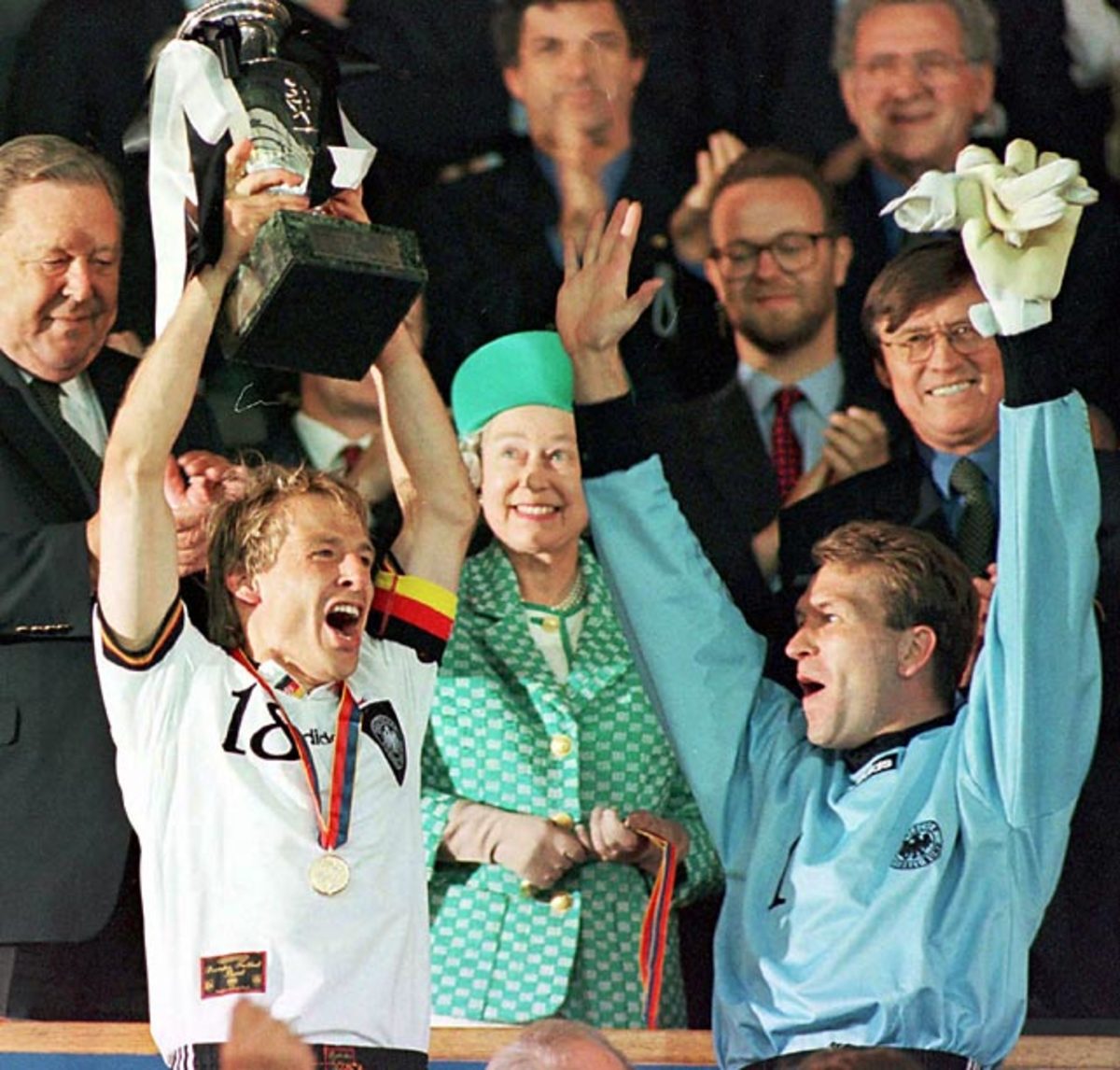
<italics>Before taking over the U.S. Men's National Team, Jurgen Klinsmann managed his native Germany to a third-place finish in the 2006 World Cup. Here's a look back at his career before he leads the U.S. into the 2014 World Cup in Brazil.</italics> Klinsmann (left) celebrates in 1996 after captaining Germany to the UEFA European Championship with a 2-1 win over Czech Republic and receiving the trophy from Queen Elizabeth II (center). Klinsmann was the first player ever to score in three different European Championships ('88, '92 and '96).
Jurgen Klinsmann
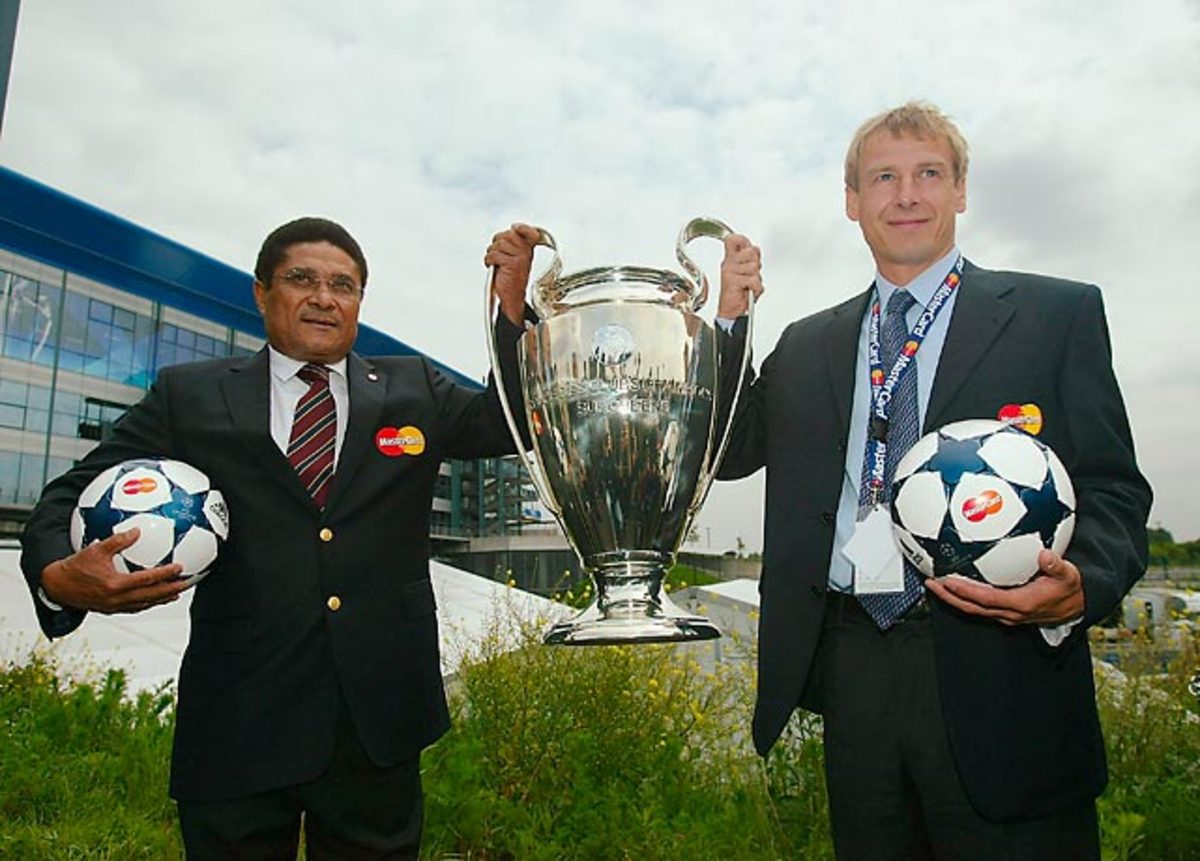
Klinsmann poses with the late Portuguese great Eusebio before the 2004 UEFA Champions League Final in Gelsenkirchen, Germany. A month later, he would be named coach of the German national team.
Jurgen Klinsmann
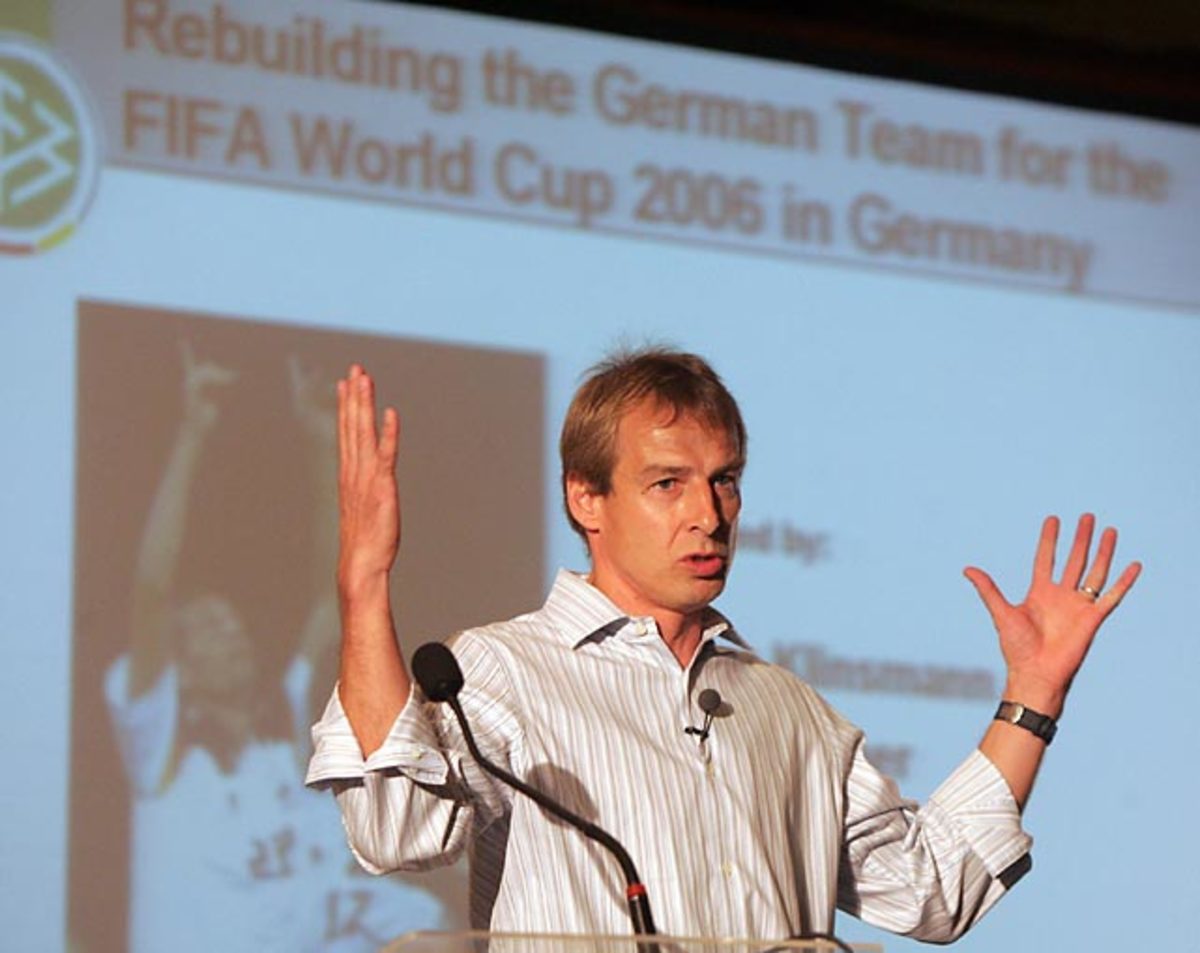
Klinsmann discusses his team-building plans for Germany at the second International Football Forum in Rio de Janeiro, in December 2005. His methods drew strongly from American training programs, as Klinsmann had lived in Southern California since 1998, and those methods initially garnered scrutiny from the greater soccer world.
Jurgen Klinsmann
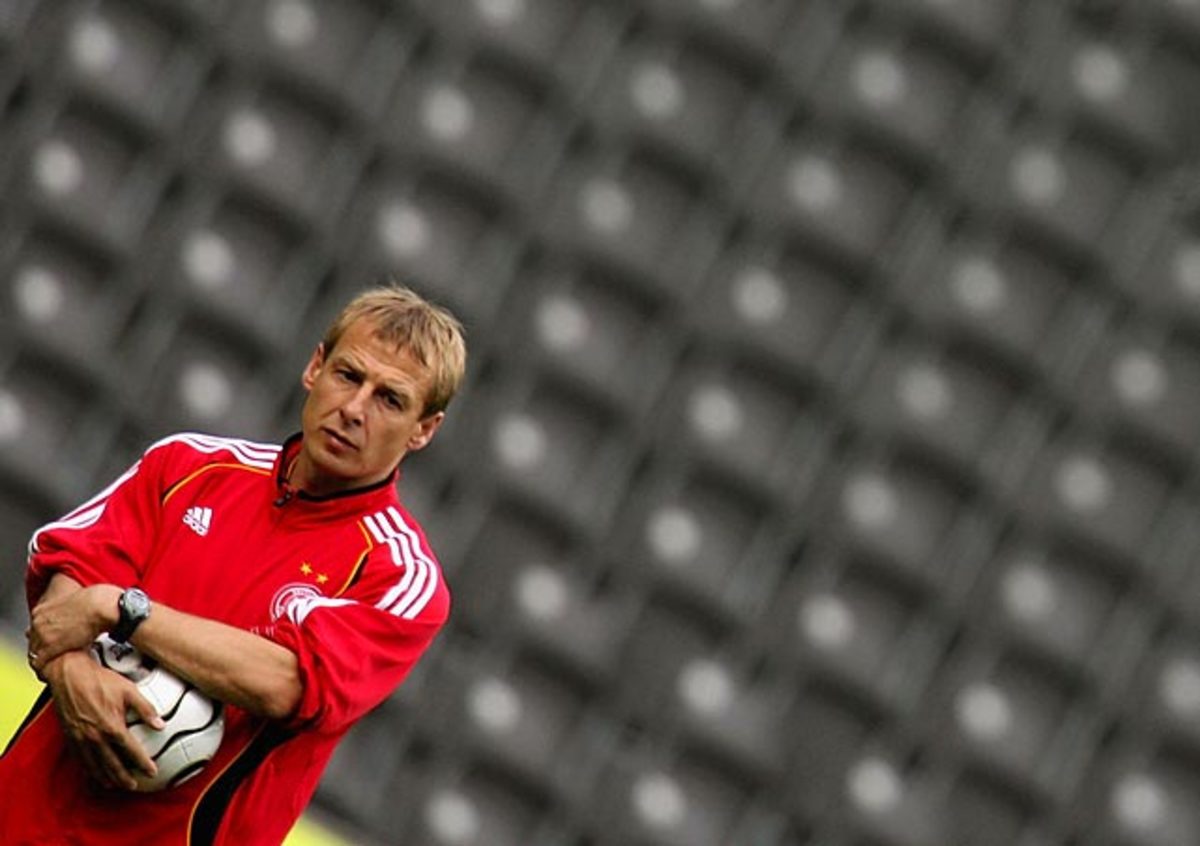
Klinsmann at German national team training in 2006. When managing the team, he would commute to sessions from his home in the United States -- to the frustration of Germany's fans. His non-traditional player selection and philosophies brought criticism that was largely silenced after Germany's third-place finish at the 2006 World Cup.
Jurgen Klinsmann
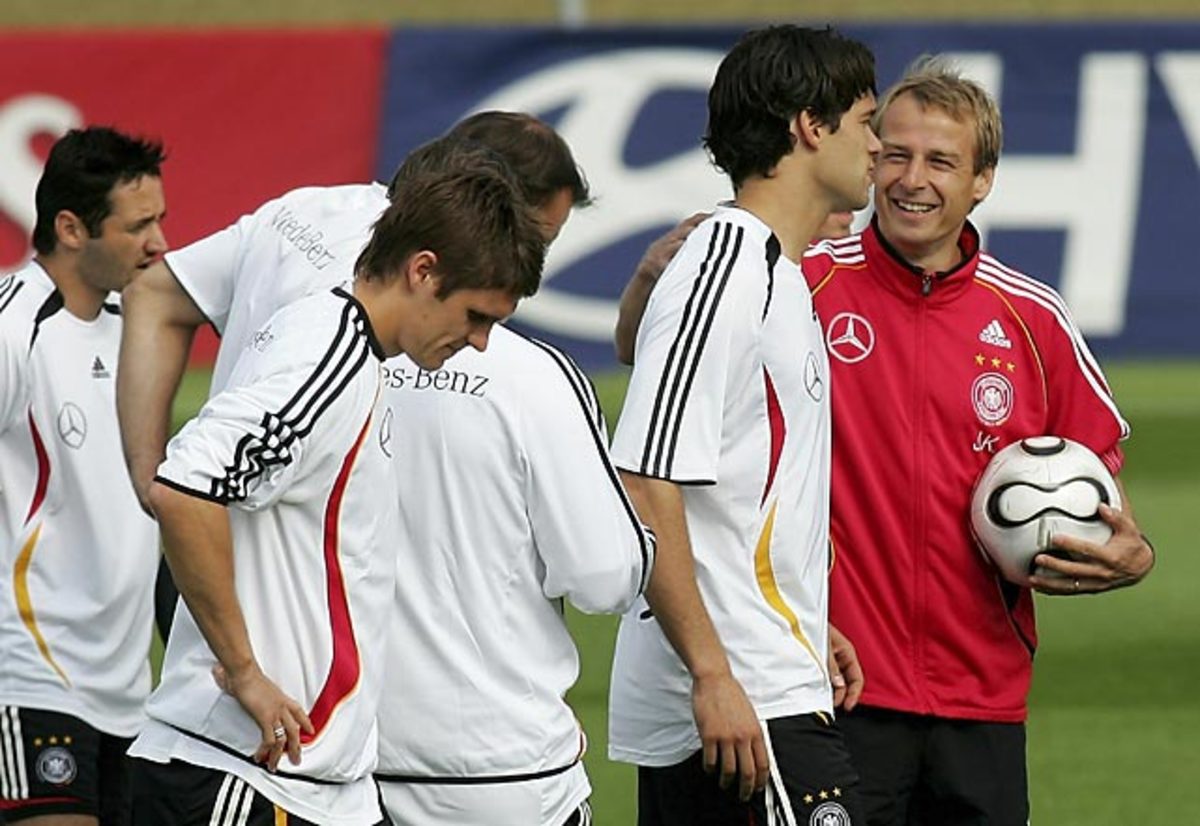
Klinsmann with members of the German national team, including captain Michael Ballack (center), during World Cup training in 2006.
Jurgen Klinsmann
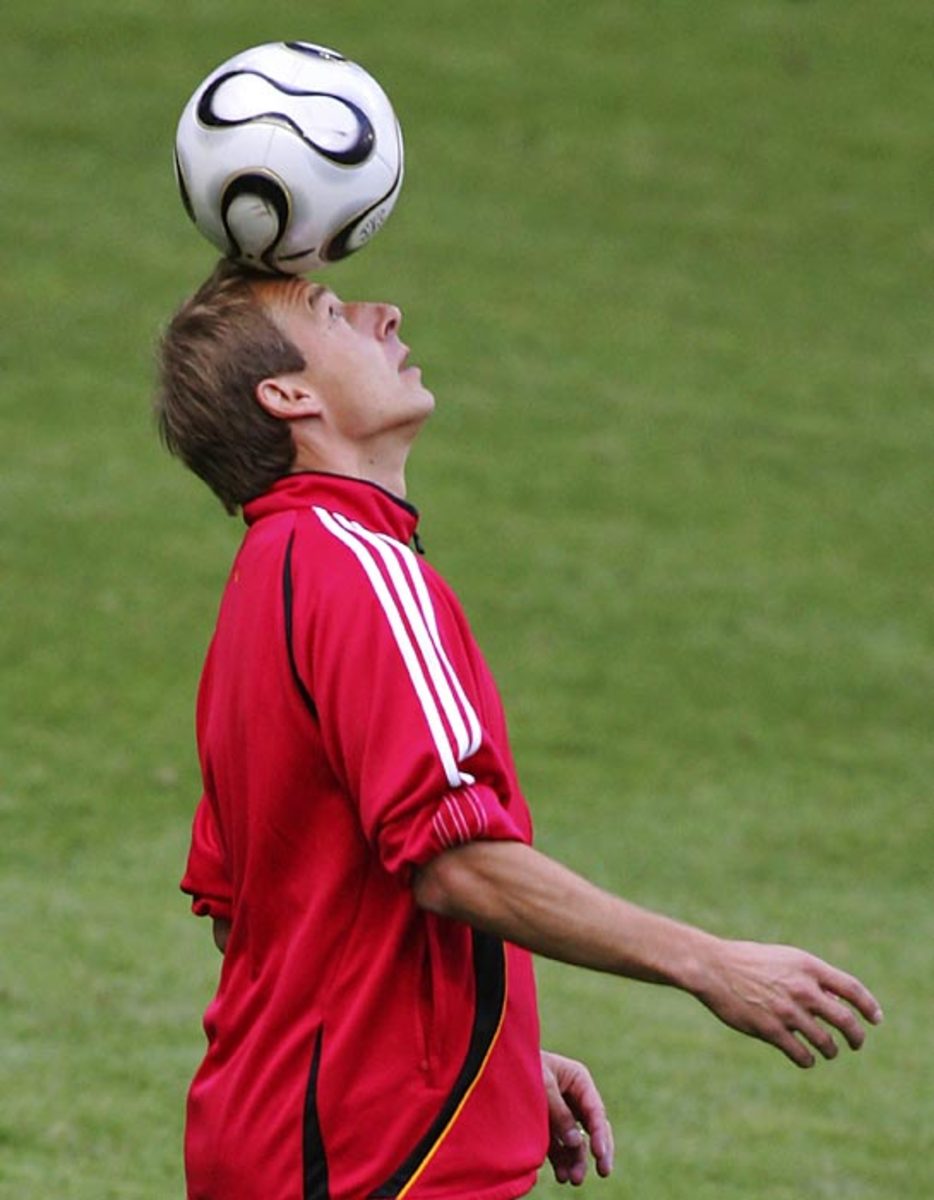
A former striker who spent time at such clubs as VfB Stuttgart, Inter Milan, AS Monaco, Tottenham and Bayern Munich, Klinsmann scored 226 goals across 506 games in his professional career.
Jurgen Klinsmann
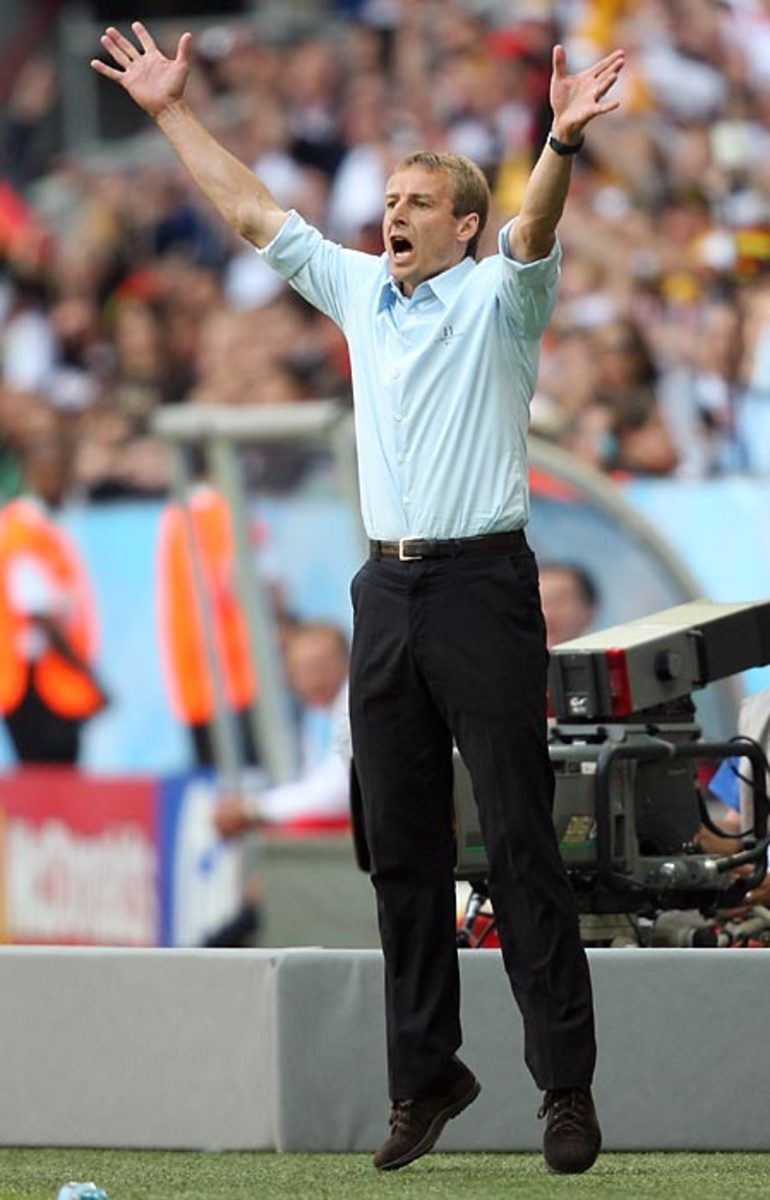
Klinsmann gestures against Costa Rica in the opening match at Munich's World Cup Stadium in 2006, a 4-2 win.
Jurgen Klinsmann
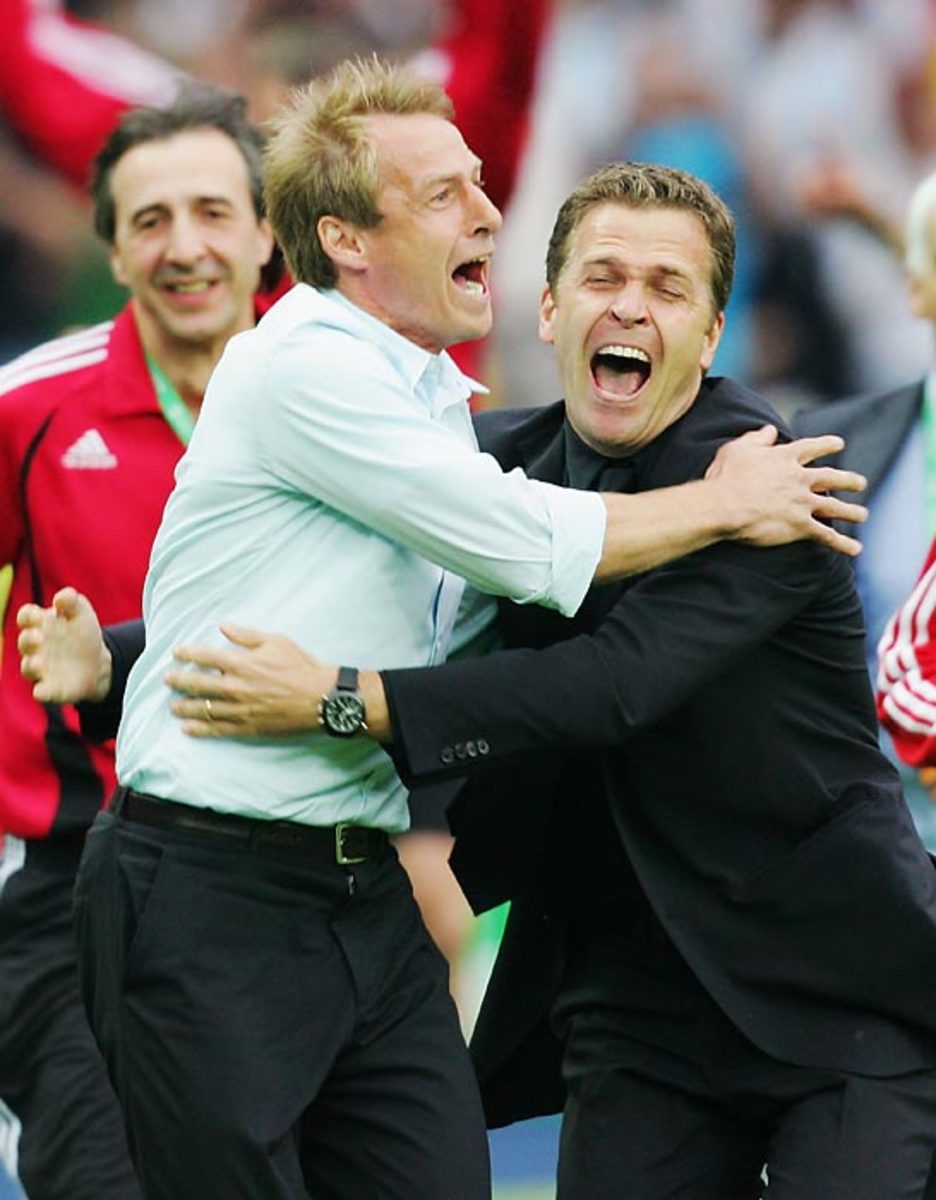
After defeating Argentina on penalties in the 2006 World Cup quarterfinals, Klinsmann celebrated with Germany assistant Oliver Bierhoff in Berlin. The two were former teammates in the German side, for which Klinsmann scored 47 goals in 108 appearances.
Jurgen Klinsmann
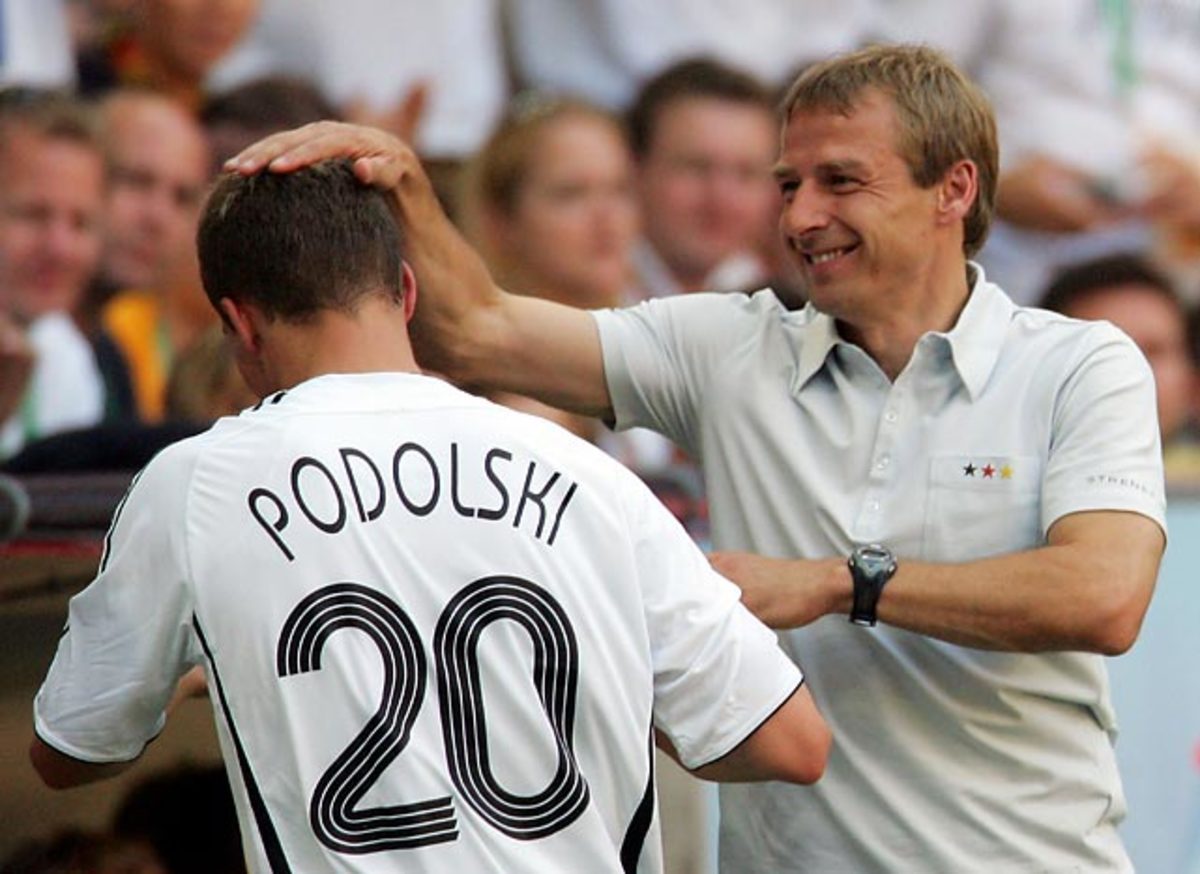
Lukas Podolski receives congratulations from Klinsmann during the 2006 World Cup Round of 16 match against Sweden in Munich.
Jurgen Klinsmann
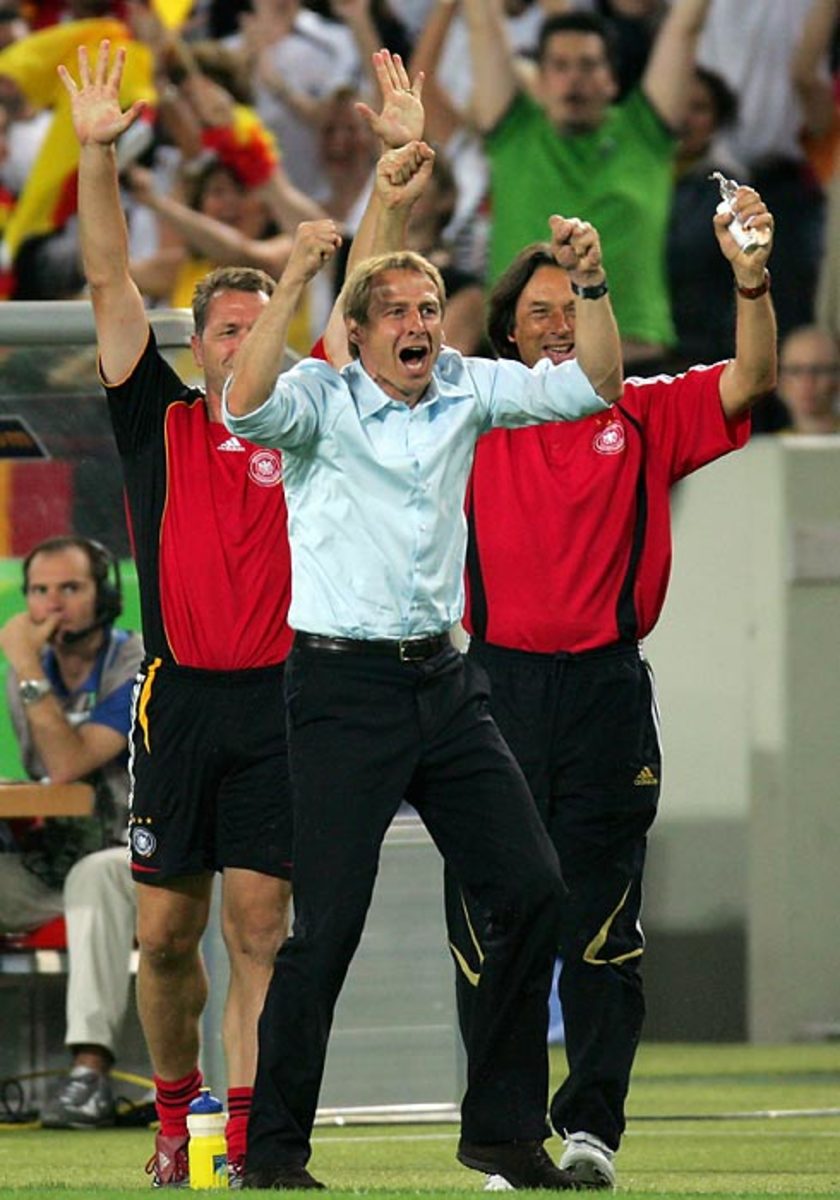
Klinsmann celebrates on the touchline after Bastian Schweinsteiger scores the first goal against Portugal in the third-place game.
Jurgen Klinsmann
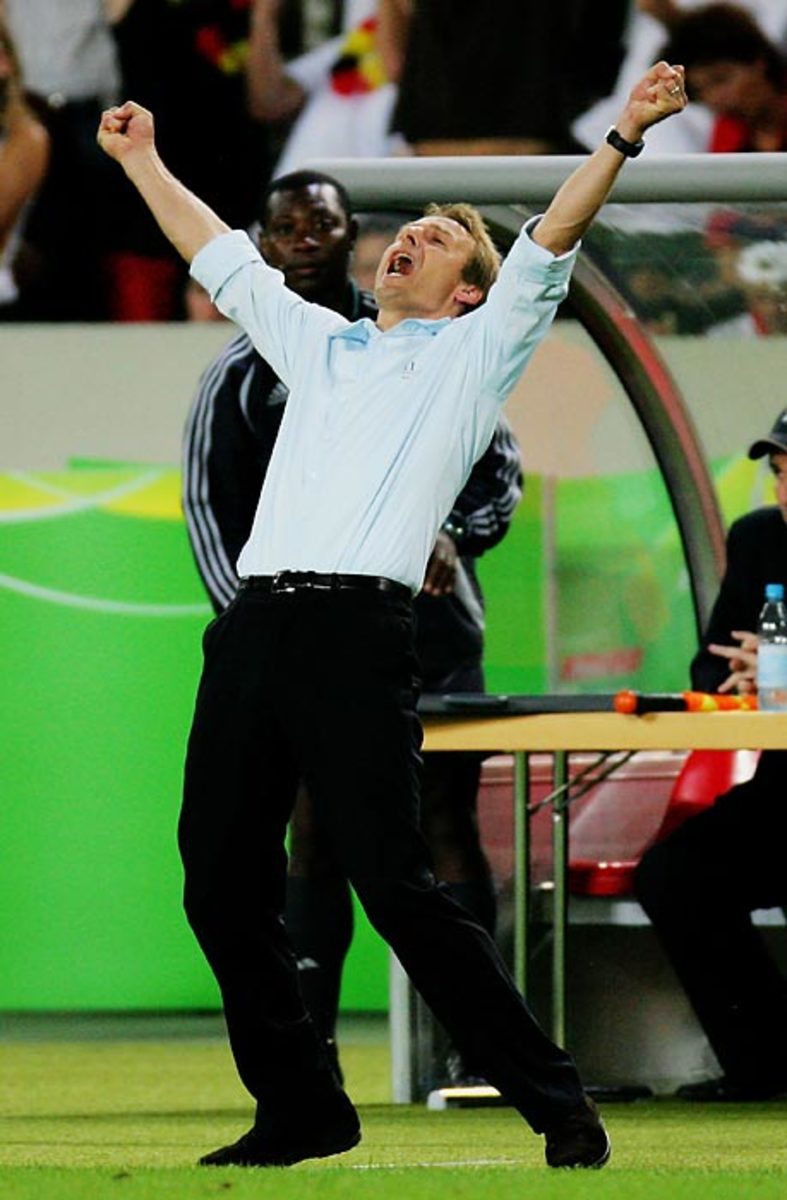
Klinsmann rejoices after Germany won the third-place match against Portugal at the 2006 World Cup. Klinsmann went 20-8-6 in 34 matches as manager.
Jurgen Klinsmann
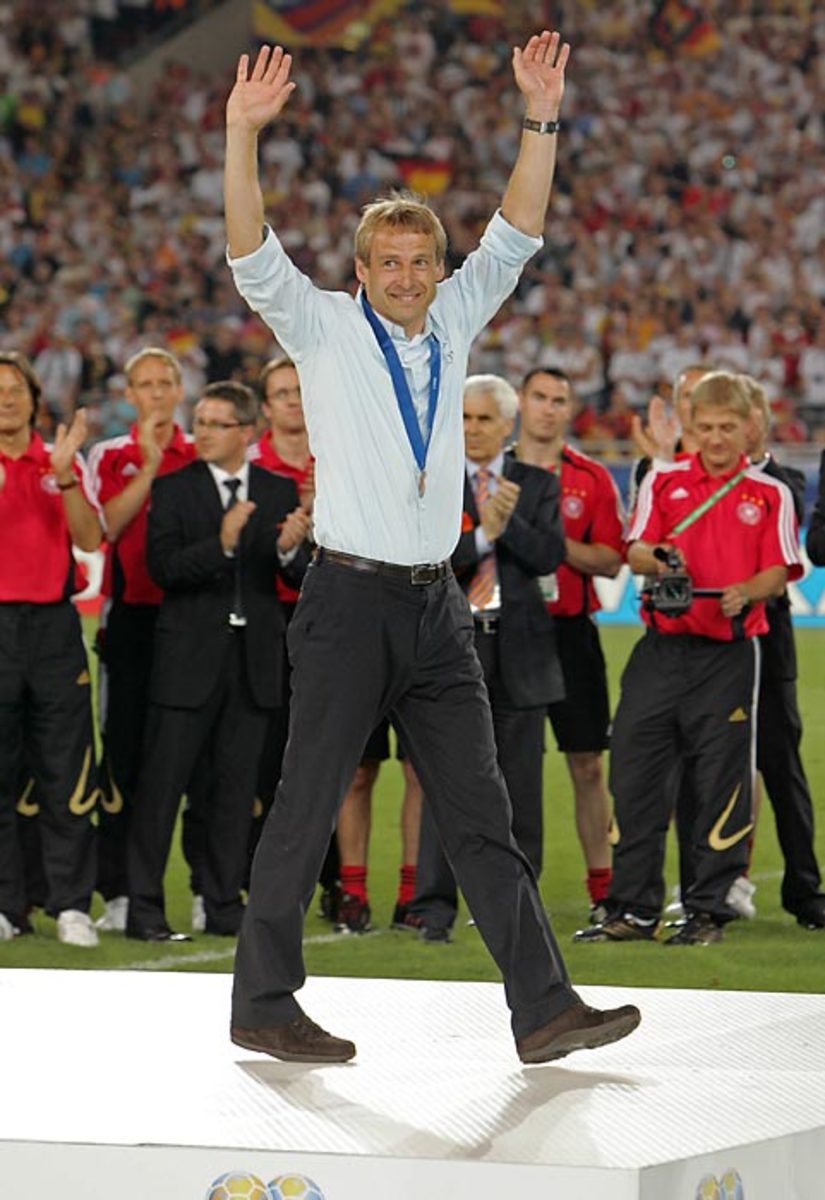
Klinsmann acknowledges the crowd at the medal presentation after winning the third-place game 3-1 over Portugal. Klinsmann would later be named German Football Manager of the Year.
Jurgen Klinsmann
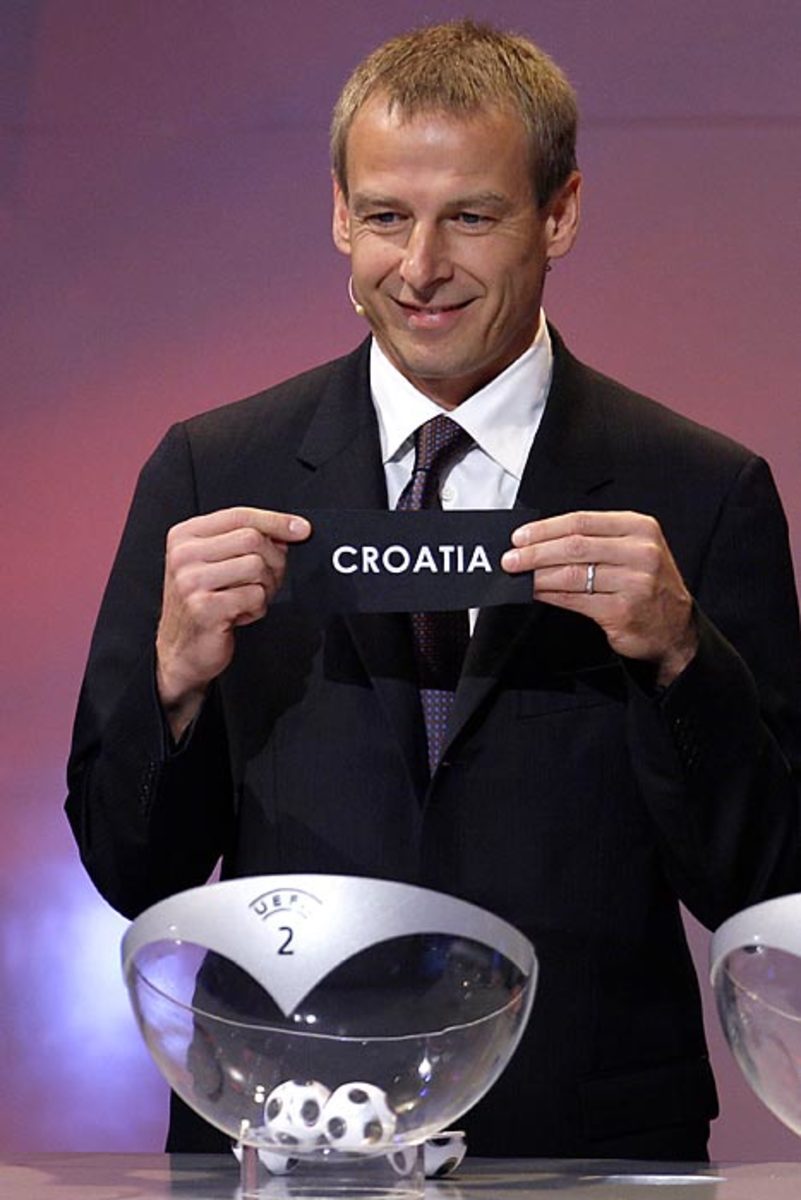
Klinsmann holds Croatia's ballot paper during the UEFA Euro 2008 draw, in December 2007. After the 2006 World Cup, Klinsmann left the Germany post and flirted with the idea of managing the United States.
Jurgen Klinsmann
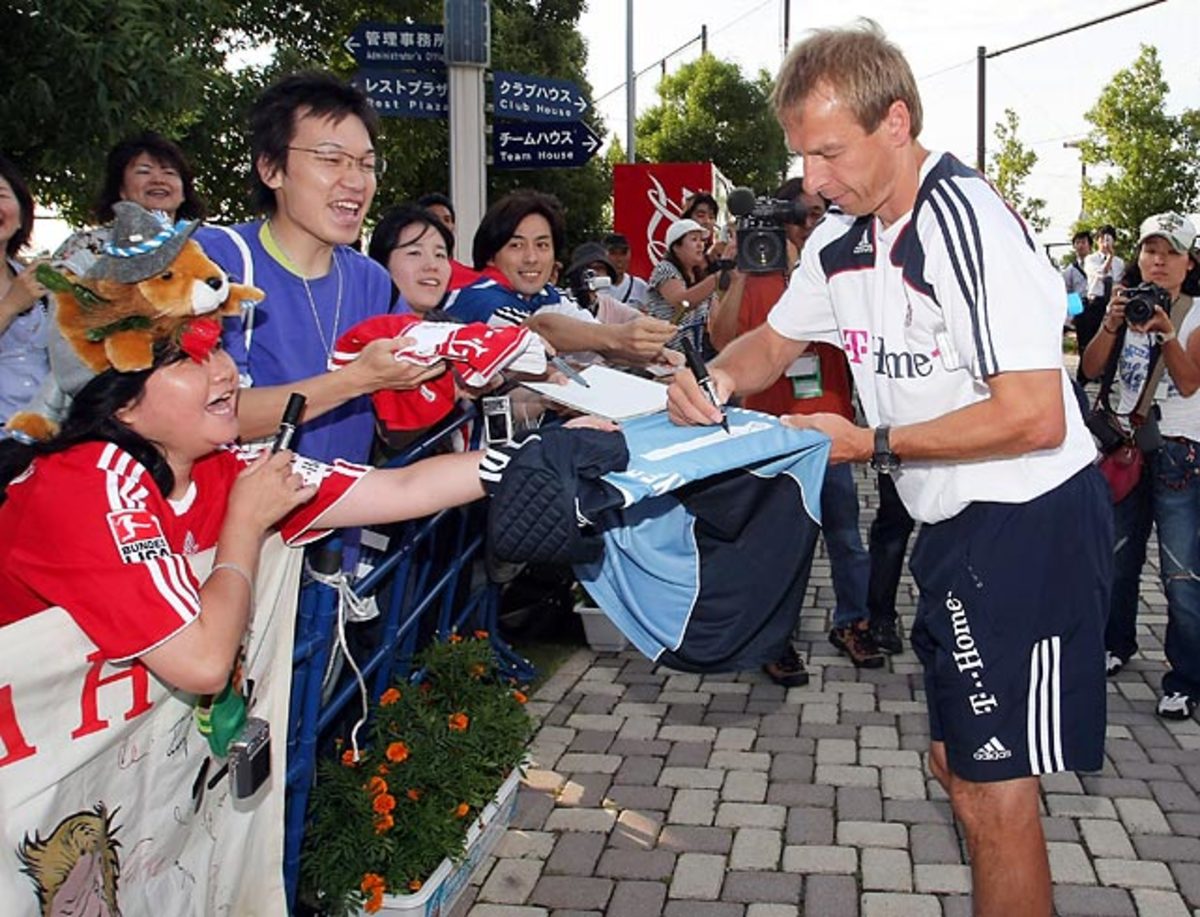
Klinsmann signs autographs for Japanese fans at a practice session in July 2008, having recently accepted the manager job at legendary German club Bayern Munich.
Jurgen Klinsmann
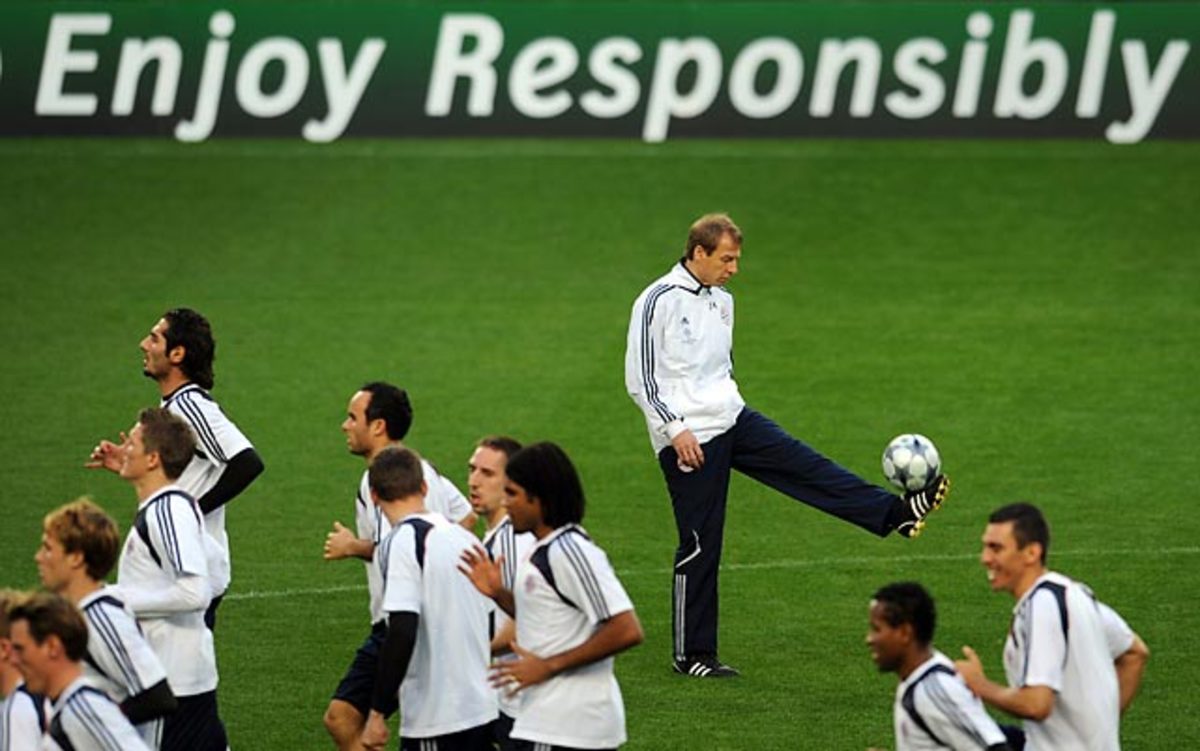
Bayern Munich and Klinsmann warm up the day of a Champions League match against Sporting Lisbon in 2009. Klinsmann would manage Bayern for just one season, and was sacked with five games left with his team just three points out of first. Bayern management was also unhappy with early exits in the Champions League and DFB-Pokal tournaments.
Jurgen Klinsmann
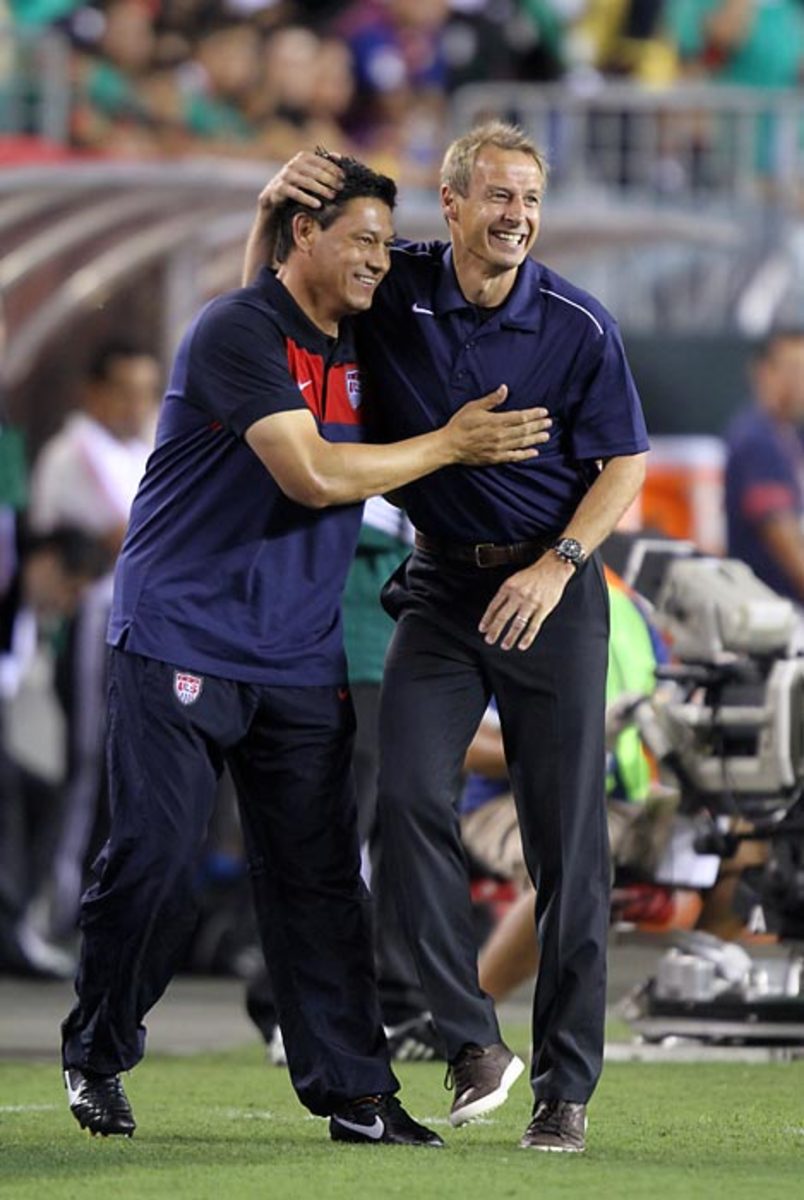
Klinsmann and assistant coach Martin Vazquez celebrate a goal by Robbie Rogers against Mexico on Aug. 10, 2011. A few weeks earlier, on July 29, Klinsmann was named coach of the United States national team after rumors linked the two for years.
Jurgen Klinsmann
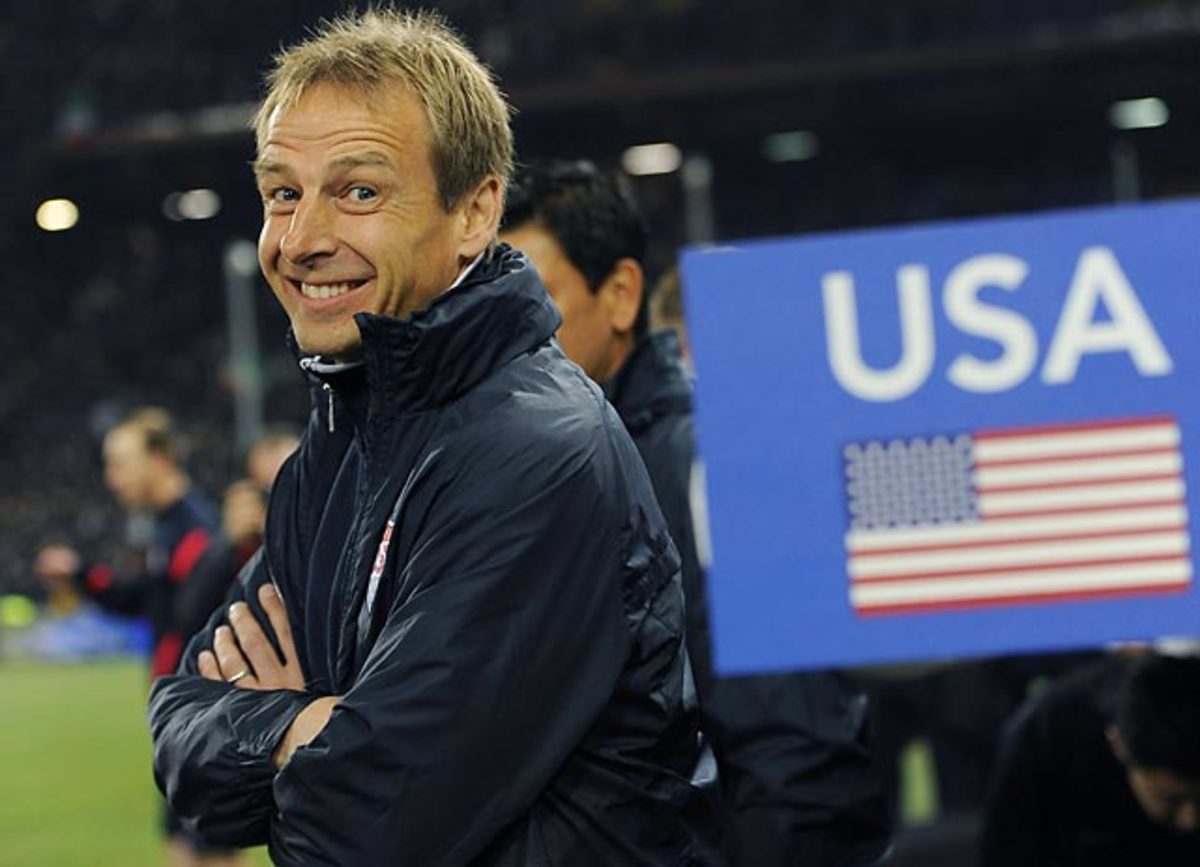
Waiting for the start of a match against Italy in 2012, Klinsmann cracks a smile. Before taking the U.S. job, he'd followed MLS and been a presence at soccer events around the country since 1998, when then-MLS Deputy Commissioner Sunil Gulati tried to get him to sign with the Los Angeles Galaxy as a player.
Jurgen Klinsmann
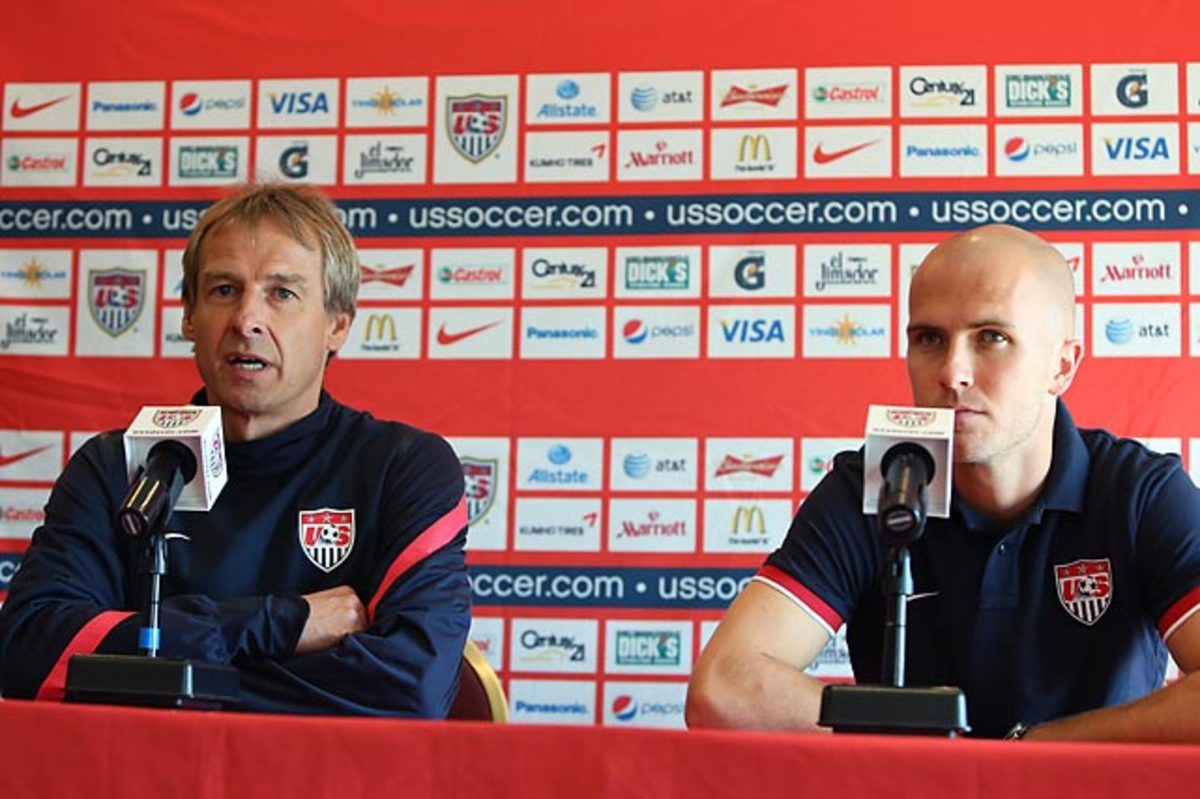
U.S. midfielder Michael Bradley (right) and Klinsmann address the media in 2012. Klinsmann replaced Bradley's father, Bob, as U.S. coach in 2011, intending to create a distinctly American style of play.
Jurgen Klinsmann
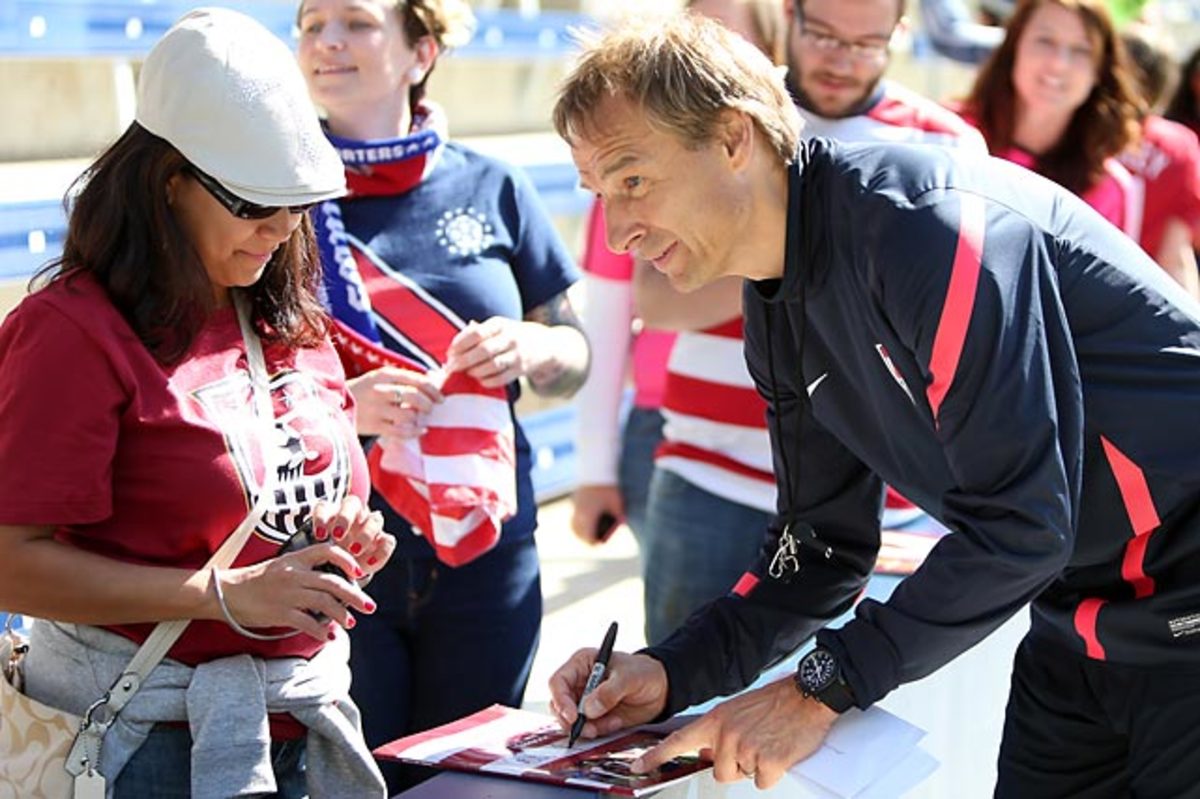
Klinsmann signs an autograph at a public U.S. national team practice in 2012.
Jurgen Klinsmann
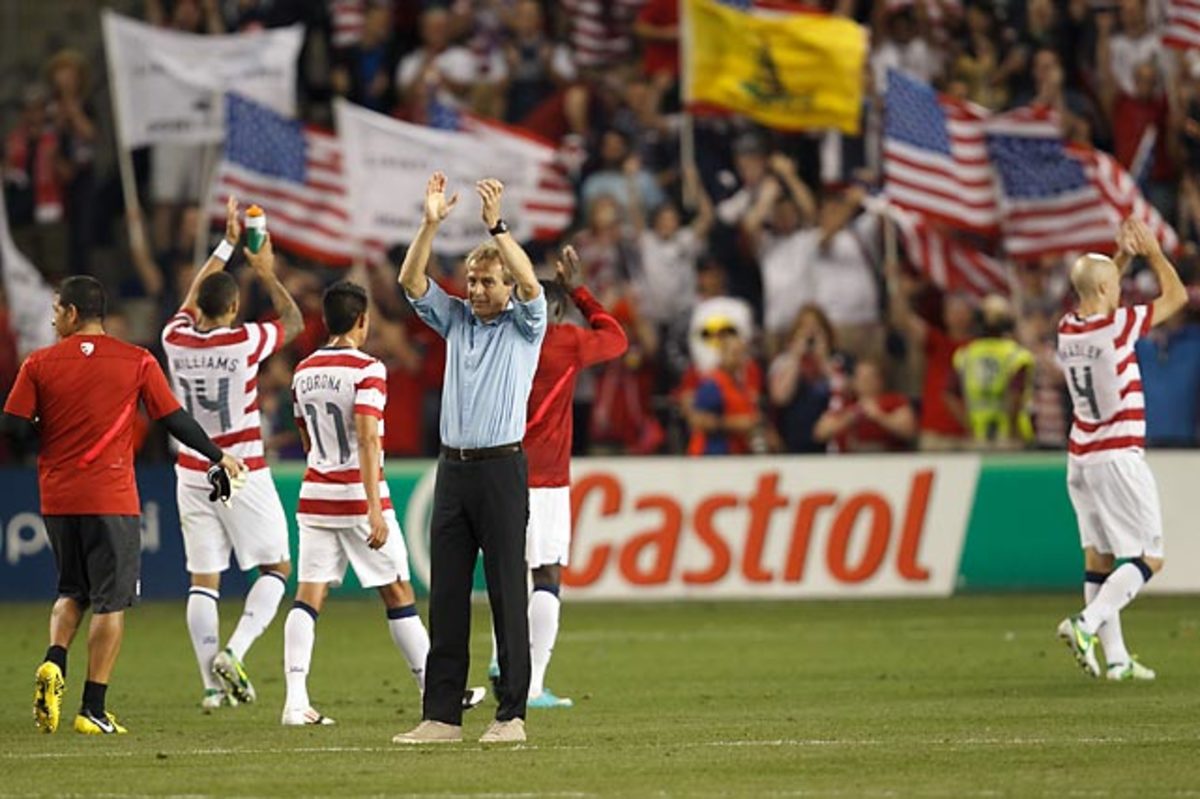
USA players and Klinsmann acknowledge the fans after a 2014 FIFA World Cup qualifying win over Guatemala in Kansas City, Kan. Klinsmann hoped to implement an offensive, passing-based mentality to the American side.
Jurgen Klinsmann
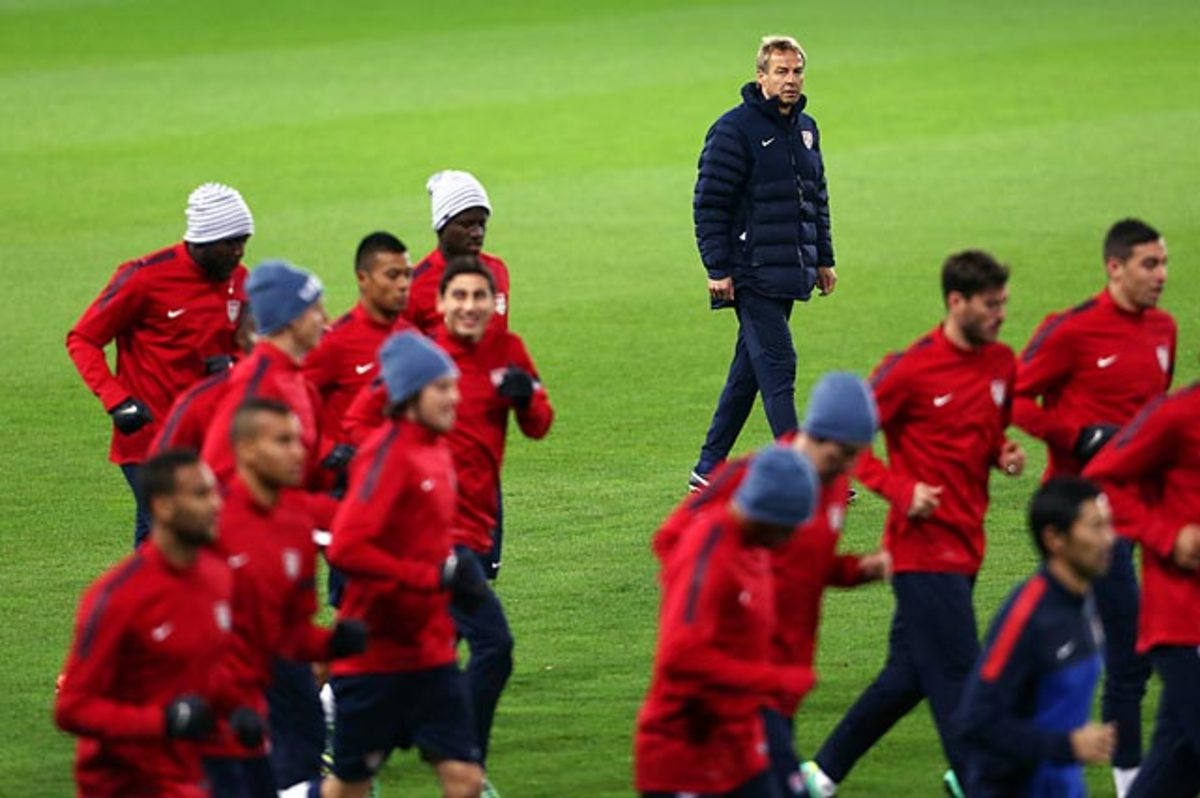
The U.S. men practice in 2013.
Jurgen Klinsmann
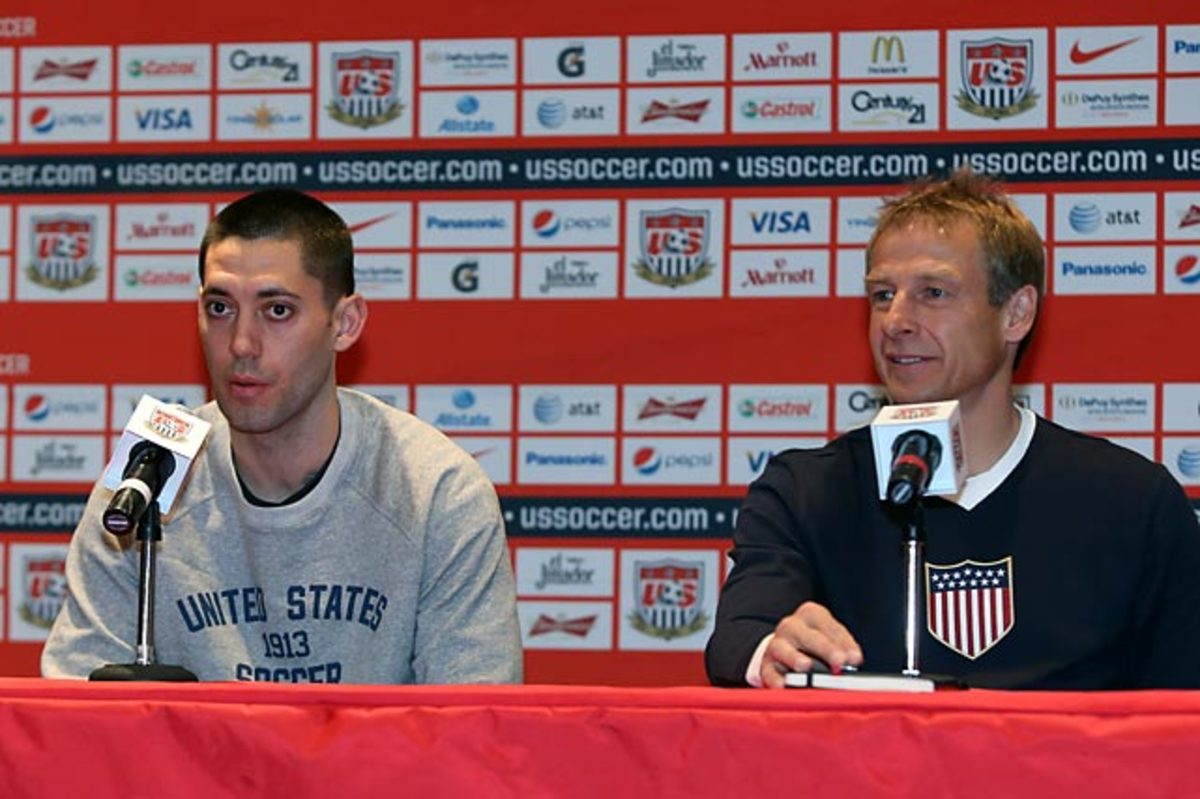
Clint Dempsey and Klinsmann hold court at a presser in Mexico City, a day prior to a World Cup qualifier.
Jurgen Klinsmann
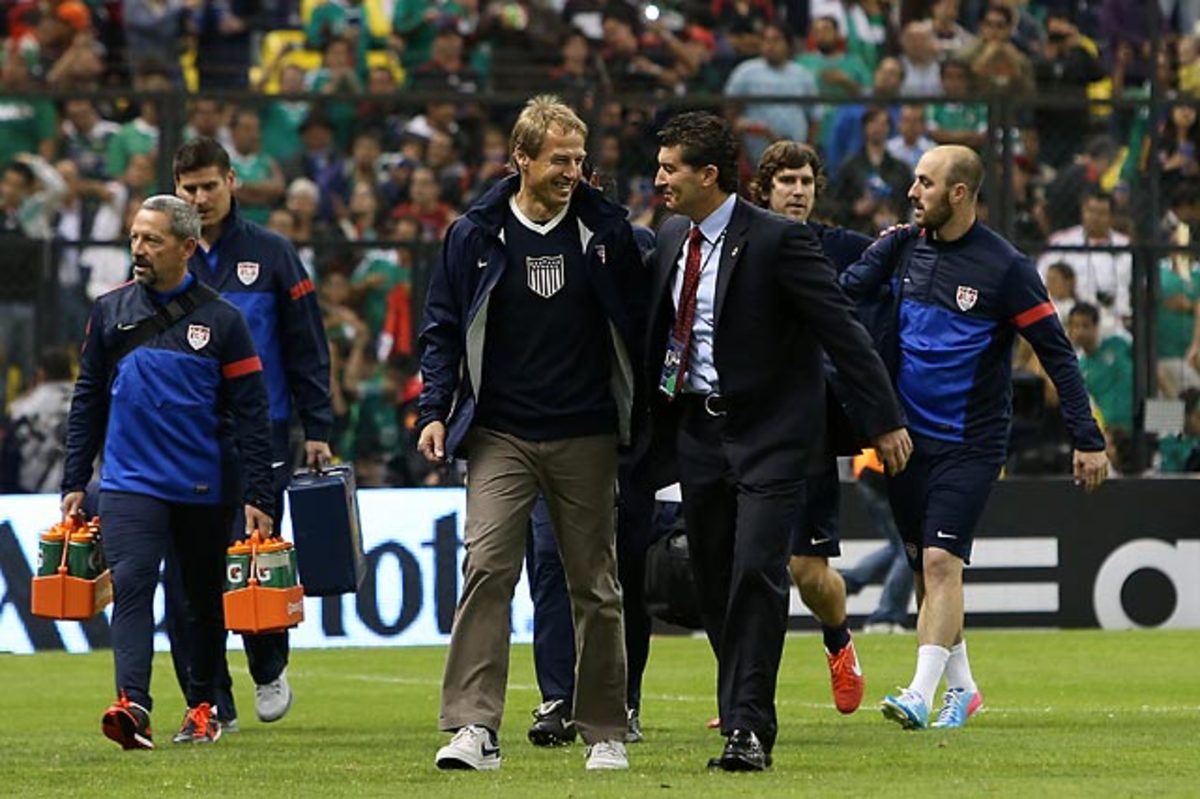
Klinsmann and Mexico head coach Jose Manuel de la Torre chat before the game at Estadio Azteca in Mexico City.
Jurgen Klinsmann
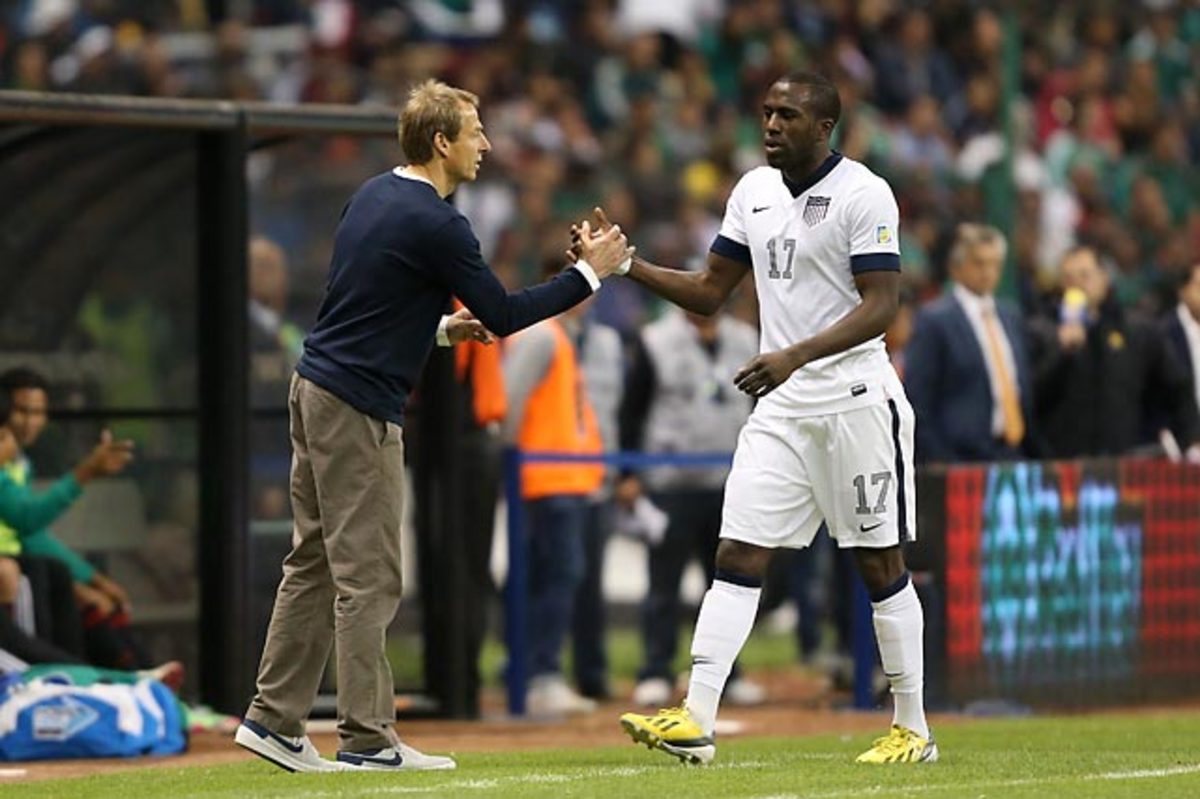
Forward Jozy Altidore is greeted by Klinsmann after being substituted in a 1-1 World Cup qualifier draw with Mexico in Mexico City.
Jurgen Klinsmann
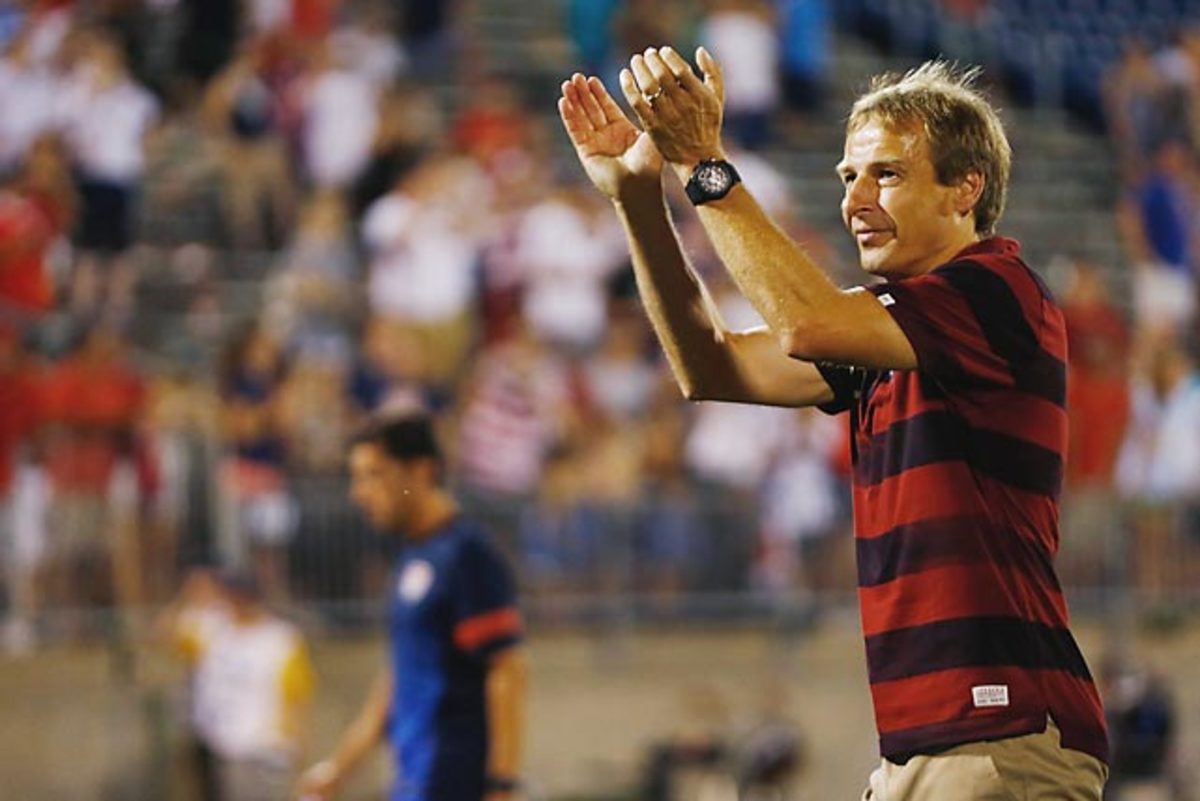
Klinsmann thanks U.S. supporters following a 1-0 win against Costa Rica during the CONCACAF Gold Cup in July 2013 in East Hartford, Conn.
Jurgen Klinsmann
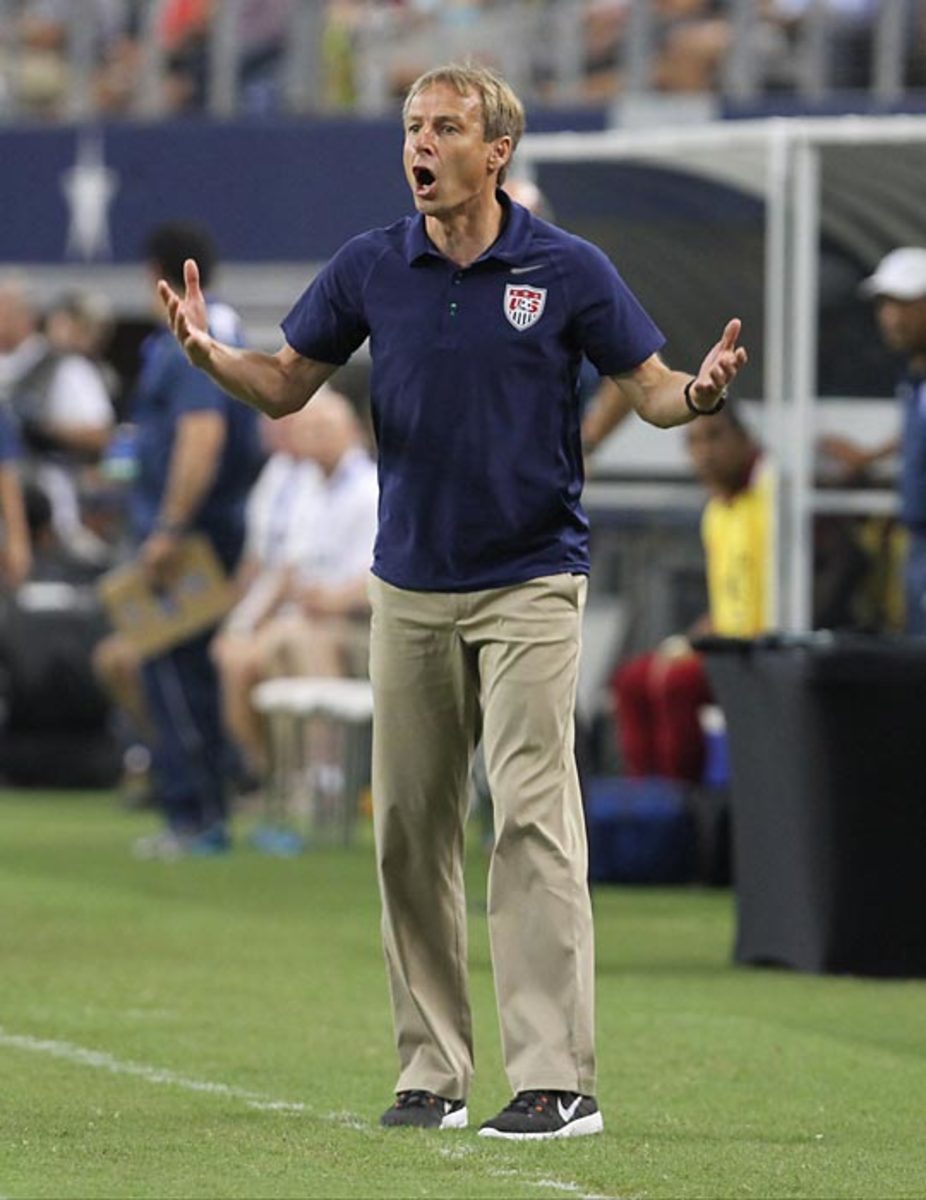
Klinsmann gestures during the CONCACAF Gold Cup semifinal match against Honduras at Cowboys Stadium in Arlington, Texas. The U.S. won 3-1.
Jurgen Klinsmann
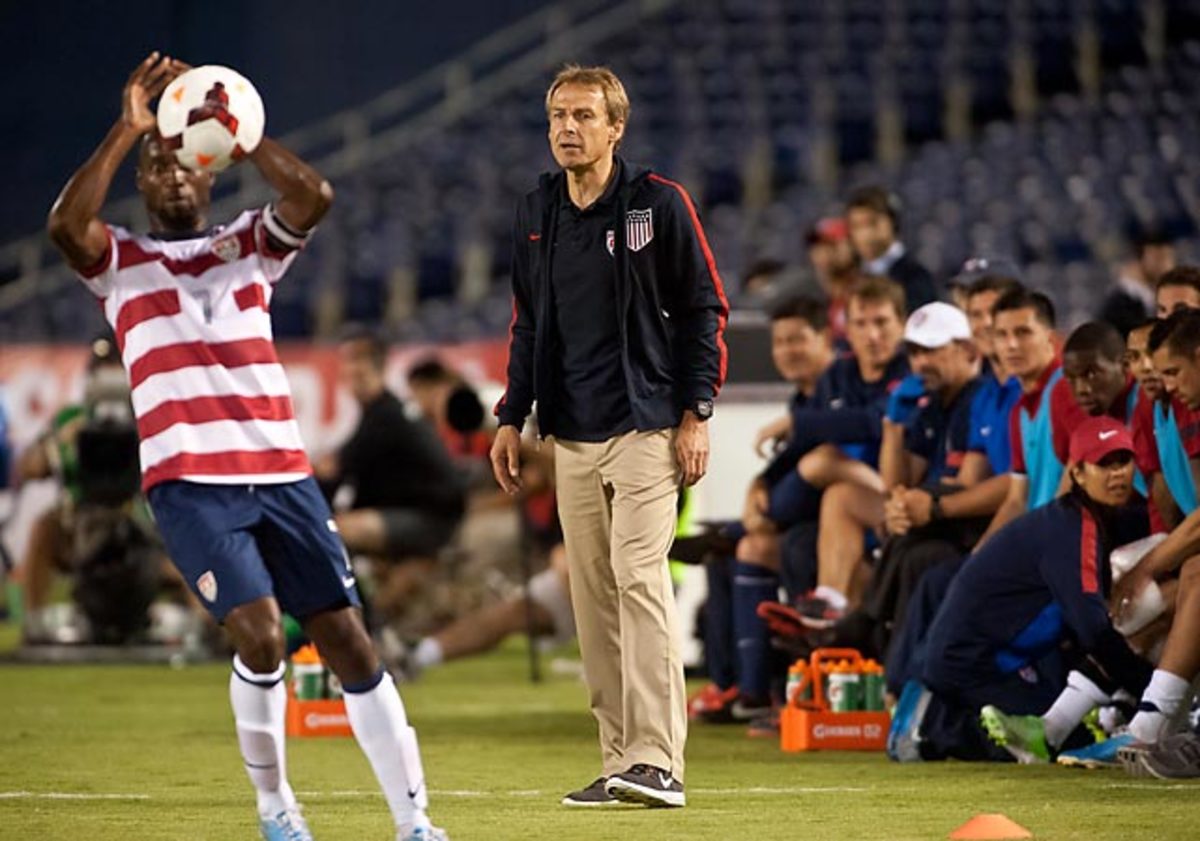
Klinsmann watches DaMarcus Beasley take a throw-in during a friendly with Guatemala at Qualcomm Stadium in San Diego, Calif.
Jurgen Klinsmann

Longtime U.S. star Landon Donovan meets Klinsmann while exiting after scoring his second goal during a friendly against Guatemala in San Diego in 2013.
Jurgen Klinsmann
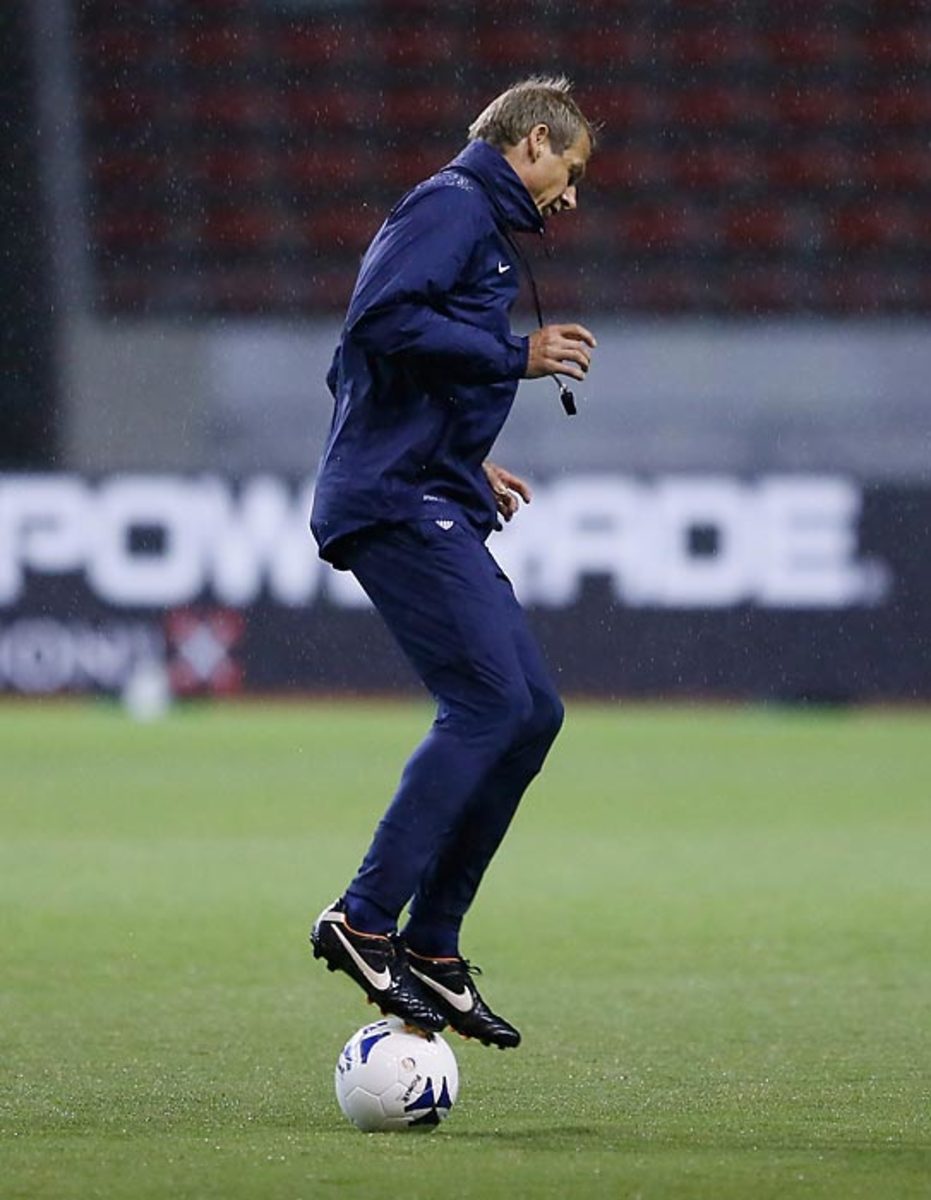
Klinsmann warms up prior to a training session in September 2013 in San Jose, Costa Rica.
Jurgen Klinsmann
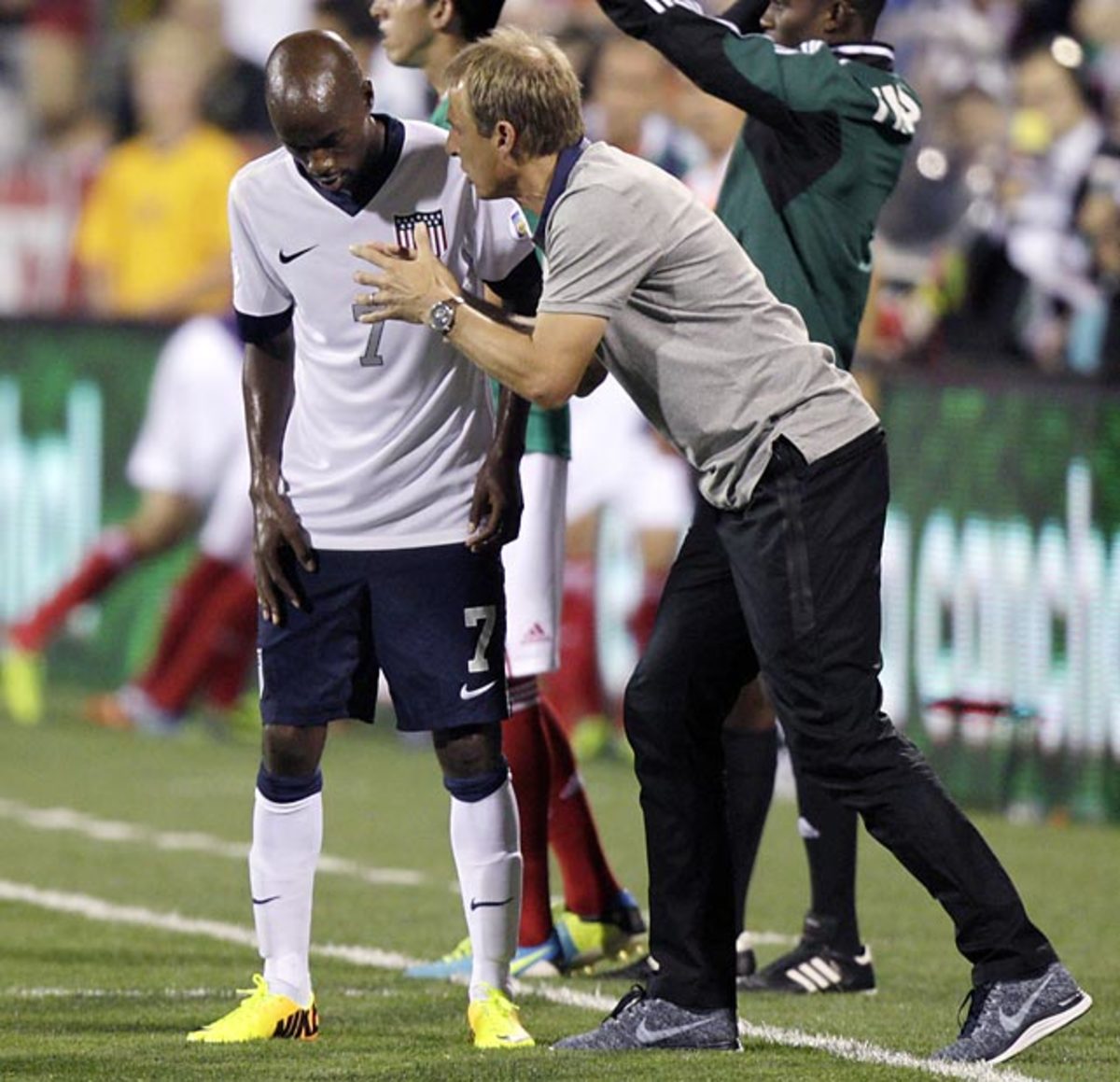
Veteran U.S. midfielder DaMarcus Beasley listens to Klinsmann during a World Cup qualifying match against Mexico in Columbus, Ohio in September 2013. The United States clinched its seventh straight World Cup appearance with second-half goals from Eddie Johnson and Landon Donovan in a 2-0 win.
Jurgen Klinsmann
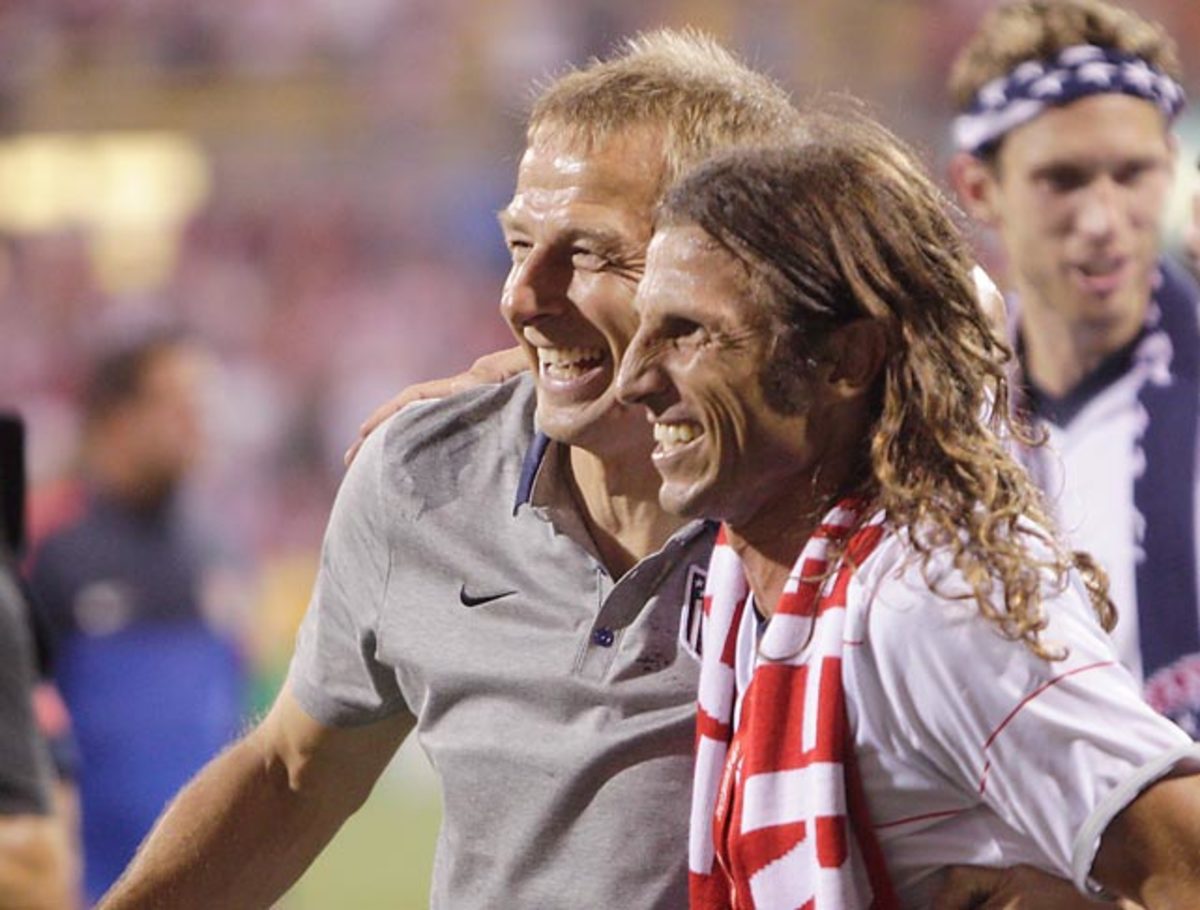
Former U.S. player Frankie Hejduk congratulates Klinsmann after the U.S. clinched a World Cup berth by defeating Mexico.
Jurgen Klinsmann
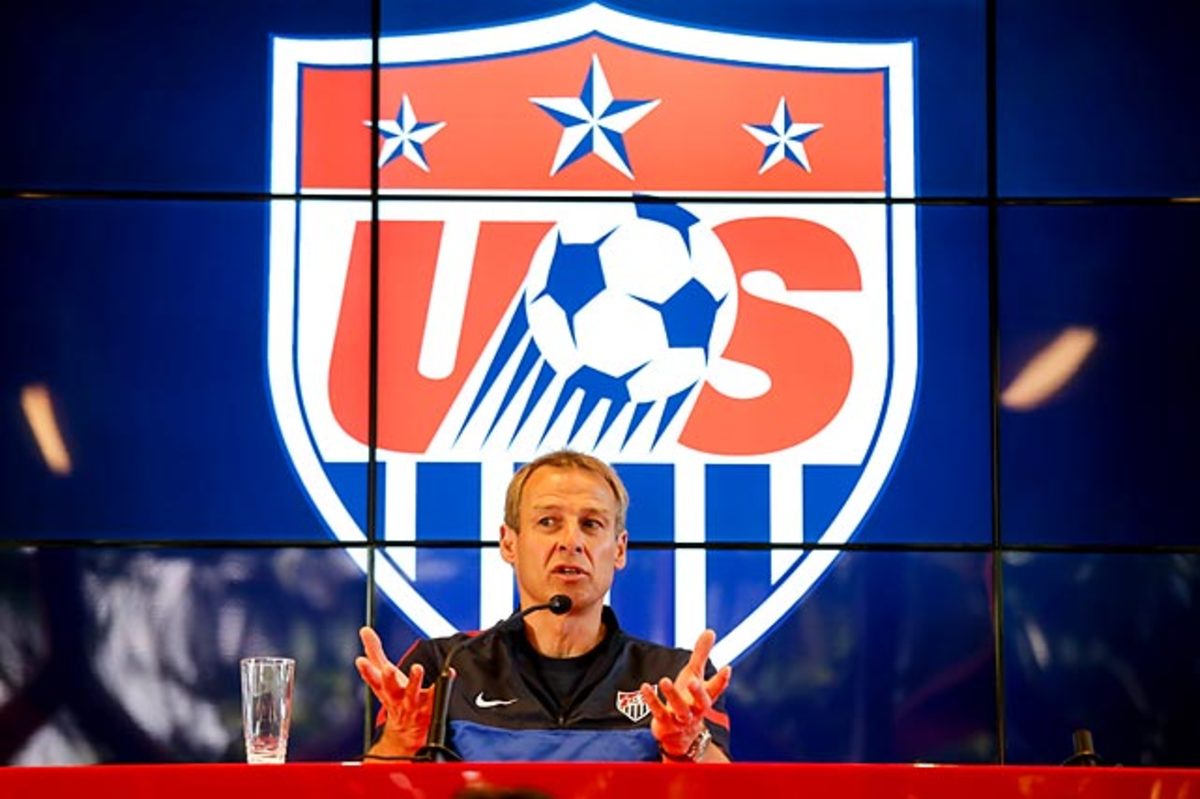
Klinsmann speaks during a press conference at the Sao Paulo FC training centre in January 2014.
Jurgen Klinsmann
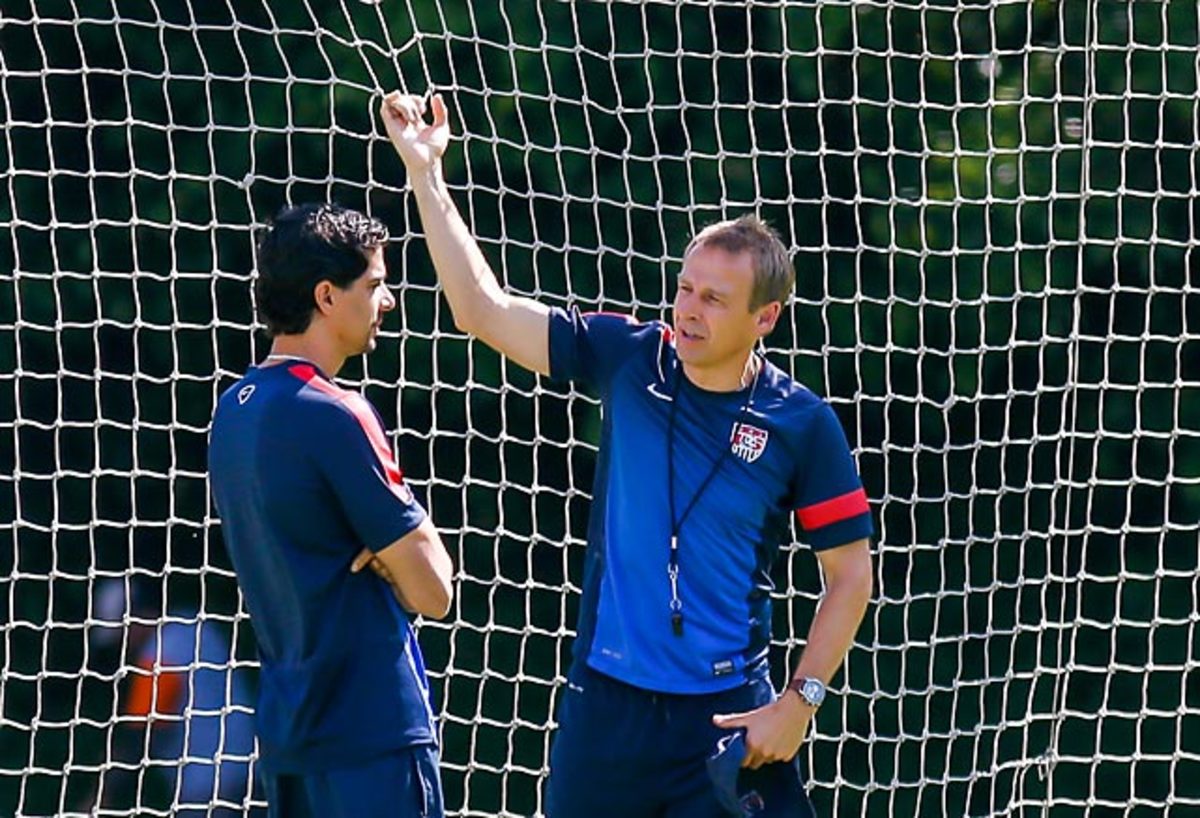
Klinsmann and the U.S. team arrived in Sao Paulo in January 2014 for a 12-day training session to prepare for the upcoming FIFA World Cup in Brazil.
Jurgen Klinsmann
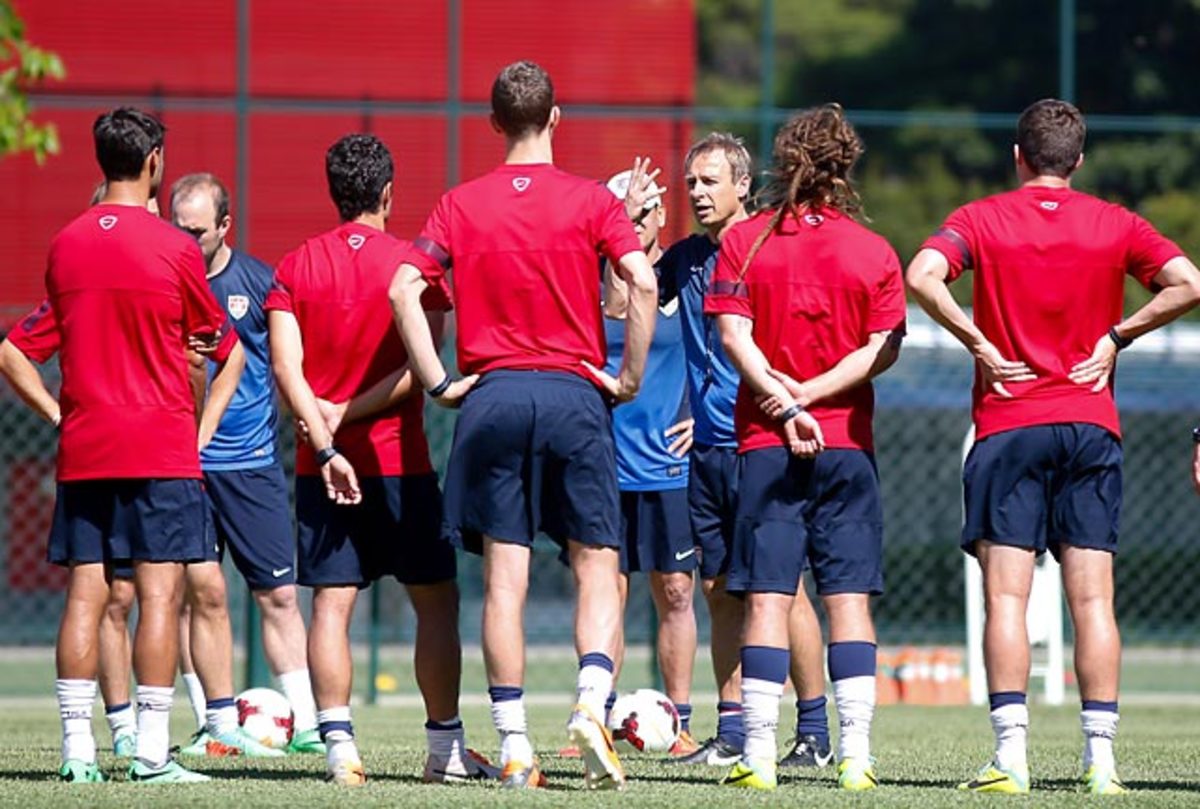
Jurgen Klinsmann addresses the team in Sao Paulo in January 2014. Known for picking his squads on performance and not reputation, Klinsmann held true to his reputation in mid-May by leaving striker Eddie Johnson out of the World Cup pool in favor of the in-form Terrence Boyd and Chris Wondolowski.
 Add us as a preferred source on Google
A leading soccer journalist and best-selling author, Grant Wahl has been with SI since 1996 and has penned more than three dozen cover stories.