%20%20--%3E%0A%3Csvg%20version%3D%221.1%22%20id%3D%22Layer_1%22%20xmlns%3D%22http%3A%2F%2Fwww.w3.org%2F2000%2Fsvg%22%20xmlns%3Axlink%3D%22http%3A%2F%2Fwww.w3.org%2F1999%2Fxlink%22%20x%3D%220px%22%20y%3D%220px%22%0A%09%20width%3D%2239px%22%20height%3D%2240px%22%20viewBox%3D%220%200%2039%2040%22%20enable-background%3D%22new%200%200%2039%2040%22%20xml%3Aspace%3D%22preserve%22%3E%0A%3Cpath%20fill%3D%22%23FFFFFF%22%20d%3D%22M38.5%2C7H28.2v26h10.3V7z%22%2F%3E%0A%3Cpath%20fill-rule%3D%22evenodd%22%20clip-rule%3D%22evenodd%22%20fill%3D%22%23FFFFFF%22%20d%3D%22M26.1%2C25.5c0%2C5.8-4.1%2C7.5-12.9%2C7.5C3.9%2C33%2C0%2C31.2%2C0%2C25.2v-1.1h11.6%0A%09v2.4c0%2C0.7%2C0.1%2C1.4%2C1.2%2C1.4c1%2C0%2C1.2-0.4%2C1.2-1.3v-0.9c0-1.6-0.9-1.6-3.5-2.2C2.2%2C21.7%2C0%2C19.7%2C0%2C15.3v-0.9C0%2C9.3%2C5.5%2C7%2C12.9%2C7%0A%09c10.2%2C0%2C12.8%2C2.6%2C12.8%2C7.4v1.8h-11v-2.9c0-0.6-0.4-1.1-1.2-1.1c-0.6%2C0-1.2%2C0.4-1.2%2C1.1v0.9c0%2C1.5%2C0.9%2C2%2C3.3%2C2.5%0A%09c8%2C1.6%2C10.5%2C3.3%2C10.5%2C7.5V25.5z%22%2F%3E%0A%3C%2Fsvg%3E%0A)
Worst Free Agent Signings Since 1996
Worst Free Agent Signings Since 1996
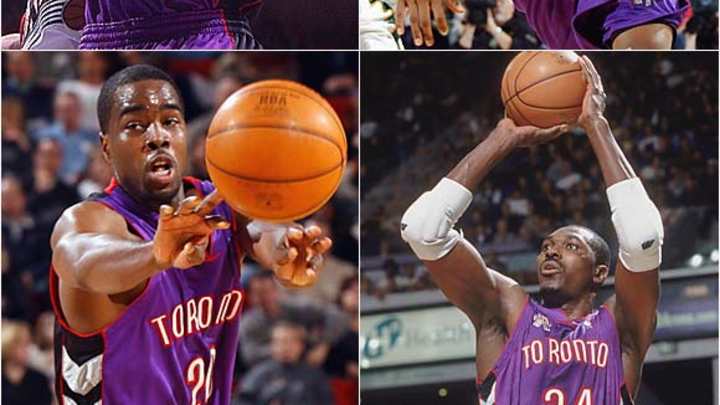
Hakeem Olajuwon, Toronto Raptors, 2001: three years, $17 million<br><br>Antonio Davis, Toronto Raptors, 2001: five years, $60 million<br><br>Jerome Williams, Toronto Raptors, 2001: seven years, $40.8 million<br><br>Alvin Williams, Toronto Raptors, 2001: five years, $35 million<br><br>This quartet of ill-fated signings set the Raptors back a half-decade. For $150 million, you'd hope to at least get beyond the first round of the playoffs, but the Raptors won only 42 games in the 2001-02 season and lost to the Pistons in the playoffs. Even with Alvin's recent buyout, the Raptors are still paying for these moves.
Adonal Foyle, Golden State Warriors, 2004: six years, $42 million<br><br> Derek Fisher, Golden State Warriors, 2004: six years, $37 million
If a deal seems ghastly to most observers on the day it's announced, things usually fail to turn out well for any involved party. Fisher and Foyle parlayed healthy attitudes and defensive mind-sets into outrageous deals in Chris Mullin's first offseason as el jefe in Golden State. Mullin was lucky enough to rid himself of Fisher's baggage this summer (traded to Utah for expiring deals), but Golden State still owes Foyle another three years at nearly $9 million per. It should be noted that the Warriors still hold a team option for Foyle in '09-10 for $10.5 million, just in case he becomes an All-Star at age 35.
Tariq Abdul-Wahad, Denver Nuggets, 2001: seven years, $43.3 million
He could never shoot. He played for three mediocre-to-lousy teams without making a dent in the three years before he signed his deal, and he played in only 58 games (averaging 4.5 points in 15.9 minutes) between the 2001 and '03 seasons.
Joe Smith, Minnesota Timberwolves, 1999: one year, $1.75 million
As disappointing as his second and third NBA seasons were, Smith's surprise signing with the Minnesota Timberwolves in early '99 seemed more than a little curious. He wasn't expected to perform as a franchise-carrying big man, but his Minnesota averages of nearly 14 points and eight rebounds (in 33 minutes) for a 23-year-old were nothing to sneeze at. When he "re-signed" in the summer of '99 for $2.1 million, and in the summer of '00 for $2.3 million, onlookers wondered if something a bit more unseemly was afoot, a notion given credence when an agreed-upon document was found that showed the Timberwolves had decided to give Smith a maximum contract starting in '01 -- a good two years before they were allowed to offer one. Smith's '00 contract was voided, Minnesota lost its '01, '02 and '04 draft picks, and Smith's career never recovered.
Jerome James, New York Knicks, 2005: five years, $30 million
Leave it to Isiah Thomas to sign a 30-year-old center coming off a five-point, three-rebound season and talk endlessly about the man's "potential." In his first season with New York, James was out of shape, perpetually in foul trouble (averaging a whistle every 3.9 minutes) and clearly a few years removed from his pitiful "prime." Even worse, the fact that the Knicks have to pay James through 2010 stopped the team from matching a relatively minuscule contract offer from the Spurs for Jackie Butler, a superior pivotman who is a decade younger.
Tim Thomas, Milwaukee Bucks, 2000: six years, $67 million
In 2000, Thomas was 23 and coming off a playoff run that saw him score 15.4 points in just 28.4 minutes per contest. But the holes in his game were obvious. Despite being 6-10, he never posted up, wouldn't rebound and seemed incapable of doing the things (only 31 blocks in all of 1999-2000) that are the hallmarks of young, athletic players. After a desperate Chicago Bulls team upped the ante (meeting Thomas at the airport with a welcome banner and mascots in tow), George Karl and Ernie Grunfeld signed Thomas to a deal that seems laughable now.
Jim McIlvaine, Seattle SuperSonics, 1996: seven years, $35 million
Back in '96, it didn't seem like THAT bad a contract. The Sonics were coming off a 64-win season and a Finals appearance in which incumbent pivotman Ervin Johnson was suspended for the last two games and retread center Frank Brickowski was pushed around by Chicago's Dennis Rodman. The 23-year-old McIlvaine had averaged 2.1 blocks as a backup in Washington, and Seattle thought that if it surrounded him with strong rebounders and scorers, such as Shawn Kemp and Detlef Schrempf, what could go wrong? Everything. McIlvaine failed to develop, Kemp pouted his way out of Seattle and McIlvaine's contract became the stink bomb of his era.
Anfernee Hardaway, Phoenix Suns, 1999: seven years, $87.7 million
Promise and potential always tantalize, but after a while you have to take inventory of how an athlete has handled his career. Hardaway could have been the best guard of his generation, but he was constantly on the shelf with injuries and seemed dangerously allergic to any sort of sustained rehabilitation efforts, even before Phoenix acquired him.
Allan Houston, New York Knicks, 2001: six years, $100 million
This one seemed like a dog from the get-go. With Chris Webber, Antonio Davis, Dikembe Mutombo and Derek Anderson on the free-agent board, the 30-year-old Houston was barely on the radar in '01. It seemed a lock he would stay in New York -- but for $100 million? It wasn't Houston's fault that Knicks GM Scott Layden seemed intent to bid against himself and wildly overpaid for Houston's services.
Grant Hill, Orlando Magic, 2000: seven years, $93 million
Hill's impending free agency was on everyone's mind in 1999. The Orlando Magic and the Chicago Bulls made a series of trades to set aside cap space for the five-time Detroit All-Star, who was asked about his future following nearly every Pistons win or loss. Anxious to prove that he was a team-first, free-agency-second type of player, Hill needlessly played on a broken ankle in Detroit's first-round playoff loss, setting up a disastrous run with the Orlando Magic -- one that has seen him play only 135 games in six seasons due to recurring injuries.
 Add us as a preferred source on Google