%20%20--%3E%0A%3Csvg%20version%3D%221.1%22%20id%3D%22Layer_1%22%20xmlns%3D%22http%3A%2F%2Fwww.w3.org%2F2000%2Fsvg%22%20xmlns%3Axlink%3D%22http%3A%2F%2Fwww.w3.org%2F1999%2Fxlink%22%20x%3D%220px%22%20y%3D%220px%22%0A%09%20width%3D%2239px%22%20height%3D%2240px%22%20viewBox%3D%220%200%2039%2040%22%20enable-background%3D%22new%200%200%2039%2040%22%20xml%3Aspace%3D%22preserve%22%3E%0A%3Cpath%20fill%3D%22%23FFFFFF%22%20d%3D%22M38.5%2C7H28.2v26h10.3V7z%22%2F%3E%0A%3Cpath%20fill-rule%3D%22evenodd%22%20clip-rule%3D%22evenodd%22%20fill%3D%22%23FFFFFF%22%20d%3D%22M26.1%2C25.5c0%2C5.8-4.1%2C7.5-12.9%2C7.5C3.9%2C33%2C0%2C31.2%2C0%2C25.2v-1.1h11.6%0A%09v2.4c0%2C0.7%2C0.1%2C1.4%2C1.2%2C1.4c1%2C0%2C1.2-0.4%2C1.2-1.3v-0.9c0-1.6-0.9-1.6-3.5-2.2C2.2%2C21.7%2C0%2C19.7%2C0%2C15.3v-0.9C0%2C9.3%2C5.5%2C7%2C12.9%2C7%0A%09c10.2%2C0%2C12.8%2C2.6%2C12.8%2C7.4v1.8h-11v-2.9c0-0.6-0.4-1.1-1.2-1.1c-0.6%2C0-1.2%2C0.4-1.2%2C1.1v0.9c0%2C1.5%2C0.9%2C2%2C3.3%2C2.5%0A%09c8%2C1.6%2C10.5%2C3.3%2C10.5%2C7.5V25.5z%22%2F%3E%0A%3C%2Fsvg%3E%0A)
Gutter ball

OK, I've learned to accept it that the Dodgers left Brooklyn and the Colts left Baltimore and NASCAR left Rockingham. And I even finally bore up to the reality that Brad actually left Jennifer. But, I'm sorry, I simply can't take it if bowling leaves Milwaukee.
Well, not all bowling -- the headquarters of the United States Bowling Congress, the heart and soul, ye, the shirt and shoes of American bowling, located in Milwaukee for more than a century, is threatening to pick up and move to Texas.
That benighted decision by the bowling poobahs is scheduled to be made by March 14. Say it aint so. As an erstwhile pin boy, I plead with the USBC to keep its sport in the city bowling made famous. After all, as Crackerjack goes with baseball, as tailgating with football, so have bowling and beer and Milwaukee always gone together.
In fact, do you know how the old German-Americans used to play the game? Three teams would compete against each other. Have you ever heard of any sport where there are three teams? Everywhere else it's two. But here's the way it worked with bowling: two of the three teams would bowl against each other, while the third team went to the bar and drank beer. Then they'd rotate. Golf may have it's nineteenth hole at the end of a round, but bowling had a moveable nineteenth hole.
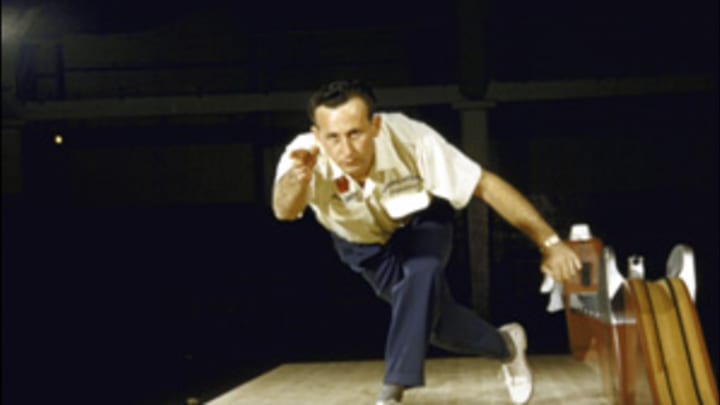
No wonder bowling prospered long into this century. Why, in winter time, its big heroes, like Don Carter and Dick Weber, were as famous as basketball and hockey stars. As recently as 40 years ago, there were nine million sanctioned bowlers in this country. But then the bubble burst. Now it's hardly two-and-a-half million. Especially as tennis and golf moved out of the country clubs, poor bowling appeared to be de classe. Bowling shirts were the epitome of tacky and, oh, those multi-colored shoes that looked like something elves would wear.
It's funny, isn't it? In most sports, the finest compliment you can pay an athlete is to call him a "blue-collar kinda guy." But the whole sport of bowling took it on the chin because it was considered too blue-collar.
Bowling tried to upgrade its image. Suddenly, you were supposed to call alleys "lanes" and gutters "channels." Please. You are what you are. You might as well try and have baseball start calling dugouts "patios."
And wouldn't you know it: what president put alleys in the White House? Right -- Richard Nixon. I interviewed President Nixon once. His big gripe against sports journalists? They didn't pay enough attention to bowling. Just bowling's luck -- Nixon. And it's Gerald Ford who plays golf, and Ronald Reagan who rides horses.
Then Robert Putnam came out with his famous treatise, Bowling Alone, which featured the decline in numbers of weekly bowling leagues to illustrate how Americans had stopped doing things together. Apparently, younger Americans would rather play video games by themselves than go down to the alleys and rent some funny shoes and drink beer with their buddies.
And now they might move bowling central from Milwaukee to Texas? Hey, you might as well make Oshkosh the rodeo capital of America and transport the Alamo to Sheboygan. Bowlers of the world, unite. Have another brewski and keep bowling where God meant it to be.

Frank Deford is among the most versatile of American writers. His work has appeared in virtually every medium, including print, where he has written eloquently for Sports Illustrated since 1962. Deford is currently the magazine's Senior Contributing Writer and contributes a weekly column to SI.com. Deford can be heard as a commentator each week on Morning Edition. On television he is a regular correspondent on the HBO show Real Sports With Bryant Gumbel. He is the author of 15 books, and his latest,The Enitled, a novel about celebrity, sex and baseball, was published in 2007 to exceptional reviews. He and Red Smith are the only writers with multiple features in The Best American Sports Writing of the Century. Editor David Halberstam selected Deford's 1981 Sports Illustrated profile on Bobby Knight (The Rabbit Hunter) and his 1985 SI profile of boxer Billy Conn (The Boxer and the Blonde) for that prestigious anthology. For Deford the comparison is meaningful. "Red Smith was the finest columnist, and I mean not just sports columnist," Deford told Powell's Books in 2007. "I've always said that Red is like Vermeer, with those tiny, priceless pieces. Five hundred words, perfectly chosen, crafted. Best literary columnist, in any newspaper, that I've ever seen." Deford was elected to the National Association of Sportscasters and Sportswriters Hall of Fame. Six times at Sports Illustrated Deford was voted by his peers as U.S. Sportswriter of The Year. The American Journalism Review has likewise cited him as the nation's finest sportswriter, and twice he was voted Magazine Writer of The Year by the Washington Journalism Review. Deford has also been presented with the National Magazine Award for profiles; a Christopher Award; and journalism honor awards from the University of Missouri and Northeastern University; and he has received many honorary degrees. The Sporting News has described Deford as "the most influential sports voice among members of the print media," and the magazine GQ has called him, simply, "The world's greatest sportswriter." In broadcast, Deford has won a Cable Ace award, an Emmy and a George Foster Peabody Award for his television work. In 2005 ESPN presented a television biography of Deford's life and work, You Write Better Than You Play. Deford has spoken at well over a hundred colleges, as well as at forums, conventions and on cruise ships around the world. He served as the editor-in-chief of The National Sports Daily in its brief but celebrated existence. Deford also wrote Sports Illustrated's first Point After column, in 1986. Two of Deford's books, the novel, Everybody's All-American, and Alex: The Life Of A Child, his memoir about his daughter who died of cystic fibrosis, have been made into movies. Two of his original screenplays have also been filmed. For 16 years Deford served as national chairman of the Cystic Fibrosis Foundation, and he remains chairman emeritus. He resides in Westport, CT, with his wife, Carol. They have two grown children – a son, Christian, and a daughter, Scarlet. A native of Baltimore, Deford is a graduate of Princeton University, where he has taught American Studies.