%20%20--%3E%0A%3Csvg%20version%3D%221.1%22%20id%3D%22Layer_1%22%20xmlns%3D%22http%3A%2F%2Fwww.w3.org%2F2000%2Fsvg%22%20xmlns%3Axlink%3D%22http%3A%2F%2Fwww.w3.org%2F1999%2Fxlink%22%20x%3D%220px%22%20y%3D%220px%22%0A%09%20width%3D%2239px%22%20height%3D%2240px%22%20viewBox%3D%220%200%2039%2040%22%20enable-background%3D%22new%200%200%2039%2040%22%20xml%3Aspace%3D%22preserve%22%3E%0A%3Cpath%20fill%3D%22%23FFFFFF%22%20d%3D%22M38.5%2C7H28.2v26h10.3V7z%22%2F%3E%0A%3Cpath%20fill-rule%3D%22evenodd%22%20clip-rule%3D%22evenodd%22%20fill%3D%22%23FFFFFF%22%20d%3D%22M26.1%2C25.5c0%2C5.8-4.1%2C7.5-12.9%2C7.5C3.9%2C33%2C0%2C31.2%2C0%2C25.2v-1.1h11.6%0A%09v2.4c0%2C0.7%2C0.1%2C1.4%2C1.2%2C1.4c1%2C0%2C1.2-0.4%2C1.2-1.3v-0.9c0-1.6-0.9-1.6-3.5-2.2C2.2%2C21.7%2C0%2C19.7%2C0%2C15.3v-0.9C0%2C9.3%2C5.5%2C7%2C12.9%2C7%0A%09c10.2%2C0%2C12.8%2C2.6%2C12.8%2C7.4v1.8h-11v-2.9c0-0.6-0.4-1.1-1.2-1.1c-0.6%2C0-1.2%2C0.4-1.2%2C1.1v0.9c0%2C1.5%2C0.9%2C2%2C3.3%2C2.5%0A%09c8%2C1.6%2C10.5%2C3.3%2C10.5%2C7.5V25.5z%22%2F%3E%0A%3C%2Fsvg%3E%0A)
As NASCAR tries to improve racing, Biffle urges caution
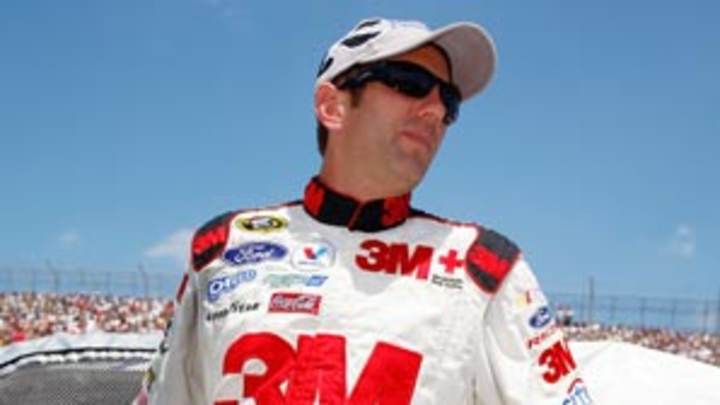
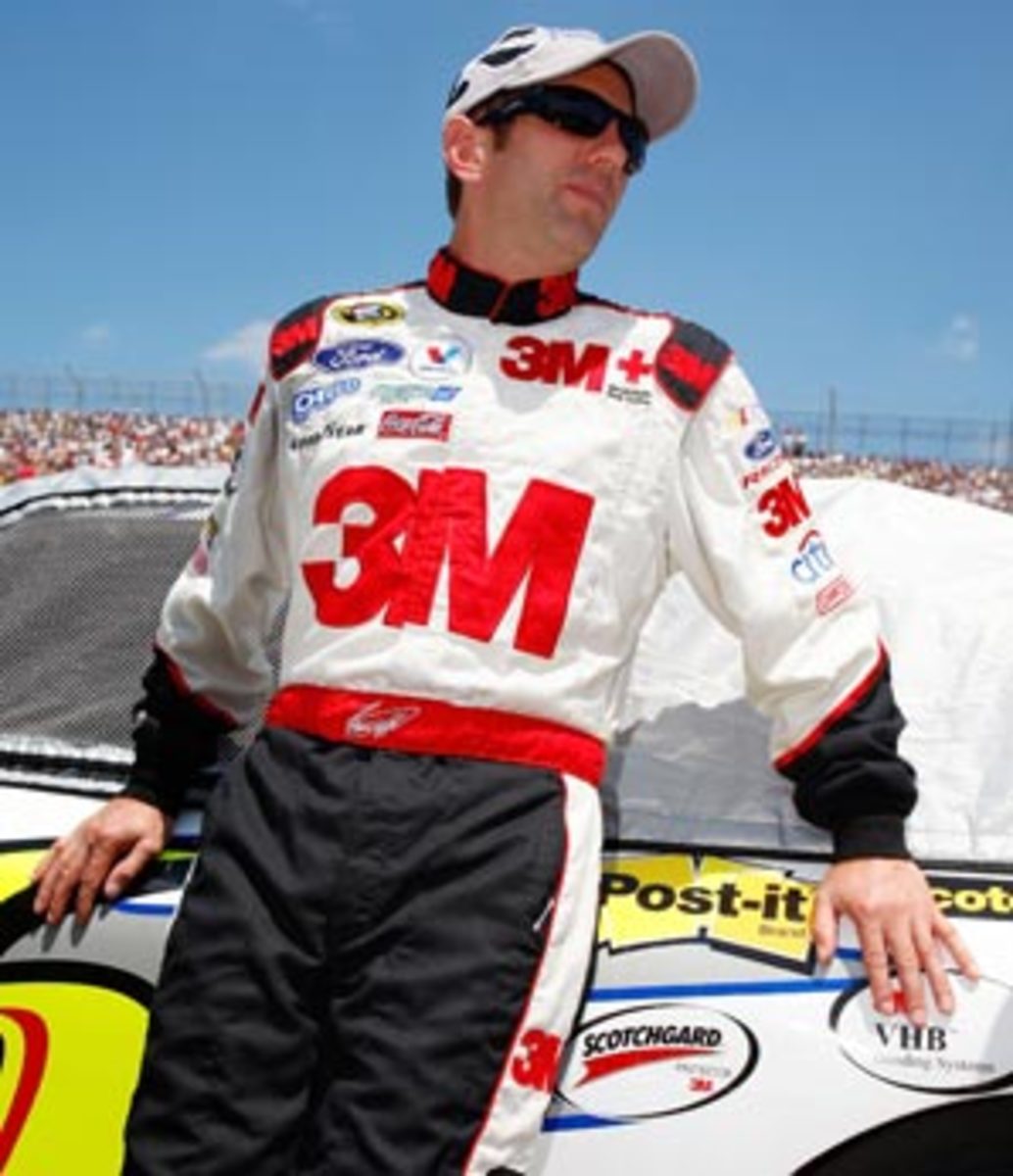
So NASCAR is going to go with double-file restarts in the Cup series. Good for them. The new rule should make for some interesting racing over the next few weeks, and especially in the Chase. I worked with my colleague Lars Anderson last week on a piece that he wrote for the magazine about how NASCAR can improve the quality of its racing. Double-file restarts was one recommendation.
I was at Dover last week while we were doing our reporting, and I talked to a few drivers and crew chiefs about NASCAR's recent state-of-the-sport meeting, and the circuit's ongoing discussion about self-improvement. There were, not surprisingly, lots of opinions and little consensus. Change is going to come slowly.
One of the most thoughtful drivers I spoke to was Greg Biffle. Engaging and challenging, Biffle wasn't ready to trash the new car, nor was he prepared to whole-heartedly endorse the idea of double-file restarts. He honestly seemed like he was still wrestling with where he stands on some of these things, and he was very clear that there aren't going to be any easy fixes. Here's some of what he had to say:
Q.Do you like the idea for double-file restarts?
A. There's a tradeoff with this scenario. One of the tradeoffs is if you're two laps down, and let's say you've got a great car. If you have to start behind all the lead lap cars, you don't stand a chance of getting your laps back. Your day is over, right? That's the negative of it. The positive of it is that you've got your leaders up front racing each other.
Q.If there was something within the template of the new car that you were allowed to fiddle with a little bit more, what is something that your crew, or most crews, would like to fiddle with?
A. Well, now those are the questions on the table. If we want to tweak on this platform, this great, solid platform we have, that we've built for three years, if we want to tweak on it a little bit -- to make the cars a little better maybe in traffic, make the cars a little more stable on this kind of track, make them a little more friendly on this kind of track, a little more racy, safer, whatever -- all those things still apply. I think that we're searching. We're all searching for that piece.
We've got to keep the racing entertaining, we've got to keep the fans entertained, we need a good drug policy. Do we consider doing a double-file restart? What do you guys think? What's the pros and cons? It was a real open discussion, and I think it was perfect. It gives us all a chance to think about it, come up with a few things. For instance, when we go do a tire test or something, we can try a few of these small items for, technically, free. Right? We're already going and testing. We're not having to schedule a test just to go try something. So let's be smart economically, whether it's a little shift, change here or something.
Q. There seems to be an opinion, or a conventional wisdom, that the racing isn't as exciting or entertaining as it used to be.
A. Here's what's happened...Or here's what I think happened. I think when we first started with this car, it was a pain in our butt because, let's face it: we couldn't figure it out. It had bump-stops on it. We couldn't move the bodies. We couldn't shift this around, shift that around. So we didn't know what to do to the car. So what do you do when you don't know what to do with the car? You complain about the car.
"This thing's terrible! We don't like it! It's not as good as the old car! Well, shoot, we'd been driving the old car for 10 years. How could it be as good as the old car the first race out of the box.
"So the consensus became, of fans, media, TV commentators, "Oh, this car isn't as good. It's just the car. That's why the racing's no good." And if you look, there's more cars on the lead lap. There's tighter finishes -- the margin of victory. What about the race that me, Carl [Edwards] and Matt [Kenseth] had here in the Chase? For the win! What more could you ask for? So I think the perception has been that this car sucks, or that this car isn't good. And we all felt like that the first five times we drove it. You know what I mean? And I think what happened was, people perceived that that is the car, period. And it'll never change. Well, today this car is great! You know? It's adjustable. It puts on awesome races. The drivers are safe inside the cars.
"Now, same discussion we had with the old car, is there anything we can do to make it better? To give you more race-ability? And I think that that's just... It was the same thing with the old car. You know? Aero push. Aero push. Aero push. Well, NASCAR cut an inch off the rear spoilers on the old car. So, they're changing from the old car like that (snaps fingers). They haven't touched this car in three years. We cut an inch off the old spoiler. Then we came back and cut another half inch off it. Then they gave us a bumper rule to move our tails over. They were giving us rules like this (snapping fingers) in the old car. The new car has been what it is. It didn't need those modifications, really.
"Now I think the thing is, is there anything we can do to make it better? And yes, there is. And the reason why is that you can always make anything better. I don't care what it is. You can always make a car get better fuel mileage. You can always make it handle better. You can always make it more aerodynamic. You can always make your grass greener if you put more fertilizer on it. There's always something that can be done. Now, what is economical and easy?
44: Starts for Mark Martin at Pocono
31: Top-10 finishes for Martin at Pocono
10.7: Martin's average finish at Pocono
0: Victories for Martin at Pocono
Courtesy of the hard-workin' folks at the excellent All Left Turns blog, I present to you a shining example of how not to make one of those sly ESPN commercials. Busch is fine enough here, filming a segment for his hometown Fox5 news team, but the local "personalities" are another story. There's a certain casual vibe to the ESPN spots, a vibe that relies heavily on the straight-man performances of the athletes or anchors at the center of each one. (Well, not every one, I suppose, but this mostly works, I think, because everybody else in the thing plays the gag totally straight.)
Ladies and gentlemen, rest assured that this piece displays none of that. Revel in the awkward blooper reel that takes up the first 30 seconds or so, the lack of even one funny idea for a skit and, the real low point, the nervous overacting in the drinking-fountain "bit." I grant you, the stop-and-go, engine-revving drag race in the parking lot that takes us to the fade-out has potential, but it's so abbreviated it's hard to tell what's going on. Couldn't we have gotten a few more seconds of that instead of, say, the behind-the-scenes B-roll of Busch standing in the hallway?
 Add us as a preferred source on Google
Staff writer Mark Beech, who has written extensively on college football, horse racing and NASCAR, among other subjects, cites his 2007 profile of Olympic gold medal-winning freestyle wrestler Henry Cejudo as his most memorable SI assignment. "I was at a NASCAR race in Charlotte on a Sunday afternoon and got a call from an editor asking me if I could fly straight to Colorado Springs to start work on a story about Cejudo for the next week's issue," says Beech. "I knew nothing about him at all but spent the next six days learning everything I could mostly through interviews, since there was no real record of him in the press at the time. The story was much bigger and more deeply affecting than I could have ever imagined, and I thought it came off very well considering the amount of time I had to write and report." During his tenure at SI Beech has also written on the NHL, soccer and college basketball. He writes a weekly auto racing column (Racing Fan) for SI.com, and also provides coverage of major horse racing stakes for the website. He says college football is his favorite sport to cover "for all the tradition and regional passions." Beech has been with Sports Illustrated since 1997. Before joining SI he spent five years in the U.S. Army, reaching the rank of captain, and serving primarily with the 84th Engineer Battalion (Combat) (Heavy) at Schofield Barracks, Hawaii. Beech received a B.S. in civil engineering from the United States Military Academy in 1991 and an M.S. in journalism from the Columbia University Graduate School of Journalism in 1997. He and his wife, Allison Keane, have an infant son, Nathaniel, and reside in Westchester County, NY.