%20%20--%3E%0A%3Csvg%20version%3D%221.1%22%20id%3D%22Layer_1%22%20xmlns%3D%22http%3A%2F%2Fwww.w3.org%2F2000%2Fsvg%22%20xmlns%3Axlink%3D%22http%3A%2F%2Fwww.w3.org%2F1999%2Fxlink%22%20x%3D%220px%22%20y%3D%220px%22%0A%09%20width%3D%2239px%22%20height%3D%2240px%22%20viewBox%3D%220%200%2039%2040%22%20enable-background%3D%22new%200%200%2039%2040%22%20xml%3Aspace%3D%22preserve%22%3E%0A%3Cpath%20fill%3D%22%23FFFFFF%22%20d%3D%22M38.5%2C7H28.2v26h10.3V7z%22%2F%3E%0A%3Cpath%20fill-rule%3D%22evenodd%22%20clip-rule%3D%22evenodd%22%20fill%3D%22%23FFFFFF%22%20d%3D%22M26.1%2C25.5c0%2C5.8-4.1%2C7.5-12.9%2C7.5C3.9%2C33%2C0%2C31.2%2C0%2C25.2v-1.1h11.6%0A%09v2.4c0%2C0.7%2C0.1%2C1.4%2C1.2%2C1.4c1%2C0%2C1.2-0.4%2C1.2-1.3v-0.9c0-1.6-0.9-1.6-3.5-2.2C2.2%2C21.7%2C0%2C19.7%2C0%2C15.3v-0.9C0%2C9.3%2C5.5%2C7%2C12.9%2C7%0A%09c10.2%2C0%2C12.8%2C2.6%2C12.8%2C7.4v1.8h-11v-2.9c0-0.6-0.4-1.1-1.2-1.1c-0.6%2C0-1.2%2C0.4-1.2%2C1.1v0.9c0%2C1.5%2C0.9%2C2%2C3.3%2C2.5%0A%09c8%2C1.6%2C10.5%2C3.3%2C10.5%2C7.5V25.5z%22%2F%3E%0A%3C%2Fsvg%3E%0A)
Man without a college football team
Growing up, I was fascinated by the exotic creatures other kids took for granted in their homes: I've never owned a pet, known a grandfather or had a big sister. But I got over these deprivations. As an adult, the only living thing I still pine for -- one gone lacking my whole life -- is a college football team.
I don't have one. My alma mater, Marquette, didn't field one. They did once, and even played in the Cotton Bowl, but alas it was the first Cotton Bowl, in 1937, and Marquette lost to TCU, a program still very much alive and bursting with confidence, to judge by the frogskin pants their players wore on Saturday night, as I sat bereft in front of my TV, thinking what I always do this time of year: Another Saturday night and I ain't got nobody.
Every Saturday in September it's the same: I am a lonely man on Valentine's Day. Every other person on earth is paired off with a team, calling them by their pet names, speaking their specialized language of "Rock Chalk" and "Rocky Top" and "Rammer Jammer." And I'm home, wondering if I'll ever find fulfillment. Or Phil Fulmer.
My whole life has been a series of one-night stands. And that was fun or a while. A couple of times, my Dad took me -- as a kid, on my September birthday -- to see the University of Minnesota play at Memorial Stadium. I sang "Rah-rah-rah for Ski-U-Mah, rah-rah-rah-rah" and I thought we'd be together forever: Me and the Golden Gophers and their skinny quarterback, Tony Dungy.
But it was only a schoolboy crush, nothing more, and when Dungy left me, I brazenly flirted with other teams in the same conference. My Mom, an Ohio native, fixed me up with Ohio State, a beautiful temptress and -- with Archie Griffin and Neal Colzie -- way out of my league. Still, the first word I could read in cursive was "Ohio," as spelled by the OSU marching band.
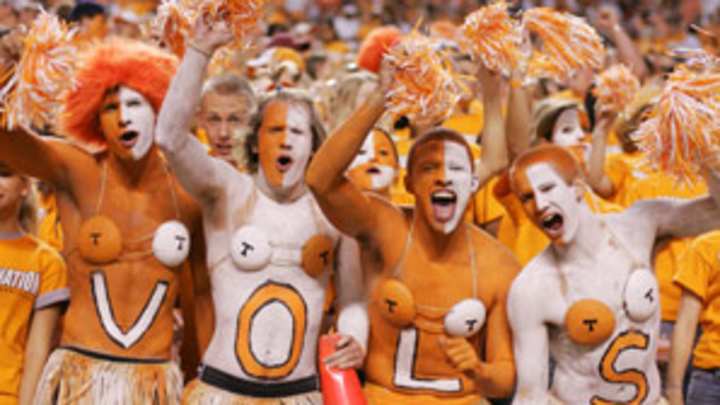
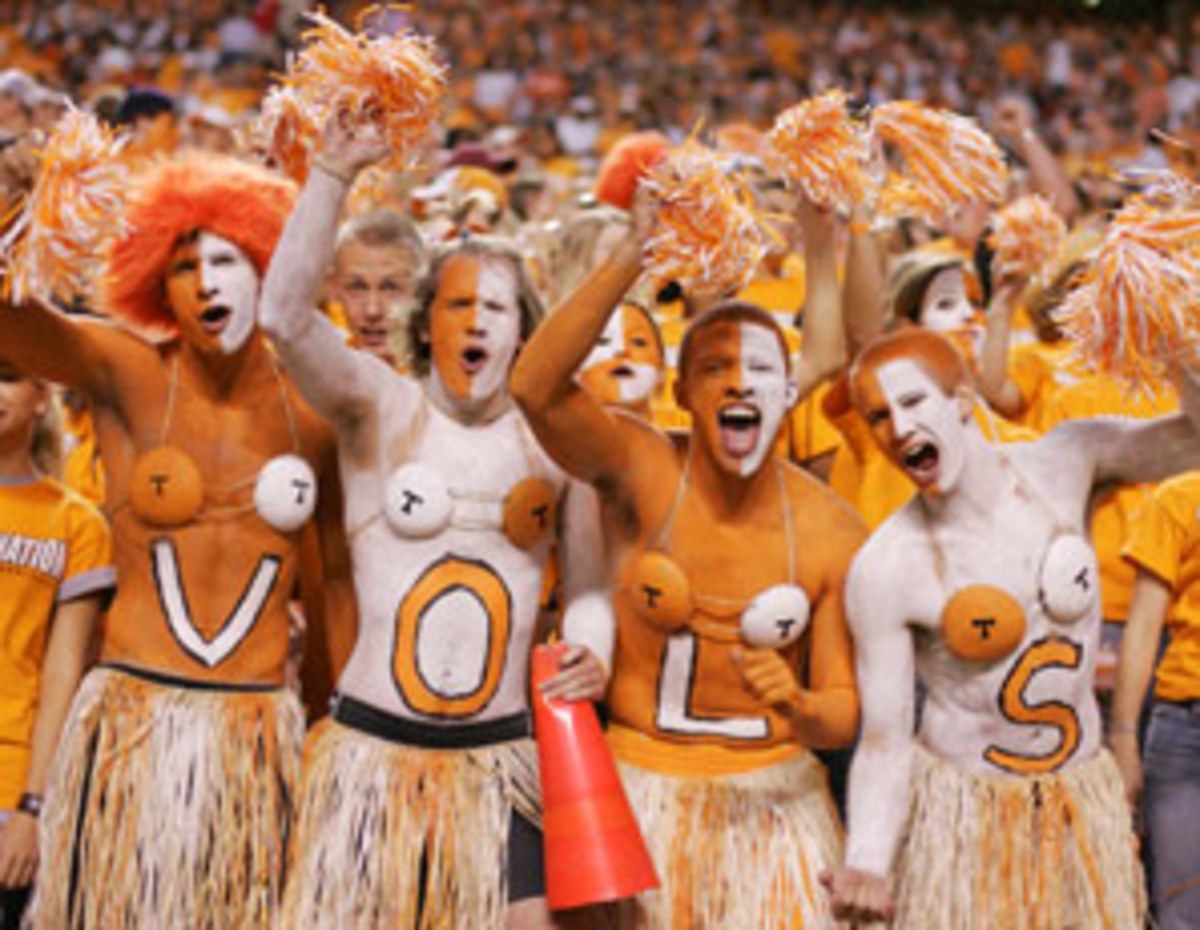
Those were confusing years, the '70s and '80s, years of epic promiscuity. My Dad played at Purdue. (His 1952 team shared, with Wisconsin, the Big Ten co-championship.) He bought me a Boilermakers sweatshirt and I was briefly smitten with them. But even he couldn't commit to Purdue, having transferred to Tennessee, for which I also had feelings. A few years ago, after his 1954 Vols' team was honored on the field in front of 100,000 fans in Knoxville, Dad gave me the orange replica number 20 jersey that the school had given him, with his name -- my name -- on the back.
So the Vols should be my team. Their last coach -- Phil Fulmer's replacement -- is from my hometown of Bloomington, Minnesota. But Lane Kiffin is not liked in Knoxville after absconding to USC, a program not liked by Notre Dame -- whose games I attended in college, when one's football bonds are forged for life, or should be.
Fall Saturdays, on Marquette's urban campus, I wanted burnt-orange leaves, and tailgating, and a marching band playing a Sousaphonic version of a current pop hit. I wanted to say "Boola boola" or "Ski-U-Mah" or something equally unintelligible into a megaphone. Marquette students and alumni get to sing "Ring out Ahoya" at basketball games, but these things always sound better in a football stadium, in crisp air, shouted by a man waving a felt pennant and wearing a raccoon coat and doing the Lindy hop with Montgomery Burns.
So I'd cadge a ride -- or take Trailways -- to Chicago and meet my oldest brother, an alumnus of Notre Dame's business school, to which he'd applied for the sole purpose of gaining access to football tickets. He'd drive me to Notre Dame Stadium, where I met the family -- the leprechaun and Touchdown Jesus and officer Tim McCarthy -- and tried to imagine these figures as my future in-laws.
My little brother would also graduate from Notre Dame, and my sister would graduate from St. Mary's in South Bend, where she'd meet her now-husband, a Notre Dame alumnus. But the Irish and Marquette were basketball rivals when I was an undergrad, and committing to Notre Dame football felt a like a betrayal, like I was two-timing. Or twelve-timing, given my complicated history.
And so I wasn't in South Bend on Saturday, when my little brother and Dad attended the Notre Dame-Purdue game. Though he played for the Boilermakers, Dad -- raised Catholic in Indiana -- could not, constitutionally, root against the Irish. He sobbed during Rudy, and is every bit as confused as I am. Perhaps it's genetic: I got his pipe-cleaner calves, and an inability to stick with one football program.
My earliest memories of college football -- hearing the name "Slippery Rock" on the "Prudential College Football Scoreboard Show" -- made me want a piece of the rock. And not Prudential. I drove 50 miles out of my way once to see Slippery Rock's campus in Pennsylvania, so desperate was I for monogamy. But it was the dead of summer, campus was deserted, and I felt the kind of disappointment you do when seeing the face of a favorite radio deejay for the first time.
But that's OK. There's an upside to all this, to not being pinned down to one program. Every Saturday, while my friends are joylessly ball-and-chained to their respective teams of 40 years, I am free to play the field. Even if that field is blue. And so I rooted for Boise State to come back against Virginia Tech late on Monday night. And when that happened, I rooted for the Hokies to come back against Boise State. I couldn't help it. It's just how I was raised.
 Add us as a preferred source on Google
Special Contributor, Sports Illustrated Steve Rushin was born in Elmhurst, Ill. on September 22, 1966 and raised in Bloomington, Minn. After graduating from Bloomington Kennedy High School in 1984 and Marquette University in 1988, Rushin joined the staff of Sports Illustrated. He is a Special Contributor to the magazine, for which he writes columns and features. In 25 years at SI, he has filed stories from Greenland, India, Indonesia, Antarctica, the Arctic Circle and other farflung locales, as well as the usual locales to which sportswriters are routinely posted. His first novel, The Pint Man, was published by Doubleday in 2010. The Los Angeles Times called the book "Engaging, clever and often wipe-your-eyes funny." His next book, a work of nonfiction, The 34-Ton Bat, will be published by Little, Brown in 2013. Rushin gave the commencement address at Marquette in 2007 and was awarded an honorary Doctor of Letters for "his unique gift of documenting the human condition through his writing." In 2006 he was named the National Sportswriter of the Year by the National Sportswriters and Sportscasters Association. A collection of his sports and travel writing—The Caddie Was a Reindeer—was published by Grove Atlantic in 2005 and was a semifinalist for the Thurber Prize for American Humor. The Denver Post suggested, "If you don't end up dropping The Caddie Was a Reindeerduring fits of uncontrollable merriment, it is likely you need immediate medical attention." A four-time finalist for the National Magazine Award, Rushin has had his work anthologized in The Best American Sports Writing, The Best American Travel Writing and The Best American Magazine Writing collections. His essays have appeared in Time magazine andThe New York Times. He also writes a weekly column for SI.com. His first book, Road Swing, published in 1998, was named one of the "Best Books of the Year" by Publishers Weekly and one of the "Top 100 Sports Books of All Time" by SI. He and his wife, Rebecca Lobo, have four children and live in Connecticut.