%20%20--%3E%0A%3Csvg%20version%3D%221.1%22%20id%3D%22Layer_1%22%20xmlns%3D%22http%3A%2F%2Fwww.w3.org%2F2000%2Fsvg%22%20xmlns%3Axlink%3D%22http%3A%2F%2Fwww.w3.org%2F1999%2Fxlink%22%20x%3D%220px%22%20y%3D%220px%22%0A%09%20width%3D%2239px%22%20height%3D%2240px%22%20viewBox%3D%220%200%2039%2040%22%20enable-background%3D%22new%200%200%2039%2040%22%20xml%3Aspace%3D%22preserve%22%3E%0A%3Cpath%20fill%3D%22%23FFFFFF%22%20d%3D%22M38.5%2C7H28.2v26h10.3V7z%22%2F%3E%0A%3Cpath%20fill-rule%3D%22evenodd%22%20clip-rule%3D%22evenodd%22%20fill%3D%22%23FFFFFF%22%20d%3D%22M26.1%2C25.5c0%2C5.8-4.1%2C7.5-12.9%2C7.5C3.9%2C33%2C0%2C31.2%2C0%2C25.2v-1.1h11.6%0A%09v2.4c0%2C0.7%2C0.1%2C1.4%2C1.2%2C1.4c1%2C0%2C1.2-0.4%2C1.2-1.3v-0.9c0-1.6-0.9-1.6-3.5-2.2C2.2%2C21.7%2C0%2C19.7%2C0%2C15.3v-0.9C0%2C9.3%2C5.5%2C7%2C12.9%2C7%0A%09c10.2%2C0%2C12.8%2C2.6%2C12.8%2C7.4v1.8h-11v-2.9c0-0.6-0.4-1.1-1.2-1.1c-0.6%2C0-1.2%2C0.4-1.2%2C1.1v0.9c0%2C1.5%2C0.9%2C2%2C3.3%2C2.5%0A%09c8%2C1.6%2C10.5%2C3.3%2C10.5%2C7.5V25.5z%22%2F%3E%0A%3C%2Fsvg%3E%0A)
Real men wear short sleeves

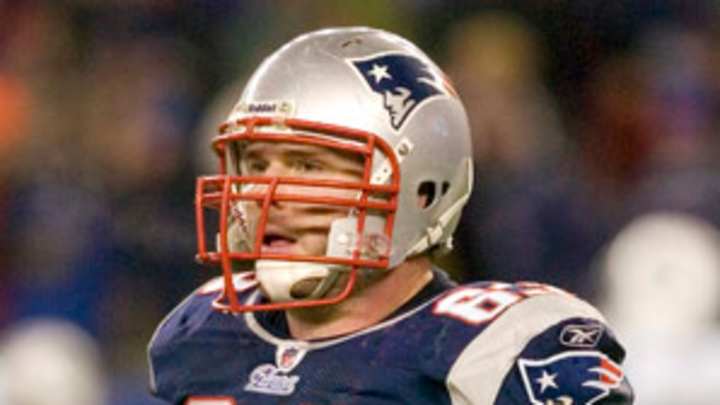
What makes a man a real man? The short answer is short sleeves, to judge by Monday night's Jets-Patriots game, in which most of the players left their arms exposed to the 17-degree windchill, even though some -- like quarterbacks Tom Brady and Mark Sanchez -- concealed balaclavas beneath their helmets.
In the NFL, in the winter, you don't have a right to bare arms: You have a duty. Until the Saints won in Cincinnati on Sunday, the only knock against their quarterback was that he couldn't win in cold weather. New Orleans had won only one of their previous five games when it was 40 degrees or colder, suggesting that Drew Brees, when he drew a breeze, couldn't take it.
Two years ago, when the Saints played in Chicago, Bears linebacker Lance Briggs said: "Drew Brees has been in San Diego and New Orleans in a dome. When he comes out here, and he's got his hand-warmer fanny pack, it's a whole different ballgame. He's freezing." In those four damning words -- hand-warmer fanny pack -- was a multitude of accusations and implications, not the least of which is: Drew Brees wears long sleeves.
In football, real men don't wear long sleeves, or hand-toasting fanny packs -- indeed, real men have no desire whatsoever to keep warm. In English soccer, real men don't wear neck warmers, either, as has been made infinitely clear this winter, when Premier League stars like Samir Nasri, Marouane Chamakh and Carlos Tevez have been roundly ridiculed in the press for wearing innocuous little accessories, called snoods, that look like loose fitting turtleneck collars.
In what has already been a cold, snowy winter in the UK, the neck-warmer has been all over the papers, putting the hype back in hypothermia. Players who wear gloves are also sneered at, an especially strange bias in a sport that seldom requires the use of hands. It's like criticizing a concert pianist for wearing socks.
Why are athletes, fans and sportswriters so insecure? Just last week, some idiot in this space suggested that the Minnesota Vikings -- currently stumping for a new stadium -- must play outdoors again, without sideline heaters, if the team is to return to the semi-greatness of their un-domed glory days.
Acknowledging that it's cold in the wintertime is seen as a failing for men like me, living in a kind of arctic Devil's Triangle -- born in Chicago, raised in Minnesota, living in New England. If you can't take the cold, goes this logic, get out of the kitchen. Playing sleeveless is like playing in pain. Except that it isn't. It's more like intentionally breaking your foot, then playing on it to demonstrate how tough you are.
Coaches dress warmly. With NFL coaches pacing heated sidelines and European soccer managers like Roberto Mancini and Jose Mourinho wearing elaborately tied scarves, coaches are literally on hot seats, and literally protecting their own necks.
This self-preservation is a good thing, a Darwinian imperative. So when did a man become a wuss for wanting to avoid frostbite? (If he's an athlete, that is. If he's a fan, the reverse is true, so that the imbeciles who go shirtless in Buffalo in December are viewed with almost universal contempt.)
Whatever the reason, men have been ignoring the weather forever. In the 1981 AFC title game, the Bengals offensive line checked the weather report -- a windchill of 59 below zero -- and chose short sleeves, rubbing Vaseline on their arms as if preparing to swim the English Channel. Of course, they promptly beat the San Diego Chargers, who had played the previous week in Miami, where the temperature was 88. By the pretzel logic of the NFL, shouldn't teams playing in subtropical heat dress like it's midwinter in Medicine Hat?
Wanting water during August football practice was once a sign of weakness. Now players are required to hydrate. It scarcely seems possible now, but goalie masks were once considered a nanny-state item of overprotection: What kind of weenie can't take a slapshot to the face?
Former baseball commissioner Bowie Kuhn is still lampooned for wearing short sleeves to night World Series games, pretending that the Fall Classic remained a balmy, sun-splashed affair. One day, we'll lampoon football players for their own shortsightedness, and short-sleevedness.
That's because the list of what real men do -- and more to the point, what they don't do -- is always changing. There are a few constants: Real men don't ask for directions, of course. And real men don't eat quiche, according to the million-selling status of a book by that name. Men should probably avoid anything in which the word man has been retrofitted to an existing word: Mantyhose -- those tights that NBA players used to wear -- are a bad idea. So is manscaping and the man purse, or murse. Watching Jets center Nick Mangold on Monday night, I was struck that his surname sounds like a line of jewelry marketed to football fans.
But the man words that I'm far more suspicious of are the ones used, without irony, to convey how manly the speaker is. This, then, is the only man rule I know for certain: A real man doesn't sit in his heated man cave, eating man food, while telling an athlete -- on TV, in the cold, wearing gloves or a neck warmer of a fanny pack -- to man up.

Special Contributor, Sports Illustrated Steve Rushin was born in Elmhurst, Ill. on September 22, 1966 and raised in Bloomington, Minn. After graduating from Bloomington Kennedy High School in 1984 and Marquette University in 1988, Rushin joined the staff of Sports Illustrated. He is a Special Contributor to the magazine, for which he writes columns and features. In 25 years at SI, he has filed stories from Greenland, India, Indonesia, Antarctica, the Arctic Circle and other farflung locales, as well as the usual locales to which sportswriters are routinely posted. His first novel, The Pint Man, was published by Doubleday in 2010. The Los Angeles Times called the book "Engaging, clever and often wipe-your-eyes funny." His next book, a work of nonfiction, The 34-Ton Bat, will be published by Little, Brown in 2013. Rushin gave the commencement address at Marquette in 2007 and was awarded an honorary Doctor of Letters for "his unique gift of documenting the human condition through his writing." In 2006 he was named the National Sportswriter of the Year by the National Sportswriters and Sportscasters Association. A collection of his sports and travel writing—The Caddie Was a Reindeer—was published by Grove Atlantic in 2005 and was a semifinalist for the Thurber Prize for American Humor. The Denver Post suggested, "If you don't end up dropping The Caddie Was a Reindeerduring fits of uncontrollable merriment, it is likely you need immediate medical attention." A four-time finalist for the National Magazine Award, Rushin has had his work anthologized in The Best American Sports Writing, The Best American Travel Writing and The Best American Magazine Writing collections. His essays have appeared in Time magazine andThe New York Times. He also writes a weekly column for SI.com. His first book, Road Swing, published in 1998, was named one of the "Best Books of the Year" by Publishers Weekly and one of the "Top 100 Sports Books of All Time" by SI. He and his wife, Rebecca Lobo, have four children and live in Connecticut.