%20%20--%3E%0A%3Csvg%20version%3D%221.1%22%20id%3D%22Layer_1%22%20xmlns%3D%22http%3A%2F%2Fwww.w3.org%2F2000%2Fsvg%22%20xmlns%3Axlink%3D%22http%3A%2F%2Fwww.w3.org%2F1999%2Fxlink%22%20x%3D%220px%22%20y%3D%220px%22%0A%09%20width%3D%2239px%22%20height%3D%2240px%22%20viewBox%3D%220%200%2039%2040%22%20enable-background%3D%22new%200%200%2039%2040%22%20xml%3Aspace%3D%22preserve%22%3E%0A%3Cpath%20fill%3D%22%23FFFFFF%22%20d%3D%22M38.5%2C7H28.2v26h10.3V7z%22%2F%3E%0A%3Cpath%20fill-rule%3D%22evenodd%22%20clip-rule%3D%22evenodd%22%20fill%3D%22%23FFFFFF%22%20d%3D%22M26.1%2C25.5c0%2C5.8-4.1%2C7.5-12.9%2C7.5C3.9%2C33%2C0%2C31.2%2C0%2C25.2v-1.1h11.6%0A%09v2.4c0%2C0.7%2C0.1%2C1.4%2C1.2%2C1.4c1%2C0%2C1.2-0.4%2C1.2-1.3v-0.9c0-1.6-0.9-1.6-3.5-2.2C2.2%2C21.7%2C0%2C19.7%2C0%2C15.3v-0.9C0%2C9.3%2C5.5%2C7%2C12.9%2C7%0A%09c10.2%2C0%2C12.8%2C2.6%2C12.8%2C7.4v1.8h-11v-2.9c0-0.6-0.4-1.1-1.2-1.1c-0.6%2C0-1.2%2C0.4-1.2%2C1.1v0.9c0%2C1.5%2C0.9%2C2%2C3.3%2C2.5%0A%09c8%2C1.6%2C10.5%2C3.3%2C10.5%2C7.5V25.5z%22%2F%3E%0A%3C%2Fsvg%3E%0A)
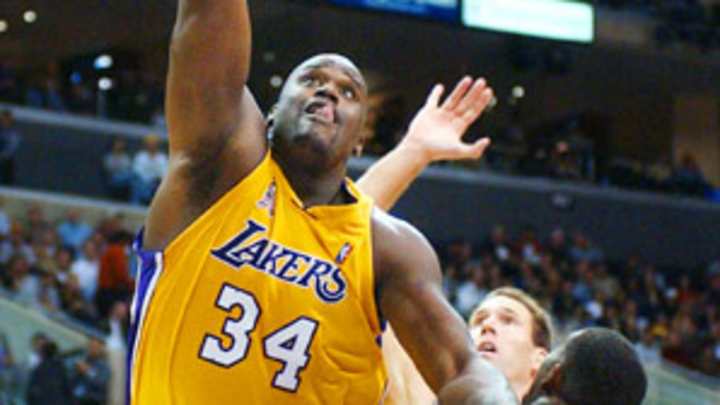
Shaq's rise to stardom spurred a new generation of Shaquilles
If the hero of Super Bowl XLV is Flozell or Atari, Maurkice or Mewelde, look for those names in 25 years at Super Bowl LXX, because Americans like to name their newborns after contemporary American sports heroes, or my name isn't Fuzzy.
My name isn't Fuzzy, as it happens, or Zeke or Elijah, but it might well have been any of those, as I was born during the Green Bay Packers' march to Super Bowl I, and prominent athletes with interesting names -- Fuzzy Thurston, Zeke Bratkowski, Elijah Pitts -- always lend those names to babies born in the peak years of their fame.
In 1991, Shaquille O'Neal became National Player of the Year in college basketball and his arresting first name for the first time entered the top 1,000 baby names in the U.S., at 719th. By 1993, the end of O'Neal's rookie season in the NBA, Shaquille had become the 181st most popular boys' name in the nation, which means a great many Shaquilles are turning 18 this year, and college basketball is about to answer the Shaqspearean question: "What's in a name?"
High school senior Shaquille Thomas has committed to Cincinnati, leading a recruiting class that includes Shaquille Boga (headed to UW-Milwaukee), Shaquille Duncan (Morgan State), Shaquille Jinks, Shaquille Wilson, Shaquille Smith, Shaquille Stokes but not 6-foot-8, 230-pound Shaquille Goodwin, who is only a junior, but a highly prized one in Decatur, Ga.
These Shaqs will join early adopters of the name already playing college ball, including Shaquille Johnson of Marshall, Shaquille White-Miller of Texas-Arlington and Shaquil Barber of South Carolina State, every one of them Shaquilling us softly with his song before the name Shaquille inevitably fades away.
That's because Shaquille fell out of the top 1,000 most popular baby names, never to return, in 1997. That was also the end of Kobe Bryant's rookie NBA season and the first year the name Kobe cracked the Social Security Administration's list of top 1,000 baby names, debuting at 553rd. It is testimony to Bryant's abiding popularity that his first name has never ranked lower than that in the 13 years since. (By contrast, "LeBron" has never entered the top 1,000 names, and seems unlikely ever to do so.)
And so Shaquille O'Neal's legacy is measured not in championships won or nicknames bestowed but in first names he helped to perpetuate. From 1995 to 1997, to cite another of his famous teammates, a popular baby name for American-born boys was "Anfernee." It will be embossed on more driver's licenses this year than ever before, or ever again.
All of which makes Sunday's Super Bowl of critical importance to this year's babies. For six years in the 1970s, Franco was a popular baby name in the U.S., peaking in 1976, the year after Franco Harris was named Super Bowl MVP -- and Spanish dictator Francisco Franco died. Bart was the 322nd most popular boys' name in 1967, a year that began with Bart Starr's Packers winning the first Super Bowl.
Super Bowl heroism only goes so far, of course, which might explain why Plaxico, Santonio and Snake have never caught on in large numbers among new parents. Peyton was a popular name before Peyton Manning's rise to prominence -- but more popular for girls than boys.
In Manning's rookie season in the NFL, the U.S. achieved Peyton Parity, the name ranking nearly the same among newborn boys and girls. As Manning thrived, so did Peyton, peaking in popularity for boys in 2007, the year the Colts won the Super Bowl.
For girls, Peyton has remained buoyant. It was the 43rd most popular baby girls' name in 2009, while sinking to 147th for boys, 38 spots below another quarterback name that has ridden a tsunami of Super Bowl exposure: Brady.
Mia Hamm once told me that it wasn't always easy, as a child, to have her name. Other kids asked: "Are you a ham? Your name's 'Me a ham.'" The irony is that she, more than any other individual, popularized the name Mia for future generations of American girls. Mia cracked the top 100 baby names for the first time in 2000, on the heels of the U.S. victory in the 1999 Women's World Cup. After a decade of ascent, Mia is now the 10th most popular name for girls in the United States.
My name has made the reverse journey. Steven was the 13th most popular boys name in the year of my birth, 1966, but has since left the top 100. Despite the athletic prominence of Steve Spurrier, Young, Francis and Gerrard, Steve has never quite gotten a new foothold.
Of course, it could have been worse. Much worse. Given what I now know about baby names, and their strong connection to televised sports, I could easily have been called Buckpasser.
He was the 1966 Horse of the Year.
 Add us as a preferred source on Google
Special Contributor, Sports Illustrated Steve Rushin was born in Elmhurst, Ill. on September 22, 1966 and raised in Bloomington, Minn. After graduating from Bloomington Kennedy High School in 1984 and Marquette University in 1988, Rushin joined the staff of Sports Illustrated. He is a Special Contributor to the magazine, for which he writes columns and features. In 25 years at SI, he has filed stories from Greenland, India, Indonesia, Antarctica, the Arctic Circle and other farflung locales, as well as the usual locales to which sportswriters are routinely posted. His first novel, The Pint Man, was published by Doubleday in 2010. The Los Angeles Times called the book "Engaging, clever and often wipe-your-eyes funny." His next book, a work of nonfiction, The 34-Ton Bat, will be published by Little, Brown in 2013. Rushin gave the commencement address at Marquette in 2007 and was awarded an honorary Doctor of Letters for "his unique gift of documenting the human condition through his writing." In 2006 he was named the National Sportswriter of the Year by the National Sportswriters and Sportscasters Association. A collection of his sports and travel writing—The Caddie Was a Reindeer—was published by Grove Atlantic in 2005 and was a semifinalist for the Thurber Prize for American Humor. The Denver Post suggested, "If you don't end up dropping The Caddie Was a Reindeerduring fits of uncontrollable merriment, it is likely you need immediate medical attention." A four-time finalist for the National Magazine Award, Rushin has had his work anthologized in The Best American Sports Writing, The Best American Travel Writing and The Best American Magazine Writing collections. His essays have appeared in Time magazine andThe New York Times. He also writes a weekly column for SI.com. His first book, Road Swing, published in 1998, was named one of the "Best Books of the Year" by Publishers Weekly and one of the "Top 100 Sports Books of All Time" by SI. He and his wife, Rebecca Lobo, have four children and live in Connecticut.