%20%20--%3E%0A%3Csvg%20version%3D%221.1%22%20id%3D%22Layer_1%22%20xmlns%3D%22http%3A%2F%2Fwww.w3.org%2F2000%2Fsvg%22%20xmlns%3Axlink%3D%22http%3A%2F%2Fwww.w3.org%2F1999%2Fxlink%22%20x%3D%220px%22%20y%3D%220px%22%0A%09%20width%3D%2239px%22%20height%3D%2240px%22%20viewBox%3D%220%200%2039%2040%22%20enable-background%3D%22new%200%200%2039%2040%22%20xml%3Aspace%3D%22preserve%22%3E%0A%3Cpath%20fill%3D%22%23FFFFFF%22%20d%3D%22M38.5%2C7H28.2v26h10.3V7z%22%2F%3E%0A%3Cpath%20fill-rule%3D%22evenodd%22%20clip-rule%3D%22evenodd%22%20fill%3D%22%23FFFFFF%22%20d%3D%22M26.1%2C25.5c0%2C5.8-4.1%2C7.5-12.9%2C7.5C3.9%2C33%2C0%2C31.2%2C0%2C25.2v-1.1h11.6%0A%09v2.4c0%2C0.7%2C0.1%2C1.4%2C1.2%2C1.4c1%2C0%2C1.2-0.4%2C1.2-1.3v-0.9c0-1.6-0.9-1.6-3.5-2.2C2.2%2C21.7%2C0%2C19.7%2C0%2C15.3v-0.9C0%2C9.3%2C5.5%2C7%2C12.9%2C7%0A%09c10.2%2C0%2C12.8%2C2.6%2C12.8%2C7.4v1.8h-11v-2.9c0-0.6-0.4-1.1-1.2-1.1c-0.6%2C0-1.2%2C0.4-1.2%2C1.1v0.9c0%2C1.5%2C0.9%2C2%2C3.3%2C2.5%0A%09c8%2C1.6%2C10.5%2C3.3%2C10.5%2C7.5V25.5z%22%2F%3E%0A%3C%2Fsvg%3E%0A)
If so many things in sports are 'no-brainers', when do we use brains?

In the last week I've read that postponing the Brooklyn Nets' opener was a "no-brainer" (ESPN), that canceling the New York City marathon was a "no-brainer" (Atlanta Journal-Constitution), that re-signing Jim Leyland to manage the Tigers was a "no-brainer" (Detroit Free Press), that voting for Barack Obama was a "no-brainer" (Huffington Post), and that voting for Mitt Romney was a "no-brainer" (a Massachusetts voter quoted in The Boston Globe).
These last two assertions suggest that nearly half of all Americans -- the ones who didn't vote for the guy you voted for on Tuesday -- are not in possession of a brain. Happily, this won't be a problem for those people, given how many daily decisions, especially in sports, are now regarded as "no-brainers."
What exactly is a no-brainer? The New York Times took a crack at explaining that in 1987, when the term made its maiden appearance in the newspaper of record, in a story about author Scott Turow choosing director Sydney Pollack to turn his novel Presumed Innocent into a film. As the Times reported: " 'Nobody has his credentials, so it was kind of a no-brainer in the end,' says Mr. Turow, indicating the decision did not require much thought."
In the quarter century since then, a no-brainer has crystallized from a decision that does "not require much thought" to one that requires no thought whatsoever.
In this contemporary usage, "no-brainer" has been around for at least half a century. "As a no-brainer medium long-shot choice," a sportswriter for the Spokane Spokesman-Review wrote before the 1961 Kentucky Derby, "I like Ambipoise." And while Ambipoise sounds like a prescription medication for those recently dispossessed of a brain -- "Ask your doctor if Ambipoise is right for you" -- it was in fact a horse who would finish 12th in a field of 15 in that year's Run for the Roses.
In doing so, Ambipoise proved right from the start that no-brainers are not always what they seem to be, and that the absence of a brain can be a handicap to professional handicappers.
It's important to note that a no-brainer is distinct from a "brain cramp," which is what an athlete or coach gets when he or she does something momentarily stupid, suggesting a temporary loss of oxygen or hydration. Brain cramps are almost exclusive to sports, as in this headline above a story last week on the Canadian Football League's B.C. Lions: READY TO PUT BRAIN CRAMPS, LOSS TO STAMPS, IN THE PAST.
(This condition is sometimes also called "brain freeze," a phrase that should be confined to people who drink a Slurpee too fast. )
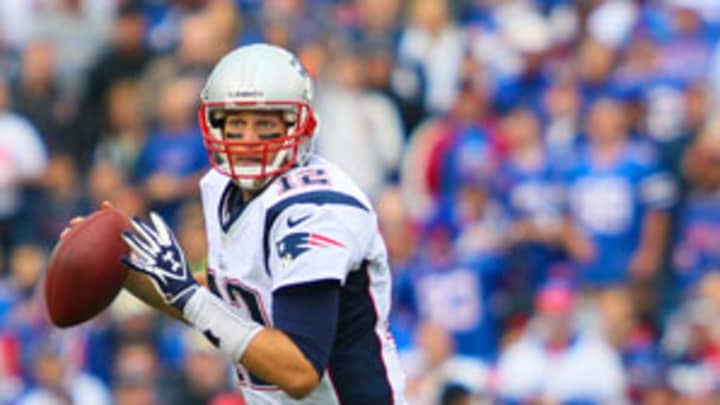
A brain cramp is marginally more dignified than a "brain fart." Cerebral flatulence -- while still a temporary condition -- signifies a greater degree of wrongheadedness. "Tom Brady committed a rare brain fart by throwing a pick in the red zone," New England's Comcast Sports Net stated on its website after the Pats lost to the Seahawks in Week 6. Boomer Esiason said on Boston's WEEI, of another miscue by that Patriots offense: "Is it a brain fart? I guess you could say that it is."
These split-second cranial cramps, farts and freezes used to go by a different name entirely. They were called "no-brainers." The phrase sometimes referred, in the distant past, to a boneheaded act. "I'm mad because we had guys out there playing with their feet and nothing else," Houston Rockets coach Bill Fitch said after a game in 1984. "It's what I call a 'no-brainer'."
To others, it meant a stroke of luck, an accident of fortune. The golfer Pat Bradley holed a 45-foot chip shot in 1977 and called it a "no-brainer." A year later, at the LPGA championship, she sank a 40-foot putt and said again, "It was a no-brainer. I couldn't even see the hole very well."
Today, a no-brainer only means one thing. It is a decision so obvious that it goes without saying, except that it never goes unsaid. Over the weekend, ESPN soccer analyst Steve McManaman suggested that Arsenal bring on Theo Walcott in the second half against Manchester United. "It's a no-brainer," claimed Macca. And soon Arsenal manager Arsene Wenger, to whom genius has often been imputed, did bring on Walcott, to no effect.
But then the presence or absence of a brain has little bearing on genius. Picasso's every artistic act was a no-brainer. "If only we could pull out our brain," Picasso is said to have said, "and use only our eyes." Another genius, Sherlock Holmes, believed quite the opposite, that the brain was all that mattered. "I am a brain, Watson," he said in The Adventure of the Mazarin Stone. "The rest of me is a mere appendix."
In sports, unlike detective work, other vital organs are necessary for success. "San Diego Shows Lack Of Heart In 7-6 Loss," SB Nation charged a week ago. The Philadelphia Eagles, I read recently, have "no heart and no guts."
If all this is true -- and so many athletes lack brains, hearts and guts -- we should run for our lives. It's a no-brainer. The zombie apocalypse is upon us.

Special Contributor, Sports Illustrated Steve Rushin was born in Elmhurst, Ill. on September 22, 1966 and raised in Bloomington, Minn. After graduating from Bloomington Kennedy High School in 1984 and Marquette University in 1988, Rushin joined the staff of Sports Illustrated. He is a Special Contributor to the magazine, for which he writes columns and features. In 25 years at SI, he has filed stories from Greenland, India, Indonesia, Antarctica, the Arctic Circle and other farflung locales, as well as the usual locales to which sportswriters are routinely posted. His first novel, The Pint Man, was published by Doubleday in 2010. The Los Angeles Times called the book "Engaging, clever and often wipe-your-eyes funny." His next book, a work of nonfiction, The 34-Ton Bat, will be published by Little, Brown in 2013. Rushin gave the commencement address at Marquette in 2007 and was awarded an honorary Doctor of Letters for "his unique gift of documenting the human condition through his writing." In 2006 he was named the National Sportswriter of the Year by the National Sportswriters and Sportscasters Association. A collection of his sports and travel writing—The Caddie Was a Reindeer—was published by Grove Atlantic in 2005 and was a semifinalist for the Thurber Prize for American Humor. The Denver Post suggested, "If you don't end up dropping The Caddie Was a Reindeerduring fits of uncontrollable merriment, it is likely you need immediate medical attention." A four-time finalist for the National Magazine Award, Rushin has had his work anthologized in The Best American Sports Writing, The Best American Travel Writing and The Best American Magazine Writing collections. His essays have appeared in Time magazine andThe New York Times. He also writes a weekly column for SI.com. His first book, Road Swing, published in 1998, was named one of the "Best Books of the Year" by Publishers Weekly and one of the "Top 100 Sports Books of All Time" by SI. He and his wife, Rebecca Lobo, have four children and live in Connecticut.