%20%20--%3E%0A%3Csvg%20version%3D%221.1%22%20id%3D%22Layer_1%22%20xmlns%3D%22http%3A%2F%2Fwww.w3.org%2F2000%2Fsvg%22%20xmlns%3Axlink%3D%22http%3A%2F%2Fwww.w3.org%2F1999%2Fxlink%22%20x%3D%220px%22%20y%3D%220px%22%0A%09%20width%3D%2239px%22%20height%3D%2240px%22%20viewBox%3D%220%200%2039%2040%22%20enable-background%3D%22new%200%200%2039%2040%22%20xml%3Aspace%3D%22preserve%22%3E%0A%3Cpath%20fill%3D%22%23FFFFFF%22%20d%3D%22M38.5%2C7H28.2v26h10.3V7z%22%2F%3E%0A%3Cpath%20fill-rule%3D%22evenodd%22%20clip-rule%3D%22evenodd%22%20fill%3D%22%23FFFFFF%22%20d%3D%22M26.1%2C25.5c0%2C5.8-4.1%2C7.5-12.9%2C7.5C3.9%2C33%2C0%2C31.2%2C0%2C25.2v-1.1h11.6%0A%09v2.4c0%2C0.7%2C0.1%2C1.4%2C1.2%2C1.4c1%2C0%2C1.2-0.4%2C1.2-1.3v-0.9c0-1.6-0.9-1.6-3.5-2.2C2.2%2C21.7%2C0%2C19.7%2C0%2C15.3v-0.9C0%2C9.3%2C5.5%2C7%2C12.9%2C7%0A%09c10.2%2C0%2C12.8%2C2.6%2C12.8%2C7.4v1.8h-11v-2.9c0-0.6-0.4-1.1-1.2-1.1c-0.6%2C0-1.2%2C0.4-1.2%2C1.1v0.9c0%2C1.5%2C0.9%2C2%2C3.3%2C2.5%0A%09c8%2C1.6%2C10.5%2C3.3%2C10.5%2C7.5V25.5z%22%2F%3E%0A%3C%2Fsvg%3E%0A)
Real Salt Lake aims to maintain regular success amid roster evolution
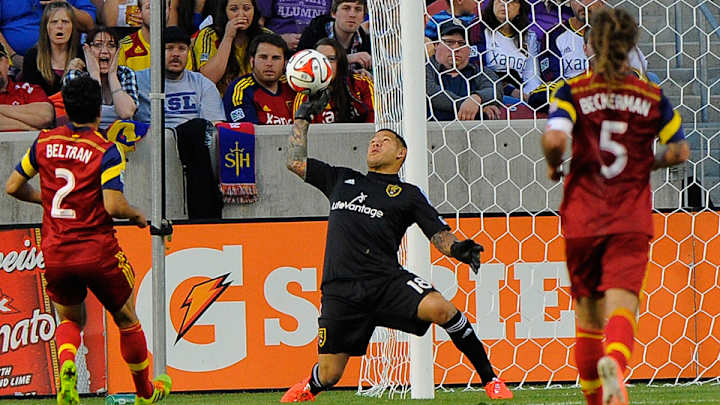
Real Salt Lake might not have the multiple trophies to prove it, but it has been the steadiest team in Major League Soccer for the better part of a decade, as the only franchise to make the playoffs each of the last seven seasons. Surely, the club's "The Team is the Star" motto will be put to the test in 2015, as the team fights to keep its identity despite major on-field and front-office turnover.
Dell Loy Hansen assumed sole ownership in 2013, coach Jason Kreis bolted for New York City FC and general manager Garth Lagerwey joined the Seattle Sounders in subsequent off-seasons. Important players Jámison Olave, Fabián Espíndola, Will Johnson, Ned Grabavoy, Chris Wingert, Nat Borchers, Carlos Salcedo and Robbie Findley all left within two years as well, though Olave now has returned via trade. No matter the change, optimism and thoughts of a trip to an eighth straight playoffs remain at the forefront in the new-look locker room.
“I miss [them] — those were my buddies that left,” captain Kyle Beckerman told SI.com in a phone interview from preseason camp in Arizona. “I’ve always been able to rely on them and always know that they were going to be there, so it was a different preseason, I guess. There’s a little difference going into this season, but I feel optimistic about things we can do this year.”
MLS at 20: Epic original branding, logos for the league's first 10 teams
Manager Jeff Cassar, formerly Kreis’ right-hand man throughout the franchise’s ascent, leads the team into a precarious future. After his first managerial experience in 2014, Cassar, 41, feels prepared for his second season.
“I think I handled [the transition] fairly well,” Cassar said. “I’m not the finished product as a coach, and I don’t think you ever really are, but I’ve been doing a lot of work.”
After carrying over Kreis’ trademark 4-4-2 system with a diamond midfield in 2014, Cassar changed the team’s tactics ahead of the 2015 season. Among other benefits, a switch to 4-3-3 should remove him from Kreis’ considerable shadow and allow him to stamp his own identity on the team.
“It’s going to be interesting at first, for sure,” goalkeeper Nick Rimando said. “Defensively, it looks like two holding midfielders is going to help us out a lot potentially, and going forward with three forwards, if we can keep possession, is going to be good for us.”
The team experimented with a 4-3-3 at various moments over the past two years—usually at Cassar’s behest, Beckerman said—making it permanent in preseason this year. The transition also offers a tangible point of evolution in RSL franchise history.
The initial iteration came with the team’s founding and playing at gargantuan Rice-Eccles Stadium, followed by the Kreis-Lagerwey revolution that brought Rimando and Beckerman to the team and a move to soccer-specific Rio Tinto Stadium. Beckerman said the team is now fully embroiled in the Cassar era.
“I think there were stories that came out a couple years ago that when we lost Will, Olave and Espíndola, that it was Real Salt Lake 2.0, but it really wasn’t. Everything was there — the diamond was there — so I would say this is the first time that it’s actually a new chapter,” he said. “I feel like this is his time to put his stamp on the team and take us in a new direction.”
After helping create RSL's identity, Garth Lagerwey adds to own in Seattle
Cassar said he the team continued its momentum in 2014, beginning with a 12-game unbeaten streak, eventually falling one point in the standings short of the team-record 57 but still getting back into the CONCACAF Champions League.
A 5-0 loss to the LA Galaxy in the playoffs seemed like an uncharacteristic slip rather than an indicator of a larger downward trend.
The expectation of success around the club lives on, and it still feels realistic.
“Through the success for many years now, the expectation’s there, so the pressure’s going to be there all the time. I put the pressure on myself,” Cassar said. “I know the club and the fans are expecting a good product. … Obviously, to be back in Champions League is huge for us. One of our major goals after we lost in the final was to get back to it and put ourselves, hopefully, in that situation again.”
RSL can measure itself early in the season, as it is slated to host star-studded Toronto FC in March and LA and NYCFC in May, when Kreis steps onto the same field as Salt Lake for the first time since its penalty shootout loss to Sporting Kansas City in the 2013 MLS Cup final.
If the team does make the CCL final again, it would be with a completely different lineup. Cassar tabbed a handful of younger players who should make their case for a future in claret and cobalt this year.
Luis Gil signed with the team in 2010 at age 16 and recently became the United States under-23 team captain. He remains the most visible personification of the club’s development pyramid from the academy to first team.
Despite accolades, LA Galaxy's Robbie Keane maintains competitive fire
Joao Plata just signed a new long-term deal, and he’s already fourth among active RSL goalscorers despite playing less than half as many games as leader Álvaro Saborío, who is returning from a broken metatarsal that kept him out of the World Cup.
Unfortunately for RSL, Plata will miss the start of the season with a broken metatarsal of his own.
Argentine DP forward Sebastian Jaime and Colombian forward Olmes García round out a stylish attacking corps that still includes veteran playmaker Javier Morales.
Rimando, Beckerman, Morales, Saborío and right back Tony Beltran remain from those who played in the two-leg 2011 Champions League final against Mexican powerhouse Monterrey.
“Myself and Kyle, Javier and Sabo, there are a lot of veterans on our team still,” Rimando said. “We still have a lot of good pieces to Real Salt Lake, so we’ve just got to be veterans and lead by example.”
Beckerman and Rimando signed new three-year contracts in the off-season, and Saborío’s deal runs through 2015. Beckerman said their individual roles haven’t changed, despite their leadership becoming more pronounced to outside observers.
“What you’d expect of somebody else, you’ve got to do it every day,” he said. “Those guys that are coming in, they’re trying to jell. They want to be a part of what we’ve got going on for a couple years, so that seems to be pretty easy, to get guys to jell and get on board. So my role has been the same, and it’s just going to continue that way.”
At long last, Kaka set for MLS debut with major aspirations, expectations
Reverence for the past still permeates RSL, which has always maintained a proud familial feel in the dressing room. Being in MLS’ smallest market adds to the team’s closeness, but it also brings a constant threat of poachers with more resources looking to bolster their reserves.
RSL’s vulnerable position makes the team’s consistency on the field even more impressive, though that vulnerability has been stretched in recent months.
“Certain people have certain aspirations; I’m extremely happy where I am,” Cassar said. “You’re going to lose some players, you have to make tough decisions, but it’s a place where people come, they enjoy themselves, they start to grow roots in the community. We have unbelievable fans who have really embraced the team and the players, and it’s a place where you come, and you’re not sure how long you’re going to stay, and you end up staying for a very long time.”
GALLERY: Critiquing every 2015 MLS uniform
Critiquing every MLS uniform, head to toe
New York City FC
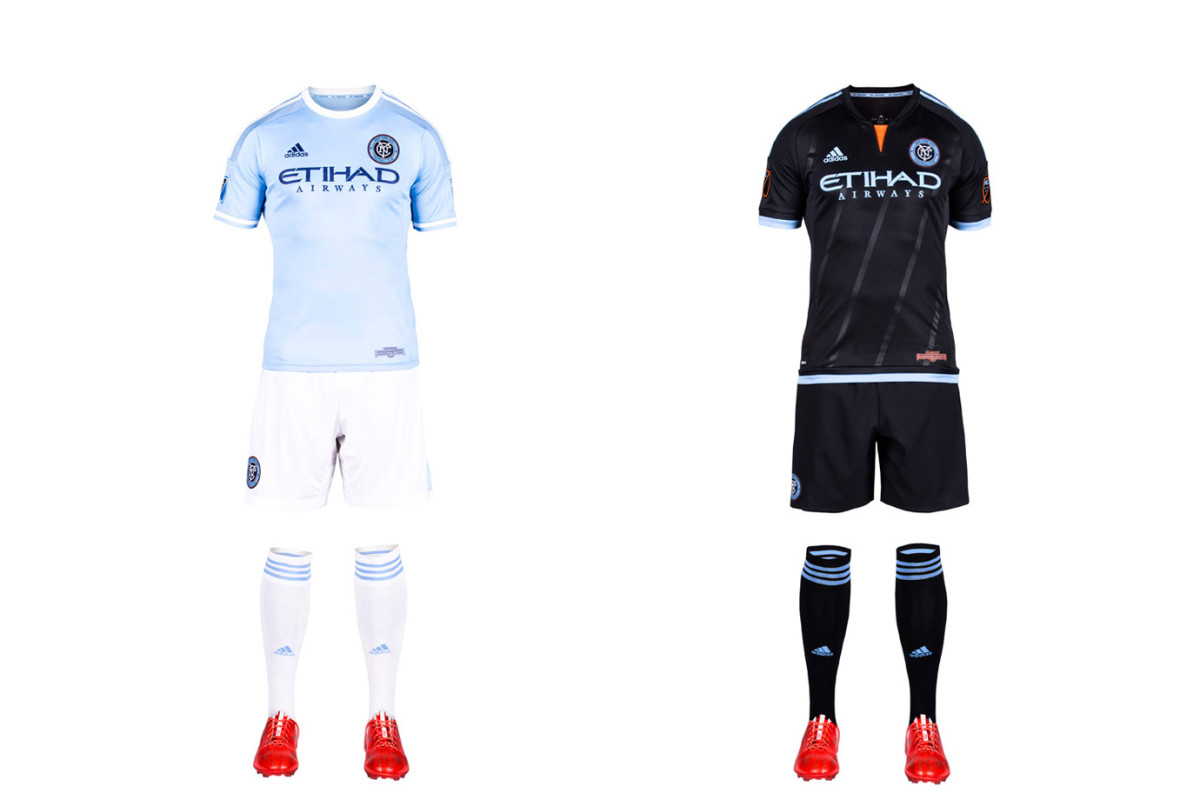
New York City FC took some heat for its sky blue home shirt, which looks a whole lot like the one worn by parent/sister club Manchester City. But an homage was inevitable, and NYCFC has differentiated itself from MCFC, and the rest of MLS, with the white shorts and socks. It’s a sharp look. The away kit, highlighted by a flash of orange (from the city flag) at the neck and five stripes you can barely see that "represent the five boroughs of New York City," is lazy. With a blank template, NYCFC should’ve come up with something other than the mono-black already worn in D.C. and Columbus.
LA Galaxy
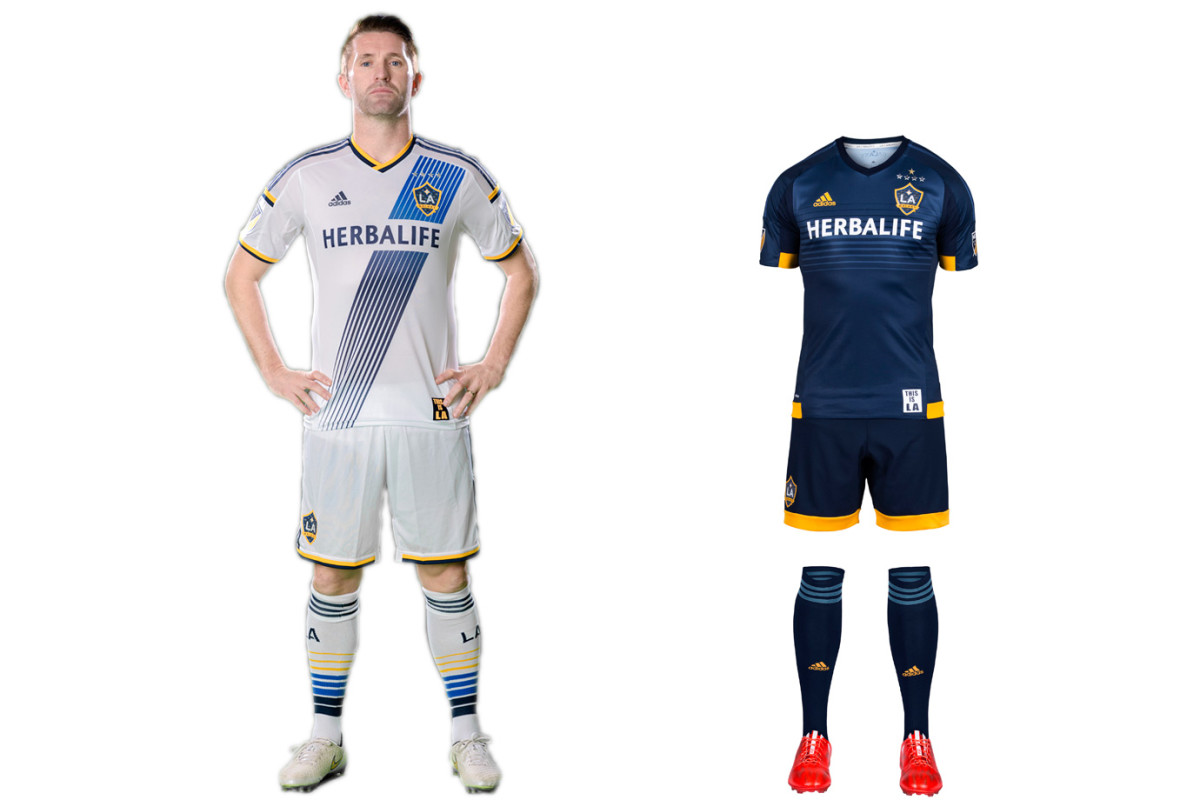
After several overhauls—LA wore black and teal, then teal and yellow, then yellow and green—the Galaxy’s white and blue brand has taken root. Three championships in four years certainly help. The sash on the home uniform, re-introduced in 2012, has quickly become iconic, and, along with the socks, helps make this all-white kit stand out. The new secondary set maintains the same feel as its recent predecessors. The yellow accents look sharp, but we can’t help but feel a white or yellow sash would tie the uniforms and brand together.
Chicago Fire
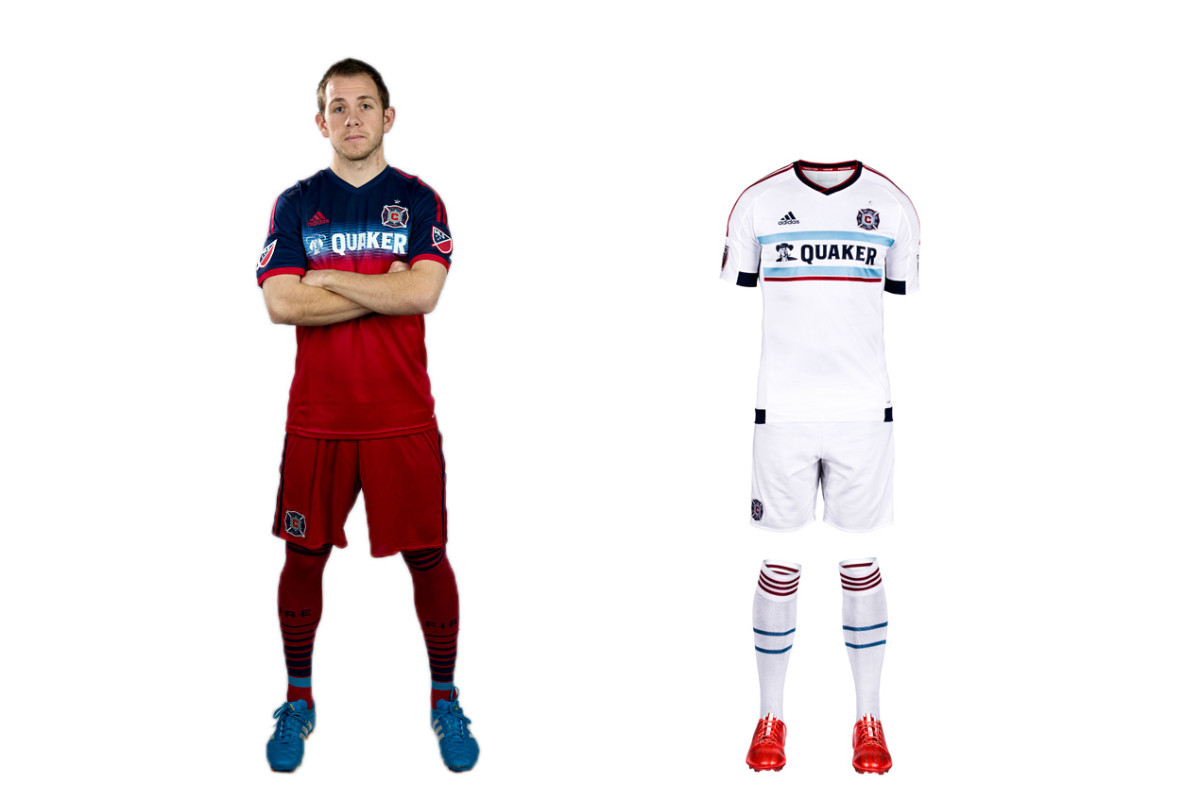
Of the four MLS teams with an all-red home uniform (that’s 20 percent of the league), the Fire were first. They’re the “Men in Red,” after all. But Chicago began veering away from its traditional look in 2012. First the famous white hoop became blue. Then last year, the blue expanded to the chest and shoulders. It doesn’t look bad, but it doesn’t seem right, either. The new away kit is another all-white offering. But at least designers put a bit of thought into this one. The thin, light blue hoops on the shirt and socks, intended to reflect the design of the city flag, are a nice touch.
Montreal Impact
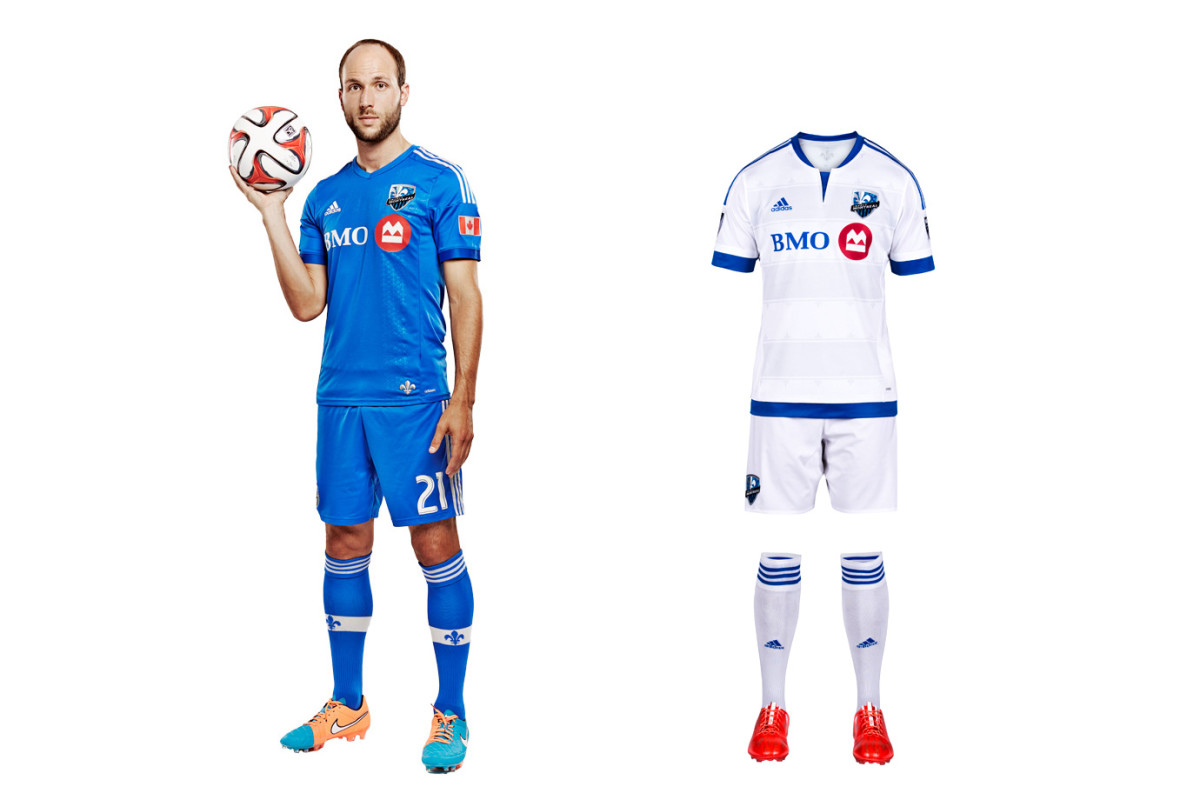
Montreal exemplifies MLS/Adidas’ fixation on tiny details rather than the impact (sorry) a uniform makes when viewed from more than three feet away, which is where most people watch a game. The new away kit features a tiny silver fleur-de-lis affixed to the back and more woven subtly into the fabric. But overall, it’s just another anonymous all-white uniform that mirrors the existing, plain blue primary set. The tragedy is that Montreal’s gorgeous blue-and-black striped alternate, which would be the only striped kit in MLS, is gathering dust. It should be the club’s primary.
D.C. United
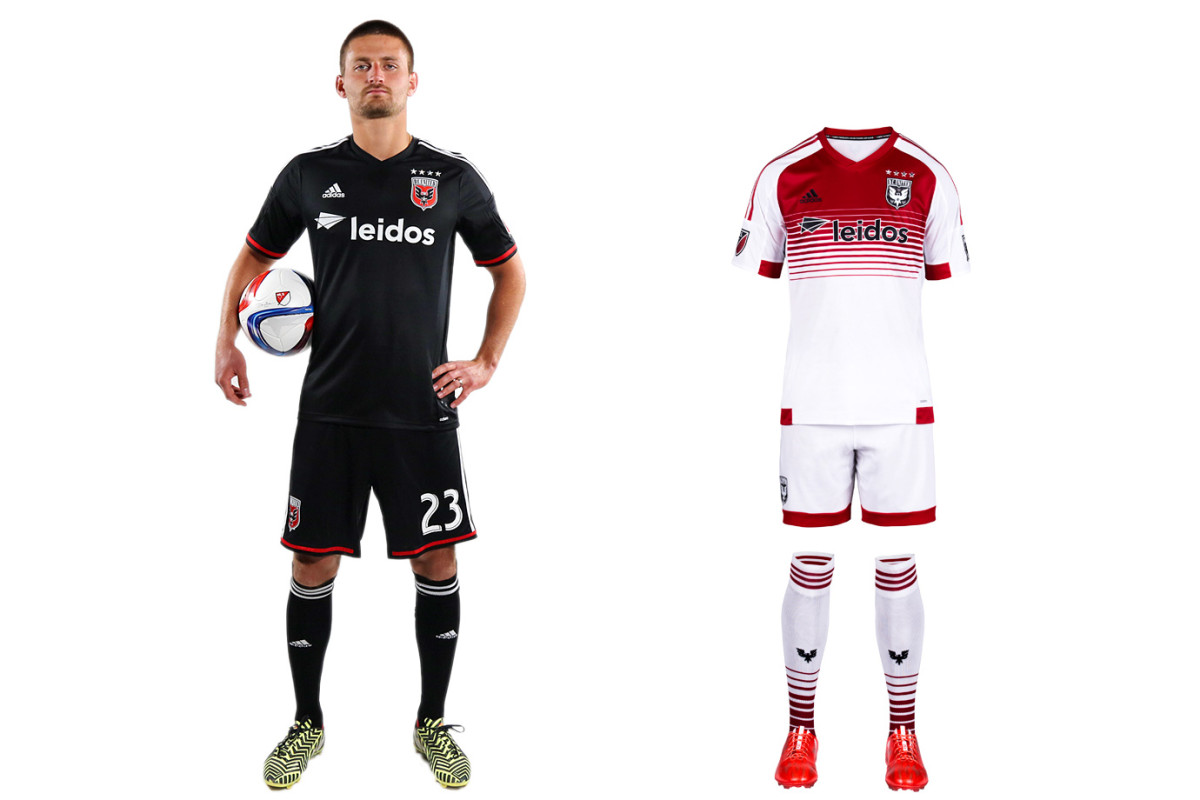
D.C. United calls itself the “Black and Red,” but its uniform palette typically has ignored the latter. That’s been rectified with the club’s new secondary kit, which features a welcome splash of red on the traditional white jersey. The home uniform, which carries over from 2014, still looks unfinished without the white chest stripes that were dropped in 2008. If D.C. could find a way to re-introduce them, perhaps above the sponsor logo and behind the crest, it once again would boast one of the sport’s most distinctive designs.
Real Salt Lake
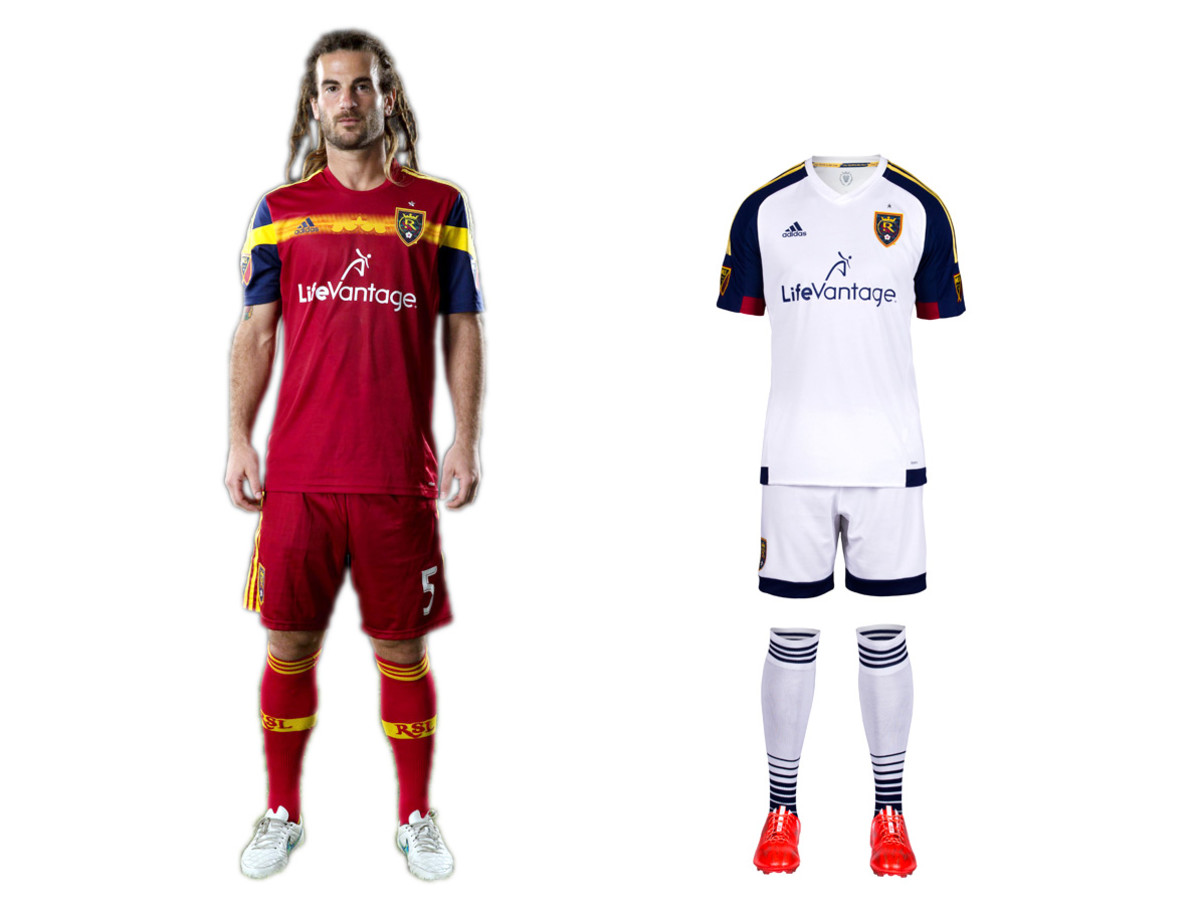
RSL stubbornly refuses to look great. It took a small step forward with its new secondary uniform, which now features two blue sleeves. It's too bad there isn’t even more of RSL’s beautiful claret, cobalt, and gold color scheme in the kit. The red home set carries over from 2014, making it six seasons since RSL abandoned the claret shirt, cobalt shorts/socks combo it wore when winning its only MLS title. The yellow chest stripe adds a little something extra, but RSL’s preference for an all-red kit similar to others around the league instead of a classy, one-of-a-kind look with championship pedigree is baffling.
Toronto FC
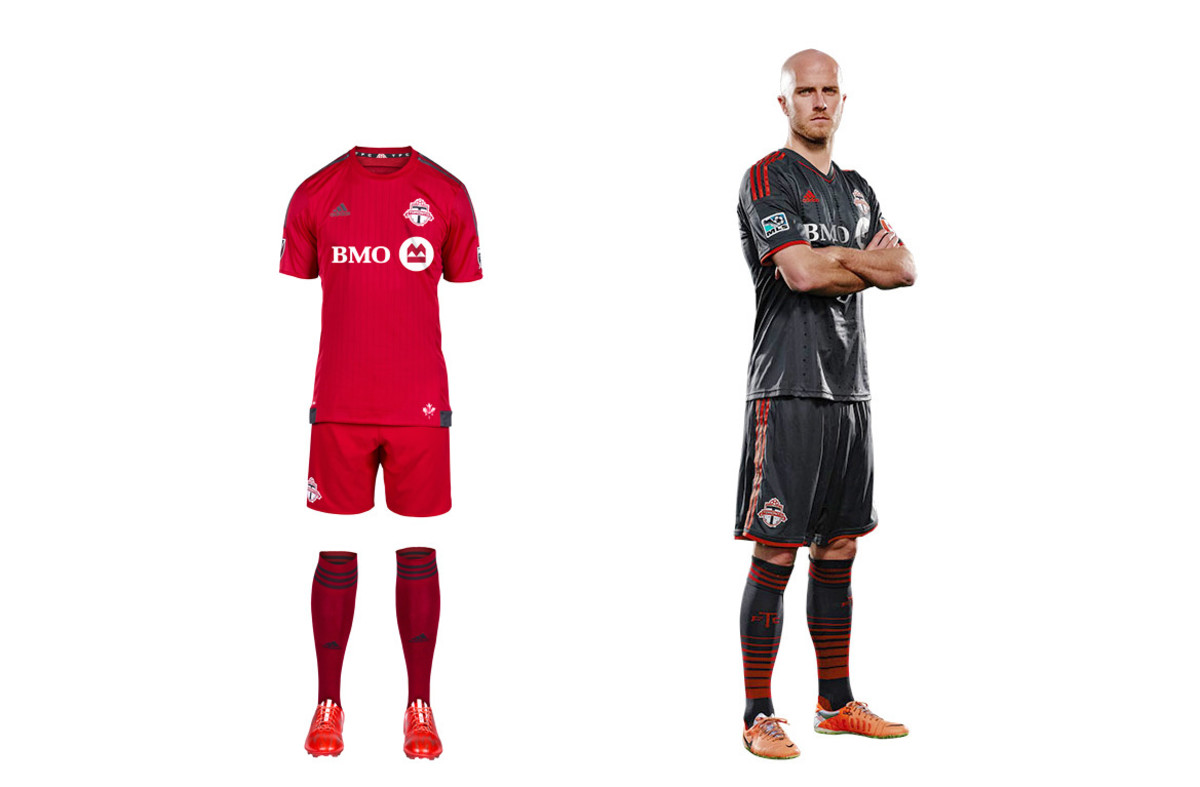
Toronto FC’s new home set could be the reddest uniform in the history of a league that loves red uniforms, which we suppose is noteworthy (guess Adidas insisted on the contrasting three stripes). Club management has focused on building a team capable of ending an eight-year playoff drought, likely leaving little time for kit design. The holdover secondary set is charcoal gray, which features in the TFC logo and is a unique uniform color in MLS. The hooped socks finish off a striking look and make us wish there was a bit more gray in the primary.
New England Revolution
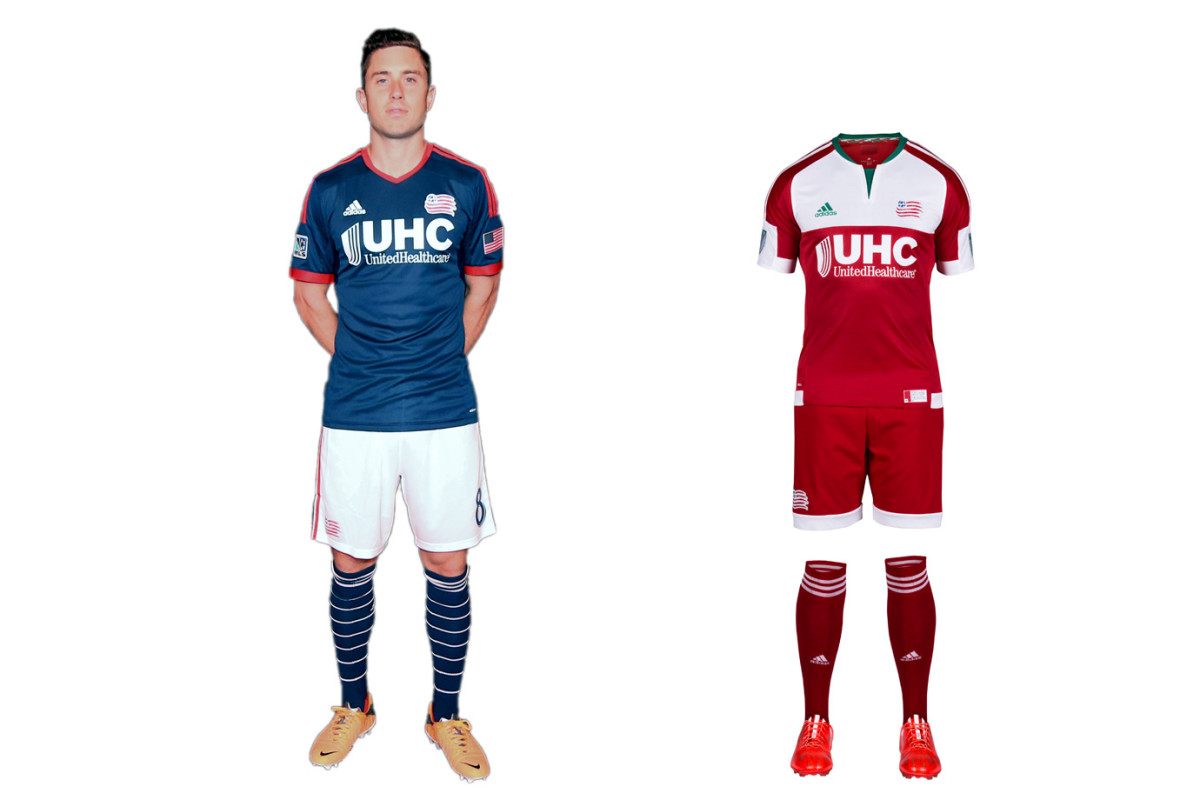
The Revs are Exhibit A for the effect a second color, even if it comes from something as mundane as a plain pair of shorts, has on a club’s brand. Long a believer in boring, N.E. last year overhauled its home blues with white shorts and hooped socks. It’s a classy yet instantly recognizable look. The image shake-up continued Tuesday with a new secondary kit inspired by the regional flag flown during the American Revolution. The red-and-white set is clunky and geometric, but it’s different, daring and local. Better to take a chance than look dull and anonymous.
Philadelphia Union
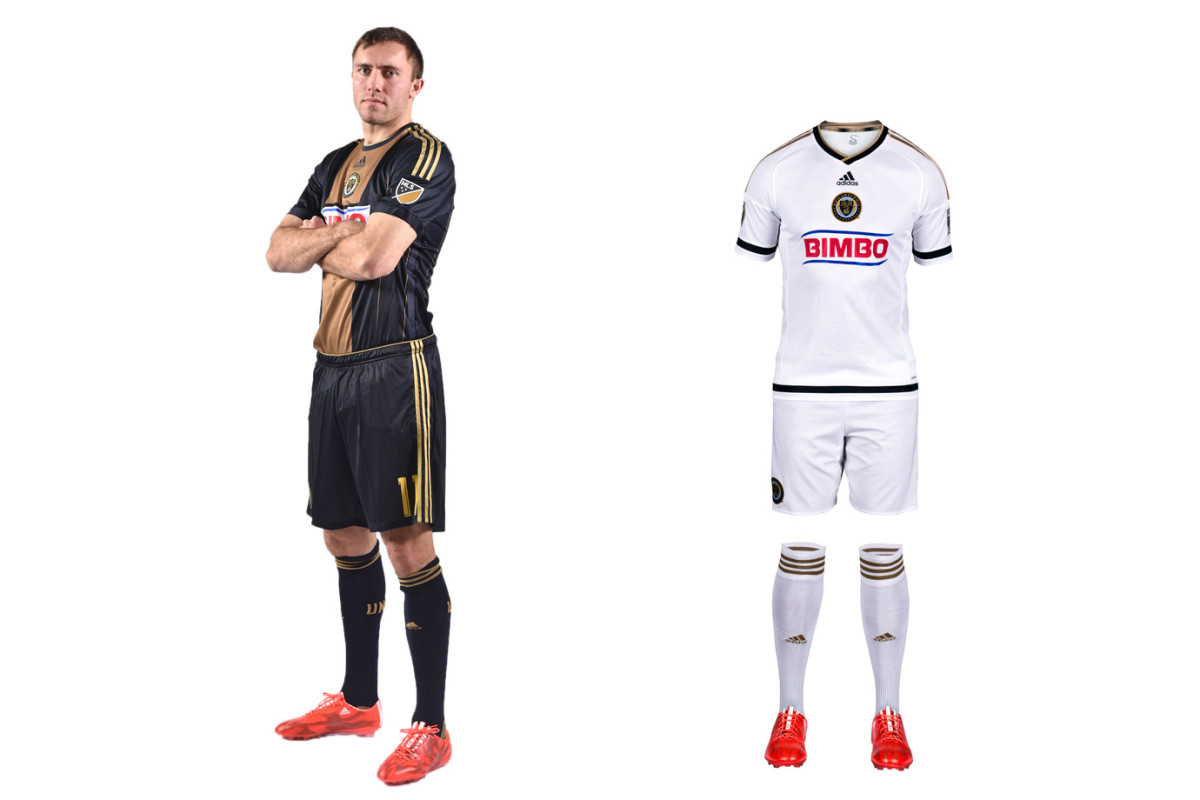
The Union got it right in 2010. The inaugural navy kit with the gold center stripe, reflecting the Philadelphia flag, was iconic. The gold-and-blue away set, a reversal of the primary, was one-of-a-kind. The holdover home uniform still looks great, although the sponsor’s logo wrecks the balance. But the new secondary is a disaster, a needless departure from the brand and an 10th all-white MLS kit. Once innovators, the Union are now followers. The “WE ARE ONE” collar slogan, the tiny snake below the neckline and the embossed stars on the front are lost in a sea of white.
Vancouver Whitecaps
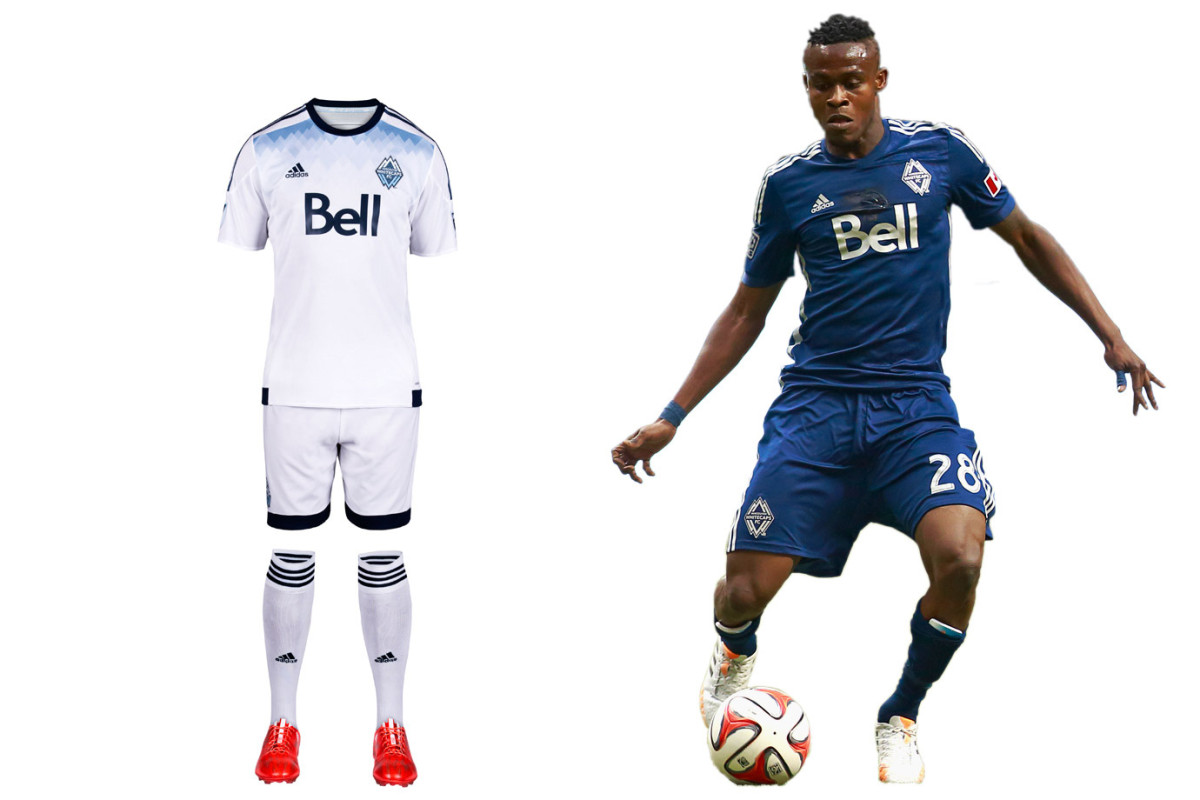
The Vancouver Whitecaps new primary uniform is meant to be experienced up close. It’s slogan heavy. “Our All. Our Honour.” appears inside the neck and on the hip. “SINCE 1974” is on the back. The thin, diagonal pinstripes that featured on the previous home kit have been replaced by light blue shading designed to represent Vancouver’s water and mountains. It’s all a bit too subtle. The shirt will look nice with jeans, but in the end, Vancouver’s all-white kit—and the holdover mono-navy secondary—simply blends in.
Portland Timbers
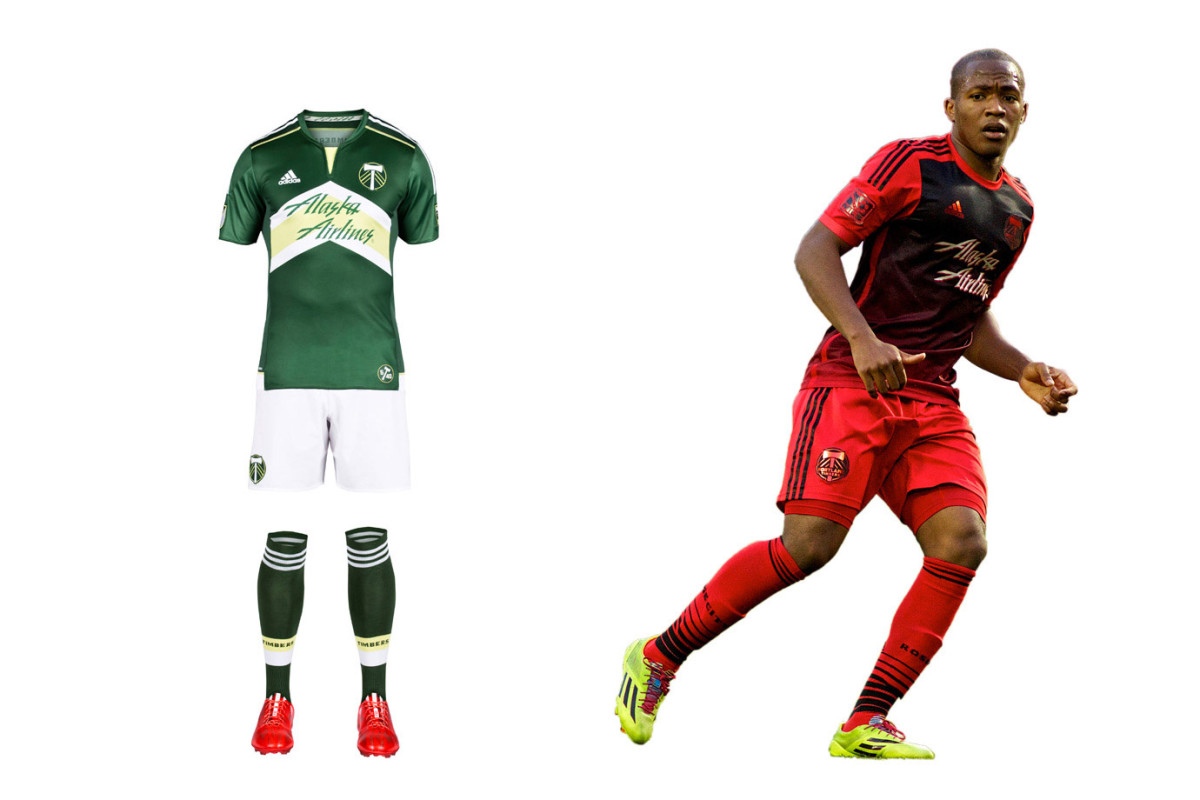
Portland quietly switched crests, from a logo featuring its name to a simpler version focusing on the axe and chevrons (the old logo lives on elsewhere). Few teams wear a badge with no writing, but the Timbers can because they’ve built such a powerful brand. Only they could wear the new home set, a bold green-and-white offering anchored by the chevrons. They're a bit wide, and the yellow below the collar clutters the shirt, but it's impressive overall. The road kit, released in 2014, is everything a good one should be: distinctive, perhaps edgy, yet connected to the club. In this case, Rose City red.
Columbus Crew
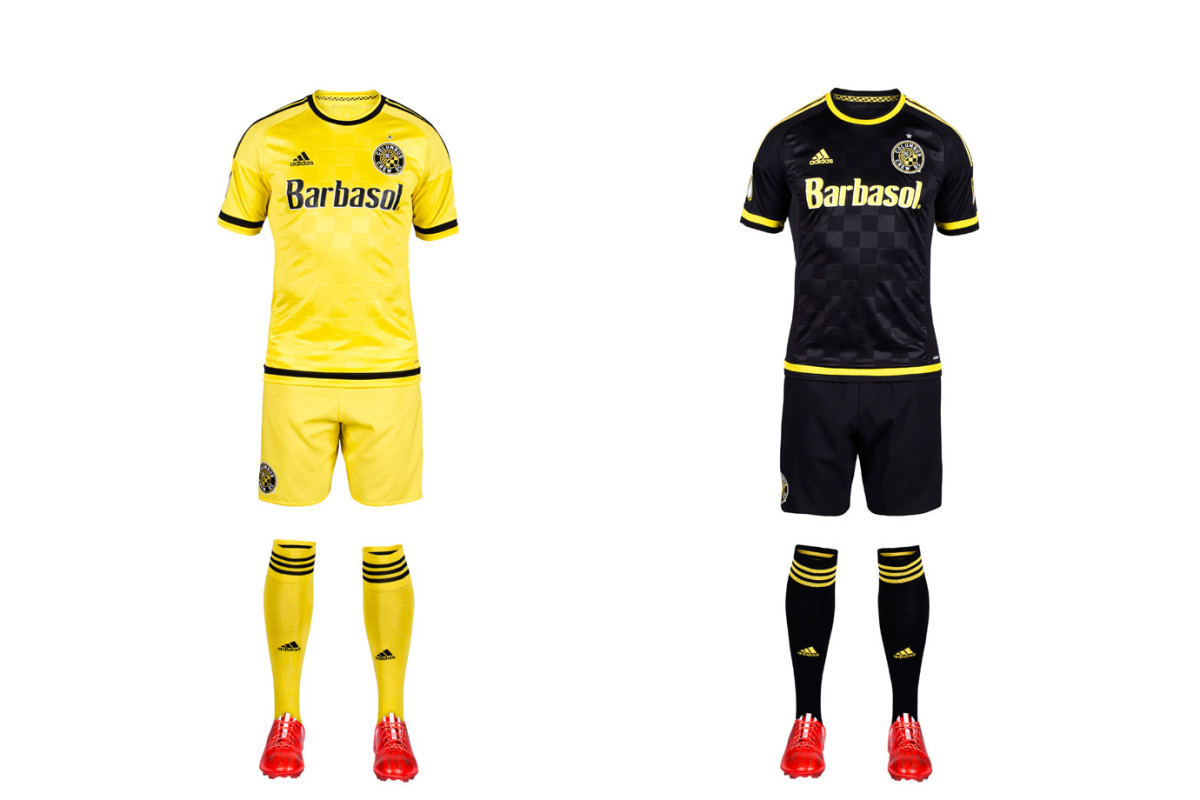
The Crew released new home and away sets featuring the club’s revamped logo, a roundel that looks nice enough but makes sense only with a cheat sheet. The explanations (the ‘O’ for Ohio, the founding year, the checkerboard pattern found in flags waived by fans) certainly tie the club to Columbus more than the goofy construction workers did. As the Crew forge ahead, they’ll stay true to their sartorial tradition. The all-yellow primary is simple but elegant, and certainly recognizable. The mono black secondary could use a bit of flourish–why so subtle with the checkers? But it works and shouldn't be needed that often, anyway.
Orlando City SC
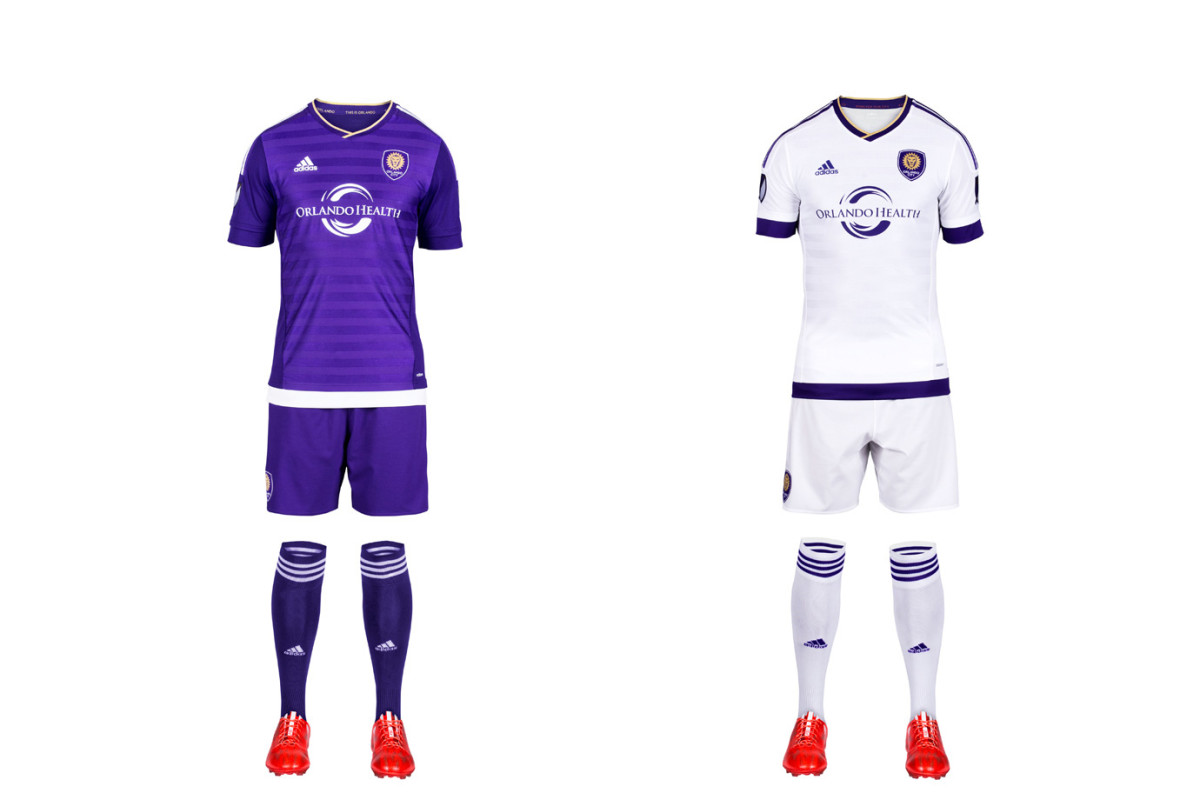
The Lions’ love for purple is welcome in a league featuring so many similar looks. But it didn't result in creative inaugural kits. The home uniform features more up-close details, like “jacquard engineered banding…representing Orlando City’s transition to a new era” and even the club's old USL logo inside. The mono-white secondary has colored hoops on the waist and sleeves and includes more small symbols and slogans. But it’s still just another white set. The answer is obvious—swap the socks. The “Chelsea” look is underrated. White hosiery at home and purple on the road would make all the difference.
New York Red Bulls
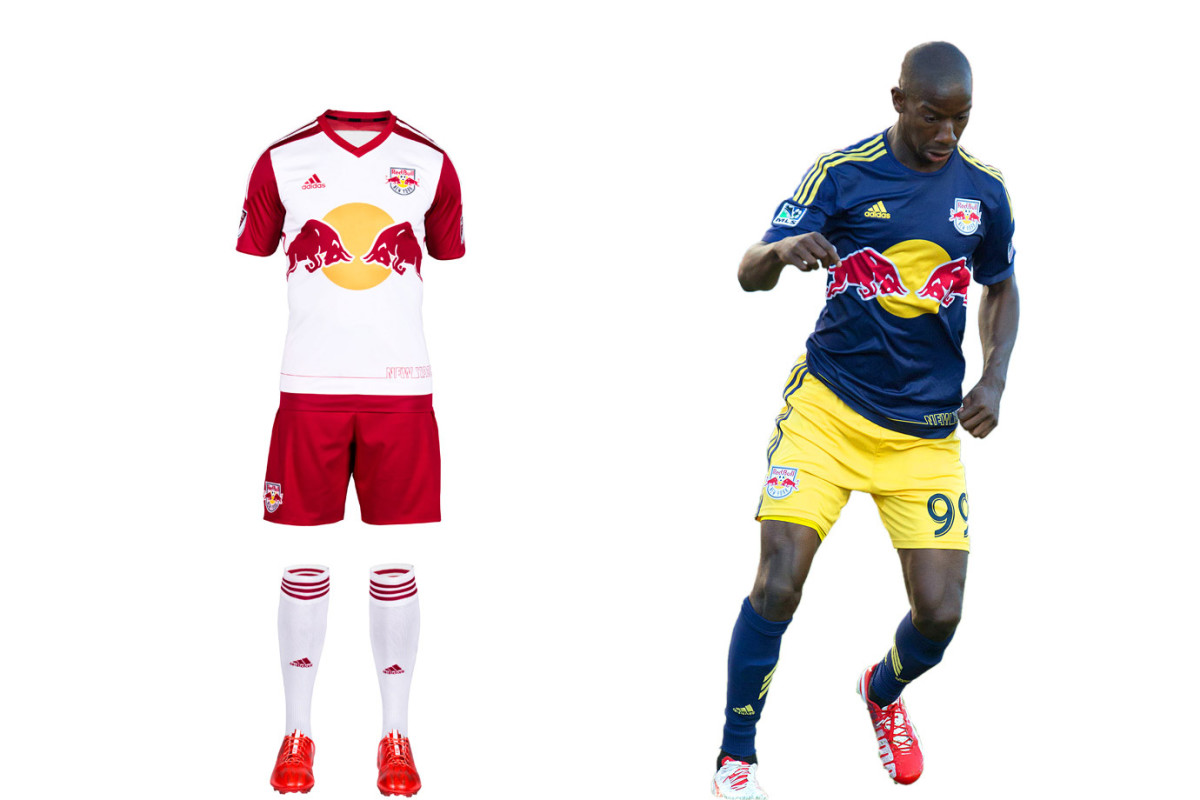
The Red Bulls have company in New York so have set out to reinforce their tenuous connection to the market within the constraints of the club’s corporate brand. The only white-red-white team in the league, RBNY now must compete with NYCFC’s pale blue. The Red Bulls’ new home set doubles down on that contrast with red sleeves and “NEW YORK” emblazoned on the shirt’s lower left in a manner “mimicking the iconic New York skyline.” The “EST.1996” on the back collar reminds fans who was there (or nearby) first. The holdover secondary definitely is unique and is great in reasonable doses.
Houston Dynamo
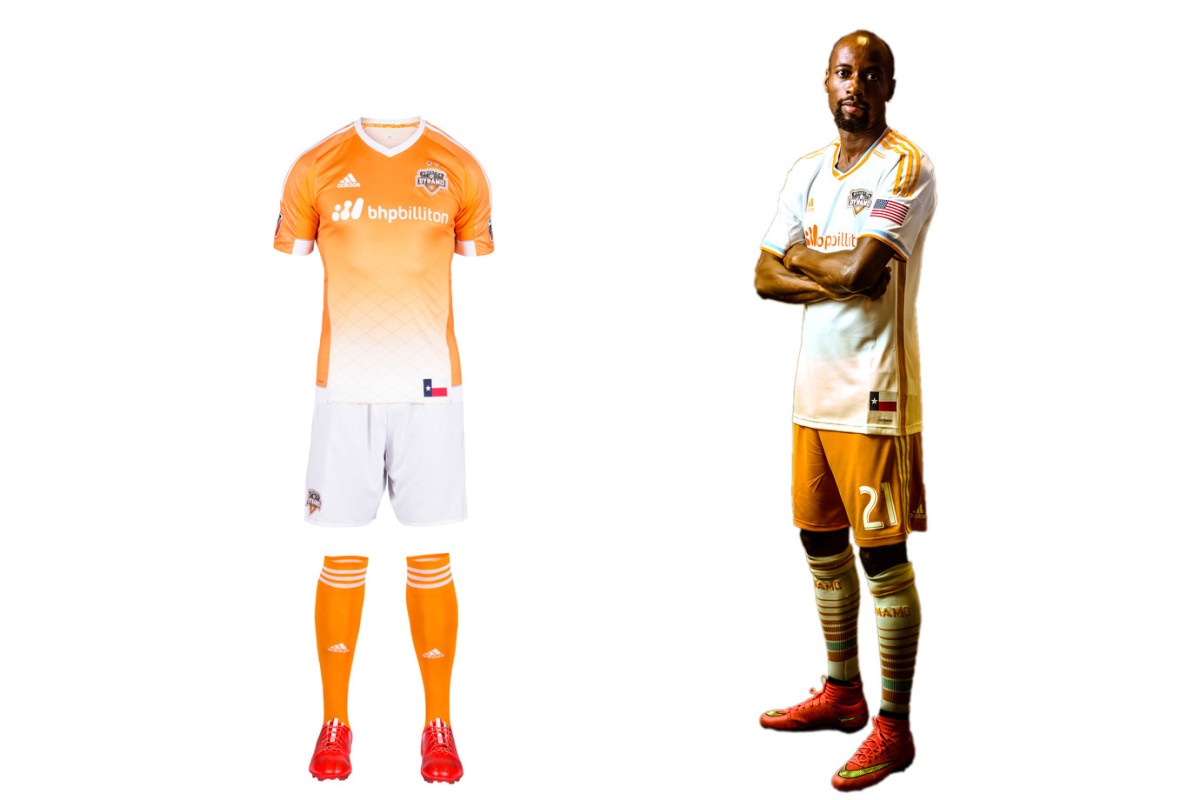
Houston’s club motto is “Forever Orange,” and while that remains the cornerstone of the brand, the Dynamo typically add a wrinkle here and there to ensure we’re not beaten over the head with it. The new home uniform is a great example. The white shorts and checkered fade on the jersey add the right amount of contrast. On occasion, the Dynamo have worn monochrome both home and away. But there’s no need to do so, especially on the road. The balance in the primary kit and the immediately identifiable orange shorts with the secondary set showcase the Dynamo at their best.
Sporting Kansas City
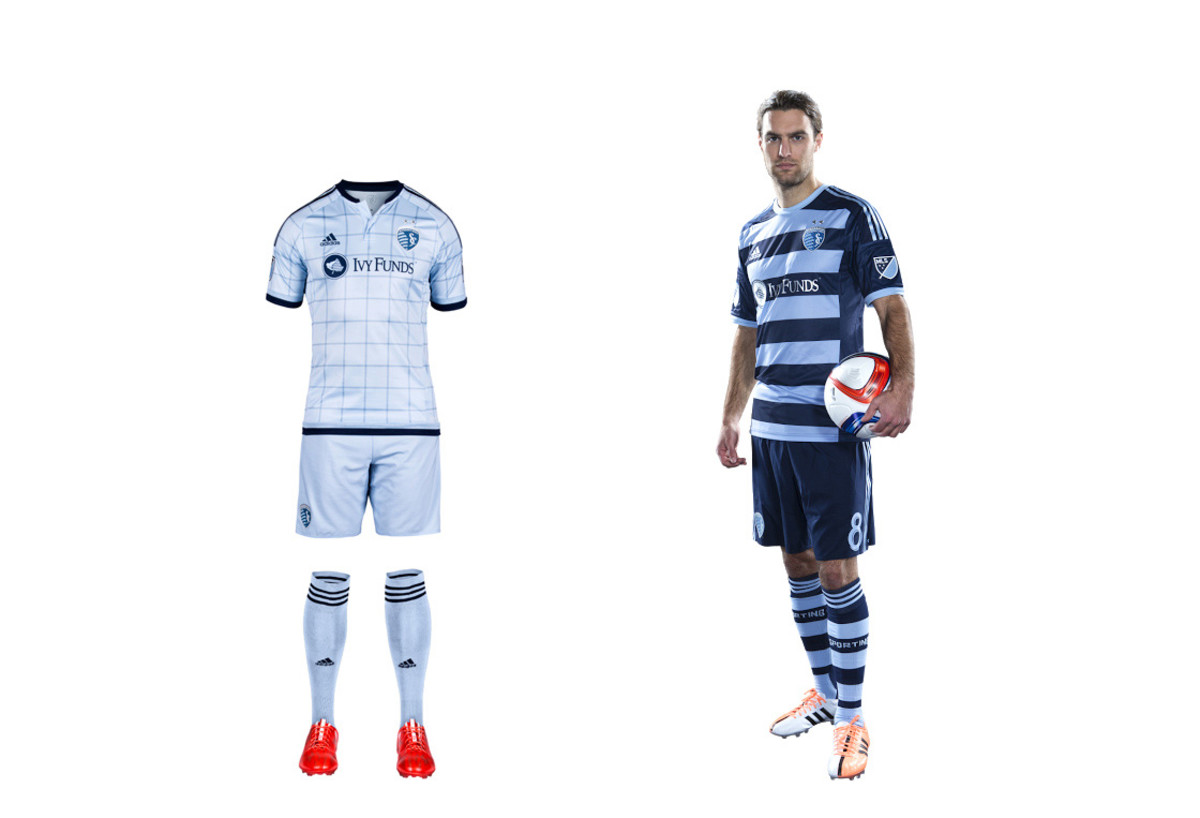
From irrelevant to trendsetting, SKC has profited from one of the most successful sports rebrands in recent history. The club now must share light blue with NYCFC, but Sporting still stands out. The new home set is a departure form the bicolor “state line” uniform of 2013-14 and is anchored by a “fashion-forward window pane pattern” that’s almost as preppy as the recent argyle alternate kit. The secondary uniform is stunning. The hoops, which mirror the stripes on the club crest, highlight one of the most eye-catching sets in MLS history. It’ll be tough to see it go after this season.
FC Dallas
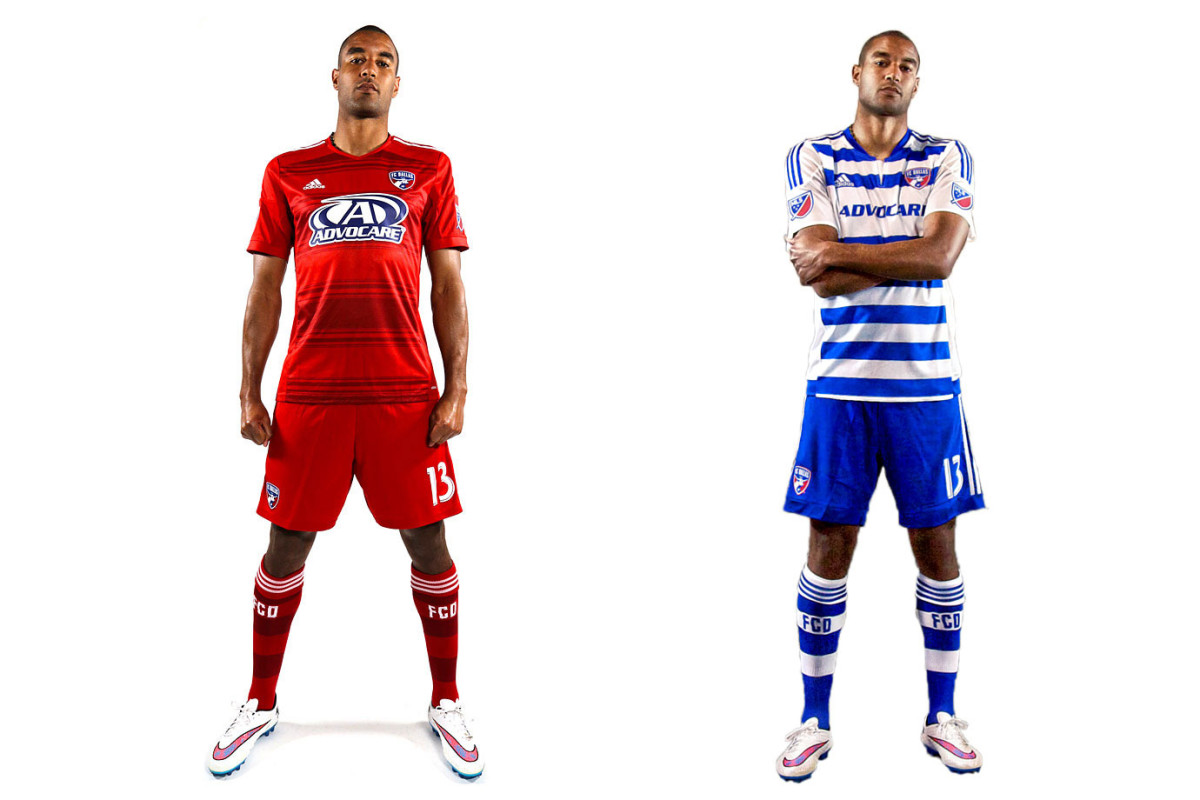
FCD’s kits are an example of a good idea, poorly executed. The club made an inspired decision to go with hoops when rebranding in 2005, but the jerseys always let them down. Unnecessary seams, plackets and panels always ruined the shirt. Dallas gave up last year and went with a boring all-red primary. But it stuck with the hoops on the new blue-and-white secondary, where the side panels and sleeves still disrupt the flow. Both blue and white shorts are an option. Our 2016 ideal: a primary jersey with seamless, sleek red and blue hoops. Unique and colorful, but less jarring. Make it happen.
Colorado Rapids
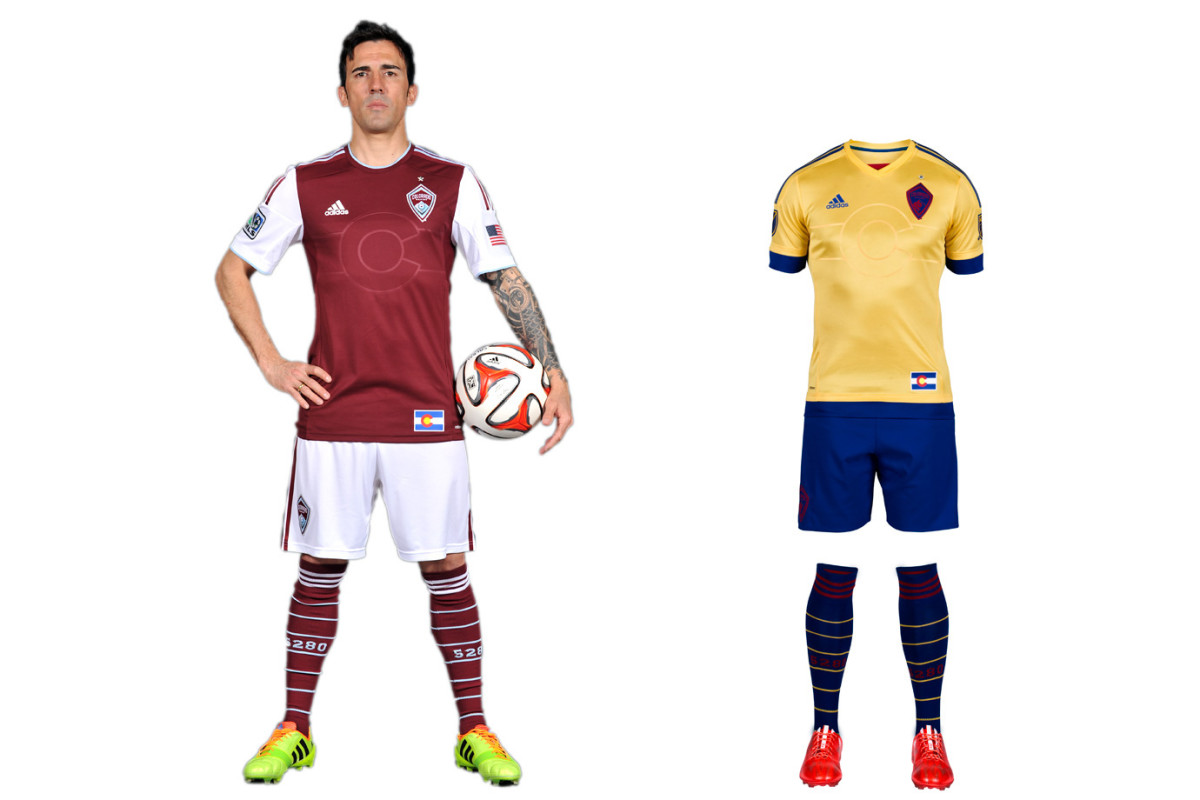
Another club that’s bounced from brand to brand (green-and-white, blue-and-black), the Rapids have settled in nicely with the unique but elegant burgundy-shirt, white-shorts combo. The sleeves, which mirror those worn by sister club Arsenal, add a subtle touch of flair. The new away uniform is a prime example of how a secondary kit can be tasteful and connect to a club’s brand. Last season’s mono blue state-flag set has evolved into a sharp gold-and-blue kit that maintains Colorado's colors and stands out from the crowd. We’re not fans of recolored badges—logos should be sacrosanct—but overall it’s a winner.
Seattle Sounders
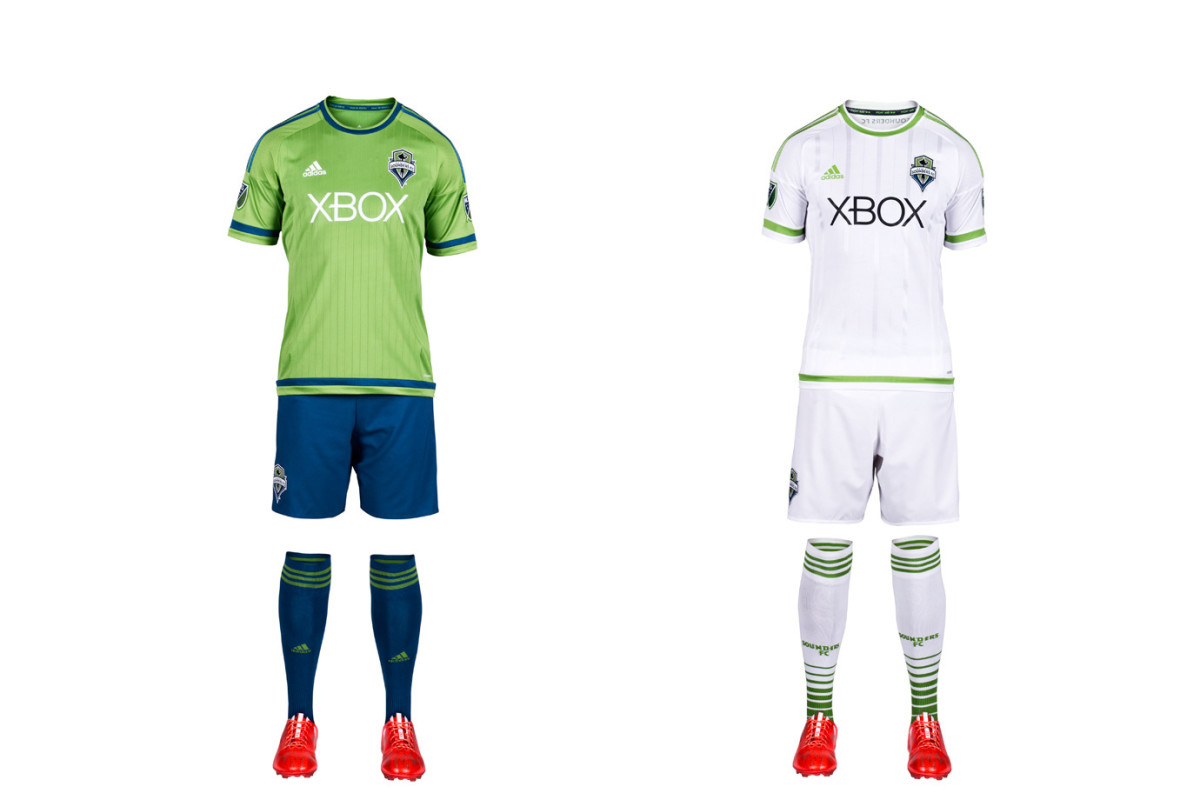
The club that brought us rave green, cascade shale, super cyan and electricity has succumbed to the all-white virus. Seattle is one of five MLS clubs to adopt the look this season, ensuring half the league now embraces the white-out copout. The Sounders new away kit is especially devoid of any personality—a surprising choice for a club that has much of it. The new home set features a less cluttered shirt than in seasons past. It’s a template, but it’s a step up. The uniform also features blue shorts and socks for the first time. Here’s hoping we see it as often as possible.
San Jose Earthquakes
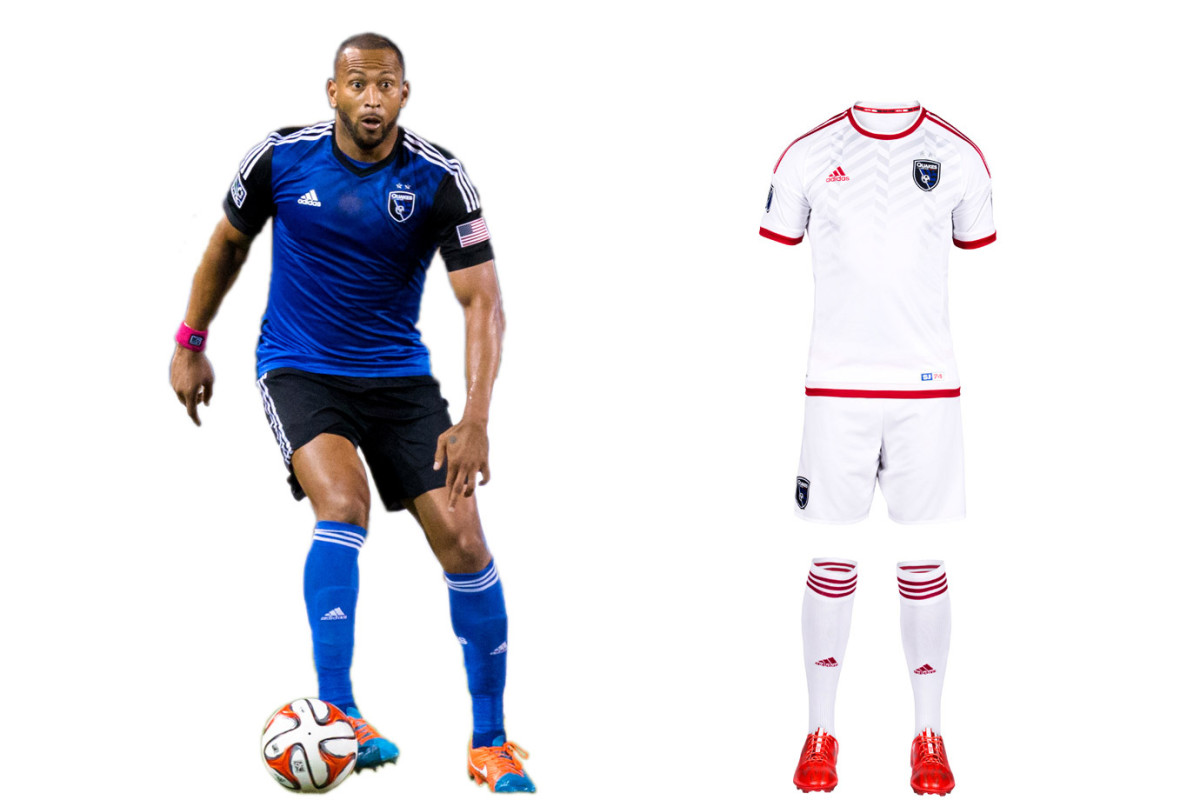
"Earthquakes" is an appropriate moniker for a club that’s experienced so much upheaval. While the new Avaya Stadium offers stability, the brand remains in flux. SJ’s '14 overhaul produced a beautiful blue-and-black primary kit that’s already a modern classic. But the logo, awkwardly anchored by “Quakes”—a nickname of a nickname—lacks gravitas. We liked the re-introduction of the NASL-era red, which inspired last year’s away kit. That’s been replaced by a new white secondary set (yes, another one). It lacks the creativity, individuality and ambition that should be associated with a Bay Area club on the rise.
 Add us as a preferred source on Google
Liviu Bird is a soccer analyst with more than 20 years of experience in the game. He learned how to play in the streets of Romania before moving to the soccer wilderness of Fairbanks, Alaska, escaping to play collegiately as a goalkeeper at Highline Community College and Seattle Pacific University, where he also earned his B.A. in journalism. Bird played semiprofessionally and had tryouts at professional clubs but hung up his gloves in 2012 to focus on writing and coaching at the youth and collegiate levels. He joined Sports Illustrated in March 2013 as a freelance contributor and has also written for NBC Sports, Soccer Wire, The New York Times, American Soccer Now and the Telegraph (UK).